Identification
Fruit fly eggs and larvae: Where to find them
Fruit fly eggs can be almost invisible on food. Learn to recognize the larvae and pupae, check likely breeding sites, and tell similar household flies apart.
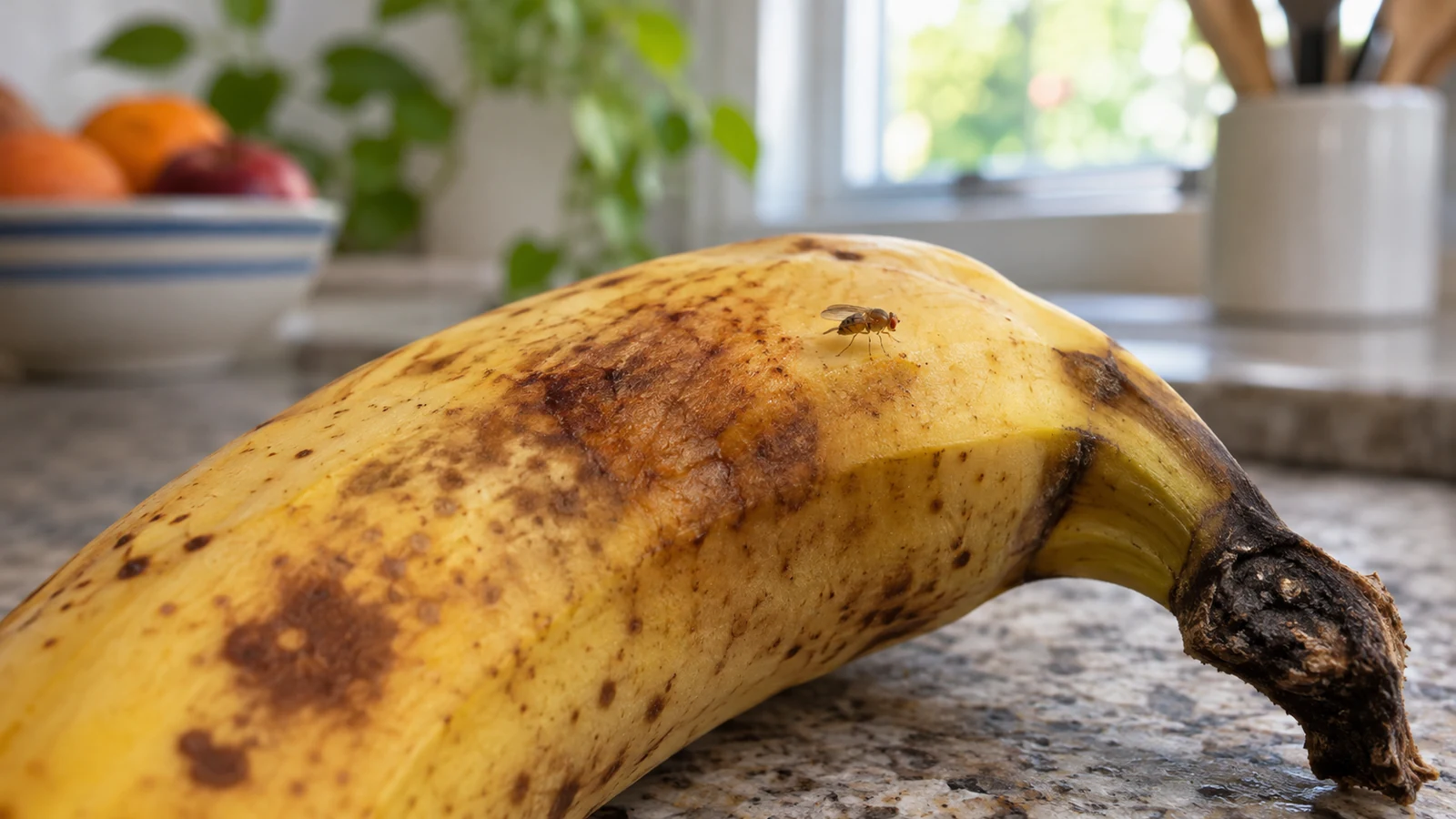
You spot a few white specks on a soft peach or something wriggling at the bottom of the trash can. Are you looking at fruit fly eggs, maggots, or another kind of insect?
The most useful clue is where you find the immature insects. Common household fruit flies, also called vinegar flies, reproduce in moist, fermenting organic material. Look for the material their larvae are feeding on, not just the places where adult flies land.
What do fruit fly eggs and larvae look like?
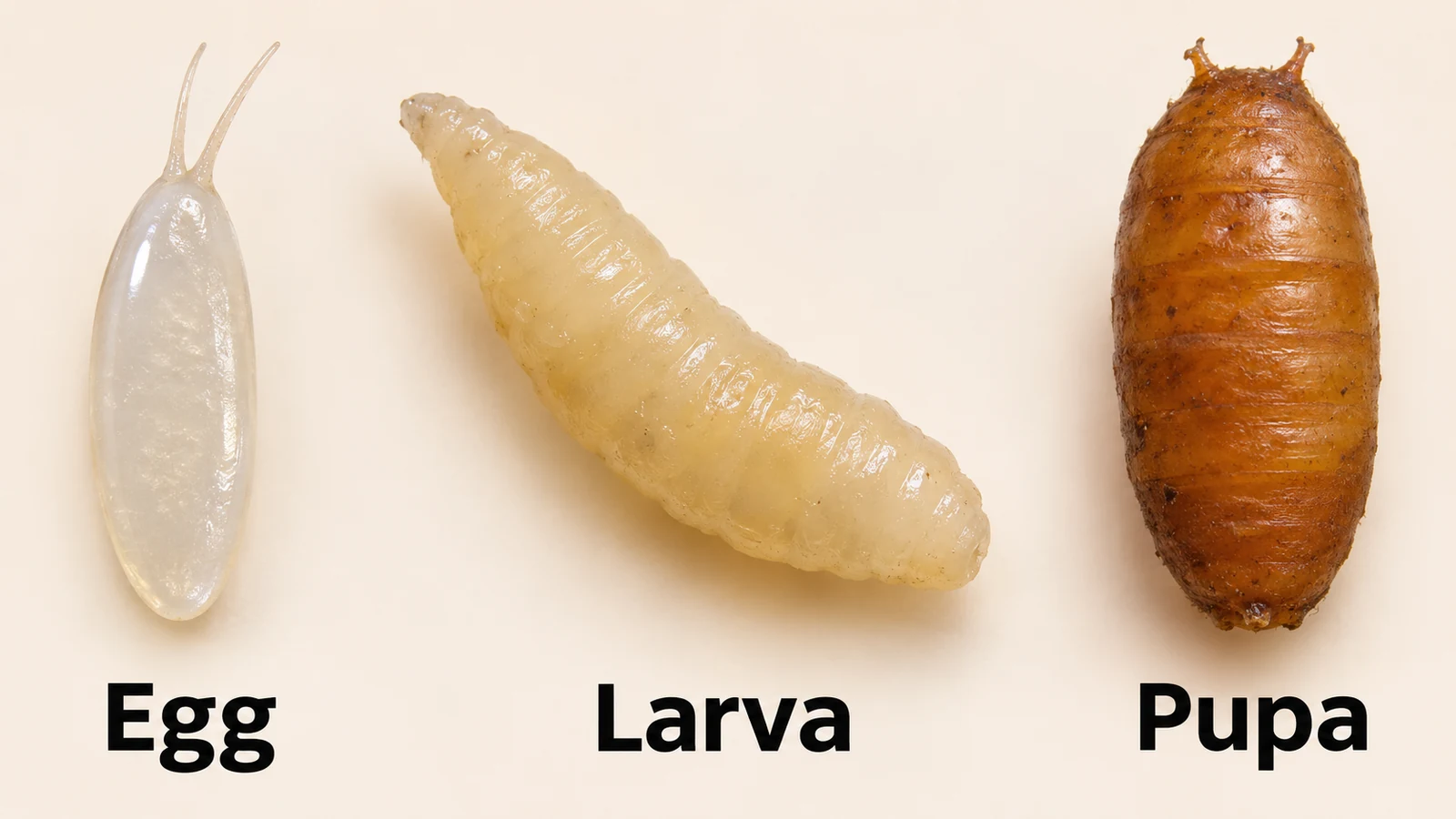
Fruit fly eggs are tiny, pale, elongated ovals. In the common fruit fly, an egg is about 0.02 inch (0.5 mm) long, with two fine projections at one end that are best seen under magnification. Eggs can blend into the wet surface of damaged fruit and are easily overlooked.
The larvae are pale, soft-bodied, legless maggots that taper toward the front. They wriggle as they move through food. Fully grown larvae of common vinegar flies can reach about 1/5 inch (5 mm), though some are smaller. A pupa looks different: it is enclosed in a short, brown, capsule-like case and stays still.
Identification in 30 Seconds
- Eggs: tiny, whitish, elongated specks on moist food or residue.
- Larvae: cream-colored, legless maggots moving through soft, decaying material.
- Pupae: small, brown, stationary cases, often on a drier surface near the food.
- Adult flies: small, tan to brown flies, often with reddish eyes, gathering around fermenting material.
A flashlight and a magnifying glass help you distinguish an egg from a crumb or seed. With the naked eye, moving larvae are generally easier to spot than eggs. Finding a pale speck without other clues is weak evidence.
Where to check for a breeding site
Start with damaged or overripe fruit and vegetables. Examine split skins, bruises, soft spots and the underside of produce where juice has collected. Check the bottom of the fruit bowl and any bags of potatoes or onions that have been sitting in a cabinet.
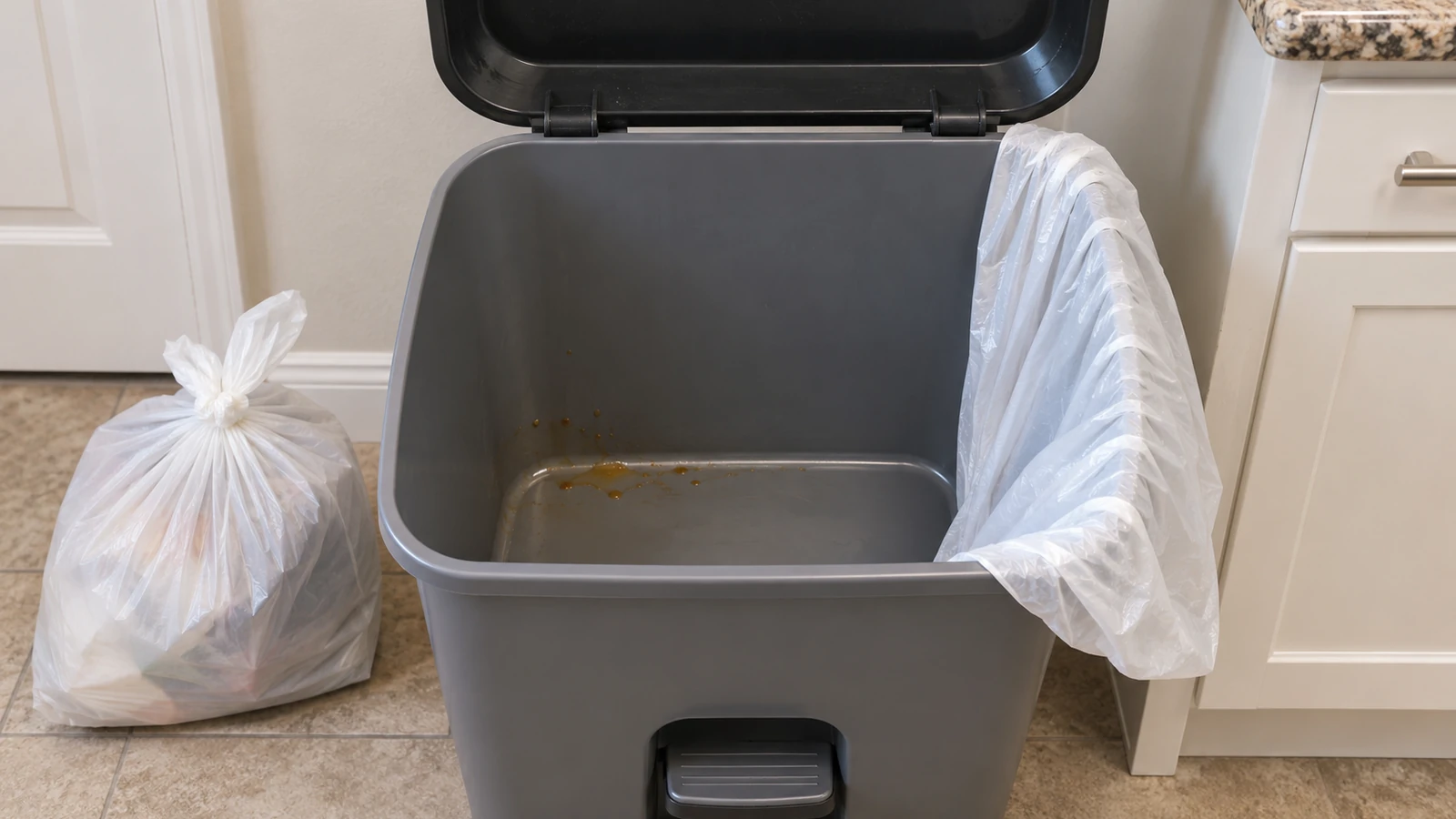
Next, look below the obvious surfaces. Lift the trash can liner to inspect the bottom of the bin, and check the recycling container for liquid left in bottles, cans or pooling underneath them. Even a small amount of old juice can provide food for developing larvae.
If those areas are clear, look for overlooked organic residues around accessible appliance edges, under the sink and on damp cleaning cloths or mop heads. Focus on material that remains moist and contains decomposing food, rather than ordinary dust or a clean water spill.
Check the sink strainer and the visible area around the garbage disposal splash guard, if your kitchen has one. Switch the disposal off and keep your fingers and tools out of the mechanism. A drain containing decomposing residue is a possible breeding site, but adult flies near a sink may simply be drawn to moisture.
If you suspect a particular drain, place an inverted clear glass that fully covers its opening while the sink is not in use and check for adult flies underneath the following morning. Repeat the check if necessary and identify any flies you find. This helps narrow the search to a drain without assuming that all small flies emerging from it are fruit flies.
Identification Mistakes
- Mistaking pale food particles for eggs.
- Assuming every maggot in a sink is a fruit fly larva.
- Inspecting only the spot where adult flies are most noticeable.
Key Clue
Finding pale, wriggling larvae in fermenting fruit or food residue, together with adult fruit flies nearby, is strong evidence that the material is supporting breeding.
What to Watch For
You can have more than one kind of small fly at the same time. Inspect each suspected source separately, especially if flies near a plant look different from those in the kitchen.
How to tell fruit fly larvae from other household fly larvae
Where the larvae are feeding can be more revealing than their size. Fruit fly larvae lack the conspicuous, shiny black head capsule typical of fungus gnat larvae. Drain fly larvae often have darker ends and a small breathing tube at the rear.
Another possible lookalike is the phorid fly. Its larvae also develop in decaying organic matter. If the adults have a noticeably humped back and tend to run in quick bursts across surfaces, consider that possibility rather than identifying the larvae by color alone.
Compare the insect with its surroundings and the adults you observe. These combinations are particularly useful when several types of small flies could be present.
| What you find | More likely explanation |
|---|---|
| Pale, tapered maggots in fermenting fruit or sugary residue | Fruit flies, especially if matching adults hover nearby |
| Grayish, wormlike larvae in drain slime, with dark ends | Drain fly larvae, particularly if fuzzy, mothlike adults are present |
| Slender, translucent larvae with shiny black heads in damp potting mix | Fungus gnat larvae |
| Pale maggots in decaying animal matter or mixed garbage | Other flies, including house flies, may be involved |
What the evidence tells you about the infestation
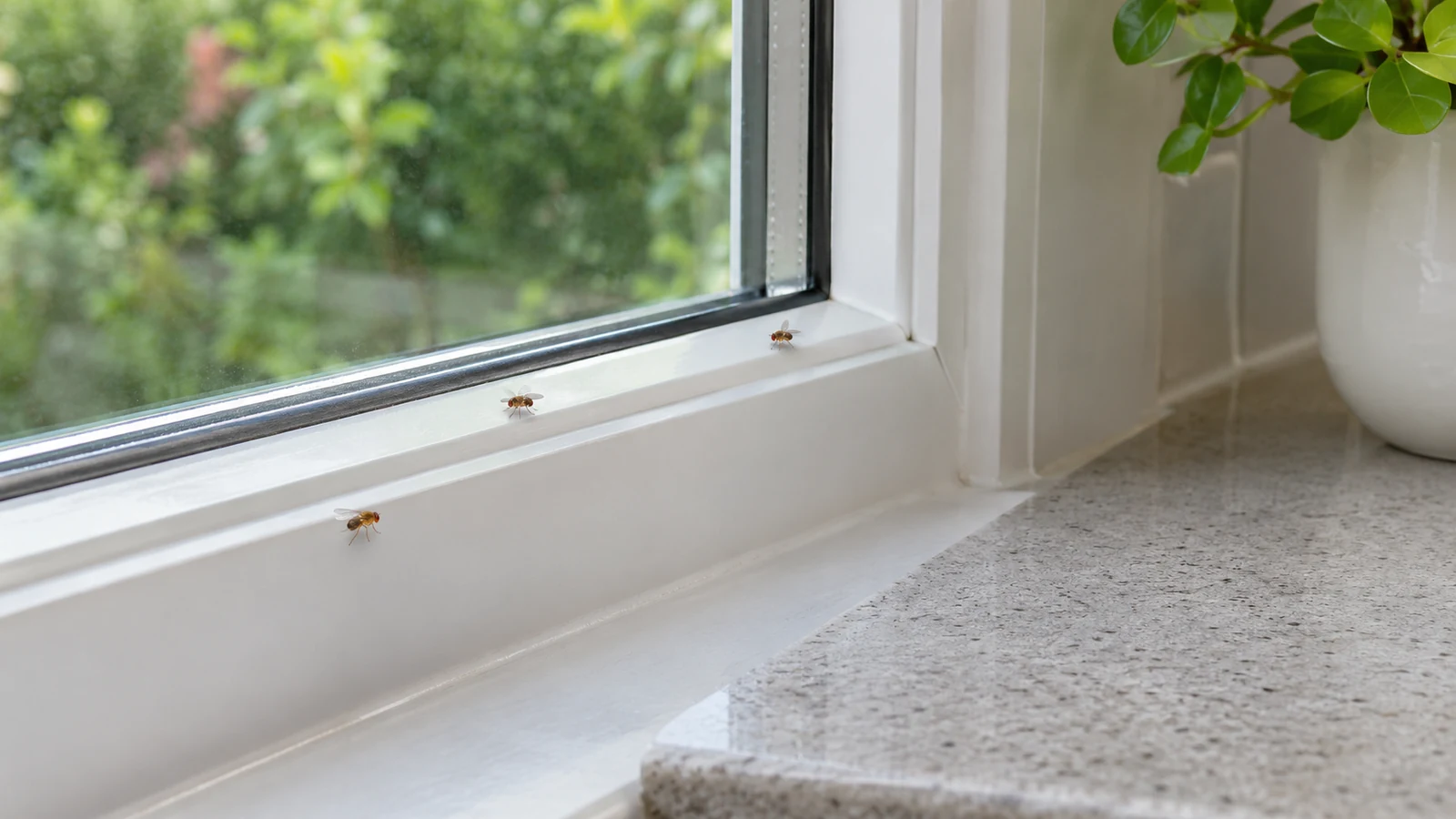
After you discard an affected item, you may still see adult flies around the room or near a window. Some may have emerged from pupae left nearby. The number of adults alone is a poor way to estimate how many eggs or larvae are present.
Finding live larvae feeding in a particular piece of fruit or a wet patch of organic residue establishes that insects are developing there. If the larvae and adults match fruit fly characteristics, you have a likely breeding source to address. Start with that location before searching the entire house.
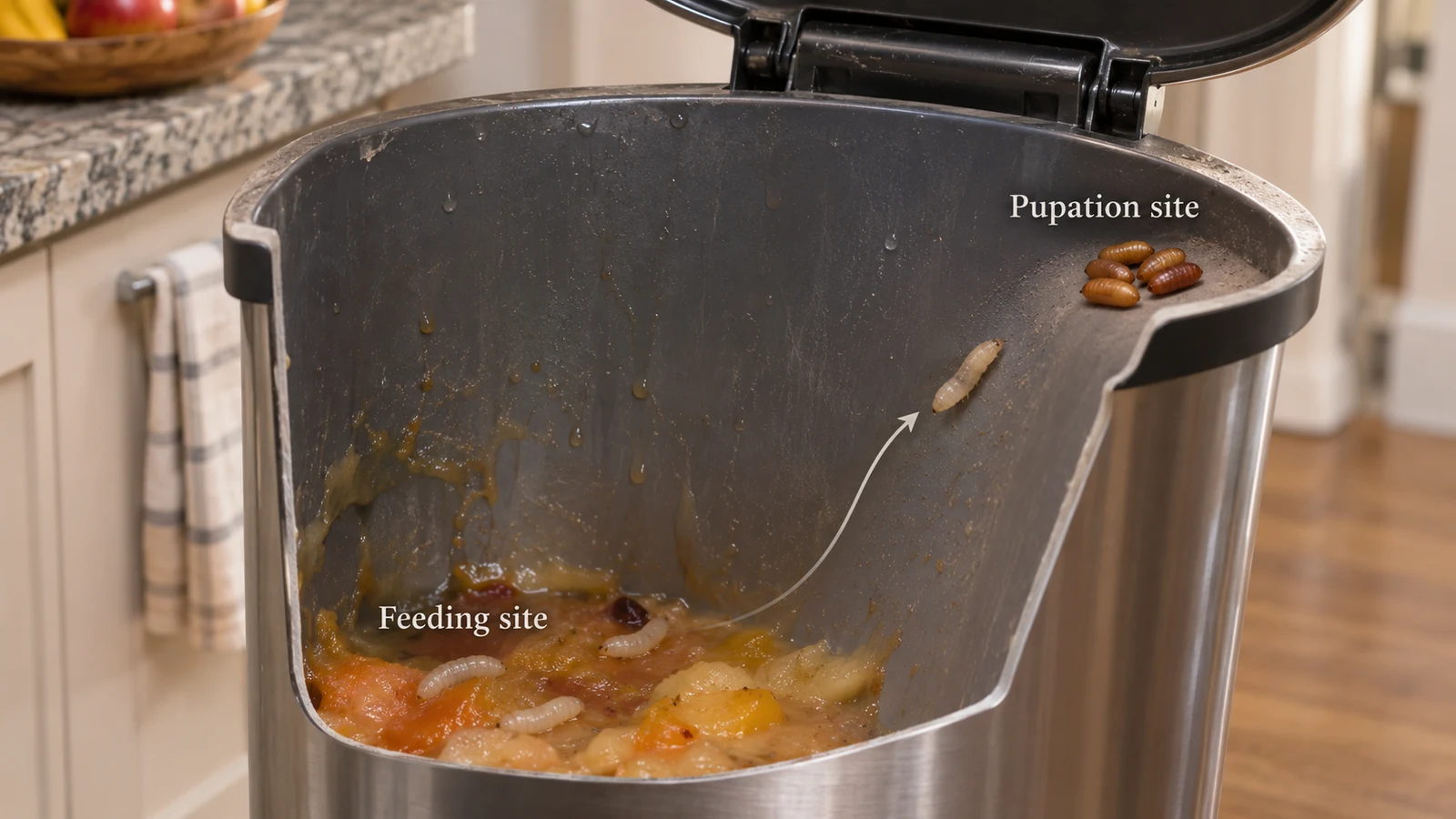
The location of a pupa takes a little more interpretation. Mature fruit fly larvae often move away from wet food before pupating. Small brown cases on the drier rim of a trash can, for example, may point back to residue at the bottom rather than to the rim itself.
A few eggs or larvae on newly purchased produce can represent an introduction from outside the home. Finding them in several separate food or residue sources indoors suggests that more than one breeding site may need attention.
Over the following days, check whether adult sightings decline and whether fresh larvae appear in another suitable location.