Comparison
Termite spray: options and limitations
Compare contact sprays, localized foams, and wood treatments by what they can reach, where they can be used, and how their limitations affect the choice.
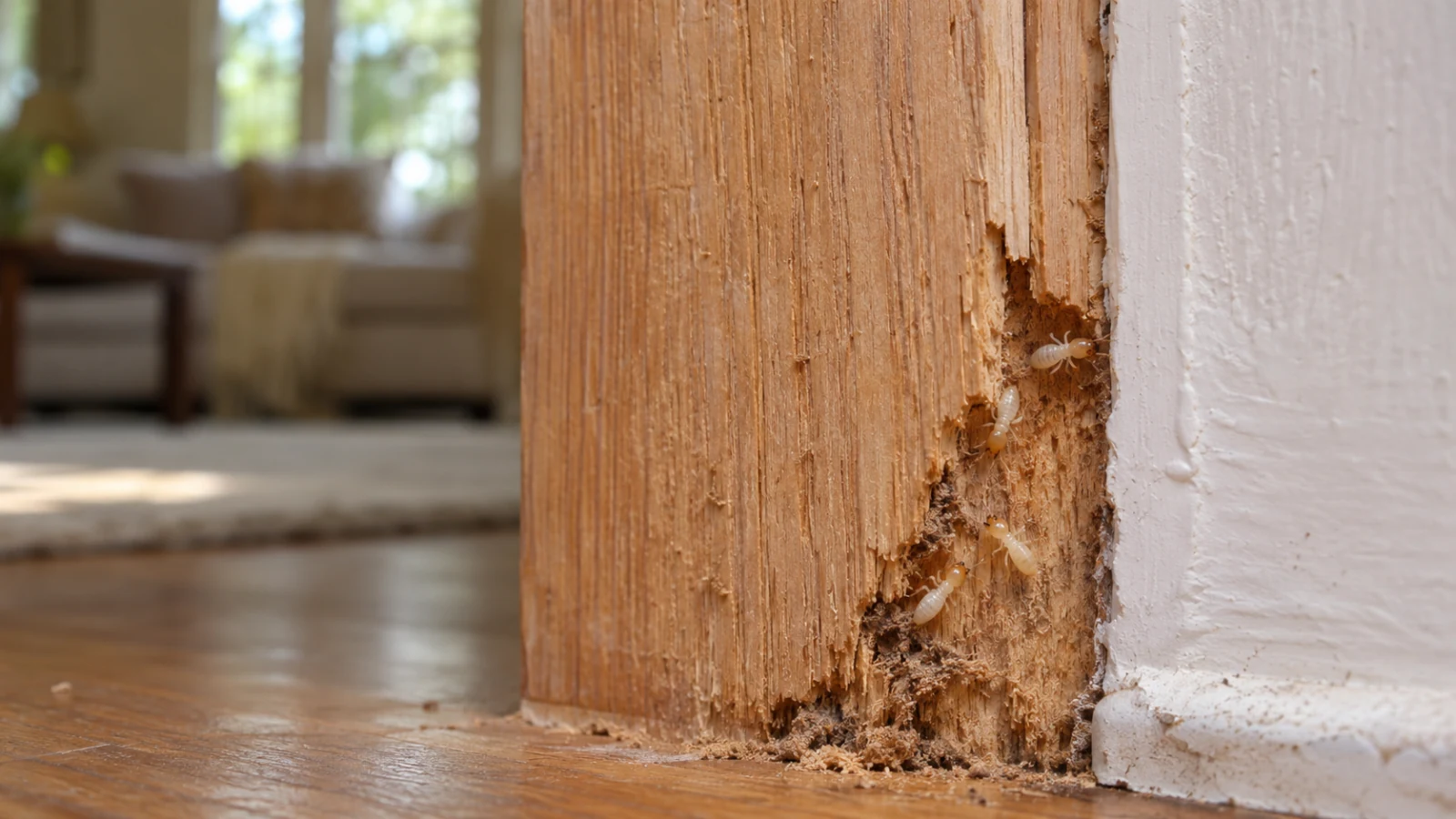
A can of termite spray seems like the obvious thing to reach for when insects appear around a windowsill or baseboard. But getting rid of the insects you can see and stopping termites from feeding inside your home are two very different jobs.
The right product depends on where the termites are, what the product is allowed to treat, and whether you are dealing with an isolated encounter or an infestation in the building.
What should you check before choosing a spray?
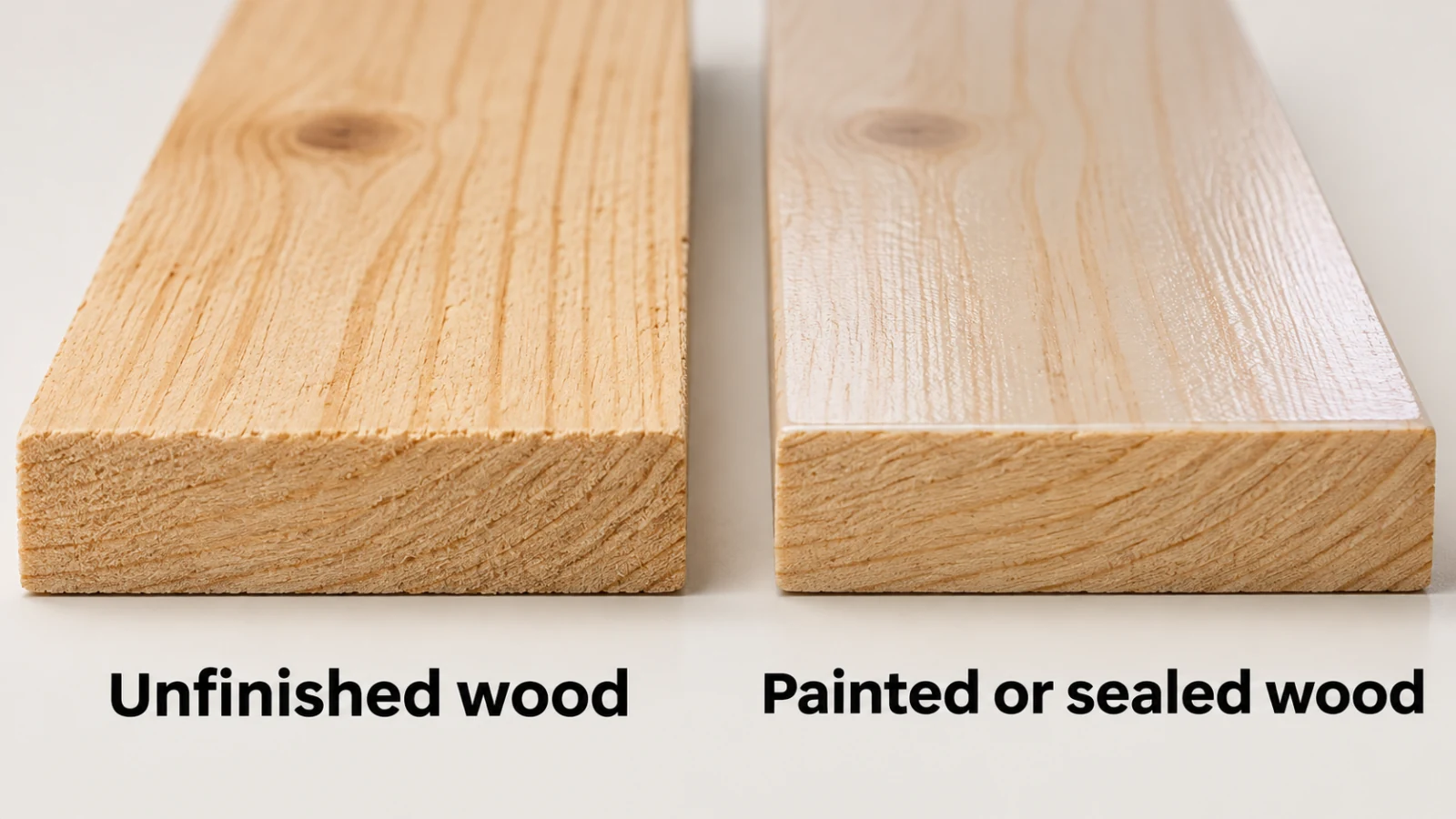
Start with the treatment site. A product intended for exposed insects may be unsuitable for treating wood, and a wood treatment may be unsuitable for soil. Bare wood and painted or sealed wood also present different conditions for products that need to penetrate the material.
Read the full pesticide label, not just the claims on the front of the container. Check its EPA registration number and confirm the following:
- Target pest: Are termites listed, and does the product cover the type of termite you are dealing with?
- Permitted site and method: Is the intended use allowed at that specific indoor or outdoor location?
- Treatment objective: Is the claim limited to killing insects in contact with the product, or does the label authorize a broader termite-control use?
- Restrictions and safety: Does the product require a qualified applicator, protective equipment, exclusion of occupants or pets, or special precautions near food and water?
State restrictions can also affect which products and uses are permitted. If you are unsure about a label, check the registration and label information before purchasing. Never use a pesticide in a way that conflicts with its directions.
Termite sprays compared
Use this comparison to match the type of product to the problem you actually need to solve.
| Option | Intended purpose | Suitable target or site | Main limitation |
|---|---|---|---|
| Ready-to-use contact spray | Kill exposed termites | Insects at a label-approved location | Limited to insects reached by the product |
| Localized foam | Target a defined area | Label-approved localized treatment site | Coverage depends on access and the product’s permitted use |
| Wood treatment | Protect or treat specified wood | Suitable accessible wood, often unfinished | Limited penetration or untreated wood can leave vulnerable areas |
| Professional soil termiticide | Structural control of subterranean termites | Soil treatment sites specified on the label | Requires professional assessment and application |
The trade-offs: quick results versus lasting control
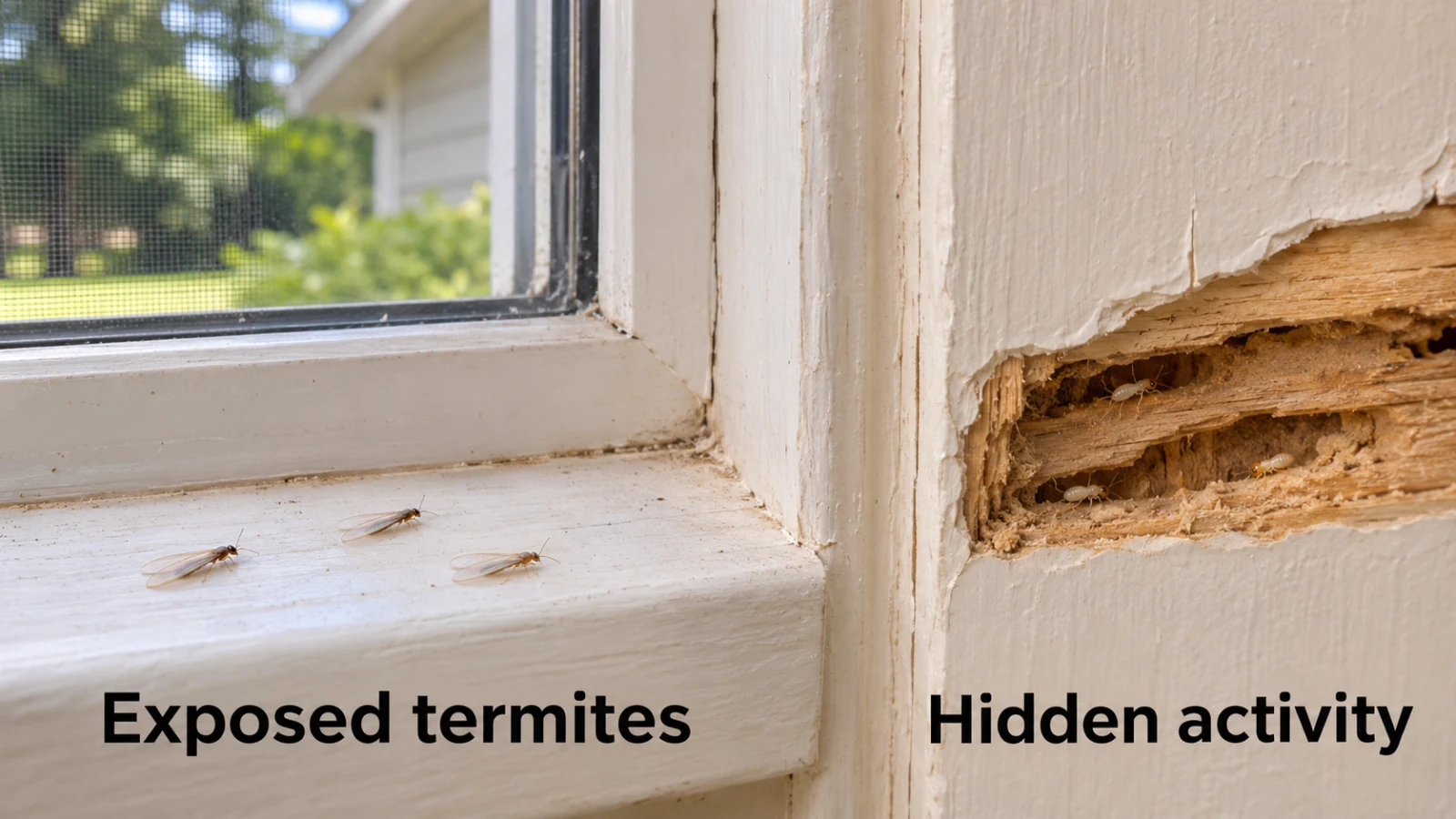
A contact spray can make visible termites disappear quickly. That is a useful result only when exposed insects are the problem. If swarmers are coming from a gap in your window frame, killing them leaves the source of that activity unresolved.
Localized treatments have a different advantage: they can address a defined site without treating every part of a building. Their effectiveness depends on finding the affected area and reaching the termites within it.
Why hidden termites change the decision
Drywood termites live inside wood. A liquid on the outside of a painted board may never reach the insects feeding within it. Even a suitable wood treatment has limits when the affected galleries are deep or when other infested wood is inaccessible.
Subterranean termites commonly travel from soil to wood through protected routes. Removing insects from the surface of a foundation or a damaged board leaves those routes and the rest of the colony outside the scope of an ordinary contact spray.
Why a stronger spray is not necessarily better
A concentrate, a longer-lasting formulation, or a product that expands into foam may seem like an upgrade. None of these features changes the authorized use or makes an unsuitable treatment site accessible. Choose according to what the product is designed to accomplish.
Match the product to the job
A contact spray can address exposed insects. A suitable wood treatment can protect accessible material. Neither should be purchased as a shortcut around an assessment of structural activity.
What to Watch For
If termites reappear at the same window, baseboard, or piece of wood after a localized treatment, preserve the evidence and arrange an inspection instead of repeatedly spraying the spot.
Which termite spray should you choose?
If you find a few termites outdoors
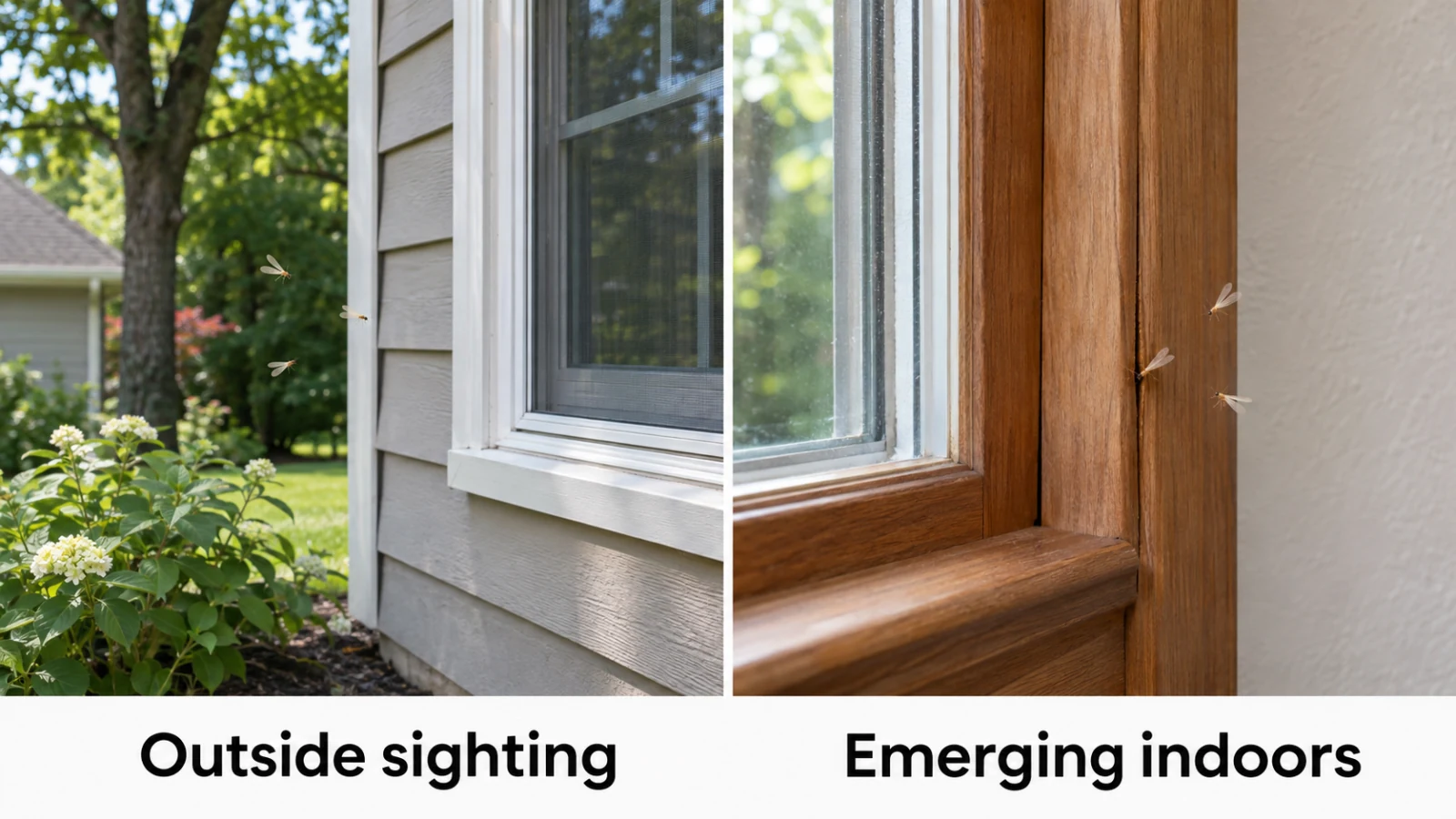
An isolated outdoor swarmer near a light or window does not automatically call for insecticide. Start by identifying termites correctly and checking whether the insects appear to be emerging from the house or simply flying nearby.
If there is a specific need to kill exposed insects, a contact product with an appropriate label may be sufficient for that limited task. Often, there is no reason to spray at all.
If you want to protect accessible wood
A registered wood-treatment product may be relevant when the material, location, target pest, and intended preventive use all match its label. An unfinished wooden component and a finished, enclosed wall are not equivalent treatment sites.
For new construction, renovations involving structural wood, or wood showing possible termite activity, discuss the appropriate protection or treatment with a qualified professional.
If termites are emerging from the house
Arrange a professional termite inspection if insects are emerging from trim or walls, mud tubes are present on the foundation, or you find suspicious damage in structural wood. Photograph the evidence, save a specimen if practical, and record where you found it.
A localized professional treatment may be appropriate for some confirmed infestations. Other situations require a wider treatment program. Have the affected area assessed before spending money on more spray.
Mistakes to avoid when comparing products
- Buying a general-purpose perimeter insecticide on the assumption that it protects a house from termites.
- Using a wood-treatment product on a finished surface without checking the label’s requirements for penetration and surface condition.
- Mixing products or applying more than the label allows in the hope of increasing effectiveness.
- Spraying into concealed spaces, opening structural wood, or attempting soil treatment without the appropriate professional assessment.
- Treating an absence of visible termites as evidence that the infestation is gone.
Keep children and pets away from pesticide application areas according to the label, protect food and drinking water from contamination, and follow the stated ventilation and reentry requirements. If a product cannot be used safely at the intended site, choose another approach rather than improvising.
Frequently Asked Questions
Is a termite spray the same as a termite barrier?
No. Some household sprays are marketed as barriers against crawling insects but have only a localized termite-kill claim. A structural termite barrier uses a product specifically registered for that purpose, as part of an appropriately designed treatment.
Can a termite spray replace termite bait?
A contact spray cannot replace a bait program intended to control a subterranean termite colony. A professional may recommend a registered liquid structural treatment instead, but that is a different use from ordinary surface spraying.
Can I spray termites if my home already has a termite service contract?
Check the terms of the contract and contact the provider first. The company may need to inspect the new activity before additional products are used. Keep a record of the location and any treatment already applied.
Explore this topic further:
Termite treatment: Options, safety, and when to hire a professional