Comparison
Termite treatment: Options, safety, and when to hire a professional
Compare liquid soil treatments, termite bait systems, localized treatments, fumigation, and heat treatment. Learn which approach fits your home, what safety precautions matter, and how to evaluate a professional treatment proposal.

One termite company recommends treating the soil around your house. Another suggests bait stations, and a third proposes treating the affected wood. All three approaches can be legitimate, but they solve different problems.
The right choice depends on the kind of termites present, where they are active, how your house is built, and what the treatment is supposed to accomplish. Understanding those differences makes it much easier to compare proposals without paying for unnecessary work or leaving part of an infestation untreated.
What should you compare before choosing a treatment?
Start with the inspection findings, not the product name. Subterranean termites usually reach a home from soil, while drywood termites can live entirely inside wood. The treatment must match the biology of the termites and the location of the infestation.
A house with an accessible crawl space presents different challenges from a house on a concrete slab with an attached garage or patio. Foundation design affects how thoroughly a soil treatment can protect likely entry points.
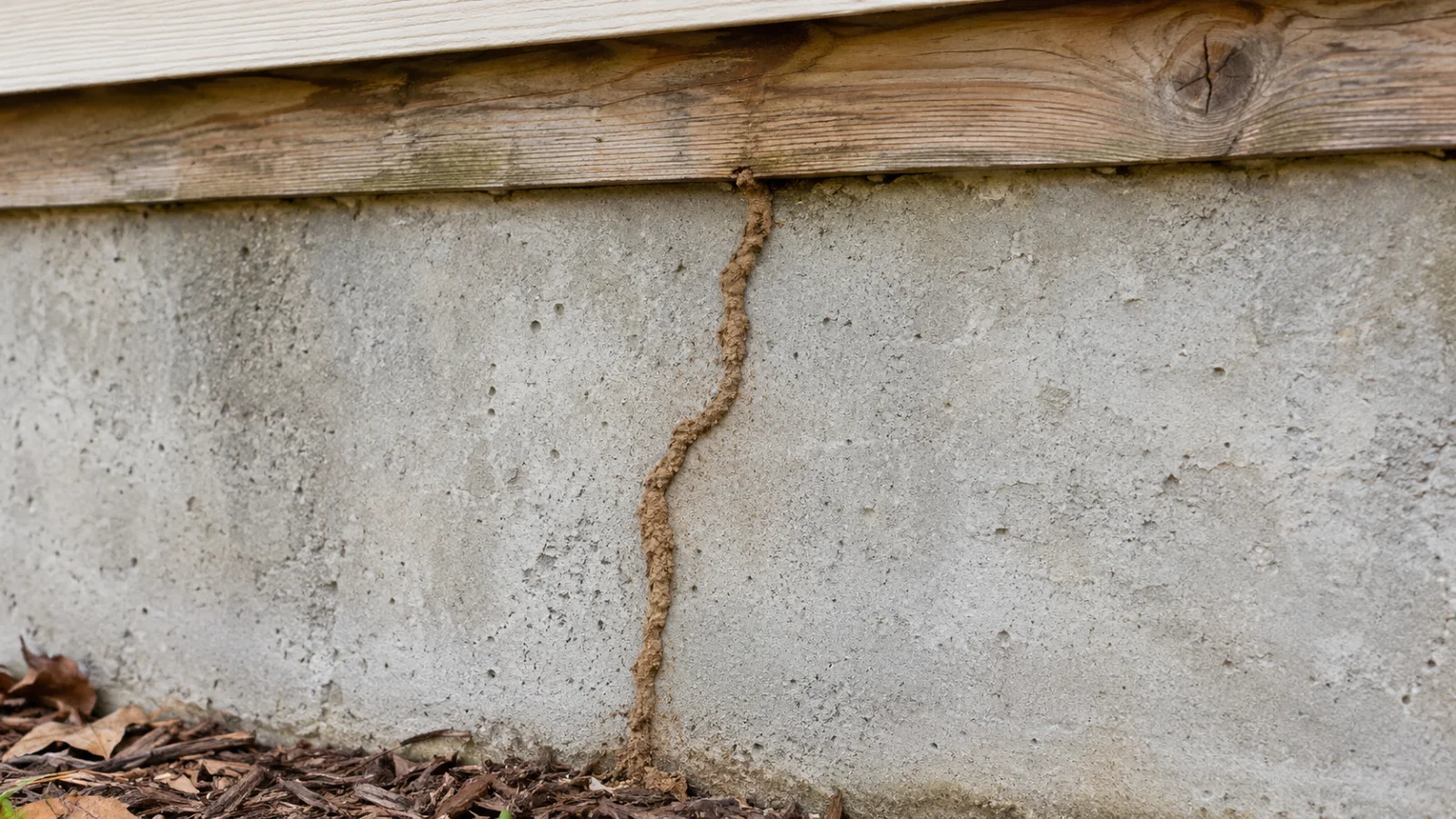
Before comparing proposals, establish four things:
- Whether there is current termite activity or only evidence of previous damage.
- Which kind of termite is involved and which parts of the building are affected or at risk.
- Whether the proposal covers the entire structure, selected areas, or preventive protection only.
- What follow-up inspections, additional treatments, and ongoing maintenance are included.
If you have not yet established where the problem is, a termite inspection is the appropriate starting point.
Termite treatment options compared
Use this table to narrow down the approaches that fit your situation. The details of an actual treatment plan still depend on the inspection and the approved uses of the proposed products.
| Treatment | Best suited to | Main advantage | Main limitation |
|---|---|---|---|
| Liquid soil treatment | Subterranean termites and structural protection | Relatively fast control and lasting protection in treated soil | Requires access to relevant areas around and sometimes beneath the structure |
| Bait system | Subterranean termites, including ongoing protection | Targets foraging termites with less disturbance to the foundation | Control takes time; stations require continued servicing |
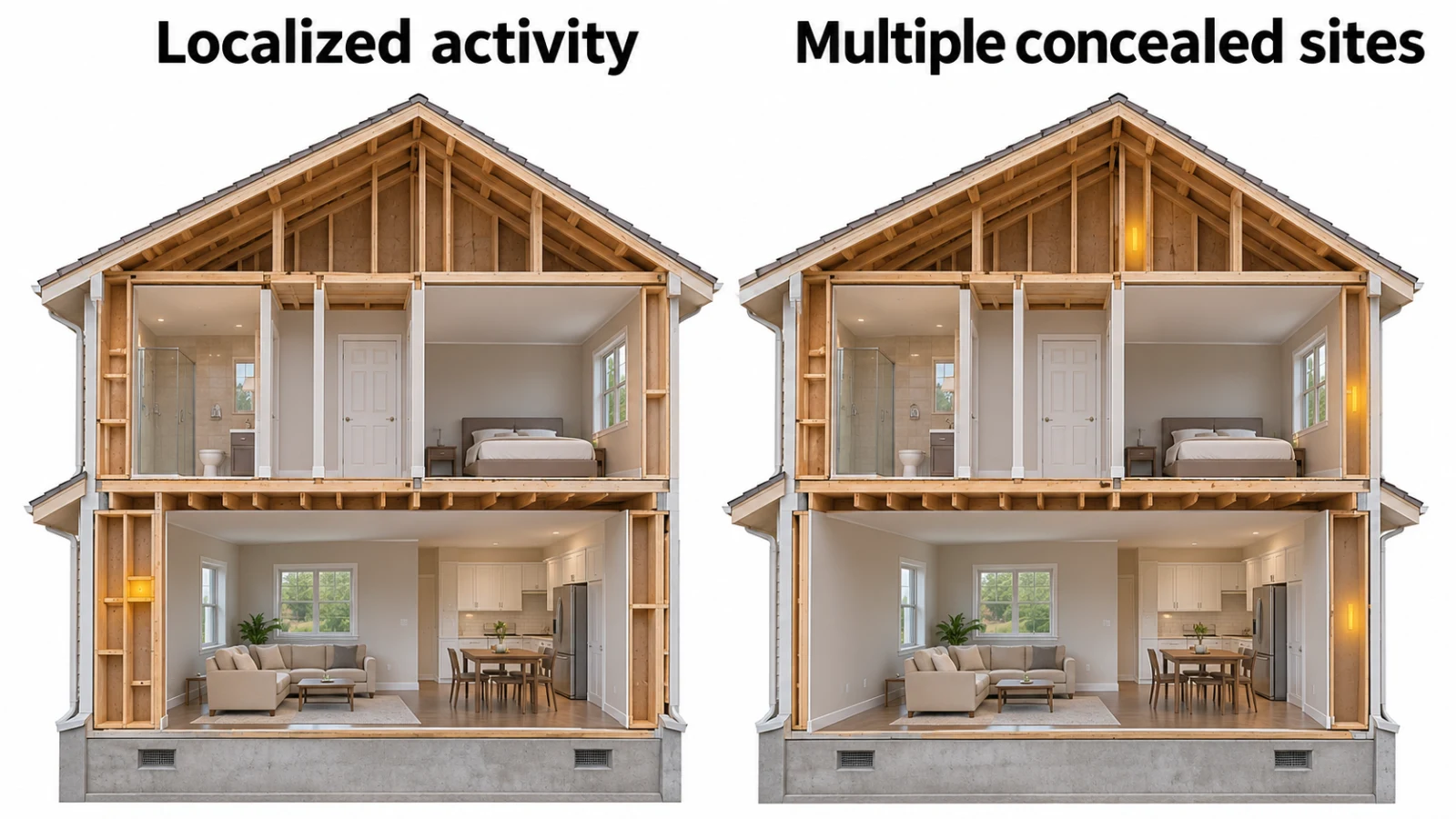
| Localized wood treatment | A well-defined infestation or supplemental treatment | Focuses treatment on affected areas | Hidden infestations beyond the treated area may remain |
| Whole-structure fumigation | Widespread or difficult-to-locate drywood termites | Reaches concealed infestations throughout the treated building | Requires evacuation and professional clearance; no residual protection |
| Professional heat treatment | Suitable drywood termite infestations | Nonchemical treatment option | Effectiveness depends on adequate heating of infested wood; no residual protection |
The trade-offs that matter most
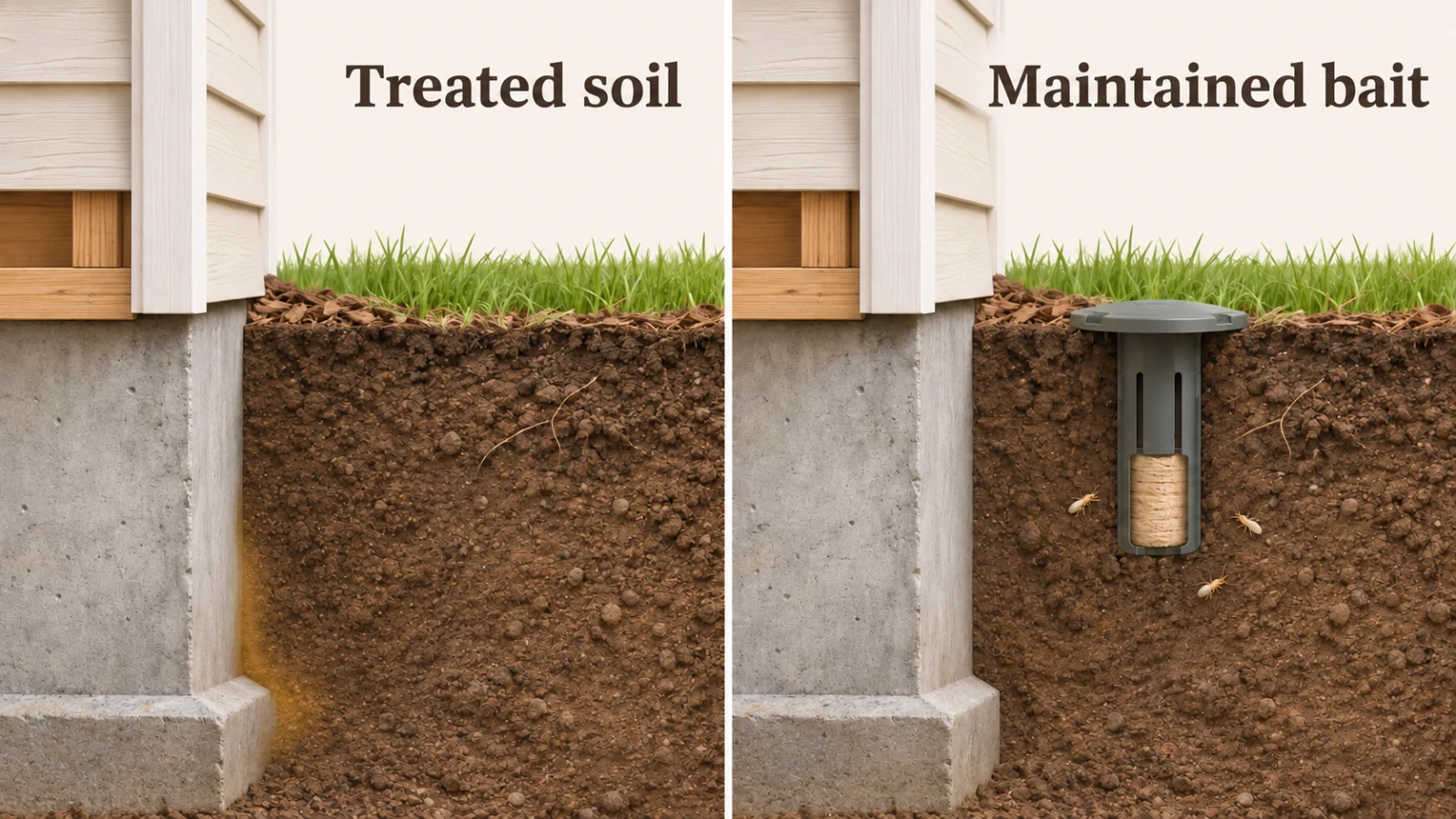
Liquid soil treatments and bait systems differ in more than installation cost. Treated soil can continue protecting a building after the initial service, whereas bait systems rely on stations remaining functional, accessible, and maintained.
A liquid treatment may involve more work around concrete or other hard surfaces. Bait stations can be less disruptive, but you need to understand how the provider will monitor termite activity and replenish or service the system. Ask what happens to the stations and your protection if you cancel the service.
Speed also matters when termites are actively feeding in structural wood. Baiting works gradually, so a professional may recommend addressing known activity directly while establishing longer-term control. The fastest treatment of visible activity is not necessarily the best long-term protection.
For drywood termites, the key trade-off is coverage. A targeted treatment causes less disruption if the infestation is confined to an accessible area. A broader treatment becomes more attractive when activity is distributed across the building or the full extent of the infestation is difficult to establish.
Safety and disruption
For pesticide treatments, request the exact product name, EPA registration number, and current label. The label must authorize the intended use, including structural termite protection where that is the objective. State rules may impose additional requirements.
Ask whether occupants or pets must leave, when they can return, and what precautions apply to your property. Nearby drinking-water wells, drainage features, and inaccessible areas deserve particular attention when a soil treatment is proposed.
Residential fumigation requires qualified professionals, evacuation, and formal clearance before reentry. Follow the instructions from the fumigation company and do not return until the building has been cleared.
Treatment scope comes first
A proposal that clearly identifies the termite type, affected areas, and protection needed gives you a better basis for choosing a method than a familiar product name.
What to Watch For
A retreatment warranty covers another treatment under its terms. Repair coverage is separate, and exclusions may leave existing or certain future damage uncovered.
Which termite treatment should you choose?
Match the treatment to the problem at your house
If an inspection confirms subterranean termites inside the structure, compare liquid treatment and bait-based programs with a qualified professional. A soil treatment may be especially practical where likely entry routes can be reached. A maintained bait system may be preferable where access or disruption makes a conventional soil treatment difficult.
If drywood termites are confined to a reliably identified area, ask whether localized treatment is sufficient. If several areas are involved or the infestation extends into inaccessible wood, discuss whether whole-structure treatment is more appropriate.
If termites have been found only in the yard, that finding alone does not establish an infestation in the house. Assess the building and any existing protection before purchasing a treatment program. Correct moisture problems and unnecessary wood-to-soil contact where practical.
Hire a qualified termite professional when there is confirmed or suspected activity in structural wood, an infestation you cannot locate or assess, or a need for structural pesticide treatment or fumigation. Verify the company’s termite-control license with the appropriate state regulatory agency. If you suspect weakened load-bearing wood, have its condition assessed by a qualified building professional as well.
When combining treatments makes sense
A combination can be worthwhile when each method addresses a distinct need. For example, treating a confirmed area of subterranean termite activity while maintaining a bait system can provide a way to address the immediate problem and continue longer-term control.
Adding two methods to the same proposal is not automatically better. Ask what the second treatment accomplishes that the first does not.
In Practice
If you already have a termite contract, contact the current provider before authorizing another company to treat the house. Existing coverage may include an inspection or retreatment.
What to check before signing a termite treatment contract
Two quotes can look similar while covering very different work. Ask each company to clarify the following points in writing:
- Inspection findings: What evidence supports the diagnosis, and which areas could not be inspected?
- Treatment scope: Which parts of the building are included? Are an attached garage, addition, or other structures covered?
- Method and safety: Why is this approach appropriate, which products are proposed, and what preparation or reentry restrictions apply?
- Monitoring: When will the company return, what will it check, and how will it respond to continued activity?
- Coverage: Does the agreement cover retreatment only, or does it also include repair of qualifying termite damage? What exclusions, limits, and homeowner obligations apply?
- Renewal and cancellation: What are the renewal charges, what services do they include, and what happens to the treatment or stations if the agreement ends?
Keep the inspection report, treatment diagram, and signed contract. If you receive substantially different recommendations, ask the companies to explain their findings before comparing prices. Our guide to termite treatment cost explains the financial side of that decision.
One more distinction matters: a product that kills termites on contact is not necessarily intended to protect a building from an infestation. Avoid relying on a general-purpose insect spray as a substitute for a properly planned structural treatment.