Explanation
Termite treatment cost: What goes into a quote?
Understand the charges behind a termite proposal, from the initial treatment and access work to annual renewals. Use a comparison worksheet to see what each quote covers and which costs still need a written answer.
Two termite quotes can cover very different work. One may include continuing service, while another lists drilling, annual fees, or wood repairs separately. To make sense of the total, you need to know what work the house needs and what the company is promising to provide.
Quick Answer
Termite treatment cost depends on the termite type, treatment area, access, method, and continuing coverage. Local advertised examples checked November 19, 2026, included treatment starting at $600 in West Metro Atlanta and an $800 minimum for soil treatment in Miami-Dade and Broward. Compare itemized local proposals, including future service fees.
What changes the treatment price
The identified termite type, such as subterranean or drywood termites, helps determine the proposed treatment and its scope. A job limited to one affected area and a plan covering the building involve different work. The quote should connect that work to the inspection findings.
Size matters, but check the measurement being priced. Foundation perimeter is measured in linear feet; treated surface area is measured in square feet. Two homes with the same floor area can have different foundation perimeters. Ask which areas and measurements the price includes.
Local price examples
These individual advertised offers illustrate different billing structures. Prices were checked November 19, 2026; each example applies to the stated location and service.
- Miami-Dade and Broward, Florida: Subterranean soil treatment starting at $7.50 per linear foot, with an $800 minimum. The advertised prices apply to homes up to 2,000 square feet; larger properties and heavy infestations require a separate quote. Annual renewal after that provider’s treatment starts at $249 per year and includes reinspection and retreatment coverage.
- Greater Boston, South Shore, and Cape Cod, Massachusetts: Treatment for an existing infestation at $10 per foot of foundation perimeter, with a $1,249 minimum. Spot drilling at steps and along the perimeter is listed separately at $7 per foot, with a $299 minimum.
- West Metro Atlanta and Cobb County, Georgia: Termite treatment starting at $600, with annual renewals starting at $160. The final quote requires measurement of the home’s foundation perimeter.
For these per-foot offers, the minimum is the floor for the base service charge, not an extra fee added to the per-foot amount. Separately priced work can still increase the total. These examples represent individual local offers; they do not establish a national average or predict the price for your home.
Construction and access affect the work
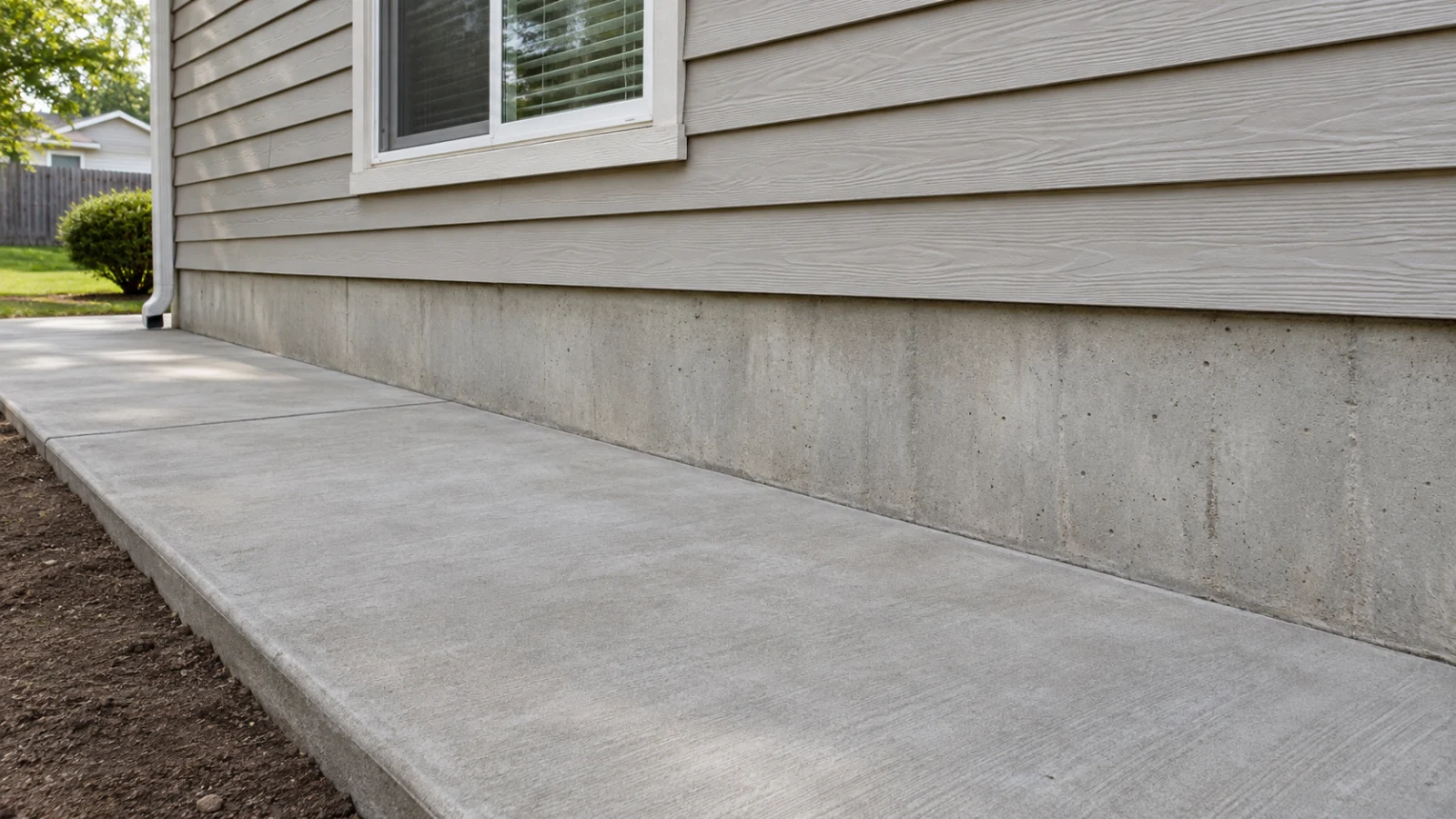
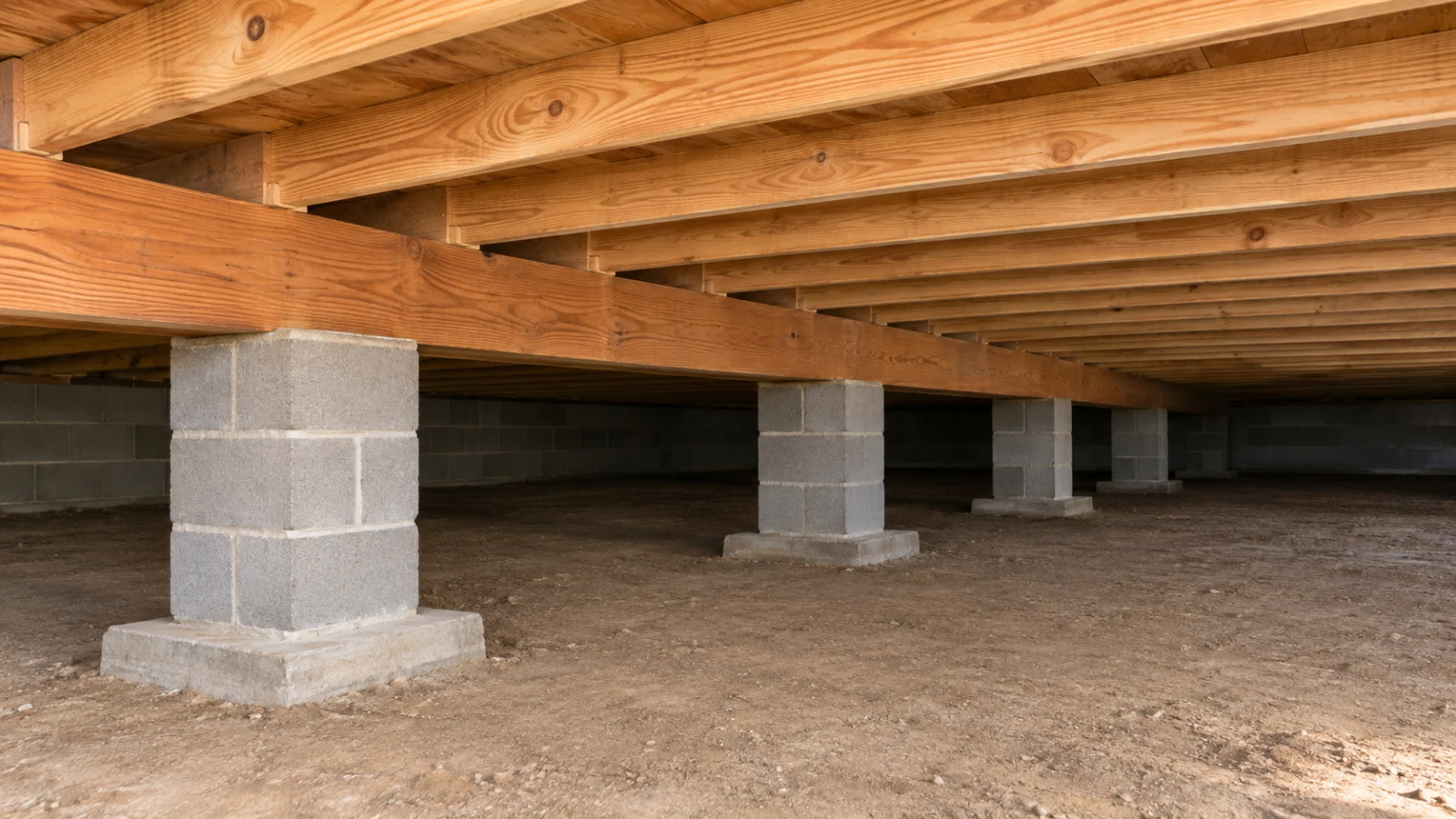
Slab, crawl space, and basement construction create different treatment conditions. Concrete beside a foundation, enclosed areas, and difficult access can change the labor involved. Ask the company to identify any drilling, access work, and patching, and show whether each is included or separately priced.
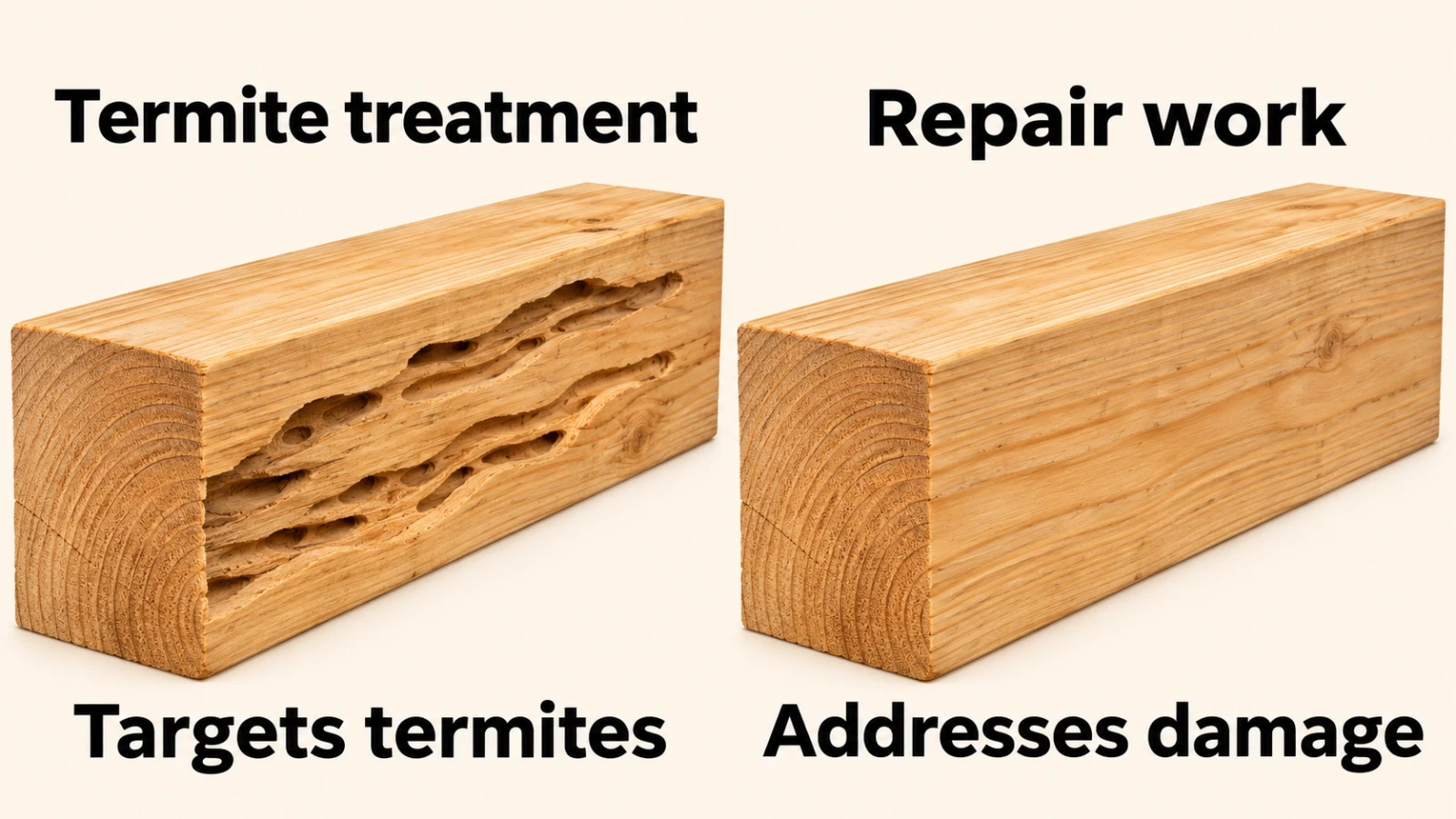
Replacing damaged wood, correcting moisture problems, or restoring finishes can involve additional work. A treatment proposal should make clear who handles those tasks and which costs remain outside the pest-control price.
The method changes what happens after installation
Different termite treatment options also involve different follow-up services. A bait system needs continuing inspection and maintenance; another proposal may include an initial treatment and scheduled checks under a service agreement. Compare the actual visits, maintenance, and response to renewed activity listed in each proposal.
Inspection fees, treatment, and warranty coverage
An inspection evaluates the property; a treatment proposal describes the work and its price. A visit to prepare an estimate may be free, while an inspection with a written report may carry a fee. Confirm what you will receive when you book.
Ask about the termite inspection cost, report fee, any additional investigation, and whether a paid inspection will be credited toward treatment. If you need a report for a property transaction, say so when booking. The termite inspection process explains what an inspection can cover and where its limits lie.
Prevention and active treatment need different descriptions
Check whether the proposal addresses documented termite activity or provides preventive service. Those jobs can have different prices and eligibility conditions. If the property has an earlier treatment or an existing agreement, give each estimator the records so the new proposal accounts for them.
Read the promise behind the warranty
A retreatment-only warranty provides additional treatment under its terms; it does not cover damage repairs. Damage-repair coverage is a separate commitment. Check whether the agreement includes retreatment, repairs, both, or neither, along with the covered termite types, structures, and dates.
For repair coverage, read the exclusions for pre-existing damage, any payment limits, and the conditions you must meet. Access, maintenance, and timely renewal can matter. The word “warranty” by itself leaves too much unanswered to explain a price difference.
Good to Know
An annual renewal fee keeps the services and coverage described in the agreement in force. It does not automatically buy a complete treatment every year. Ask which visits and maintenance are scheduled, and which additional work depends on termites being found.
How to compare itemized termite quotes
Give each company the same property information and ask for a written, itemized proposal. If the plans differ, ask which finding explains the different scope. A lower total becomes meaningful once you know whether the same structures, areas, follow-up visits, and warranty commitments are covered.
Compare costs over the same period. Include the initial work, separately billed inspection or access charges, and the renewals or service fees due during that period. Check whether the first year’s service is already included so you do not count it twice. Leave unquoted future charges marked as unknown instead of assuming they will stay unchanged.
For continuing service, ask when renewal is due, whether its price can change, and what happens if you cancel or let the agreement lapse. If a bait system is involved, ask what happens to the stations and their maintenance. A long warranty term is only useful when you understand the payments and conditions that keep it active.
Before hiring, verify the company’s license for termite work with your state pesticide or structural pest-control agency. If the proposed service requires you to leave the home, get and follow the applicator’s written preparation and product-specific reentry instructions. Account for any lodging or pet-care costs separately.
What to Watch For
“Whole-house coverage” and “treated areas only” can describe very different commitments. Ask for the covered structures and areas to be identified in writing, including any exclusions. A verbal promise of broad protection is not a substitute for the agreement you will sign.
Use this worksheet beside each proposal. Record the company’s answer and quoted amount for every relevant row; a missing answer is a point to clarify before comparing totals.
| Quote item | What to record | Why it changes the comparison |
|---|---|---|
| Inspection and report | Visit or report fee; any treatment credit; extra investigation | Separates assessment costs from the treatment charge. |
| Termites and treatment scope | Identified termite type; active treatment or prevention; structures and areas included | Shows whether the proposals address the same problem and property. |
| Method and measurements | Proposed method; linear feet, treated area, or other pricing basis; minimum charge | Makes the basis of the initial price clear. |
| Access and restoration | Drilling, access work, patching, and who performs any separate repairs | Reveals work that may sit outside the base price. |
| Initial payment and service | Total due, payment schedule, and visits or maintenance included in that amount | Prevents an installation price from being mistaken for the full service cost. |
| Renewals and monitoring | Frequency, due date, current fee, possible changes, and cancellation terms | Makes continuing costs and service obligations visible. |
| Warranty and exclusions | Retreatment or repair coverage; limits; excluded areas or damage; owner responsibilities | Shows what the company commits to do if a covered problem occurs. |
Choose a quote you can explain
A useful termite quote tells you what is being treated, what you pay now, what continued service costs, and what the company will do if a covered problem returns. Once those answers are clear, you can judge the price against the work and protection you actually need.