How-To
How to use Mosquito Bits for fungus gnats
Learn how to prepare Mosquito Bits for fungus-gnat larvae, apply the treated water to potting mix, and check progress without overwatering your plants.
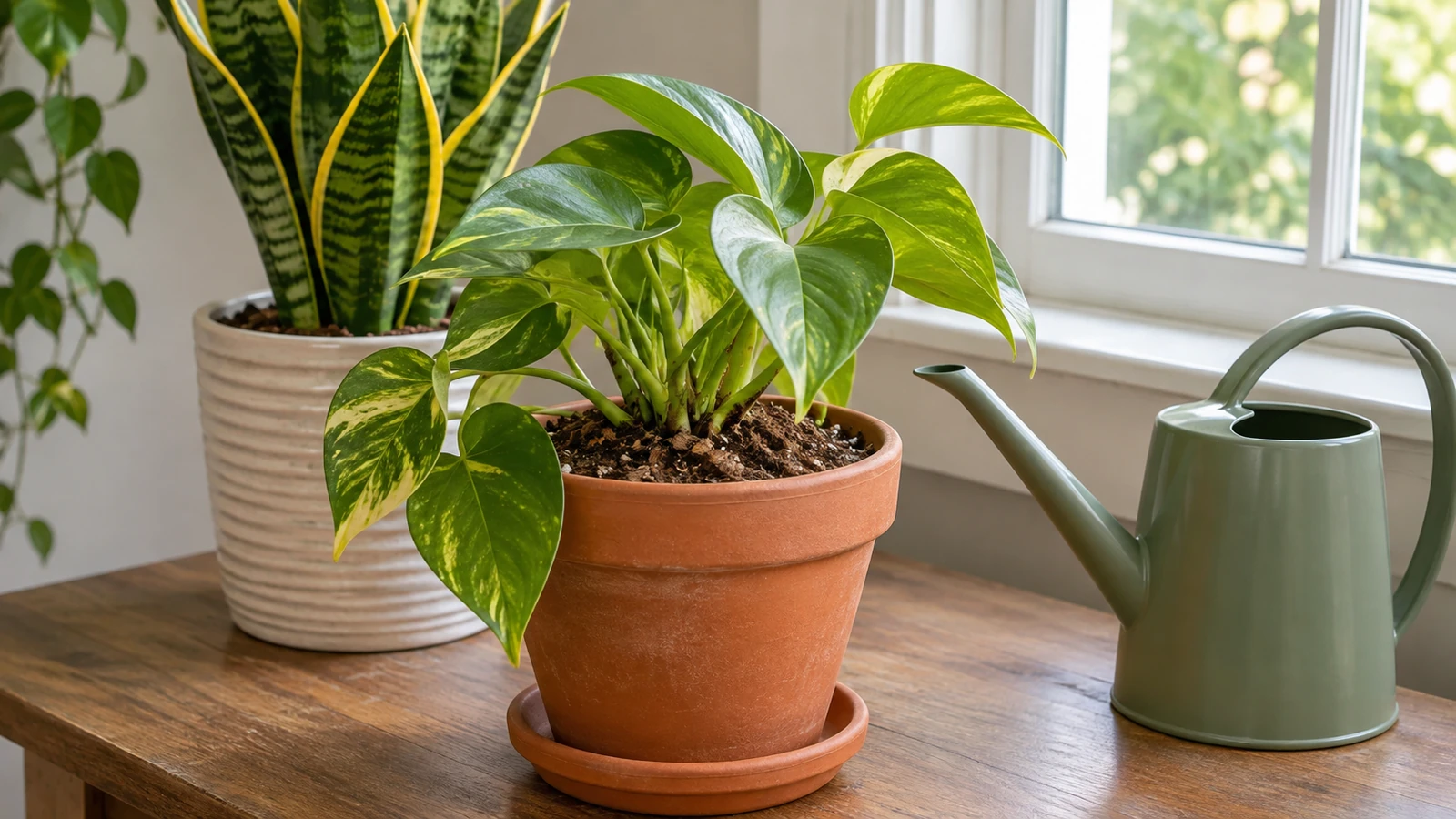
The flies around your houseplants are easy to see. Mosquito Bits contains Bti, a bacterial insecticide that targets feeding larvae in the potting mix. Getting the prepared water to that growing medium matters more than chasing the adults around the room.
This method is for an identified fungus-gnat problem in potted plants. It uses the water preparation described on the U.S. Mosquito Bits label, with checks for the product, the application site, and the plant’s watering needs.
- Time Required: A 30-minute soak, plus time to measure and apply the water.
- Difficulty: Measuring, mixing, and watering; no specialist equipment.
- Equipment: Mosquito Bits labeled for the intended fungus-gnat use, water, a tablespoon measure, a mixing or watering container, and a tool for skimming out granules. Keep measuring and mixing equipment separate from food use.
Check the product and the pots before mixing
Start with the pots you have identified as breeding sources. If the insects or their source are still uncertain, use our guide to identifying fungus gnats and finding the source first. Flies near a window alone are not a reason to treat every plant.
Check that your package is Mosquito Bits, EPA Reg. No. 6218-86, and read its fungus-gnat directions and precautions. You can consult the Mosquito Bits label, but the instructions on the package you are using govern the application. Confirm that they cover your plant-growing medium and location. Do not transfer this recipe to Mosquito Dunks, a spray with a similar name, or another Bti formulation.
Check that you can reach the soil surface and that the pot drains properly. Keep children and pets away from the measuring area. Avoid raising or breathing dust and getting the product on skin, in eyes, or on clothing. Wash thoroughly with soap and water after handling.
Before You Start
In New York, the label restricts use to contained water with no outflow to the natural environment. Before using this soil-watering method there, clarify the permitted use with the manufacturer or your local Cooperative Extension.
Prepare the water and apply it to the soil
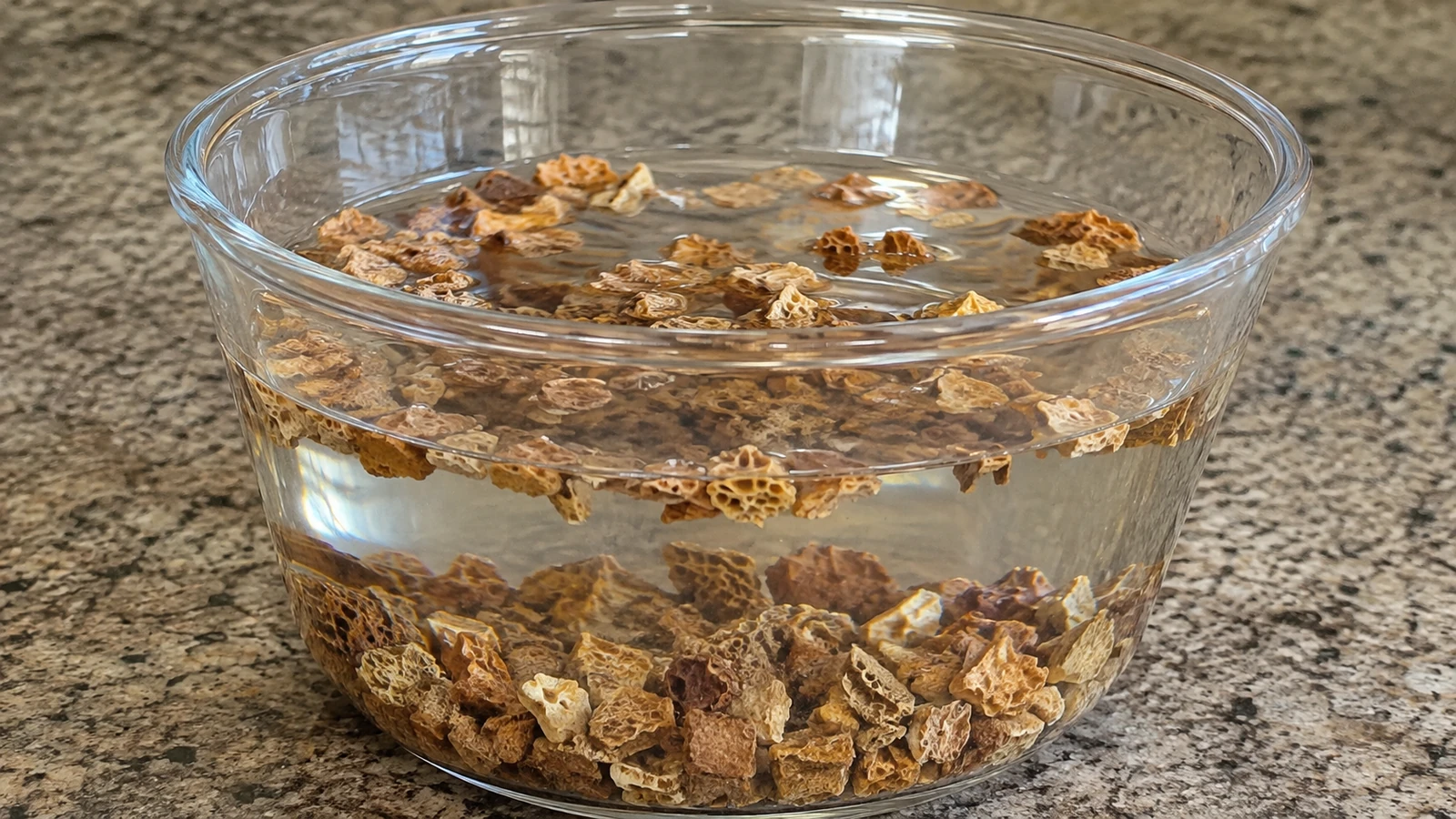
The coarse granules release Bti into the water while the carrier material stays visible. This method removes the used granules before the water reaches the pot.
1. Measure the granules and let them soak
Mix 4 tablespoons of Mosquito Bits with 1 U.S. gallon of water and let them soak for 30 minutes. For a smaller batch at the same concentration, use 1 tablespoon per U.S. quart.
Use the fungus-gnat instructions on the package. The surface-area rates for mosquito treatment in standing water do not tell you how much to use in a houseplant pot.
2. Remove the granules and water the growing medium
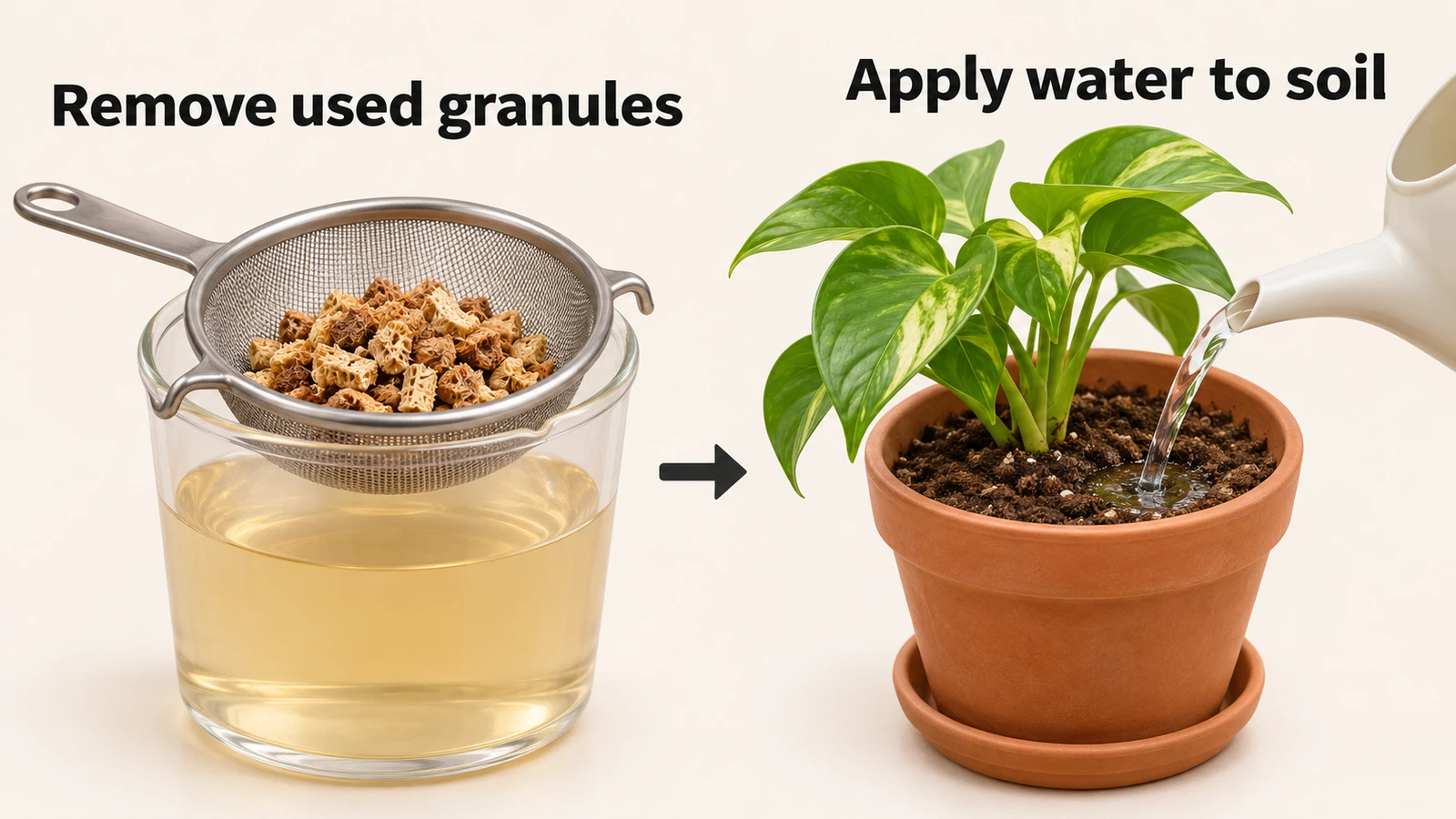
Skim off the floating granules, then stir or shake the water. Apply the prepared water directly to the soil surface, using enough to wet that surface. A gallon is the batch size, not the amount for each pot.
Discard the used granules in the trash or compost them as the label allows. Do not keep topping up the same spent granules as if they were a fresh measured batch.
3. Repeat the labeled treatment course
Repeat the treatment weekly for three weeks. Prepare each application with newly measured granules and follow the same labeled method.
Count the treatment water as part of the plant’s watering. The schedule is not a reason to leave a pot saturated or to add extra applications between the labeled intervals.
Keep watering from working against you
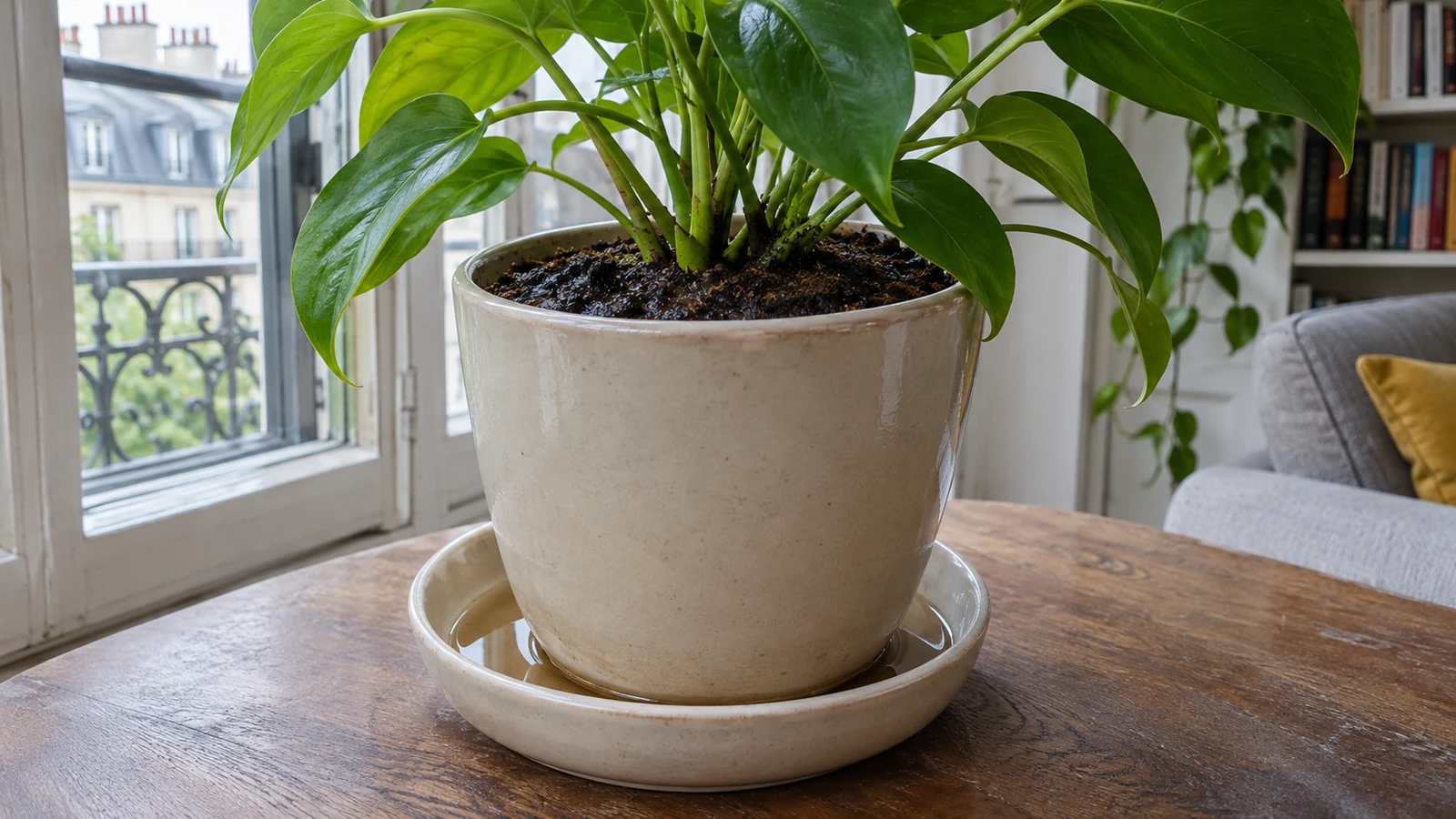
Water left standing in a saucer or outer pot is a reason to check drainage. A larval treatment will not correct a waterlogged growing medium. If the mix remains saturated when the next application is due, address that problem before adding more water.
Keep the application on the soil surface. Pouring only into the saucer, spraying the leaves, or misting the air changes the method described here.
Use only the labeled product and water in the mixture. Do not add other treatments or increase the concentration because flies are still visible.
Look for a trend across the treatment course
Yellow sticky traps for fungus gnats can help you follow adult activity while the soil treatment targets larvae. Compare new catches over similar periods. Old insects remain stuck, so the total on an unchanged card is not a measure of today’s activity.
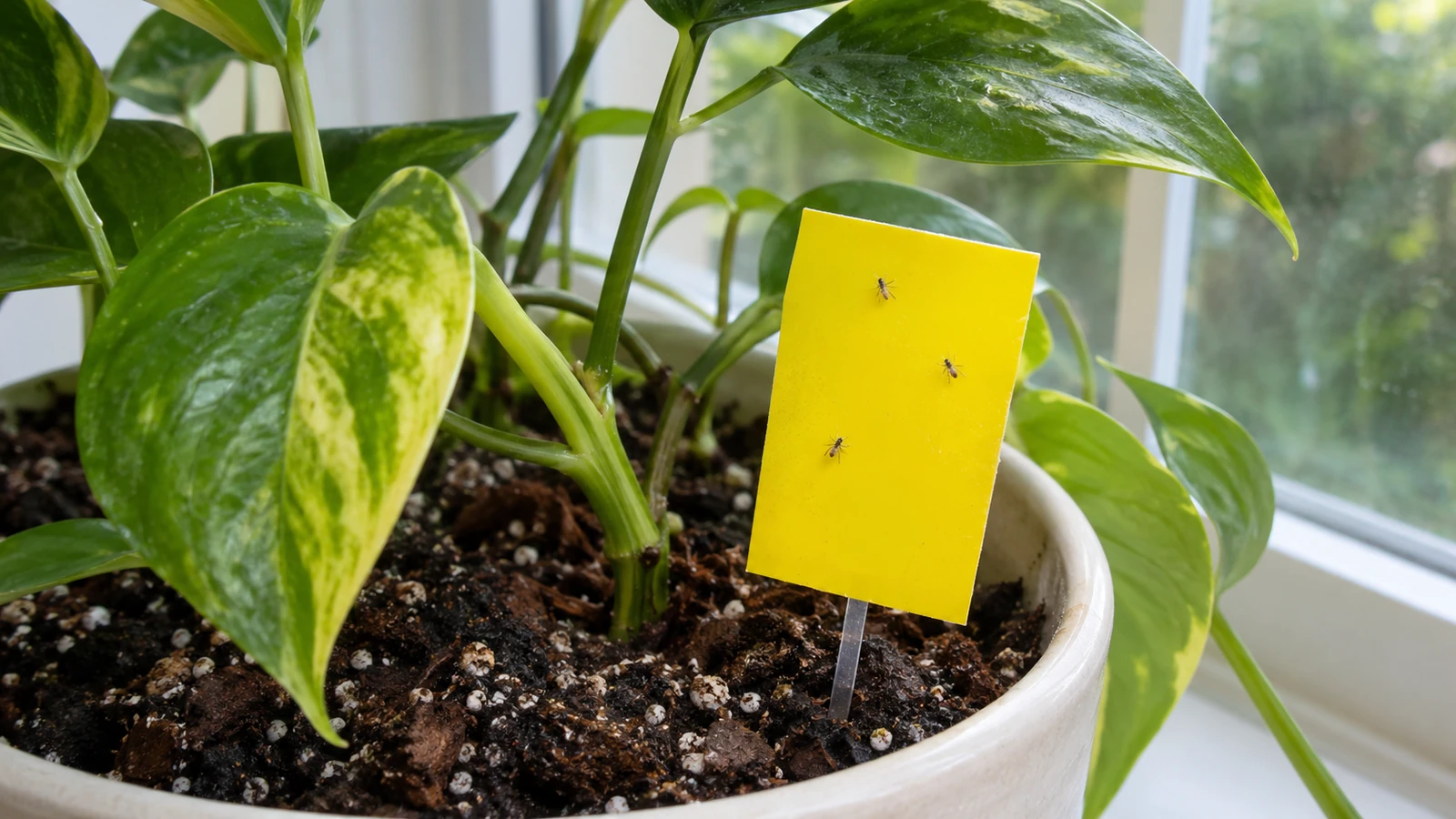
Bti does not control fungus-gnat eggs, pupae, or adults. Adults already present can remain visible, and pupae in the mix can still produce new adults. Seeing flies soon after an application does not, by itself, mean the treatment failed.
Look for fewer newly appearing adults around the treated pots and fewer larvae where you previously found them. Assess that trend through the labeled course rather than expecting a fly-free room the next day. If activity is unchanged or increasing at the end of the course, review the source and application before repeating it.
Recheck the source if activity continues
Check whether the prepared water actually reached the growing medium in each affected pot. Then look at nearby plants: treating one container leaves other breeding sources untouched. Return to identification if the insects appear mainly around a sink or food rather than the plants.
If the application was correct but the problem continues, use a broader fungus gnat control plan that addresses the growing conditions as well as the larvae. Keep watering suited to the plant and investigate poor drainage or declining plant health instead of repeatedly increasing the treatment.
If you cannot fit the labeled applications around a plant that needs infrequent watering, get plant-specific guidance from your local Cooperative Extension. Do not use a stronger mixture or apply it more often to compensate.
Keep checking after the treatment ends
If fungus gnats reappear, the label allows another treatment course. Check the source first, including recently added plants, rather than automatically treating the whole collection again.
Store unused granules in their tightly closed original package in a cool, dry place, away from sunlight and food. Keep the product out of children’s reach. Follow the package’s disposal instructions for unused material; do not pour it into an indoor or outdoor drain.