Identification
How to identify a European hornet and understand its behavior
European hornets have distinctive markings, may visit lights at night, and usually nest out of sight. Learn which clues help identify them, how their activity changes through the year, and when a sighting calls for extra caution.
A large wasp repeatedly bumping against your window after dark can be an alarming sight. In much of the eastern United States, a European hornet is a plausible explanation. What matters is whether the insect is simply visiting a light or whether there is evidence of a colony near an area people use.
The European hornet (Vespa crabro) was introduced into North America in the 1800s and is now established across much of the eastern United States.
What does a European hornet look like?
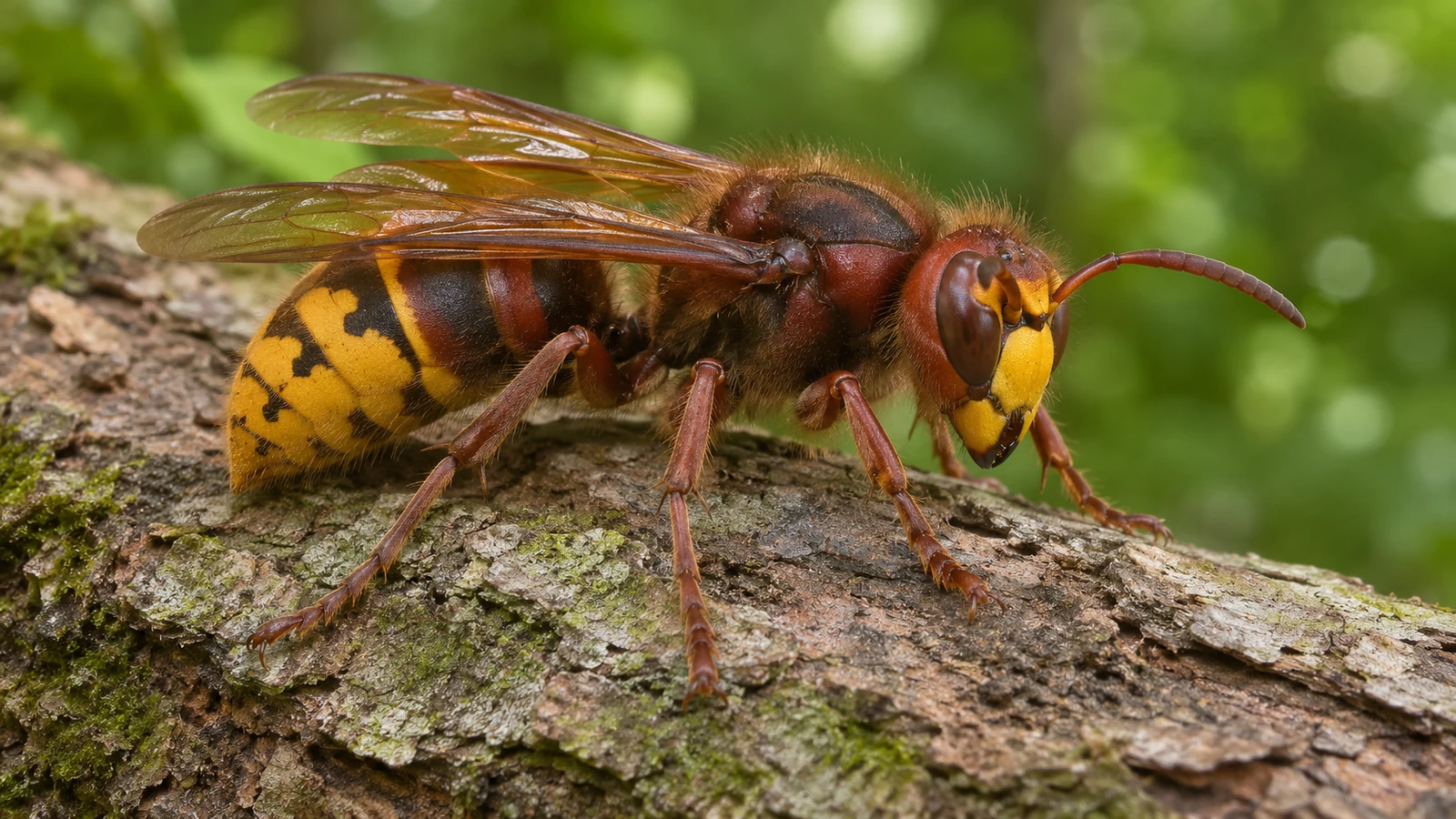
European hornets have a sturdy body, a reddish-brown head with a yellow face, and a thorax with dark and reddish-brown areas. The front of the abdomen is dark, while the remaining segments are predominantly yellow with dark markings that often resemble teardrops.
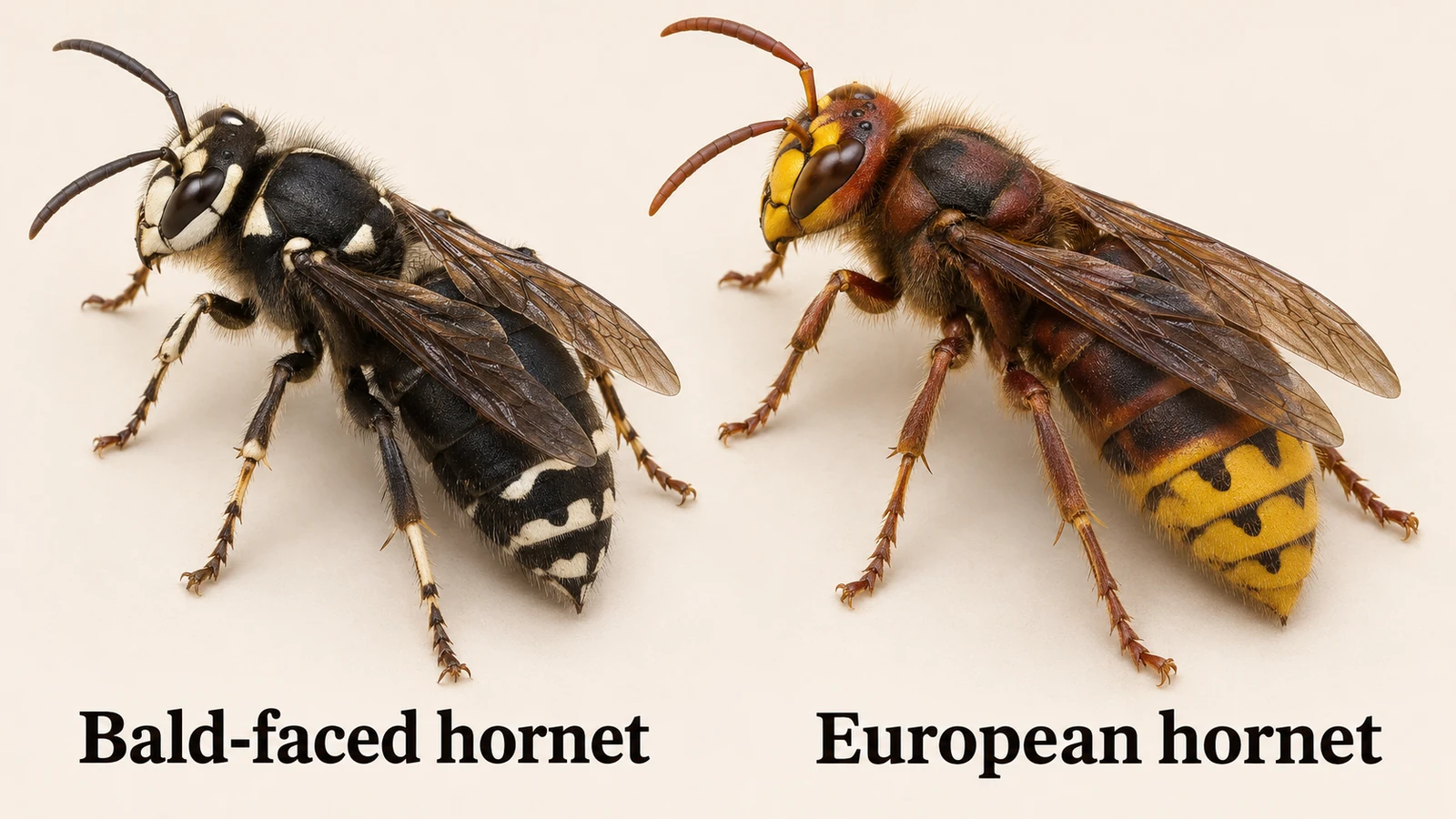
Identification in 30 Seconds
- Look for a yellow face framed by reddish-brown coloration.
- Check for a mostly yellow abdomen with dark, irregular markings toward the rear.
- Workers can reach about 1 inch long; queens may reach about 1.4 inches.
- Activity around outdoor lights after dark is a useful supporting clue.
Queens are larger than workers and may be particularly noticeable when they emerge in spring. The coloration and markings vary between individuals, so a larger insect is not automatically a different species.
What can you observe without getting closer?
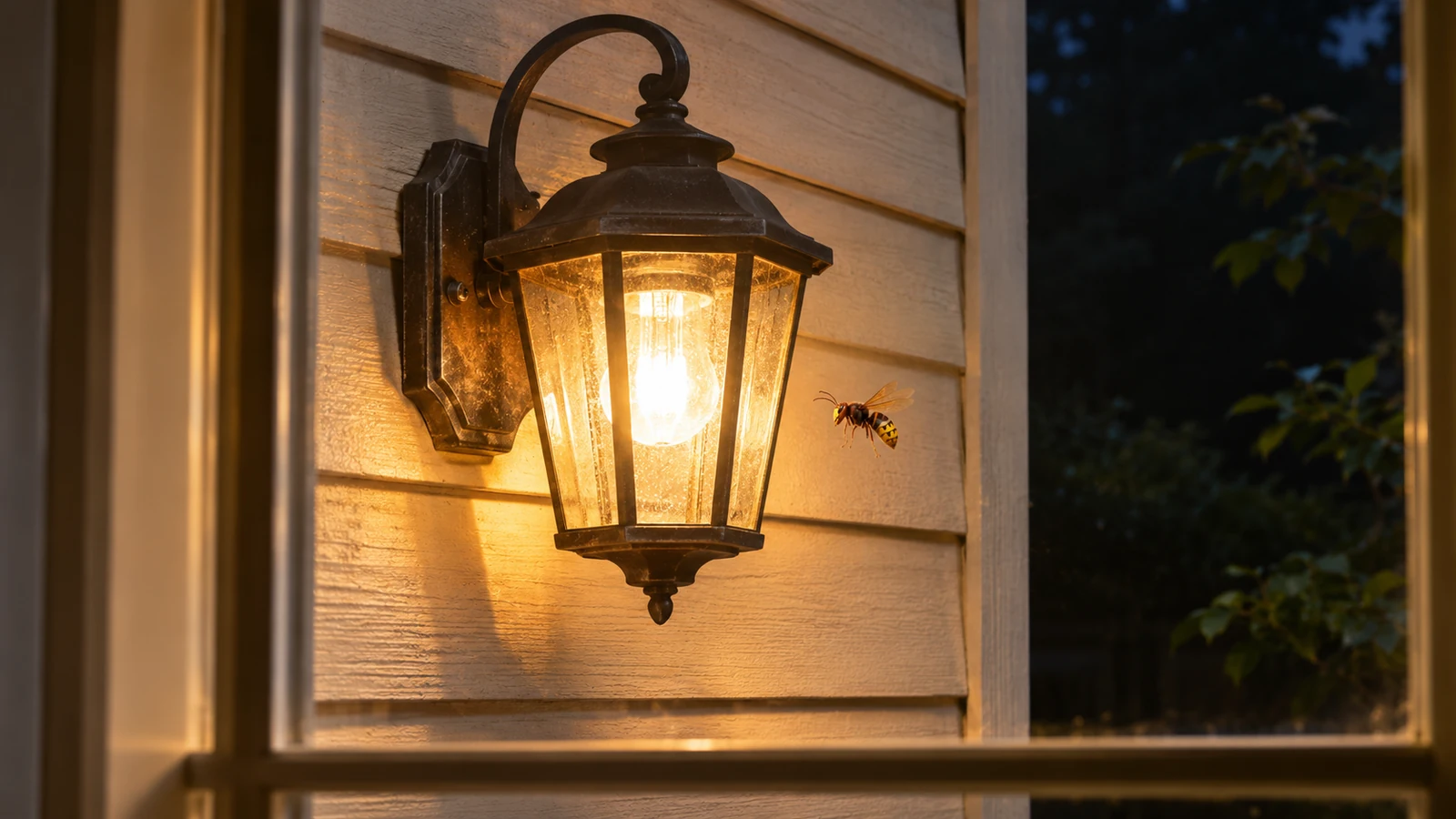
If you already have a clear view from indoors or another protected position, look at the hornet’s body and note what it is doing. Use an existing photograph or your camera’s zoom rather than moving toward the insect.
European hornets forage during daylight and can remain active after dark. They may circle porch lights, strike illuminated windows, or hunt insects attracted to lighting. Several hornets visiting the same light may be coming from a colony somewhere in the surrounding area.
From a protected position, you may also notice hornets visiting fallen fruit or feeding on sap from damaged bark. Do not approach a tree, shrub, or building opening to investigate where they are coming from.
Identification Mistakes
- Identifying a giant-looking wasp solely by its size.
- Treating every hornet at a window as evidence of a nest inside the house.
Key Clue
The combination of a rusty-colored head, yellow face, and yellow abdomen with dark teardrop-like markings is more useful for identifying a European hornet than any single color.
What to Watch For
Repeated arrivals and departures at one cavity suggest a possible colony. Keep clear of the opening rather than trying to see what is inside.
How to distinguish European hornets from similar wasps
Bald-faced hornets and yellowjackets
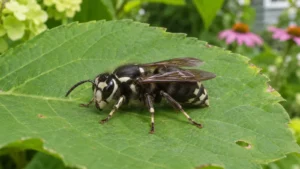
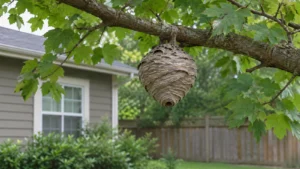
Bald-faced hornets are predominantly black with ivory or white markings, including on the face. They commonly build exposed enclosed paper nests, whereas European hornets generally use sheltered cavities. Read our guide to bald-faced hornets if the insect looks black and white rather than rusty brown and yellow.
Many common yellowjackets are smaller, with more sharply contrasting black and yellow markings. Some larger queens are easily confused with hornets, so use the overall body pattern and context rather than size alone.
Cicada killer wasps
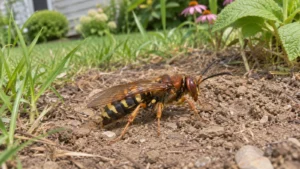
The eastern cicada killer is another large wasp that can resemble a European hornet. Its abdomen is mostly dark, interrupted by yellow bands or patches. Cicada killers are solitary ground-nesting wasps, and activity over bare soil may be a helpful clue. See our cicada killer wasp guide for that specific identification question.
Invasive hornets
The northern giant hornet (Vespa mandarinia) has a much more uniformly yellow-orange head and more regular dark abdominal bands. U.S. authorities declared it eradicated in December 2024, and Washington reported no new confirmed sightings as of November 2026. A large hornet seen in the eastern United States should not automatically be identified as that species.
The yellow-legged hornet (Vespa velutina) is a separate invasive species with a predominantly dark body and distinctive pale yellow leg tips. Federal authorities reported detections in Georgia, South Carolina, and North Carolina in 2026. If you suspect an invasive hornet, send an existing photograph and location to your state agriculture department. Do not attempt to capture it.
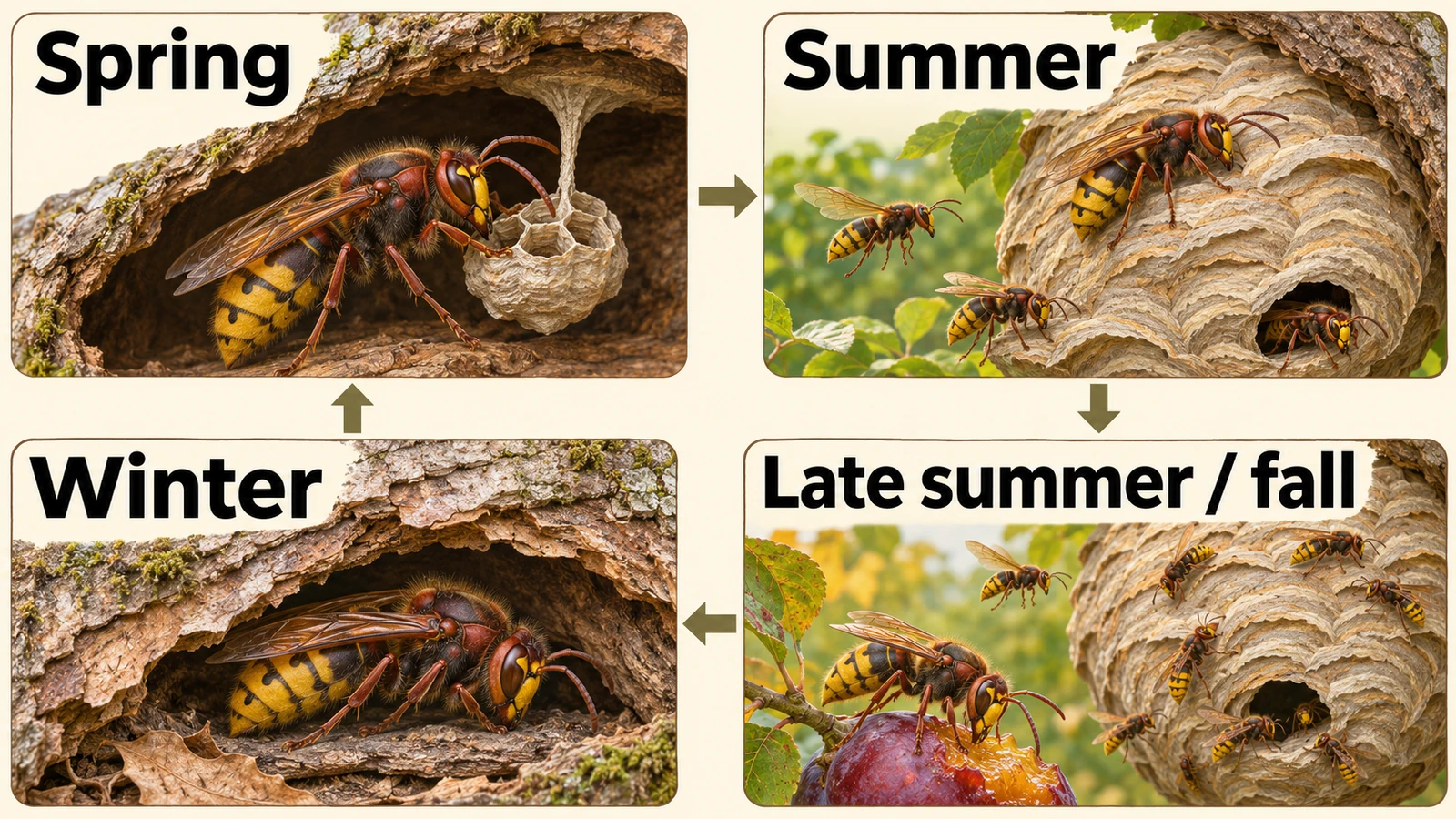
What the season and nest location tell you
A fertilized European hornet queen survives winter in a sheltered place and starts a new colony in spring. Workers take over foraging as the colony grows through summer. Encounters often become more noticeable in late summer and early fall, when colonies are larger and workers seek food, including fruit and tree sap.
The paper nest is usually concealed in a tree hollow or another protected cavity, such as a space within a building wall or an outbuilding. You may see only the opening used by the workers, not the nest itself.
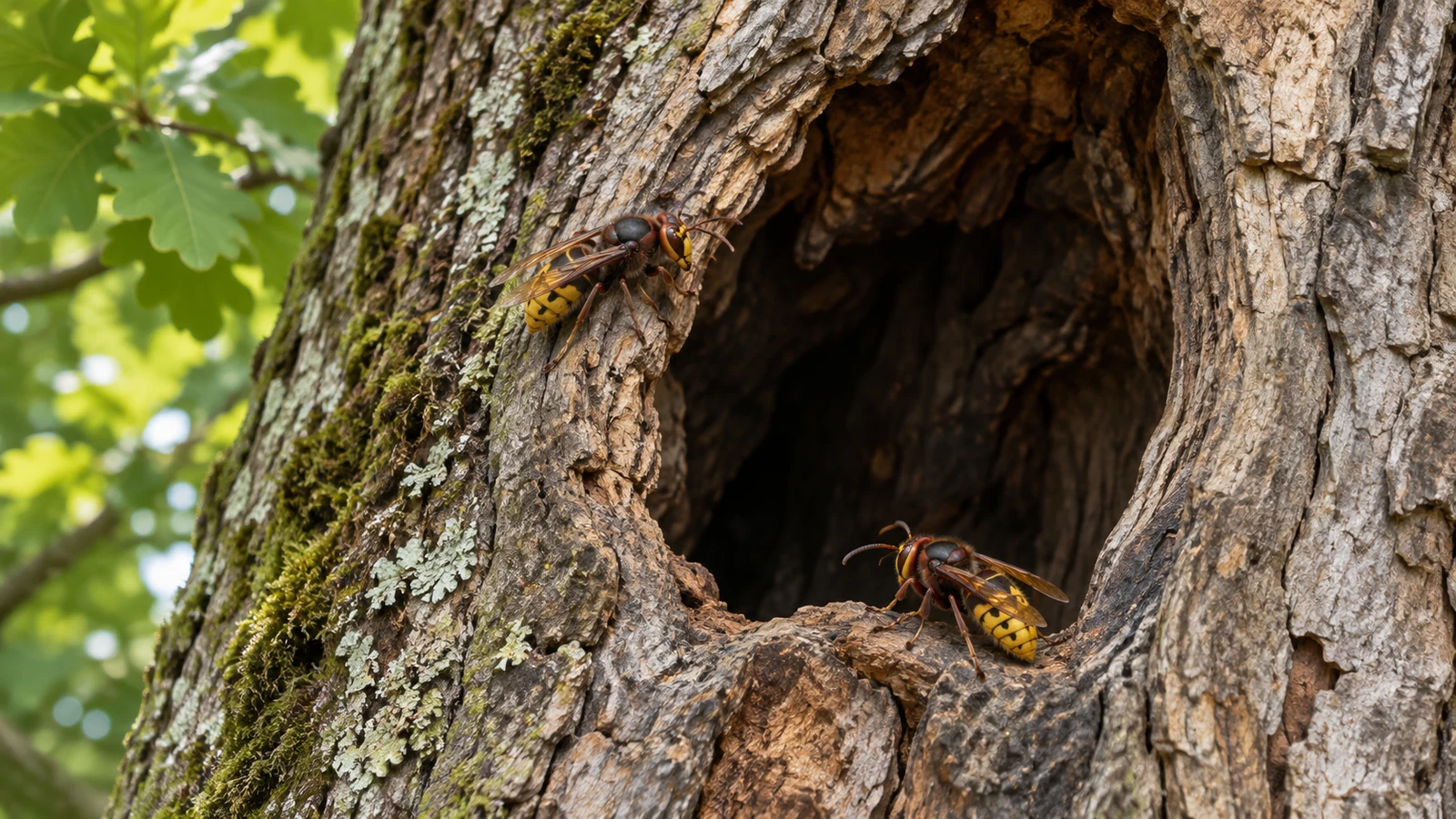
A lone hornet in spring, a group around fallen fruit in late summer, and repeated traffic into a wall opening are different situations. The last is the strongest reason to suspect a colony at that location. A single sighting cannot establish how large or close a nest is.
In fall, the colony declines and eventually dies out, while newly fertilized queens find places to overwinter. Timing varies with local weather. An isolated hornet indoors in early spring can be an overwintered queen, rather than evidence of an active colony in the building.