Explanation
How long do fruit flies live?
Understand the lifespan and development of common household fruit flies, and why their presence can continue even after you remove the original food source.
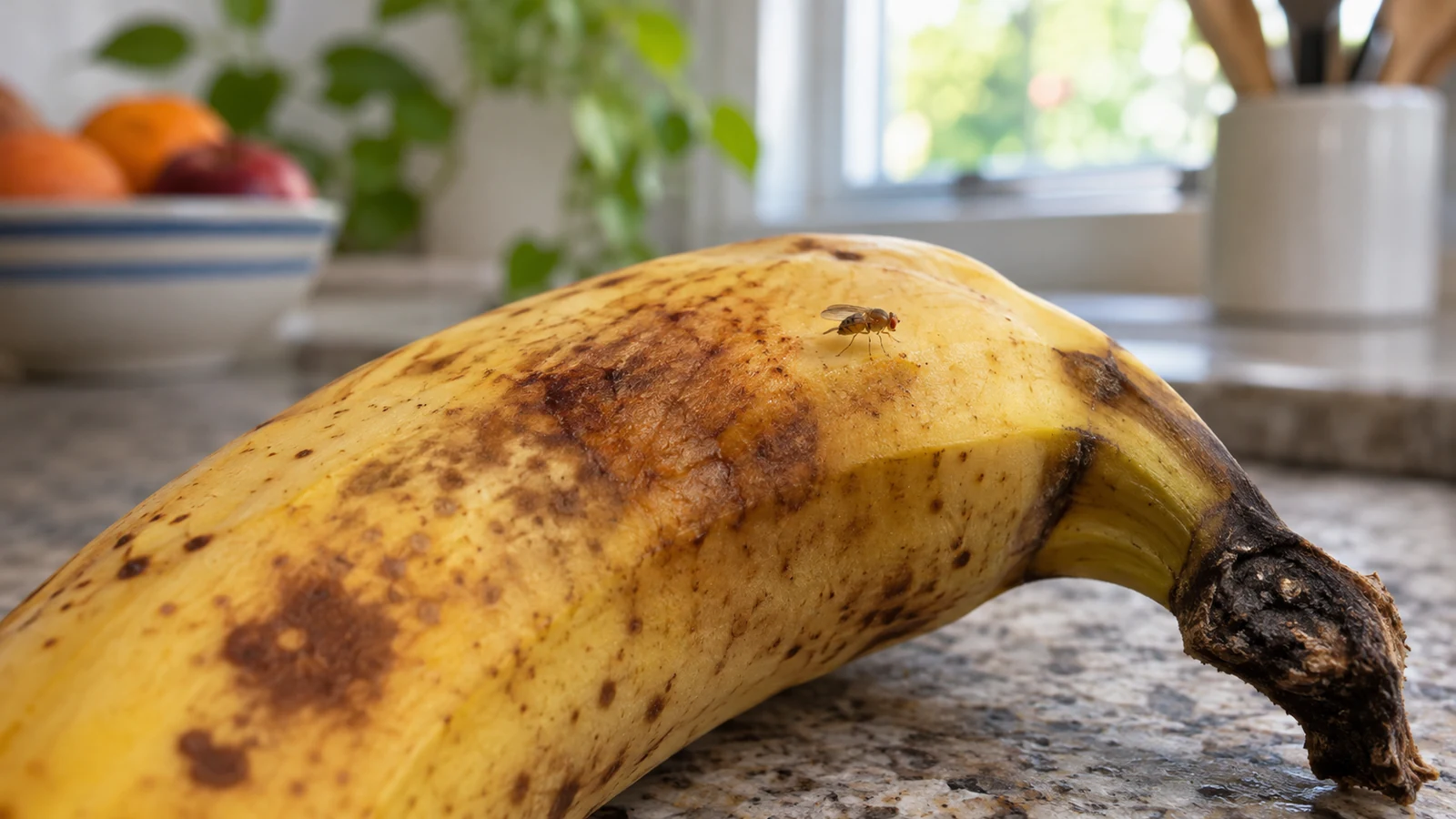
You throw away the overripe bananas, wipe down the counter and catch a dozen fruit flies. A few days later, more turn up. Are these the same flies you saw before, or is a new generation emerging?
The answer depends on which stage of the fruit fly’s life you’re dealing with.
Quick Answer
Adult household fruit flies typically live for about a month. Before reaching adulthood, they develop from eggs in roughly 8 to 10 days under favorable conditions around 77°F (25°C). New generations can appear while older adults are still alive, allowing an infestation to continue far longer than any individual fly’s lifespan.
The fruit fly life cycle: from egg to adult
Common household fruit flies, including Drosophila melanogaster, develop through four stages: egg, larva, pupa and adult. The first three account for the time before a fly starts flying around your kitchen.
Females lay eggs on fermenting food or moist organic residue. The larvae that hatch feed on microorganisms growing in that material. When fully grown, they move to a suitable spot to pupate, where their bodies transform into adult flies.
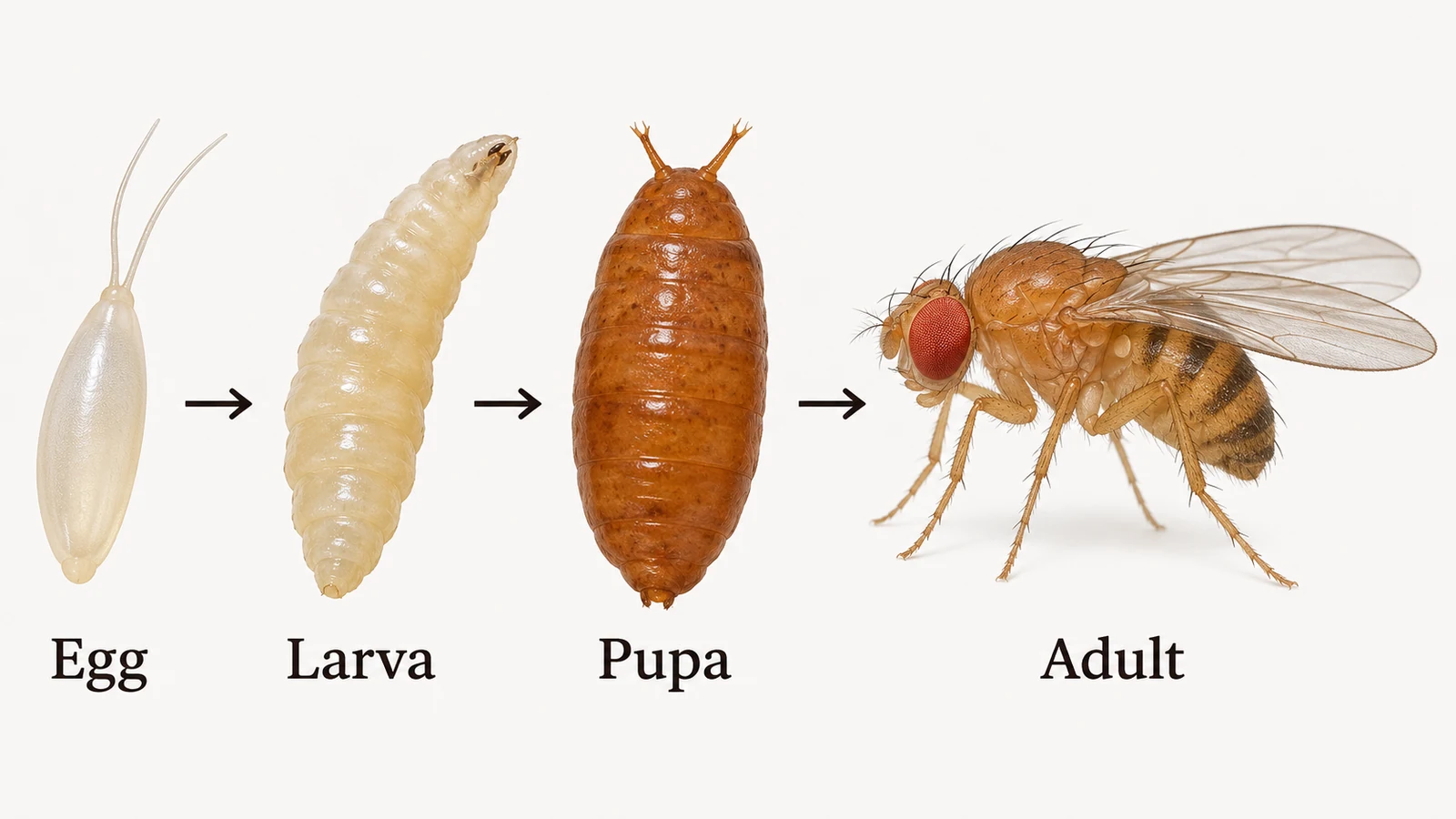
The adults then emerge from their pupal cases. They can reproduce soon after reaching adulthood, so a single breeding site can support multiple generations within a month.
The important distinction is that a fruit fly’s adult lifespan begins when it emerges from the pupal case. The time spent developing as an egg, larva and pupa comes before that. An adult lifespan of around a month is not the same as a month from egg to death.
What affects how long fruit flies live?

Temperature has a particularly strong effect on development. Around 77°F, fruit flies can reach adulthood in 8 to 10 days. At about 64°F (18°C), the same process can take 18 to 20 days.
Food and moisture matter too. A little fermenting juice left in a recycling container can provide enough material for larvae to develop, even when there is no fruit left on the counter.
Warmer conditions within a suitable temperature range generally speed up development. That does not necessarily mean that adults live longer in a warmer room. Adult survival and the speed of immature development respond differently to temperature.
Adult lifespan also varies with the species, diet, access to water and other environmental conditions. Fruit flies raised in laboratories can survive longer under carefully controlled conditions than flies exposed to the changing conditions of a home. There is no single exact lifespan that applies to every fly in your kitchen.
Why fruit flies keep coming back after cleaning
It is possible to find newly emerged adults after the original food source has been discarded. Larvae that had already finished feeding may have pupated on a nearby surface, where they can complete their development even after the food is gone.
This explains why an apparently successful cleanup may be followed by another small wave of flies. It also explains why catching the adults alone is rarely enough: while some flies are being caught, immature stages can continue developing elsewhere.
If you are using fruit fly traps, look at the trend in catches under similar conditions rather than expecting the traps to be empty immediately. Fewer flies over time is encouraging. If the number stays high or rises again, a remaining breeding site or newly introduced flies may be sustaining the problem.
You do not need to wait for an entire adult lifespan before taking action. Removing the material that supports larval development interrupts the production of new generations. Capturing the remaining adults can help reduce the nuisance in the meantime.

Explore this topic further:
How to get rid of fruit flies by finding their breeding source