Comparison
Fruit fly traps compared: Which option fits your kitchen?
Compare store-bought liquid traps, refillable bait traps, DIY versions, and plug-in sticky traps by placement, mess, upkeep, and what they can actually catch.
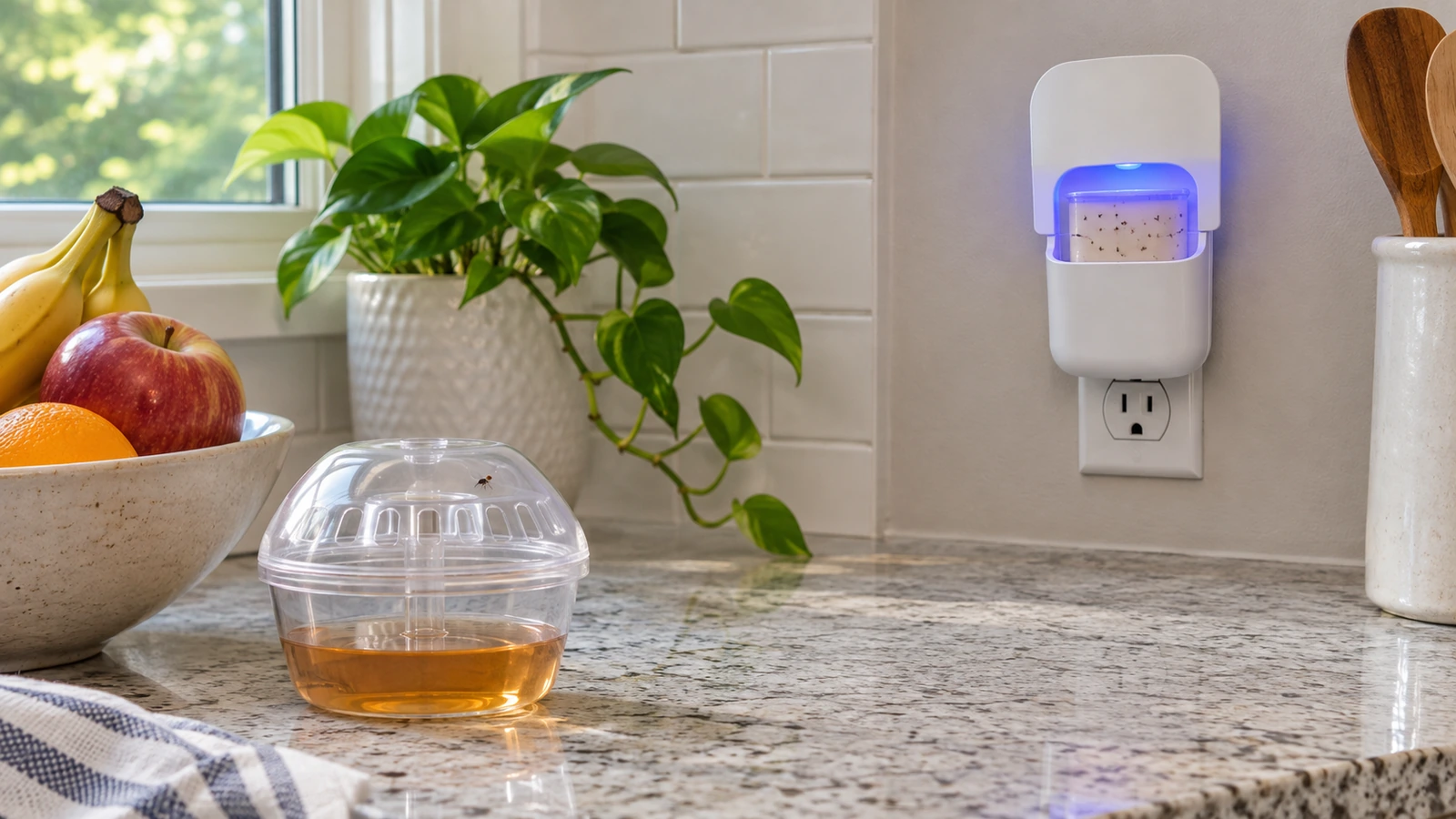
You spot tiny flies circling the recycling bin and reach for a trap. Should you buy a ready-filled container, try a vinegar trap, or plug in a sticky light? Each can catch adults, but they create different chores and suit different spaces.
Before choosing, make sure these are fruit flies. The small, often tan flies gathered around ripening fruit or fermented drinks differ from the slender flies often seen by damp potting soil and the fuzzy, mothlike flies associated with drains. If you’re unsure, use this gnats vs fruit flies comparison first.
What matters when choosing a fruit fly trap
The attractant comes first. Common household fruit flies respond to odors from fermenting material. A food-baited trap works with that behavior; a light-and-glue model uses a different attraction mechanism. Neither design should be assumed to win in every kitchen, especially when a stronger food odor is competing nearby.
The location matters just as much. A compact liquid trap may fit near a recycling container, provided it can’t be knocked over. A plug-in model needs a dry, unobstructed outlet away from splashes. Check product instructions for indoor placement and keep traps away from food preparation surfaces and curious children or pets.
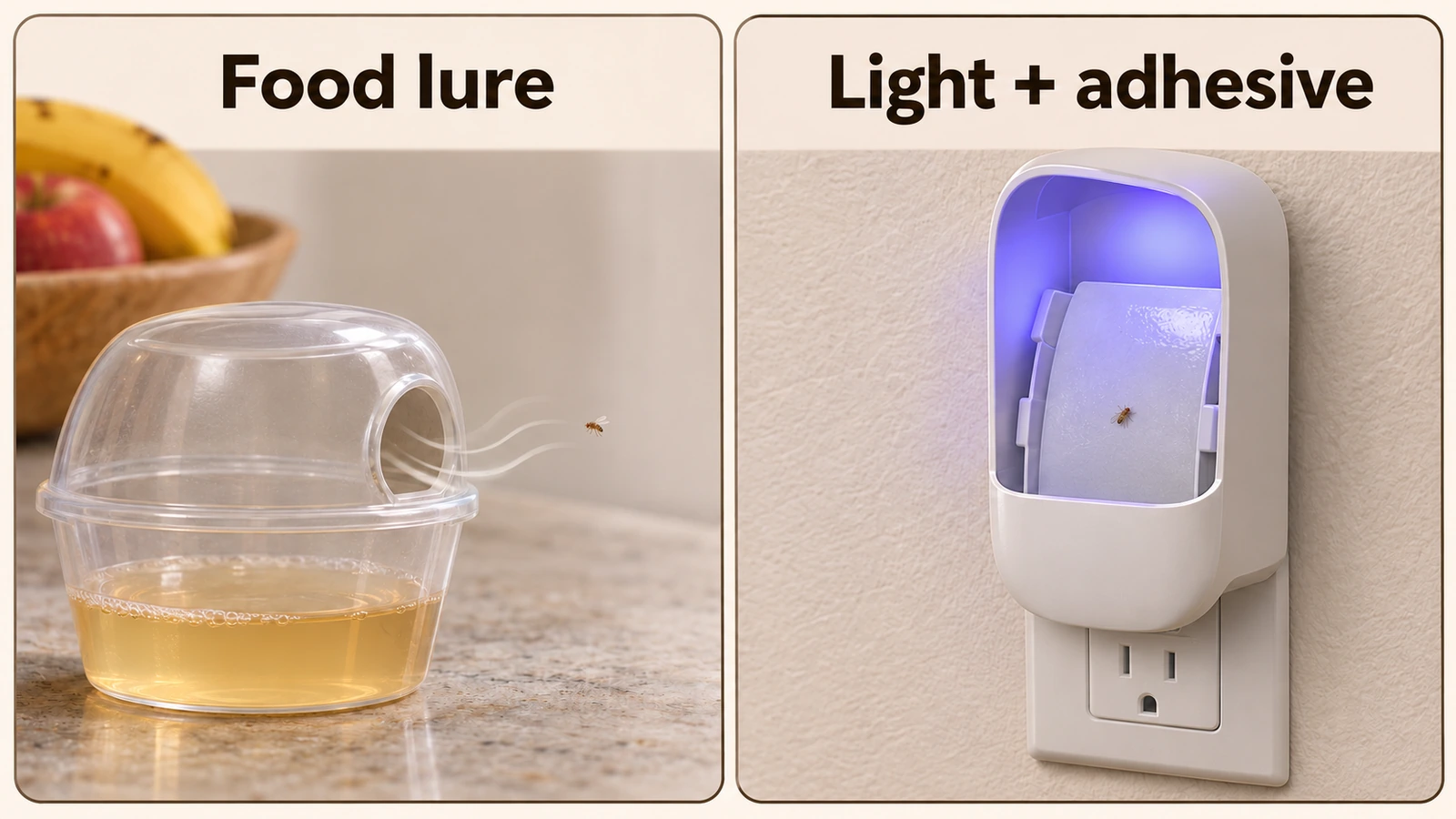
After those two checks, compare the routine you’ll actually keep up with:
- Mess and odor: Liquid bait can spill or develop a smell; adhesive cartridges avoid that liquid cleanup but leave used glue pads to discard.
- Servicing: Bait needs checking and renewal; sticky surfaces need replacing when full, dirty, or past the manufacturer’s service guidance.
- Running cost: A reusable container may save on new housings, while ready-to-use traps, lure refills, and adhesive cartridges all have consumable costs.
- What the catch tells you: A food-baited trap is aimed at a fermentation-attracted fly; a broad flying-insect light trap can catch other species too.
Here’s the practical comparison, without treating different trap designs as if they’d been tested head-to-head:
| Trap type | Good fit | Upkeep | Main limitation |
|---|---|---|---|
| Ready-to-use liquid bait | Quick setup near fruit or recycling activity | Position upright; replace or discard as directed | Liquid can spill; lure is consumable |
| Refillable bait container | You prefer reusable hardware | Empty, clean, and replenish the appropriate bait | More handling and cleaning |
| DIY vinegar bait | You want to try materials already at home | Inspect and replace bait regularly | Odor, spill risk, and variable attraction |
| Plug-in light with sticky pad | You want dry capture and have a suitable outlet | Check and replace adhesive cartridge | Not specific to fruit flies; needs power |
The tradeoffs a product listing rarely settles
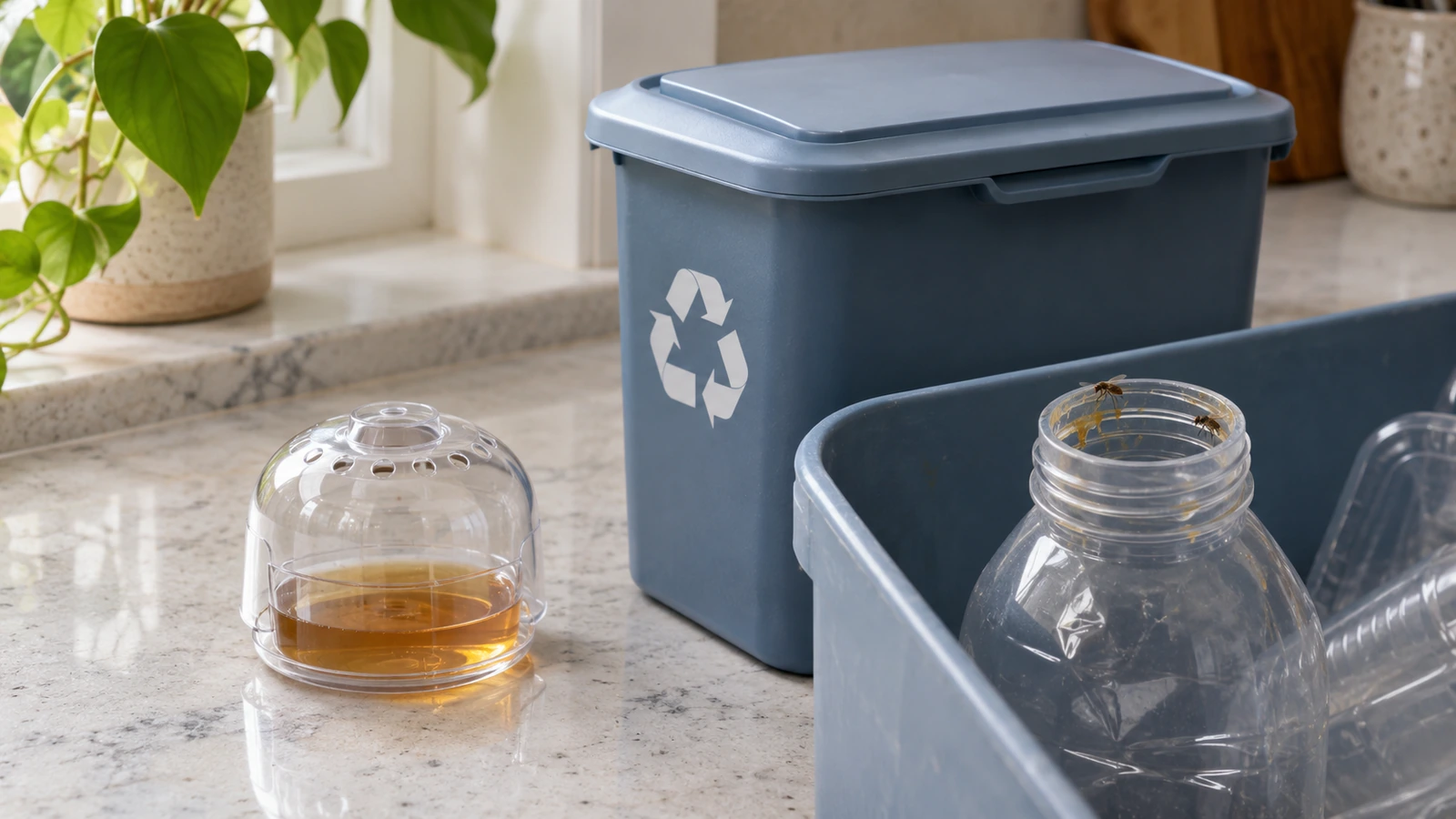
A baited container is only attractive if the lure can compete with what’s already in the room. An unwashed compost pail, a leaking drink can, or overlooked produce can keep attracting flies elsewhere. Moving the trap closer to activity may help with adult captures, but choosing an ever-stronger lure isn’t a substitute for dealing with the fermenting material.
Homemade bait is not maintenance-free. A container holding fruit or other organic bait can become another place where flies develop if it’s left sitting too long. Check it frequently and dispose of used bait before it turns into a new problem. Packaged lures and refillable devices also need their stated servicing routines.
The dry adhesive option is more appealing when you dislike bait odor or open liquids. Its compromise is different: you need a working outlet, a clear path to the light, and replacement pads. Keep an electrical trap out of wet or splash-prone locations rather than placing it directly beside a dripping sink.
Choose the upkeep you’ll actually do
A simple trap you can safely check and service is a better fit than a feature-heavy one you’ll neglect. Pick the capture method that fits your counter space, available outlet, and tolerance for bait or glue cleanup.
What to Watch For
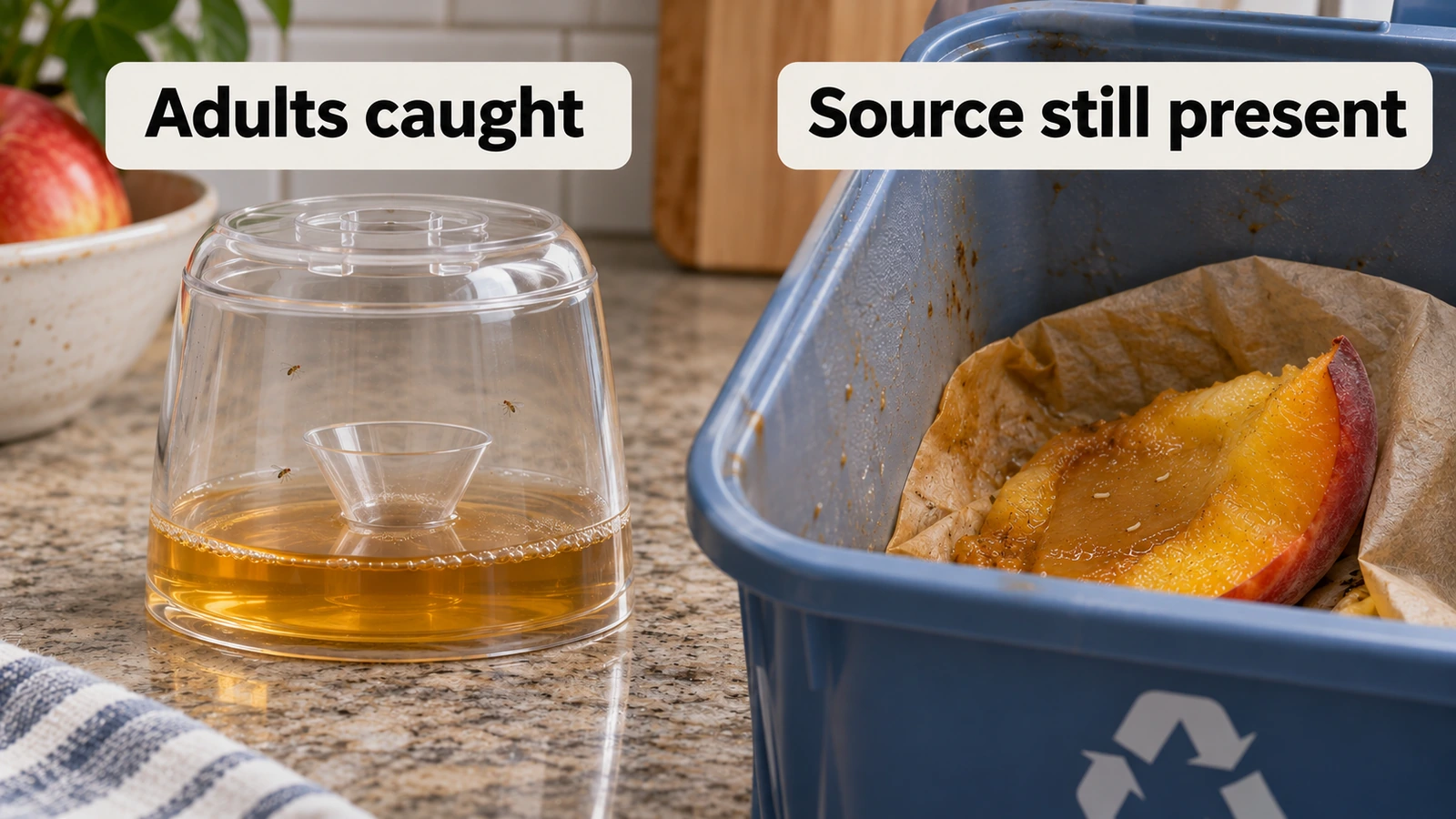
A trap full of adults shows that adults are being caught. It says little about eggs and larvae still developing elsewhere. Repeated catches after cleanup are a reason to look again for the breeding source, not automatically to buy more traps.
Which fruit fly trap should you choose?
Match the trap to your main constraint
- You want the simplest countertop setup: Start with a ready-to-use liquid trap labeled for fruit flies. Place and service it as directed, near activity but away from food-contact surfaces.
- You want to avoid open liquid: Choose a plug-in adhesive model intended to catch fruit flies, if you have a safe, dry outlet. Expect to replace the sticky cartridge.
- You want to spend little before buying anything: Try a DIY vinegar-baited option and maintain it carefully. For the exact build, see the dedicated DIY fruit fly trap guide.
- You prefer reusable equipment: A refillable funnel or bait container may fit, provided you’re comfortable with cleaning and regular lure replacement.
If the flies seem to be coming from plant soil, drains, or another source rather than fermenting kitchen waste, revisit the identification before buying a different trap. For confirmed fruit flies, the trap is a supporting tool; the next step is to deal with whatever is allowing new flies to emerge.
Explore this topic further:
How to get rid of fruit flies by finding and removing their source