
How-To
How to get rid of fruit flies by finding their breeding source
Get rid of fruit flies at the source. Check produce, recycling, sticky spills and drains, then clean up breeding material and monitor the remaining adults.
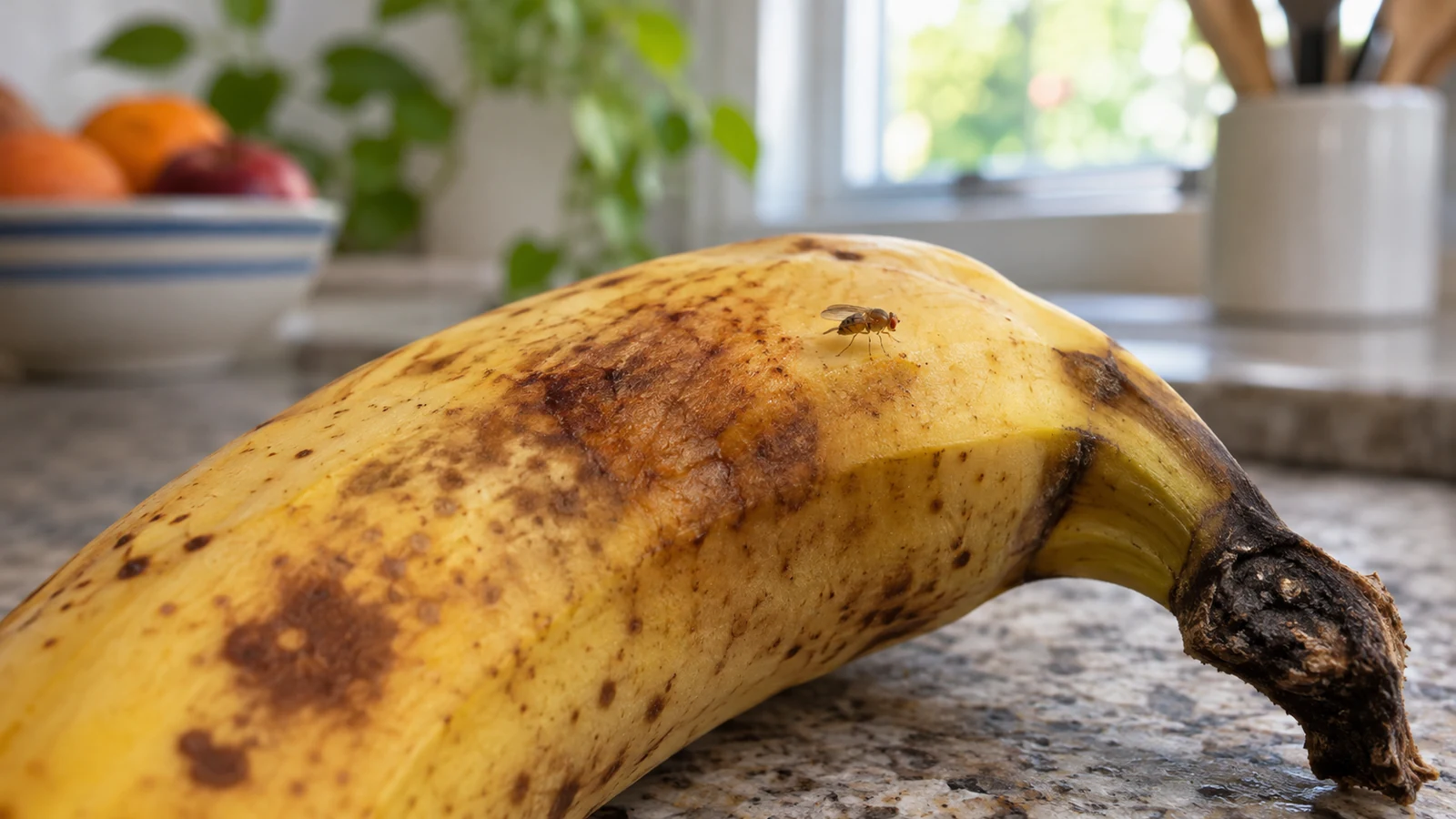
You put the bananas away, but tiny flies are still circling the sink. The problem may be a forgotten onion, a little juice under the recycling bin, or another damp spot where food has started to ferment.
Fruit flies reproduce in moist, fermenting material. Catching the adults helps, but lasting control comes from removing the material their larvae develop in. Work through the kitchen in a practical order, then check whether the flies are actually disappearing.
- Time Required: One initial cleanup session, followed by brief daily checks for at least a week.
- Difficulty: Usually easy with accessible breeding sources; more involved when residue is hidden.
- Equipment: Trash bags, dish soap, a cloth or scrub brush, a drying towel, and covered containers. An adult trap is optional.
- Estimated Cost: No special purchase is required if basic cleaning supplies are already available. An optional trap may add to the cost.
Before you start, make sure they’re fruit flies
Common household fruit flies are tiny, usually about 1/8 inch long, with tan to brown bodies and often reddish eyes. They tend to gather around ripe fruit, open drinks, recycling, and other places where sugary material is fermenting.
Look at where the insects spend their time as well as how they look. Small flies associated with damp potting soil or plumbing may need a different approach. Comparing gnats and fruit flies can save you from cleaning the wrong area repeatedly.
Clear enough counter space to lift fruit bowls, inspect beneath containers, and reach the bins. Have your cleaning supplies ready, and plan to take discarded material outside rather than leaving it in the kitchen trash.
Before You Start
Never mix bleach with vinegar or other cleaning products. Such mixtures can release hazardous fumes. Avoid spraying the room or using insecticide foggers as a substitute for removing the material where fruit flies breed.
Remove the places where fruit flies breed
Start with anything that can hold fermenting food or liquid. Adult flies may rest at a window or hover around a sink even when the breeding source is somewhere else.
Work from the obvious sources to the hidden ones. Finding a rotten piece of fruit is useful, but finish the inspection before assuming you’ve found the only problem.
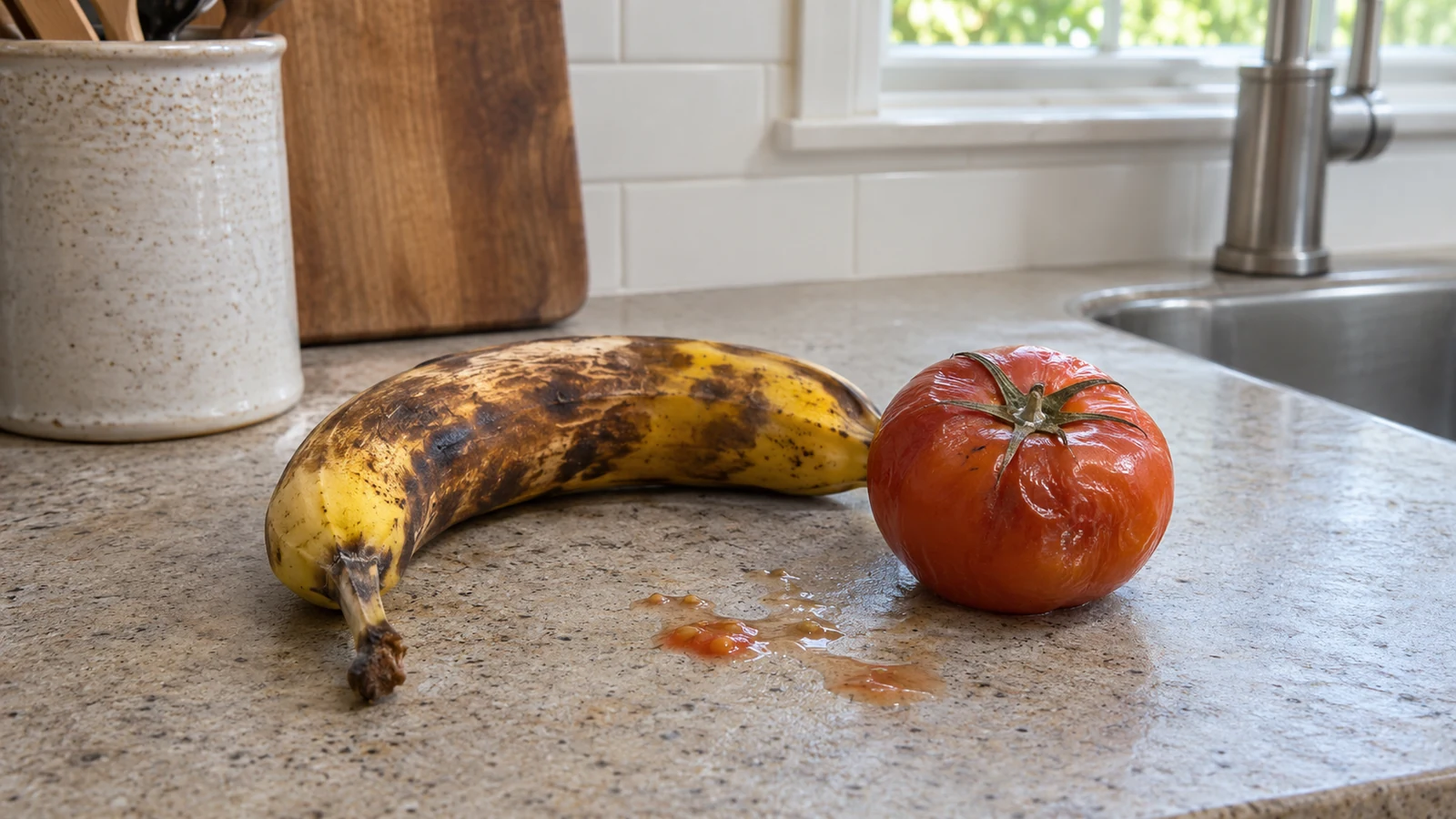
1. Check fruit and forgotten vegetables
Inspect fruit bowls, produce bags, countertop containers, and shelves where you keep potatoes, onions, or tomatoes. Look for soft, damaged, leaking, or fermenting produce, including items tucked behind other packages.
Discard spoiled produce promptly in a closed bag and take it to an outdoor trash container. Refrigerate ripe fruit and vegetables you intend to keep when appropriate for that produce.
Don’t overlook a piece of fruit that has rolled behind an appliance or a vegetable forgotten at the back of a cabinet. A surprisingly small amount of decomposing material can support a continuing infestation.
2. Empty and wash trash, compost, and recycling containers
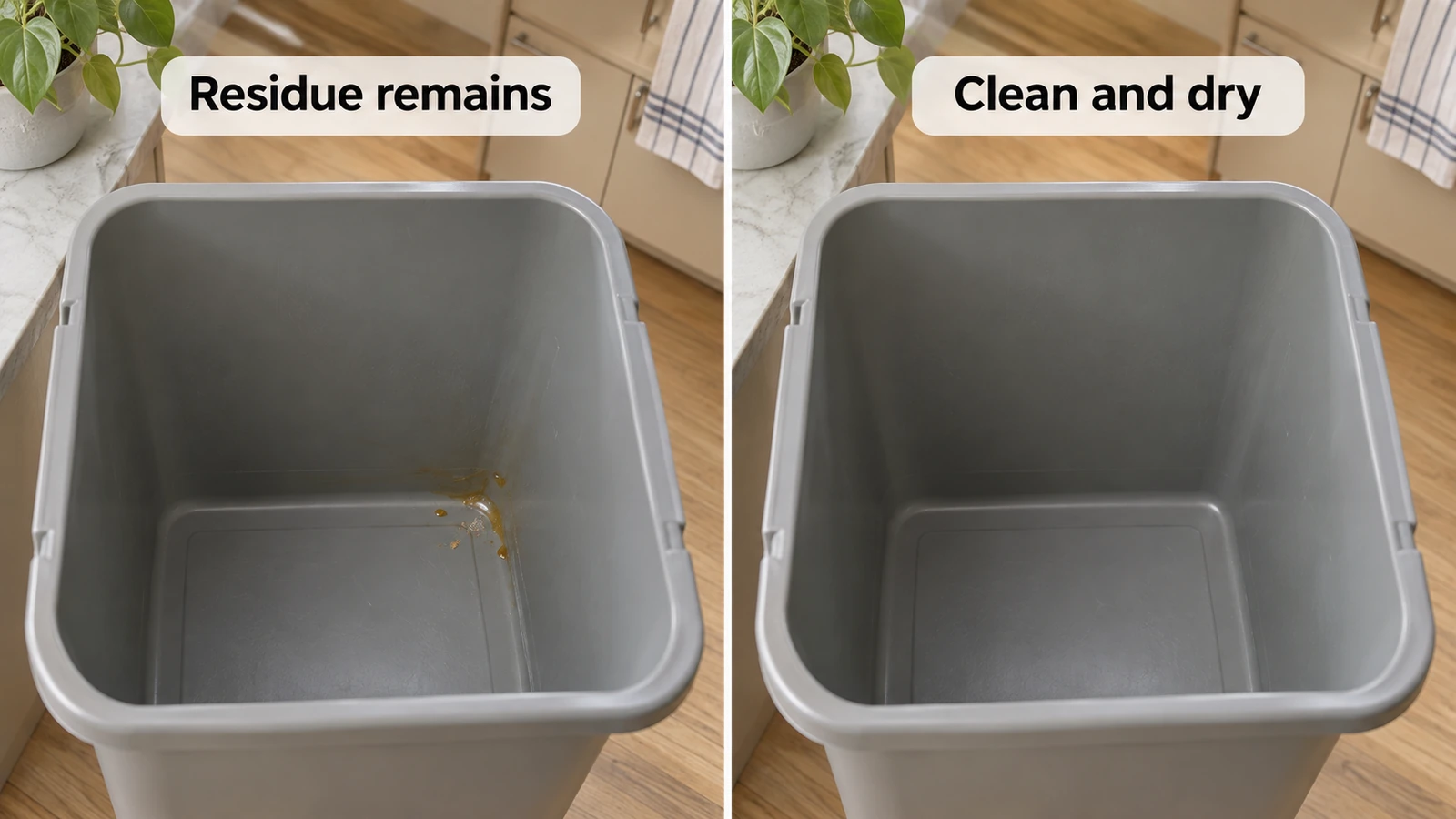
Remove food waste and indoor compost. Wash the inside of the containers, paying attention to the rim, lid, bottom, and any sticky residue beneath the trash liner.
Check empty beverage bottles and cans. A little leftover juice, soda, beer, or wine can ferment and attract fruit flies. Pour out the remaining liquid, rinse the containers, and let them drain and dry before storing them for recycling.
If you’ve cleaned the kitchen but not the recycling bin in the garage or basement, include it in the inspection. The flies don’t have to breed in the same room where you notice them.
3. Clean sticky spills and damp cleaning tools
Look beneath fruit bowls, behind the trash can, along accessible floor edges, and around the refrigerator or stove. Dried-looking spills can leave sticky residues that become moist again.
Wipe affected surfaces with soapy water, remove the residue, and dry the area. Check for liquid collected in accessible trays or beneath containers.
Rinse food-contaminated cleaning cloths, squeeze out mop heads, and let them dry properly. Damp rags or mops containing organic residue can provide another breeding location.
4. Check the sink and nearby food residue
If flies continue gathering around the sink, examine the strainer, drain opening, and any reachable food buildup. Check nearby bottles, dishes, and countertop seams before assuming the insects are emerging from the drain itself.
Remove visible food debris and clean accessible surfaces with a suitable brush and ordinary cleaning products. If your sink has a garbage disposal, switch it off and follow the appliance’s safety instructions. Never put your hand inside the disposal.
Fruit flies can breed in moist organic deposits associated with drains, but not every small fly near a sink is a fruit fly. If the insects appear to be coming from inside the plumbing, verify their identity before attempting more specialized drain treatment.
5. Capture the remaining adults with a trap
Once you’ve removed the likely breeding sources, a suitable adult trap can reduce the flies still circulating in the kitchen.
Baited fruit fly traps can attract adults, but they do not remove eggs or larvae developing in fermenting material. Put the trap where adult flies are active, following its instructions and keeping it away from uncovered food and out of children’s or pets’ reach.
Use the trap as a supplement to cleaning, not as the main treatment. A trap that keeps filling up while new flies appear is a reason to inspect for overlooked breeding material, not simply to add more traps.
What to watch for during cleanup
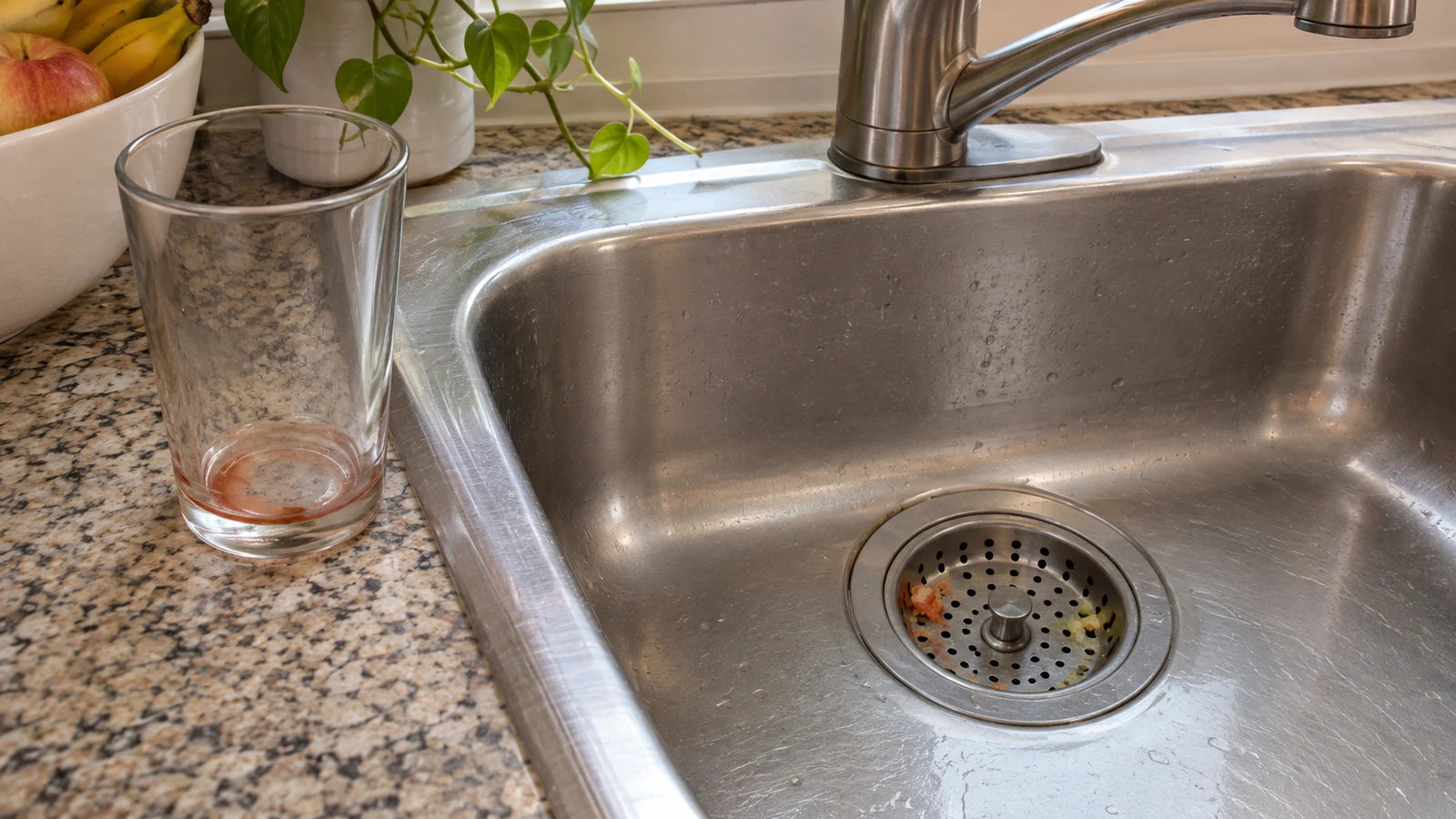
Don’t judge the source only by where the adult flies gather. A group hovering around the sink might have come from a bottle beside it, food caught in the strainer, or a sticky spill underneath a nearby container.
Cleaning the visible countertop while leaving wet residue in a bin or under a liner is another common mistake. Remove the material itself rather than just covering an odor or wiping the surrounding surface.
Insecticide sprays may kill exposed adults, but they won’t remove the breeding material. Routine spraying is usually unnecessary for a household fruit fly problem. If you use a pesticide, choose one labeled for the intended pest and location, and follow its U.S. label and any applicable local restrictions. Pay particular attention to food, food-contact surfaces, children, and pets.
Avoid moving heavy appliances or dismantling plumbing just to reach a suspected spill. If the material is inaccessible or associated with a leak, the underlying maintenance problem may need attention.
Check whether the infestation is declining
After removing the suspected sources, watch the areas that previously had the most activity. You should begin seeing fewer adult flies as the remaining population dies off, provided no suitable breeding material remains.
If you’re using a trap, keep it in a consistent location while checking its catches. A downward trend can be encouraging, but catch numbers depend on the trap and its placement. Also watch for new clusters of flies around produce, waste containers, and damp residues.
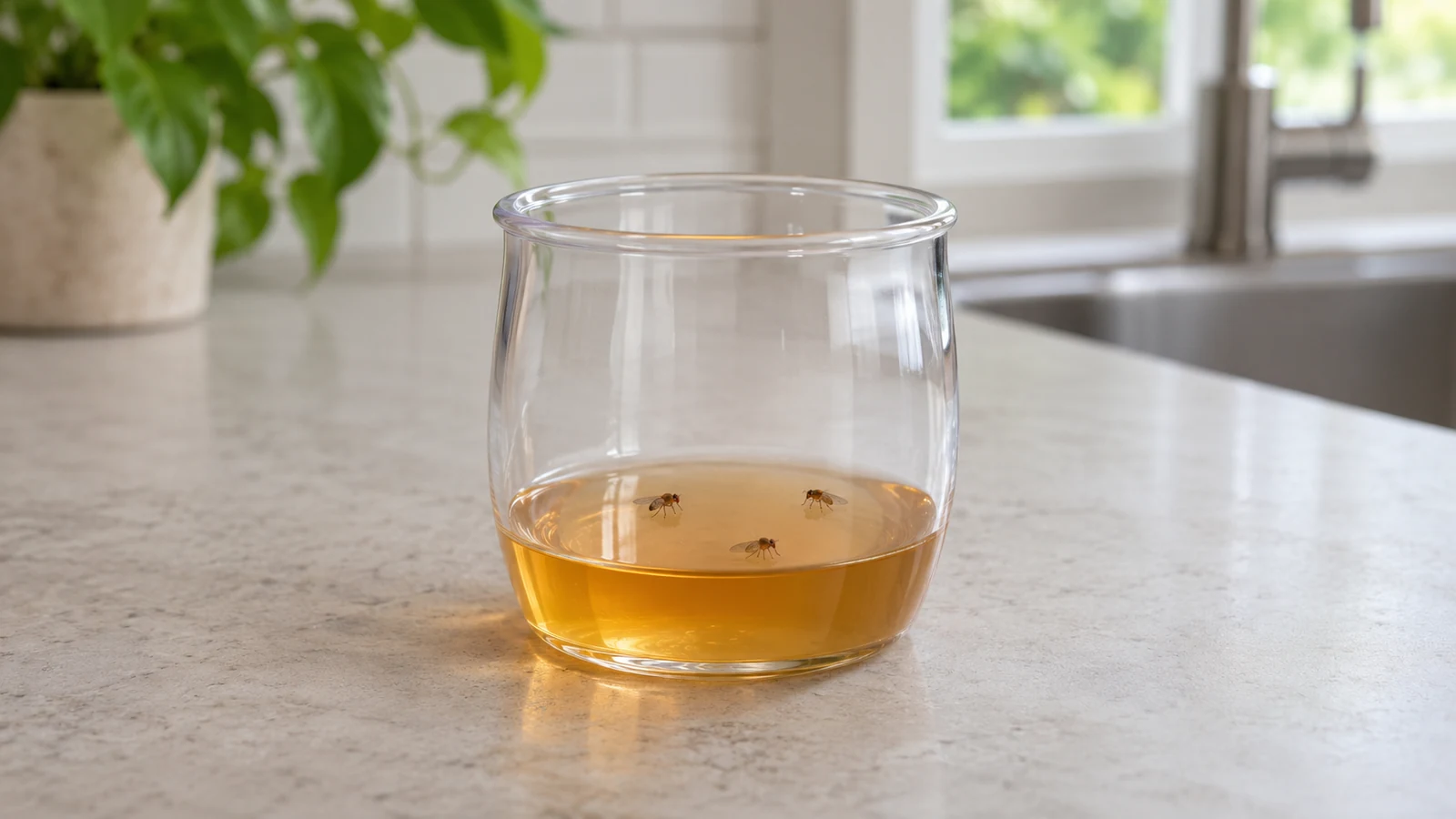
Adult flies already present may survive for a week or longer after breeding has stopped. Keep susceptible produce covered or refrigerated and maintain the cleanup routine for at least the next week.
A few remaining adults during that period aren’t necessarily a failed treatment. If numbers stay high, new groups keep appearing, or activity increases again, another source may still be available.
If fruit flies keep coming back
When traps continue catching flies but the kitchen looks clean, widen the search. Check places that aren’t part of daily food preparation: stored recycling, unused containers, hidden spills, compost storage, and damp areas beneath accessible appliances.
Then reconsider the insect itself. Fuzzy, moth-like flies concentrated around drains may be drain flies. Small, dark, slender insects associated with wet potting mix may be fungus gnats. Their breeding sites and control methods differ from those of common fruit flies.
If the insects appear to be ordinary fruit flies, search for fermenting material again before using stronger products. Repeated adult catches are less useful than locating the overlooked source.
When Should You Call a Professional?
Most household fruit fly problems can be managed by removing breeding material and maintaining sanitation. Professional help becomes reasonable when the source appears inaccessible, activity remains substantial despite a thorough cleanup, or you suspect hidden moisture and organic buildup from a plumbing problem.
A pest control professional can help identify the insects and investigate difficult breeding sites. If a leak or damaged plumbing is responsible, a qualified plumber may be needed to correct it.
Match the pattern you’re seeing to the next area worth checking:
| What you’re noticing | Possible source or explanation | What to check next |
|---|---|---|
| Flies rise when the trash or recycling bin is opened | Food residue inside the bin, under its liner, or in unwashed containers | Empty, wash, rinse, and dry the affected items |
| Flies hover near a sink even after produce is removed | Food residue around the sink or disposal, or a different drain-associated fly | Clean accessible debris and verify the insect before treating plumbing |
| Small flies repeatedly emerge around houseplants | Fungus gnats may be developing in moist potting mix | Inspect the plants and confirm the fly type |
| Traps catch adults continuously without a clear decline | A breeding source may remain elsewhere | Reinspect stored recycling, forgotten produce, damp cloths, and hidden spills |
| Flies reappear near windows after indoor sources are removed | Adults may be entering from outdoors | Check window and door screens while keeping attractants inaccessible |
Keep fruit flies from returning
Keep ripening produce refrigerated when appropriate, dispose of spoiled items promptly, and avoid allowing fruit scraps to sit in indoor compost or trash. Rinse beverage containers before storing them for recycling.
Clean spills when they happen, including those beneath bowls and waste containers. Keep cleaning cloths and mops free of food residue and allow them to dry between uses.
If fruit flies can enter through damaged window or door screens, repair those openings. Regular attention to fermenting material is more useful for prevention than relying indefinitely on a trap.