Identification
What do termites look like? Workers, soldiers, and swarmers
Compare the appearance of termite workers, soldiers, and winged swarmers, then check the body features that separate termites from ants.
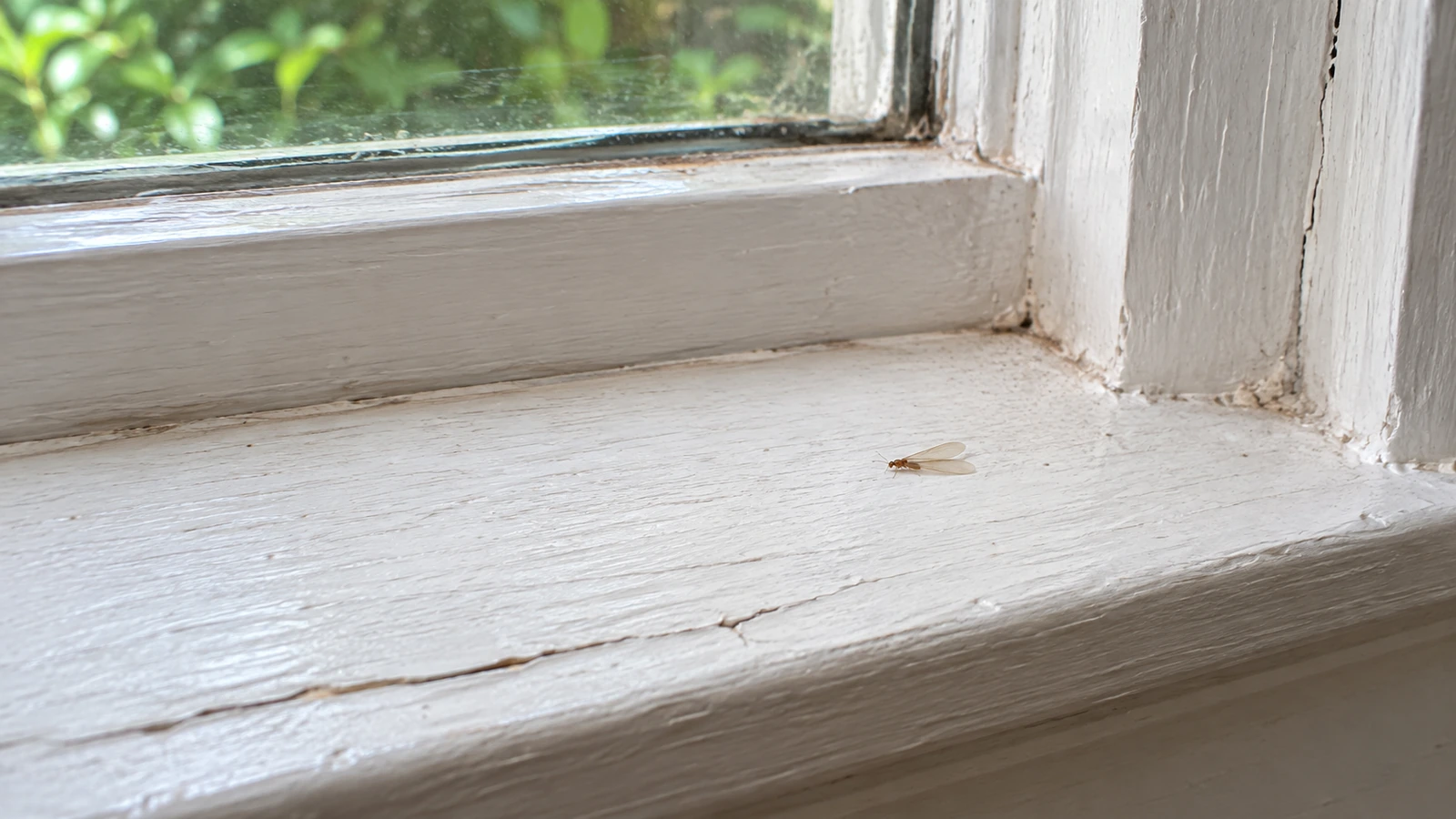
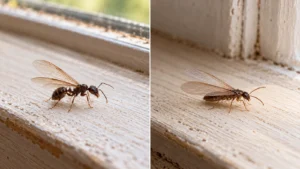
A pale insect exposed in a piece of wood can look nothing like the dark, winged insect you find on a windowsill. Both could be termites. Their appearance changes depending on the job they perform in the colony.
The most useful clues are body shape, antennae, wings, and head structure. Those details can help you narrow down an identification before deciding whether the finding calls for a closer inspection of your home.
What a termite looks like up close
Termites have six legs, a pair of antennae, and a broad connection between the middle and rear sections of their bodies. Their antennae are made of small, beadlike segments. Unlike ants, termites lack a sharply pinched waist.
Color and wings are less consistent. The pale termites living and feeding inside wood look very different from the darker reproductive adults that emerge during swarms. Even members of the same colony can have noticeably different heads and body shapes.
Identification in 30 Seconds
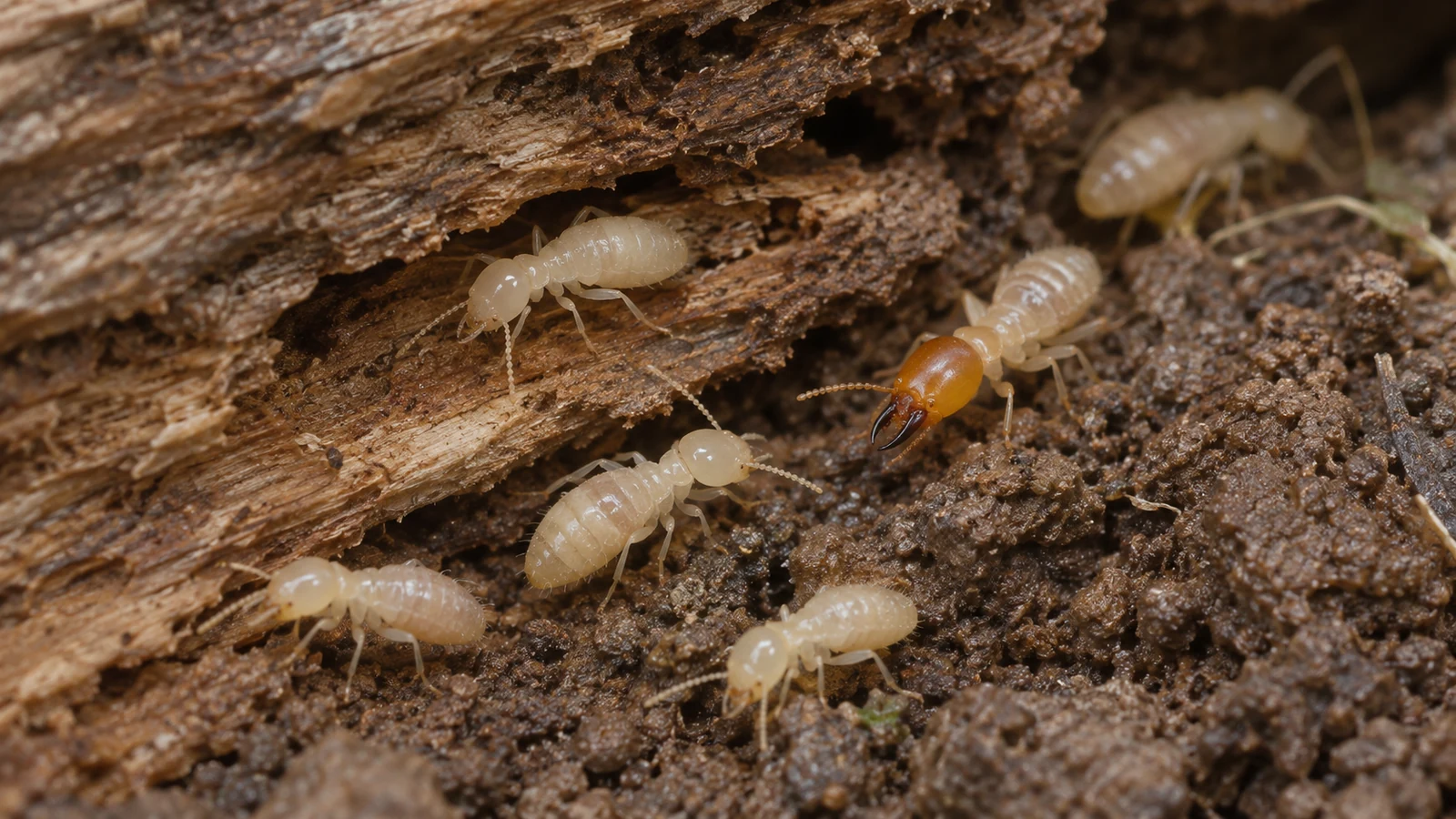
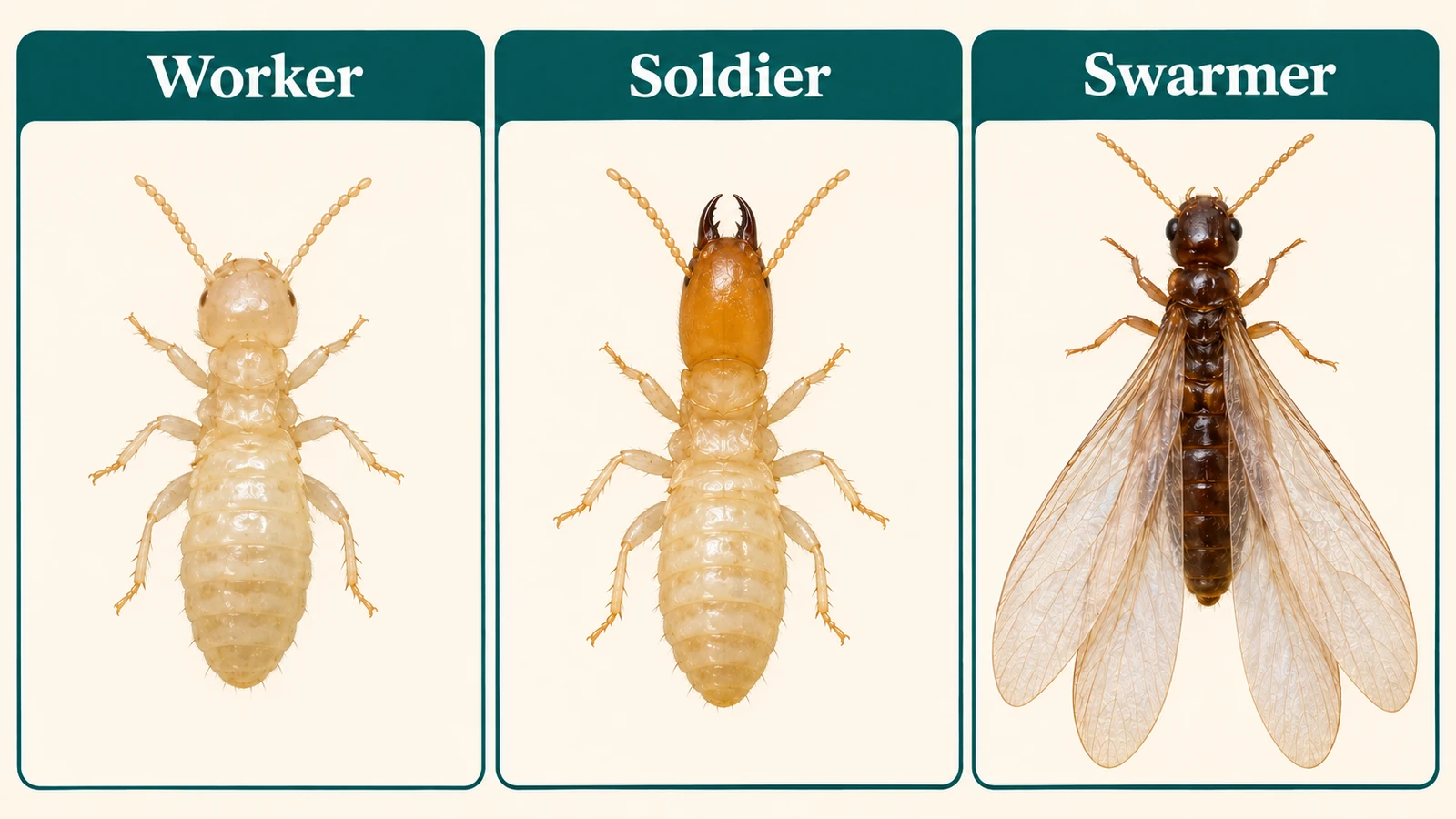
- Workers: Usually pale cream or whitish, soft-bodied, and wingless.
- Soldiers: Wingless, with an enlarged, often darker head and prominent defensive jaws in many common species.
- Swarmers: Reproductive adults with two pairs of long wings of similar length, usually extending beyond the body.
- Body shape: A broad waist and straight or gently curved, beadlike antennae distinguish termites from typical ants.
Workers are the pale termites most likely to appear when infested wood or a shelter tunnel is exposed. They generally lack visible eyes, have relatively small heads, and stay protected from open air. Their light coloring explains why termites are sometimes called “white ants,” although termites are not ants.
Soldiers have a more specialized appearance. Their heads are larger and more hardened than those of workers, often amber or brown, with strong jaws used in colony defense. Head shape varies between termite groups, so not every soldier has the same elongated or rectangular profile.
Swarmers, also called winged reproductives, are the termites homeowners often notice near windows or lights. Their bodies may be dark brown, black, or yellowish brown depending on the species. They have eyes, and their wings extend well beyond the abdomen. After a swarming flight, they shed those wings, making wingless reproductive adults harder to recognize at a glance.
How to distinguish termites from similar-looking insects
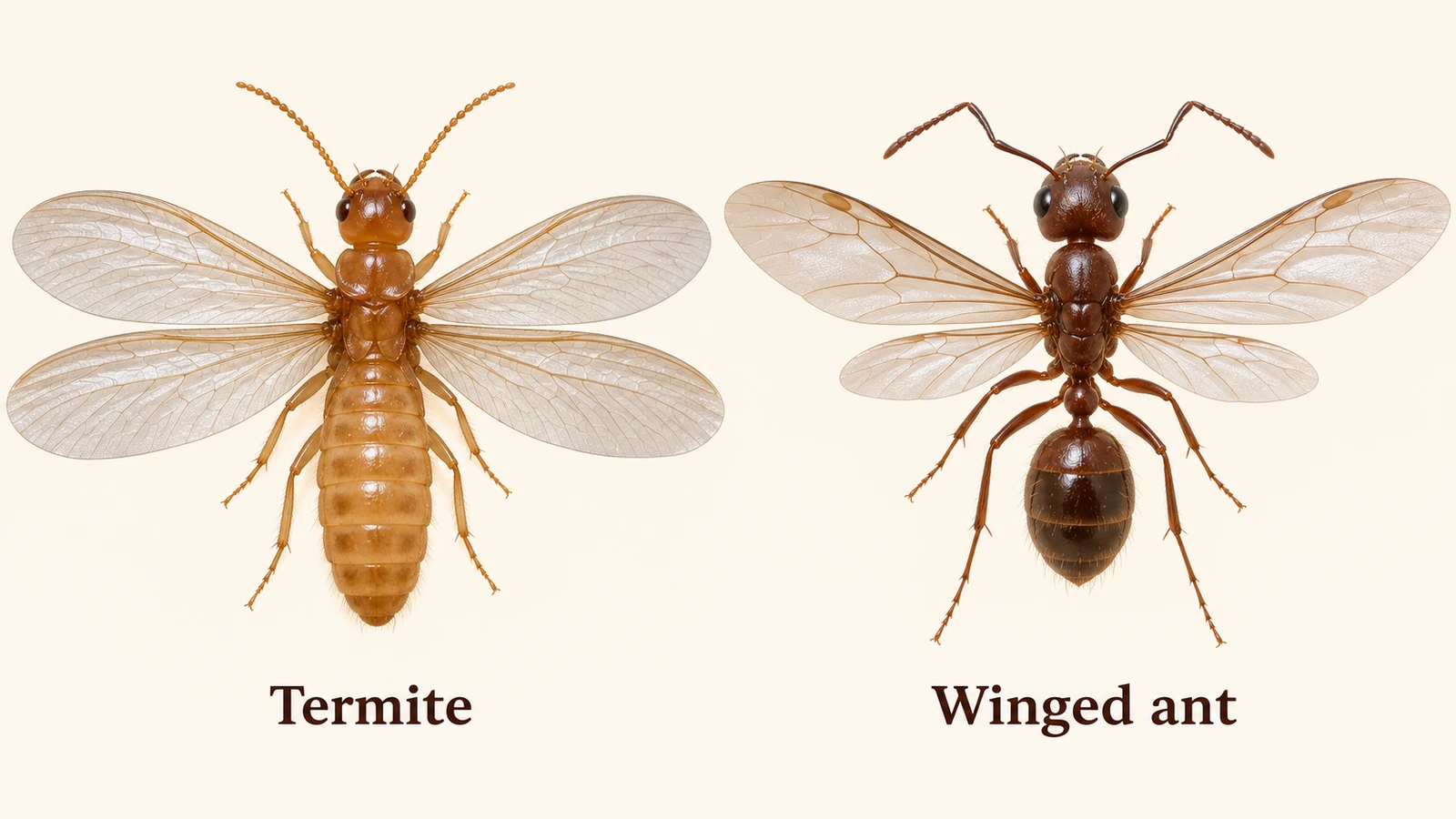
Flying ants are the most important lookalikes. Both insects can appear in groups, have four wings, and gather near windows. Look beyond the fact that they can fly.
A winged termite has a relatively broad waist, beadlike antennae, and front and rear wings of similar length. A flying ant generally has a distinctly narrowed waist, elbowed antennae, and front wings longer than its hind wings.
If the insect has lost its wings, focus on its waist and antennae instead. The guide to flying ants vs. termites is especially useful when the wings are folded, damaged, or missing.
For wingless insects, a pale color alone is a weak clue. Small booklice and other soft-bodied insects can also look whitish or translucent. A clear view of the whole body matters more than color, and the location where you found the insect can help direct the next check.
If you have an insect to photograph, aim for:
- A sharp view of the head and antennae.
- A side or top view showing the waist and, if present, both pairs of wings.
- A wider photograph recording where the insect was found.
If practical, preserve an intact specimen in a small sealed container. Avoid breaking open walls or damaging structural wood just to obtain a better photograph.
Identification Mistakes
- Calling every pale insect in wood a termite without checking its body features.
- Assuming every dark, winged insect near a window is a termite swarmer.
- Identifying a termite species from color or overall size alone.
Key Clue
On an intact winged insect, the combination of a broad waist, beadlike antennae, and two similarly sized pairs of wings is a strong indicator of a termite rather than a flying ant.
What to Watch For
A clear insect identification tells you what the insect is, not where its colony is located or how much damage may exist. Those questions require a separate inspection.
What different termite sightings can tell you
Finding several pale, soft-bodied insects together inside exposed wood, particularly with larger-headed soldiers among them, is more convincing than finding a single pale insect on a bathroom wall.
A termite swarmer has a different appearance from a worker, and its color can vary by species. Dark-bodied swarmers are common among several subterranean termites, while other species have lighter brown or yellowish reproductive adults. The location of a swarm helps establish what to investigate, but color alone is not a reliable species identifier.
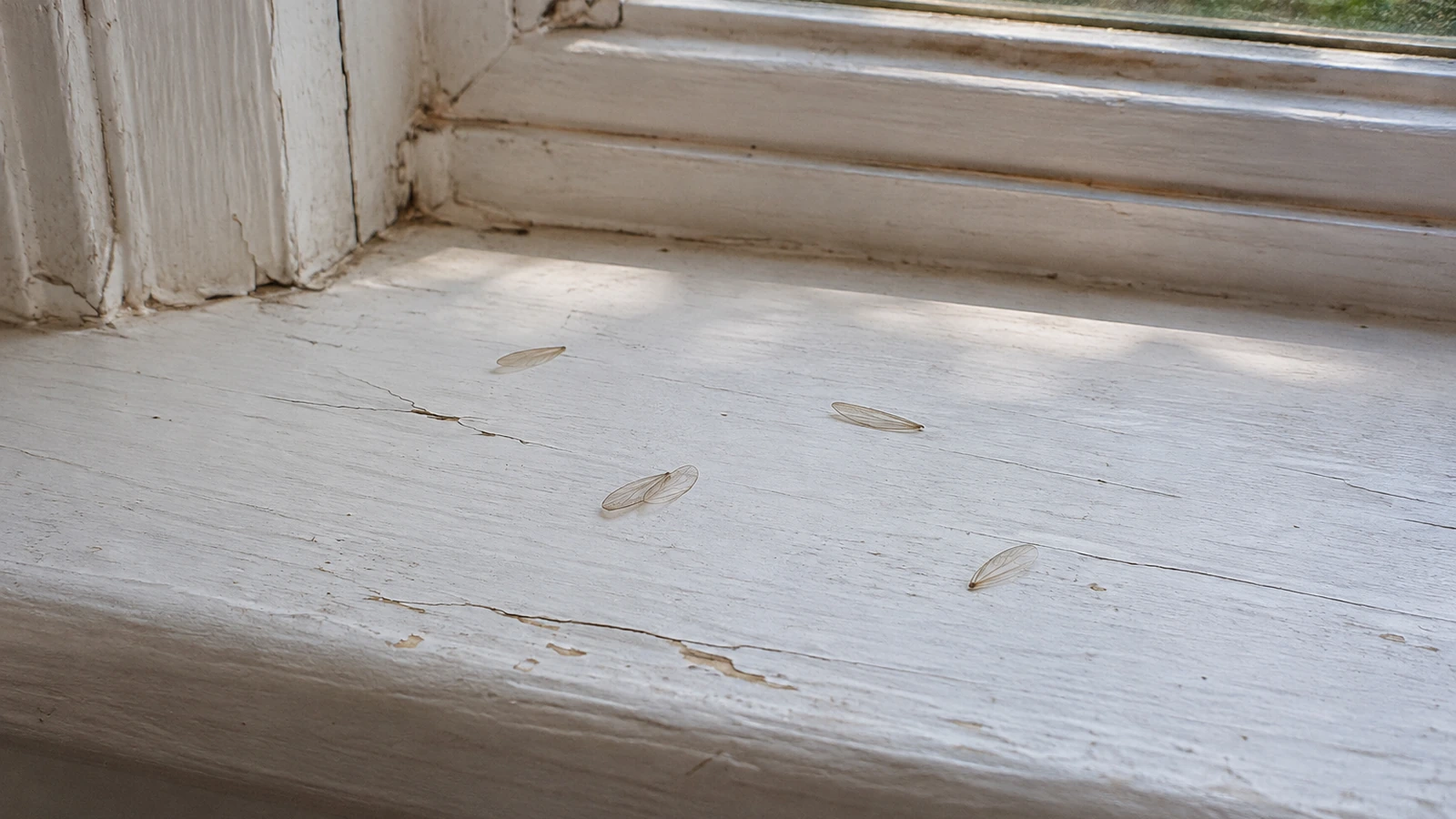
You may also encounter evidence without seeing a termite. Shed wings, mud tubes, unusual wood surfaces, or suspected termite droppings can prompt an inspection, but they are not substitutes for examining an actual insect. Each type of evidence needs to be interpreted on its own terms.
Use the features you can actually see to decide how far the identification has progressed:
| What you can see | What it suggests | Best next check |
|---|---|---|
| Pale, wingless insects together inside exposed wood | Possible termite workers or worker-like immatures | Look for beadlike antennae and any larger-headed soldiers; preserve a specimen if practical |
| A pale insect with a large amber or brown head and prominent jaws | A termite soldier is a strong possibility | Get a clearer view of the head, antennae, and body |
| A winged insect with a broad waist and two similarly sized wing pairs | Likely termite swarmer | Check the antennae and keep a clear photograph or specimen |
| A winged insect with a pinched waist and elbowed antennae | More consistent with a flying ant | Compare its body shape and relative wing lengths |
| Loose wings or suspected mud tubes without a visible insect | Environmental evidence requiring further investigation | Identify the evidence separately rather than assigning a termite caste |
How confident can you be from a photograph?
A sharp photograph showing the antennae, waist, and wings can provide enough detail to identify a likely termite. A blurred insect, a cropped wing, or a pale body without a visible head leaves more room for confusion.
Where the insect was found matters too. A lone winged insect outdoors is different from repeated winged insects emerging inside a building or pale termites exposed in structural wood. Those indoor findings deserve closer attention even when the precise species remains uncertain.
The insects encountered in U.S. homes are not identical nationwide. Subterranean termites are widespread, while drywood and dampwood termites have more regional distributions. Soldier head shapes and swarmer coloration also differ. Identifying an insect from its appearance should not be confused with evaluating termite damage or the extent of an infestation.
Good to Know
In many drywood termite species, the pale individuals doing worker tasks are immature termites called pseudergates, or “false workers,” rather than a separate permanent worker caste. They can look very similar to the pale workers shown in general termite identification guides.