Explanation
Do termites bite people?
Learn when a termite might bite, why termites are not blood-feeding pests, and what evidence matters if you suspect termites in your home.
Finding termites in your bedroom can be unsettling, especially if you’ve also noticed unexplained marks on your skin. It’s natural to wonder whether an insect that can chew through wood might bite you, too.
The distinction lies in what termites use their jaws for.
Quick Answer
Termites can bite people, but it is very uncommon. A soldier termite may pinch your skin with its jaws if you disturb or handle it. Termites feed on cellulose-rich materials, not blood, and they do not seek out people to bite. Repeated skin irritation is unlikely to be caused by a typical household termite infestation.
Why termites have jaws capable of biting
In a typical household termite colony, workers chew wood and other materials that contain cellulose. They gather food, maintain the nest and feed other members of the colony.
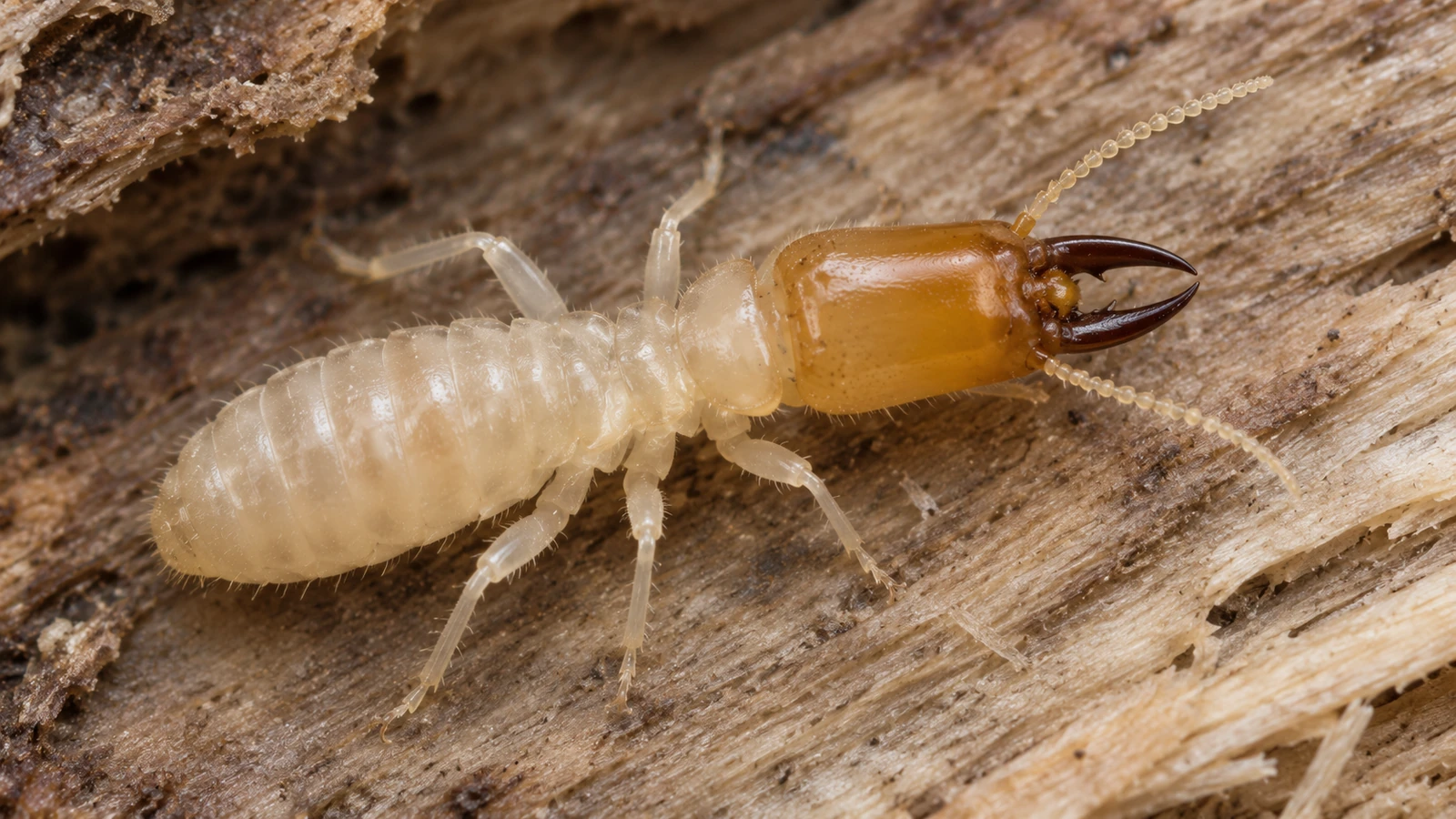
Soldiers have a different job. In many common U.S. termites, their enlarged, hardened heads support strong jaws called mandibles. These are used to defend the colony against intruders, especially ants.

The shape of a soldier’s jaws can be so specialized for defense that it relies on workers for food. Its ability to grip an object has little to do with what it eats.
Winged termites, often called swarmers, are reproductive members of the colony. They leave to find mates and establish new colonies. Unlike mosquitoes or bed bugs, they are not looking for an animal or person to feed on.
When might a termite bite you?

Direct contact with a disturbed colony is the main situation in which a bite is plausible. For example, if you pick up a piece of infested wood and a soldier comes into contact with your finger, it may grip your skin.
Formosan subterranean termite soldiers are a documented example. They defend their colony with curved jaws and a sticky secretion, and can latch onto a finger when disturbed.
A defensive pinch may cause minor discomfort. The response varies by species, and there are exceptional reports of worker termites biting people during direct contact with disturbed nests. This behavior is unusual and should not be confused with the ordinary activity of termites in a home.
Swarmers are a different situation. These winged insects may end up on your clothes or bed as they move through a room, particularly near a light. Repeated biting during sleep is not typical termite behavior.
Can you recognize termite bites by the marks on your skin?
A red bump, an itchy patch or a group of small marks has no reliable appearance that identifies it as a termite bite. Finding termites in the same room does not establish what caused the skin irritation.
If you actually see an insect gripping your skin, that observation is much more useful than trying to identify the cause from a mark afterward. Capture a clear photo of the insect or collect it safely in a closed container if identification is needed. Do not handle termites with bare fingers to test whether they bite.
Unexplained skin symptoms may have other causes, including other insects and skin conditions unrelated to pests. Seek medical advice if the symptoms persist, worsen or are concerning. If you have trouble breathing or develop swelling of the mouth or throat, call 911.
What matters if you find termites in your home?
Treat the identification of the insect and the cause of your skin symptoms as separate questions. If you’re finding unfamiliar insects indoors, compare them with what termites look like before assuming they belong to a particular pest group.
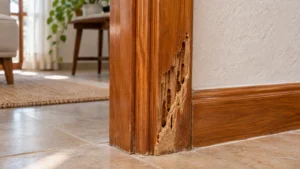
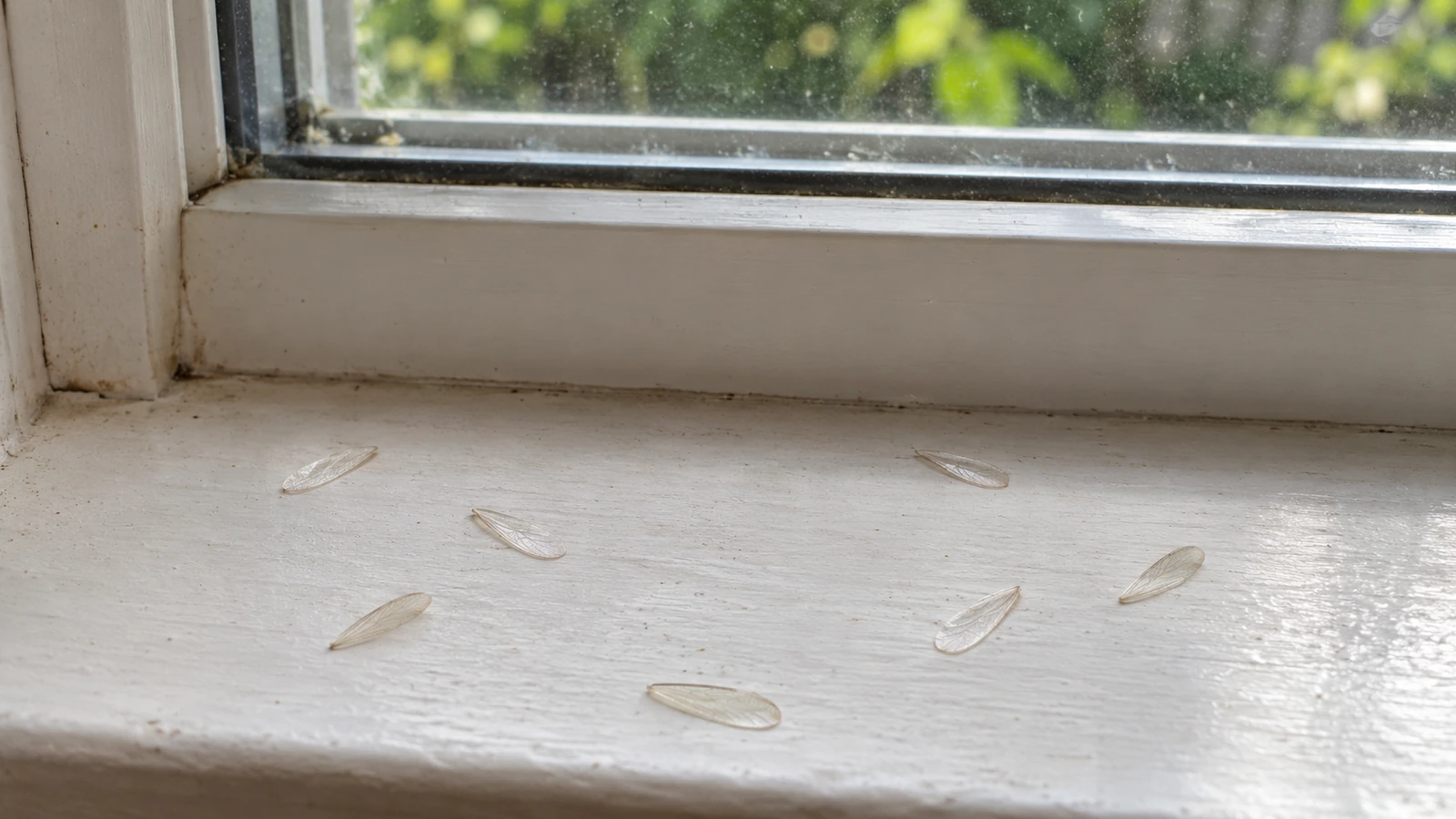
For suspected termites, look at the area where the insects appeared. Mud tubes on a foundation, shed termite wings around an indoor window or characteristic drywood termite pellets beneath a piece of wood are much more relevant to a possible infestation than marks on your skin.
Finding one winged insect that may have flown in from outside is different from discovering termites emerging repeatedly from the same wooden trim. If the evidence points to activity in the structure, arrange a termite inspection. An established colony can damage wood even when it never comes into contact with the people living in the house.
Explore this topic further: