Identification
Clothes moth larvae: How to identify them and their feeding traces
Identify clothes moth larvae by their bodies, silk shelters and feeding traces. Learn what to inspect on textiles and how to distinguish lookalikes.
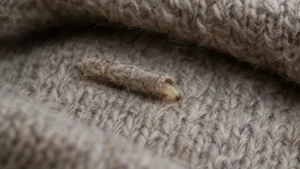
A tiny caterpillar on a wool sweater is easier to investigate while it is still where you found it. Before brushing it away, look at what surrounds its body. Is it moving freely, emerging from a fabric-colored case, or hiding beneath silk attached to the garment?
The answer helps you distinguish clothes moth larvae from other small household insects and locate the material they may be feeding on.
What clothes moth larvae look like up close
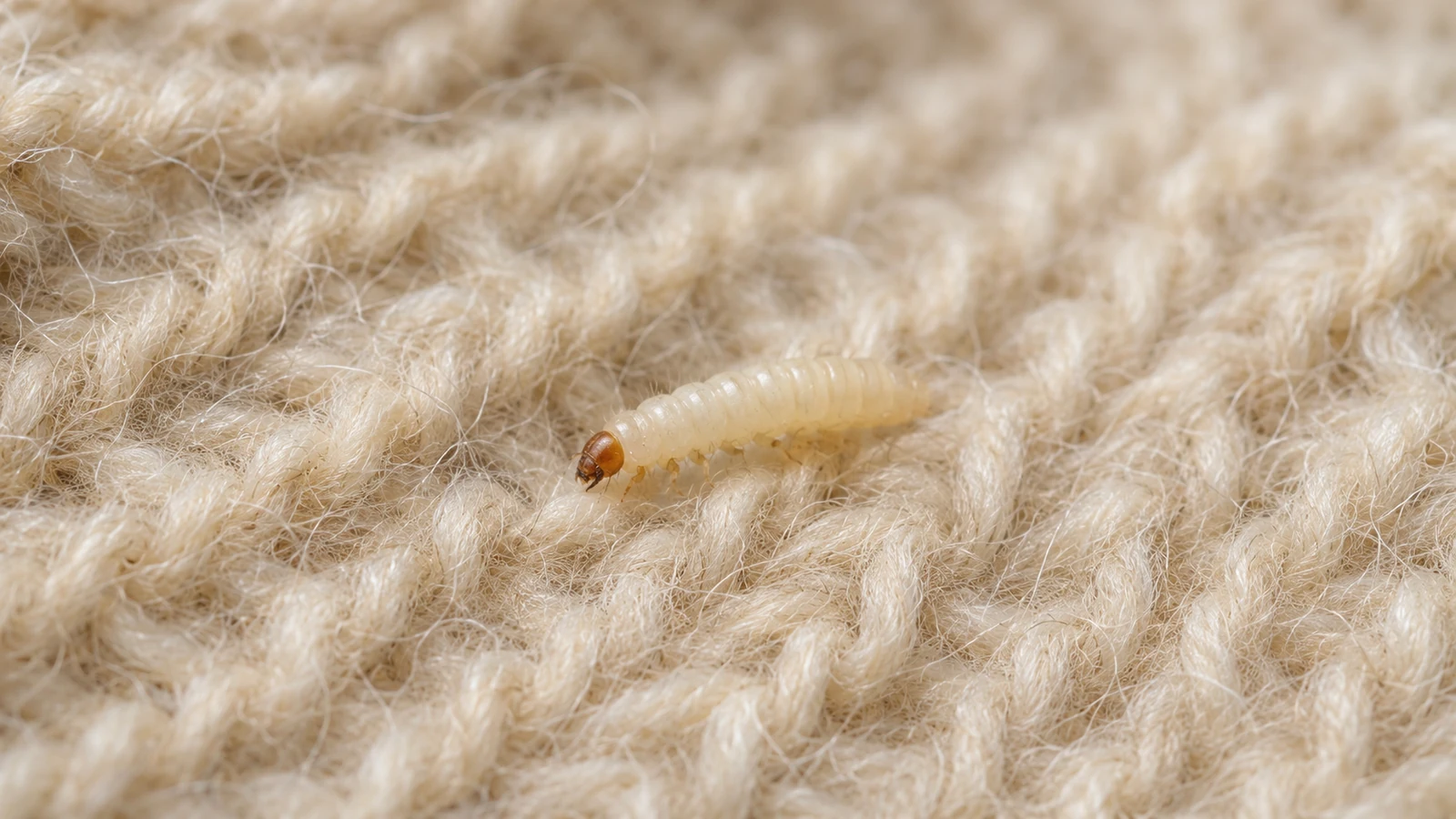
The larvae of webbing clothes moths and casemaking clothes moths are small, cream-colored caterpillars with a brownish head. Fully grown larvae can reach about 1/2 inch (13 mm), but younger ones are considerably smaller. Their segmented bodies lack the conspicuous tufts of hair found on many carpet beetle larvae.
The larva is the stage that damages textiles. On wool, it may remove surface fibers before a hole develops through the fabric.

Identification in 30 Seconds
- Pale, segmented caterpillar with a distinct brownish head.
- Silk fixed to fabric, sometimes forming a feeding tunnel.
- A narrow, fiber-covered case that moves with the larva.
- Bristly larva or hairy shed skin: check for carpet beetles instead.
Look closely at the edge of any silk or case, not just its overall color. A larva may be almost completely concealed, with only its head and the front of its body visible. Loose fibers and tiny fecal pellets can become caught in the silk, making the structure resemble a clump of lint.
How to examine a larva or its traces on fabric
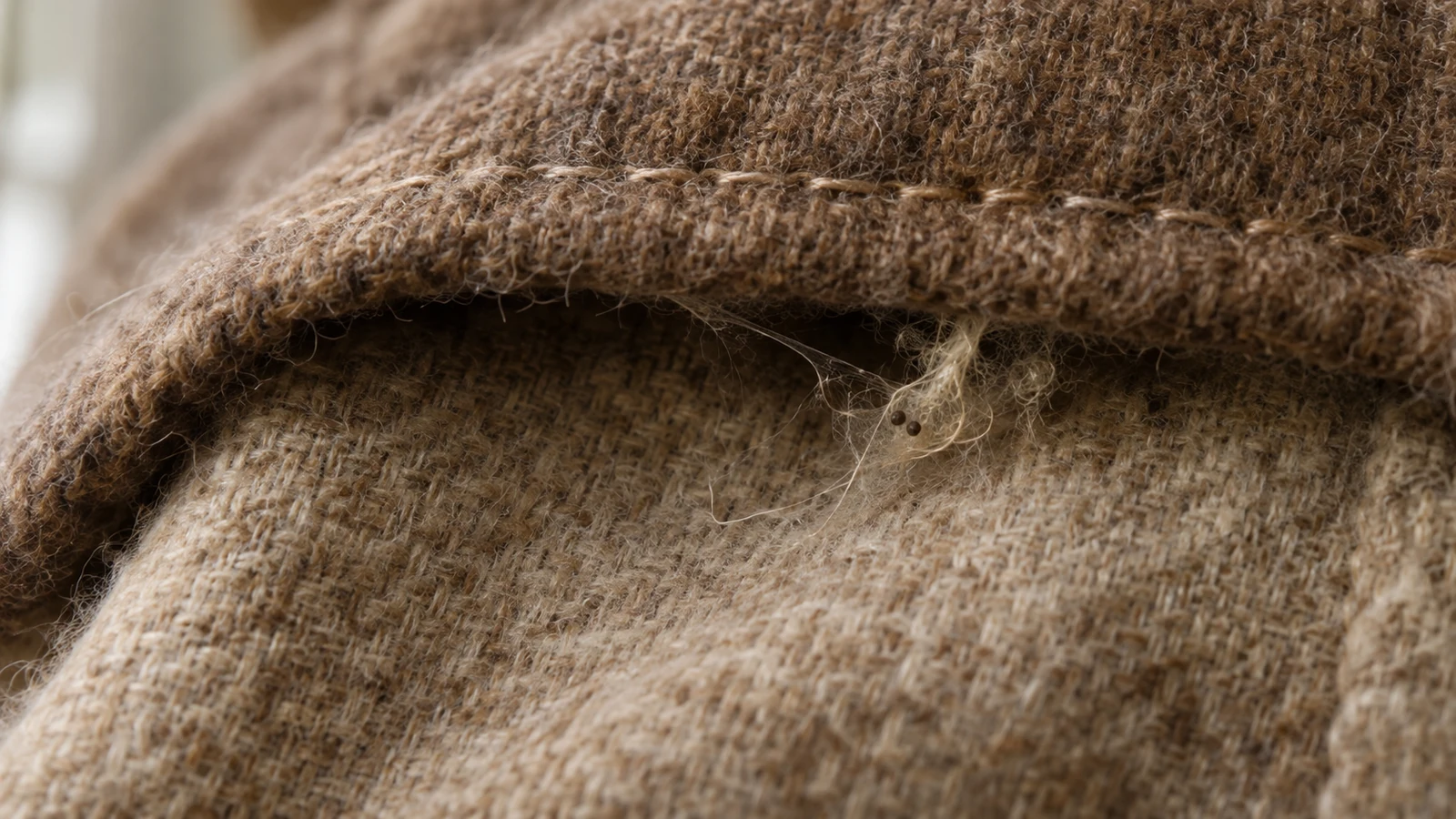
Keep the specimen and the fabric together until you have looked at both. Place the item on a clean, light-colored surface and use a flashlight at an angle to reveal fine strands of silk. A magnifying glass can help you distinguish the larva’s head from debris.
If the object is attached to a delicate textile, examine it in place rather than pulling it free. Avoid stretching or brushing an already weakened area.
Start with the exact spot where you found the object.
- Check whether the silk is anchored to the surrounding threads or forms a separate, movable tube.
- Watch for a head emerging from a case or movement along the edge of webbing. A resting larva may remain still.
- Look underneath the nearest fold or seam for additional silk, small pellets or areas of missing surface fibers.
- Photograph the object with its surroundings, then take a closer picture with a ruler beside it for scale.
If you need to move a loose specimen, keep it in a small closed container. A clear photograph of the head, body and any case is more useful for identification than a blurry picture of a speck on the floor.
Identification Mistakes
- Calling every pale larva found in a closet a clothes moth.
- Mistaking a hairy, hollow beetle skin for a silk case.
- Removing silk before checking the underlying fabric.
Key Clue
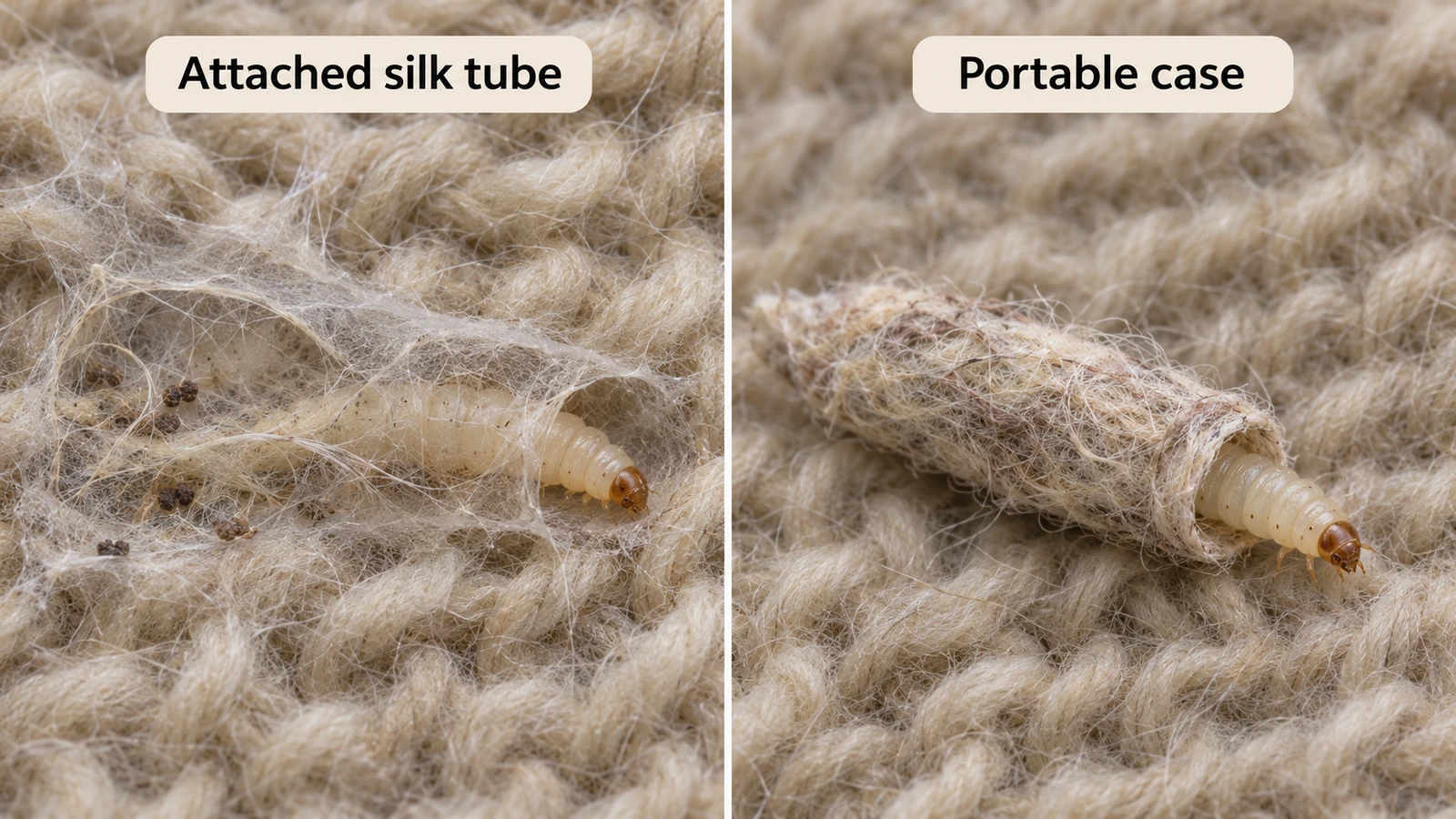
Watch whether a live larva carries its shelter as it moves or leaves a silk tunnel attached to the textile. That distinction helps separate the two common clothes moth types.
What to Watch For
An empty case or a stationary cocoon may remain after the insect has developed or moved away. Check nearby material for live larvae before deciding that feeding is ongoing.
What the silk, case and feeding marks tell you
Webbing clothes moth larvae make silk shelters on the surface of their food. The silk may spread across a small patch of wool or form a tunnel among the fibers. As a larva moves to a different feeding spot, it can leave the old silk behind. A patch of webbing is therefore worth inspecting even when you cannot immediately see an insect.
A casemaking clothes moth larva carries a protective sleeve made from silk and incorporated fibers. A mature case is roughly 3/8 inch (10 mm) long and may match the color of the material it has been feeding on. A moving case with a caterpillar emerging from one end is particularly informative. For a closer look at this type of evidence, see our guide to recognizing a casemaking clothes moth and its case.
The feeding marks offer additional context. Under angled light, grazed wool may appear flattened or threadbare because fibers have been clipped close to their base. Silk and pellets lying against that patch help connect the larva to the damage. Pellets may even reflect the color of the textile, so their color alone is a poor identification feature.
Use the specimen and its immediate surroundings together:
| What you find | What it suggests | What to check next |
|---|---|---|
| Pale larva emerging from a silk tunnel fixed to wool | Webbing clothes moth is likely | Look along the tunnel for clipped fibers and pellets |
| Moving, fiber-covered case with a visible caterpillar | A case-bearing moth larva | Examine the case and its feeding site |
| Brown, bristly larva or hollow hairy skin | Carpet beetle evidence | Check for further larvae or shed skins rather than moth silk |
| Pale caterpillar away from textiles, with no nearby feeding evidence | Source uncertain | Check whether nearby stored foods or animal-fiber materials contain similar larvae |
| Loose silk and debris beside a hole, with no identifiable insect | Possible previous feeding | Inspect the nearest concealed surface for stronger evidence |
Is the larval activity confined to one item?
Finding one live clothes moth larva on grazed wool establishes a reason to protect that item and investigate its immediate surroundings. It does not tell you how far the problem extends.
Check the surfaces that touched the affected piece while it was stored. For example, examine the underside of a sweater stacked directly above it, the wool blanket next to it and the protected fold where the original larva was hiding.

If you find live larvae or feeding traces in several separate items, expand the inspection to the shared storage area. If you encounter empty cases alone, record where they were found and look for additional evidence before deciding how extensive the problem is.
A larva on a wall or shelf can be away from its feeding site, especially when approaching pupation. Search nearby susceptible materials rather than assuming that the closest item is the source.