
Identification
Moth holes in clothes: How to check what caused them
Found holes in stored clothes? Compare fabric type, nearby larvae or silk, carpet beetle traces, and everyday wear before assuming moths are responsible.
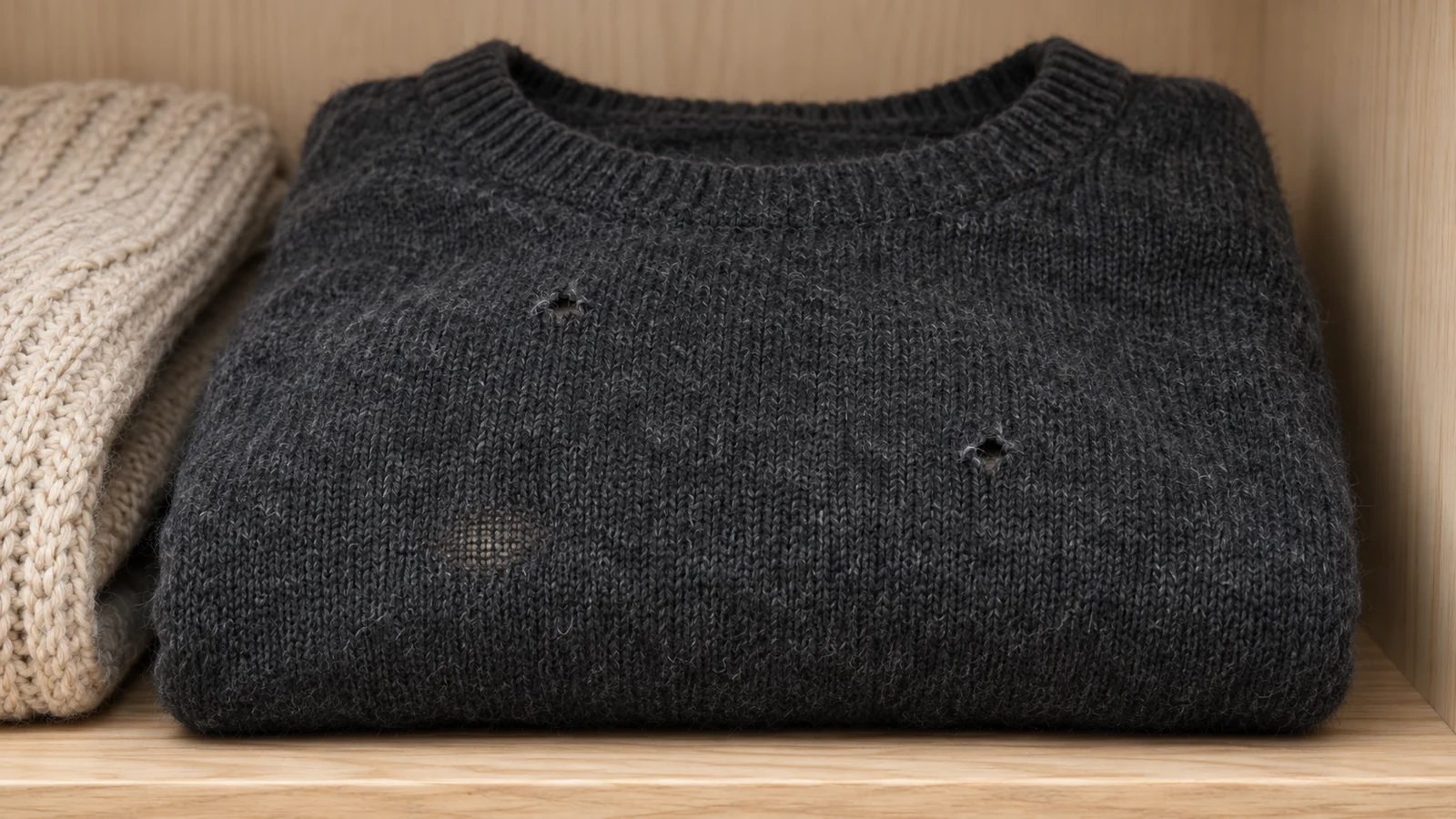
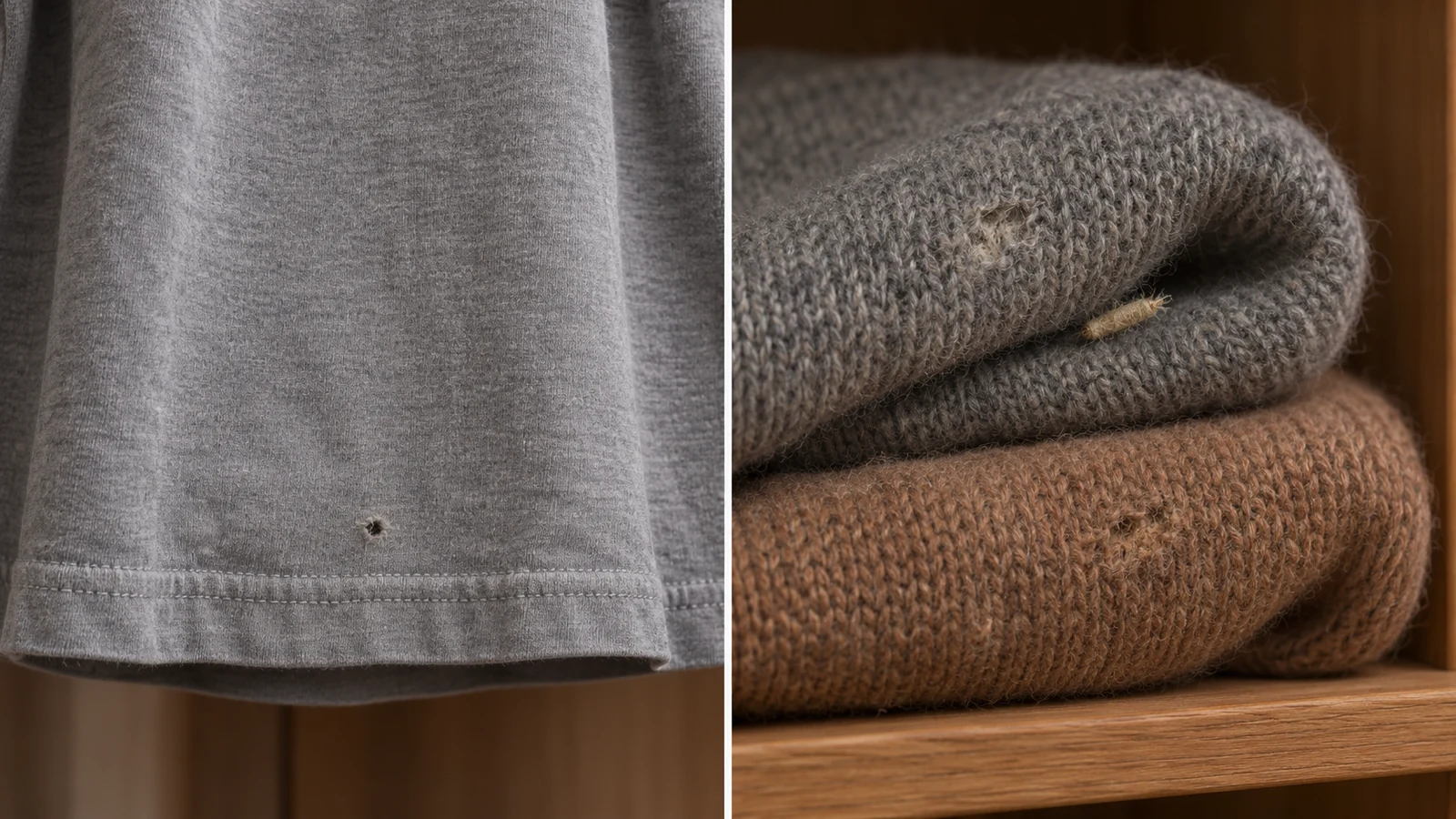
You pull a wool sweater out of the closet and find several small holes. Then you notice a pinhole in a cotton T-shirt near the waistband. Did clothes moths cause both, or are two different things happening?
Holes can come from fabric-feeding insects, but also from rubbing, snags, weakened fibers, or laundry-related damage. The useful starting point is the garment, the location of the holes, and any evidence nearby, not the shape of a hole by itself.
What clothes moth damage looks like
Clothes moth larvae, not adult moths, feed on vulnerable materials. Wool, cashmere, fur, feathers, and some other animal-derived fibers are particularly susceptible. A garment with a wool blend can also be affected. A hole in a pure polyester shirt is much less suggestive of clothes moth feeding, especially without other signs.
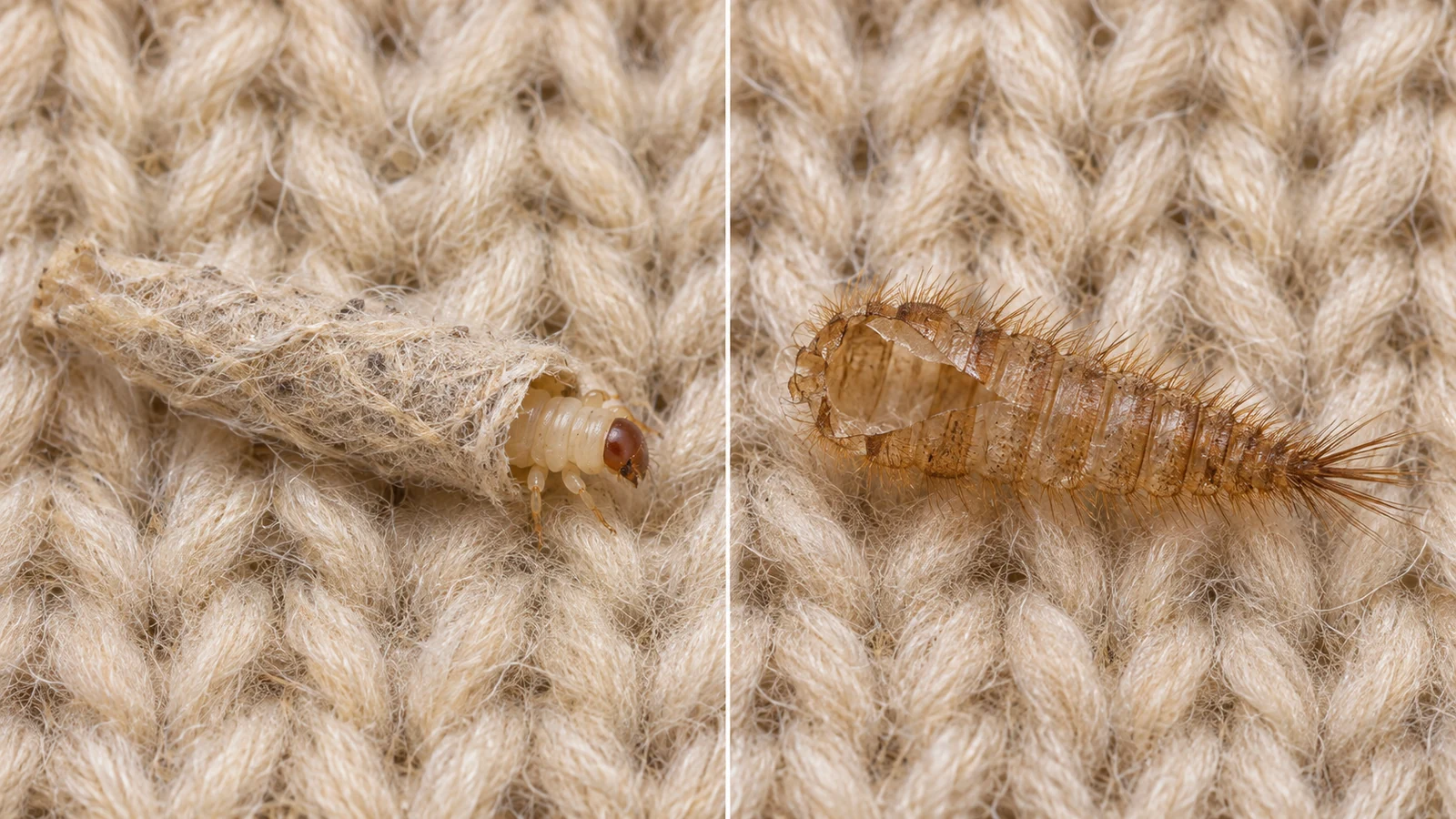
Larvae may leave irregular holes, shallow patches where fibers look grazed or thinned, fine silk webbing, or a small portable case made of silk and fabric fibers. They tend to feed in protected places such as folds, under collars, along cuffs, and inside stored clothing. The same hole appearance can result from different causes, so nearby larval evidence is more informative than the outline of the damage.

Identification in 30 Seconds
- Check the fabric: Wool, cashmere, and animal-fiber blends make clothes moth feeding more plausible.
- Check the setting: Long-stored garments or undisturbed closet corners deserve a closer look.
- Look beside the damage: Silken tubes, attached cases, tiny larvae, and granular debris can strengthen the moth hypothesis.
- Check for alternatives: Bristly shed skins suggest carpet beetles; repeated holes at a rubbing point suggest wear.
Finding one damaged item still leaves questions. A garment can be eaten in one spot and then worn or washed before the weakened threads finally separate. You need to examine more than the open hole to establish what happened.
Inspect the clothing and the places it was stored

Lay the affected garment flat in good light. Check both sides, including seams, folds, pocket edges, collars, and cuffs. Gently separate the layers where fabric overlaps. Look for fine silk, small cream-colored larvae with darker heads, or a narrow case that blends into the fibers. Avoid pulling at fragile holes just to see farther inside.
Then inspect the other clothes that touched it and the nearby drawer or closet shelf. Check folded woolens, the underside of stored blankets, fabric-covered storage surfaces, and lint in quiet corners. Clothes moth activity is often more noticeable in items that have sat undisturbed than in clothes you handle every day.
Keep your observations simple:
- Map the holes. Are they scattered across stored wool, concentrated along one seam, or repeatedly appearing at the same spot on shirts you wear?
- Look for actual insect traces. Save a clear photograph or a small specimen if you find a larva, case, or shed skin; do not identify a pest from a blurry hole photo.
- Check nearby fabrics. Similar fresh-looking damage and associated traces on more than one vulnerable item call for a wider inspection.
- Record what is absent. If the closet and neighboring garments show no feeding traces, look seriously at friction, hooks, zippers, and weakened yarn.
Identification Mistakes
- Assuming every small round hole was made by a moth.
- Treating one flying moth as proof that larvae damaged the clothing.
- Spraying an entire closet before identifying the cause.
Key Clue
A clothes moth larva or its silken tube or case on the affected textile, especially near feeding damage, is much more useful evidence than the hole’s size or shape.
What to Watch For
Carpet beetle larvae also feed on some animal fibers. Their bristly larvae and brown, hairy-looking cast skins may point away from clothes moths, even when the fabric damage looks similar.
What the other clues mean
A few small holes near the front waist of several frequently worn T-shirts can fit repeated rubbing against a pants button, buckle, countertop, or another hard surface. Snags from zippers and hooks, chemical damage, and yarn weakness also belong on the list. When holes repeatedly occur at a contact point and no insects or larval traces turn up, investigate the mechanical source first.
By contrast, a wool sweater stored for months with grazed patches, silk webbing, and a larva nearby gives a stronger reason to suspect clothes moth feeding. Carpet beetles remain a separate possibility when the evidence is bristly cast skins rather than silk. Neither fabric type nor hole pattern alone identifies the insect.
Use these combinations to choose the next check:
| What you find | More plausible explanation | Next check |
|---|---|---|
| Stored wool with silk strands or a portable case close to damaged fibers | Clothes moth larvae may have fed there | Examine the case or larva and neighboring animal-fiber items |
| Wool or fur damage with bristly brown shed skins, but no silk | Carpet beetle larvae deserve consideration | Identify the skin or larva and inspect sheltered edges |
| Pinhole damage repeatedly at the waistband of worn T-shirts | Friction or snagging may be responsible | Check buttons, belts, counters, zippers, and weakened threads |
| Several stored fabrics with new-looking damage but no identifiable insect traces | Cause remains unresolved | Inspect the storage area and preserve any specimen you find |
Does one damaged sweater mean an active infestation?
One garment with old holes is a reason to inspect, not a reason to treat every drawer. If other clothes are intact, you find no larvae or cases, and you cannot establish that the damage is recent, start by keeping the garment separate and checking the storage area more carefully.
Concern increases when multiple vulnerable items show damage, you find living larvae or fresh-looking cases, or traces appear in several undisturbed storage places. That pattern warrants checking surrounding woolens, rugs, upholstery, and debris where fabric pests can develop. The aim is to establish whether feeding is ongoing and where its source lies.
A moth pheromone trap can sometimes help monitor adult male clothes moths when the lure targets the correct species. It cannot inspect the fabric for you, detect every life stage, or certify a closet pest-free when empty. Use the findings on the textiles as the main evidence.
Good to Know
A hole noticed after washing may have started as barely visible fiber damage before the wash. Laundering can enlarge a weak spot or make it easier to see, so the moment you discover the hole is not necessarily when the damage began.


