How-To
How to prevent wool moth damage in stored clothes
Keep stored wool and cashmere protected with a practical routine for cleaning, sealed storage, and ongoing checks. Learn which storage details matter and where cedar and moth traps fall short.

A sweater can look clean enough to put away while still carrying traces of perspiration or food. Clothes-moth larvae favor soiled animal fibers, and garments left undisturbed give them time to feed unnoticed.
Protecting wool and cashmere starts with how you put them away. The routine below is for preventing damage, including after a previous infestation has been resolved.
- Difficulty: Routine sorting, vacuuming, and garment care.
- Equipment: A vacuum with a crevice tool, cleaning supplies suitable for each garment, and clean bags or containers that seal completely.
Sort your woolens before packing
Gather the wool, cashmere, and wool-blend pieces you plan to store. Include blankets and spare yarn, not just the sweaters you wear most often. Look over each item as you sort, paying attention to folds, seams, collars, and cuffs.
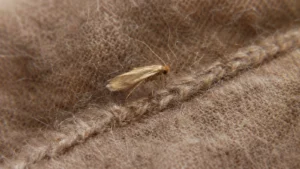
Set aside anything with larvae, webbing, or suspicious damage instead of packing it with the rest. If you are unsure what you have found, use our guide to identifying clothes moths and fabric damage before continuing. An existing infestation needs attention before the storage routine begins.
Clean the space and pack your woolens
Work through one shelf, drawer, or group of garments at a time. Clear the space so you can reach the corners and floor edges where lint and hair collect. Keep items awaiting cleaning separate from those ready to pack.
1. Clean each garment before long-term storage
Follow the care label for washing and drying, or have the item professionally cleaned when its instructions call for that. Include lightly worn pieces that have no obvious stains. Cleaning before a long period of storage removes residues that can make the fibers more attractive to moth larvae.
Let the textile dry completely before packing it. Check thick cuffs, seams, and folds for remaining dampness. Use the drying method allowed by the label; raising the heat to speed things up may damage the garment.
A gentle wool wash is a cleaning step, not a guaranteed treatment for hidden moth eggs or larvae. If you found signs of activity during sorting, keep that item separate and arrange treatment suited to the textile.
2. Remove lint and hair from the storage area
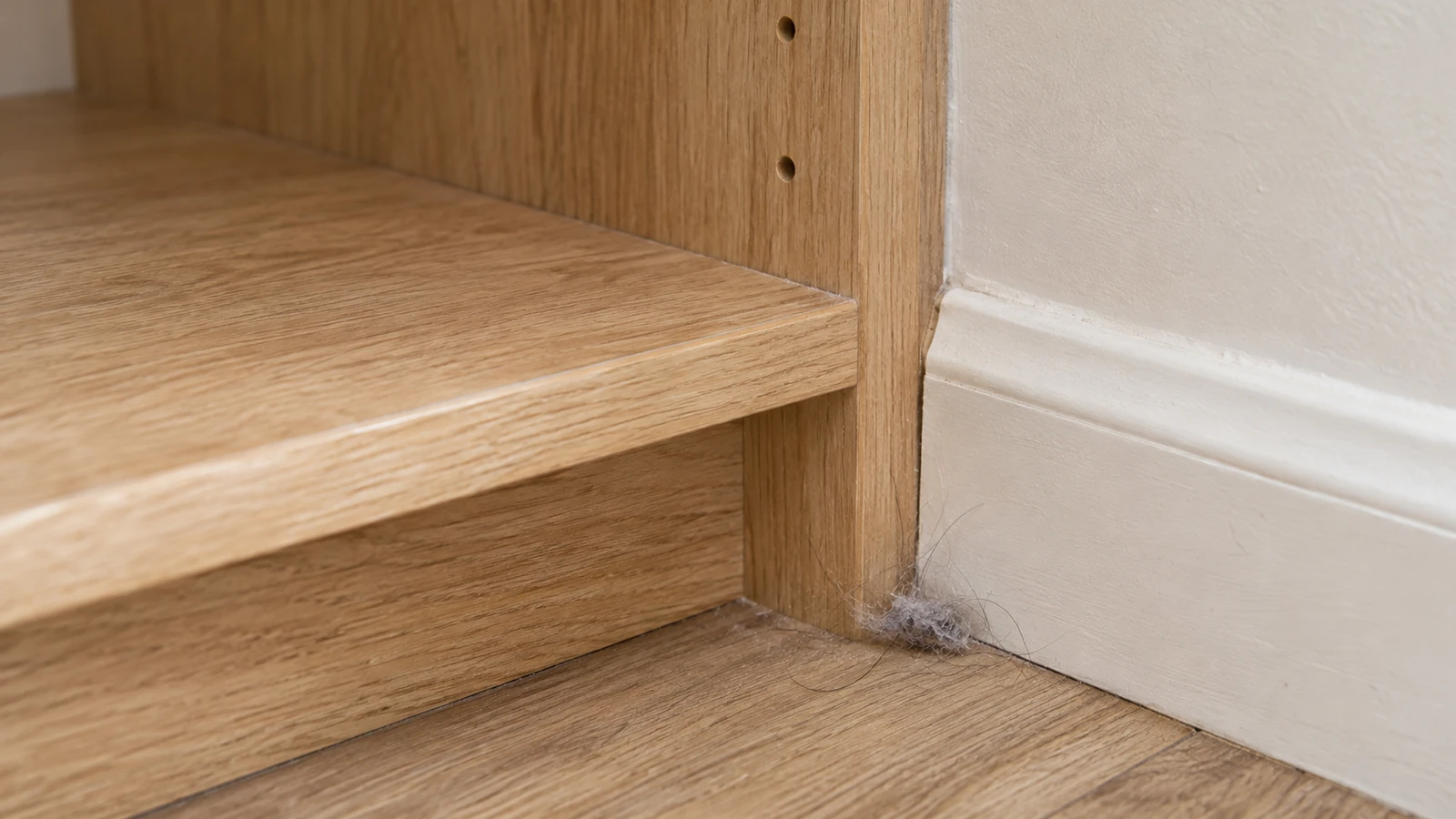
Vacuum the empty shelf or drawer, its joints and corners, and the nearby floor and baseboards. Reach behind stored items and beneath movable furniture where wool lint and pet hair accumulate. These overlooked materials can support clothes moths even when the main stack of sweaters looks tidy.
Clean reusable containers before refilling them. If you wipe down a shelf or box, let it dry fully before the clothes go back.
3. Pack clean items behind a complete seal
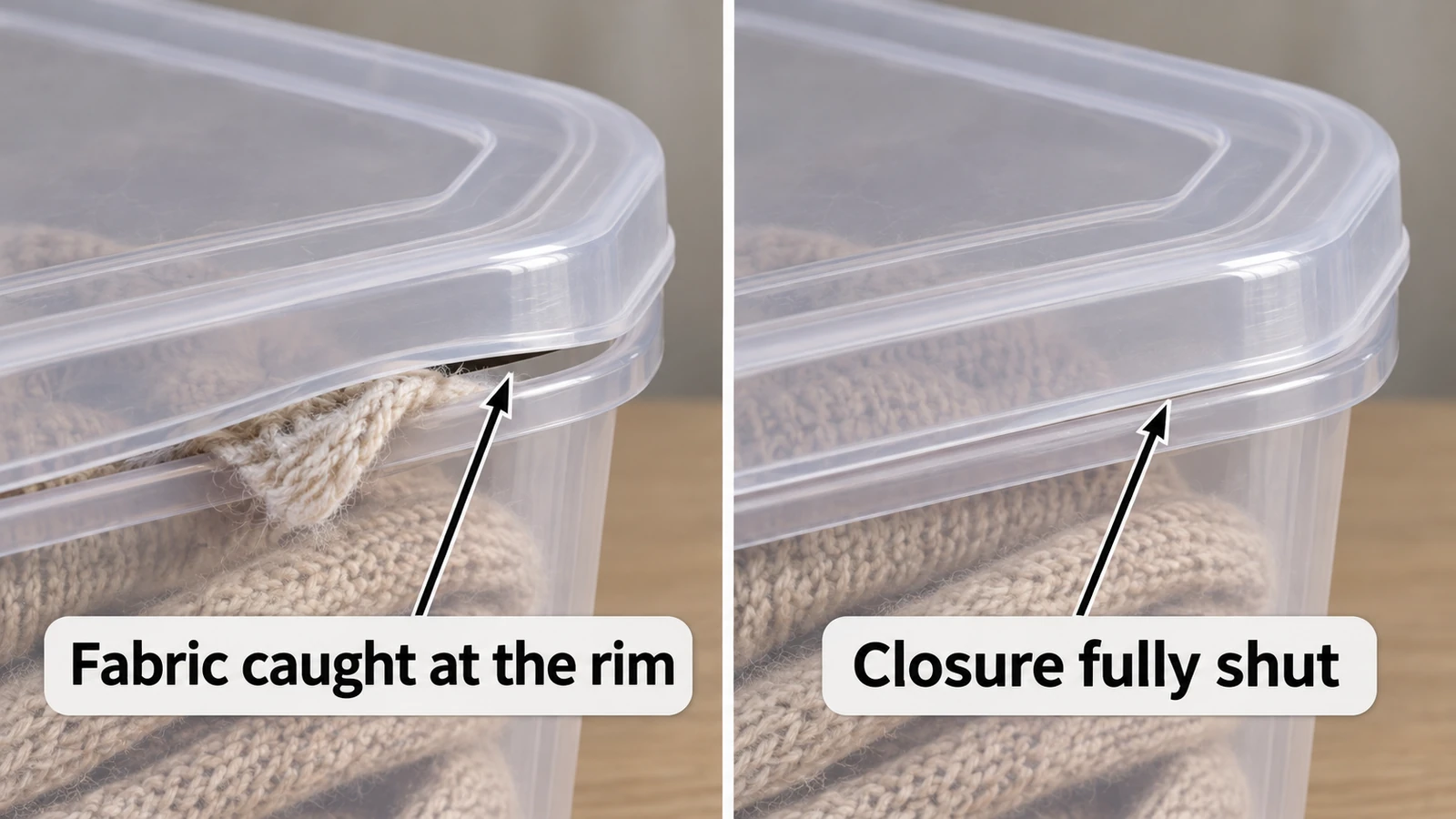
Use intact airtight bags or tightly sealing containers for pieces that will stay unused. Check the entire lid rim or zipper, including its ends. A lid that clips down at two points can still leave a gap elsewhere.
Keep fabric clear of the closing edge and leave enough room for the lid or zipper to shut without strain. Replace a split bag, damaged closure, or warped lid. Vacuum compression is optional; a complete closure is the part that matters for keeping moths out.
A hanging cover with an open neck or a zipper left partly open leaves an access route. Check how it closes rather than assuming that any garment bag protects against moths.
Avoid shortcuts that leave wool exposed
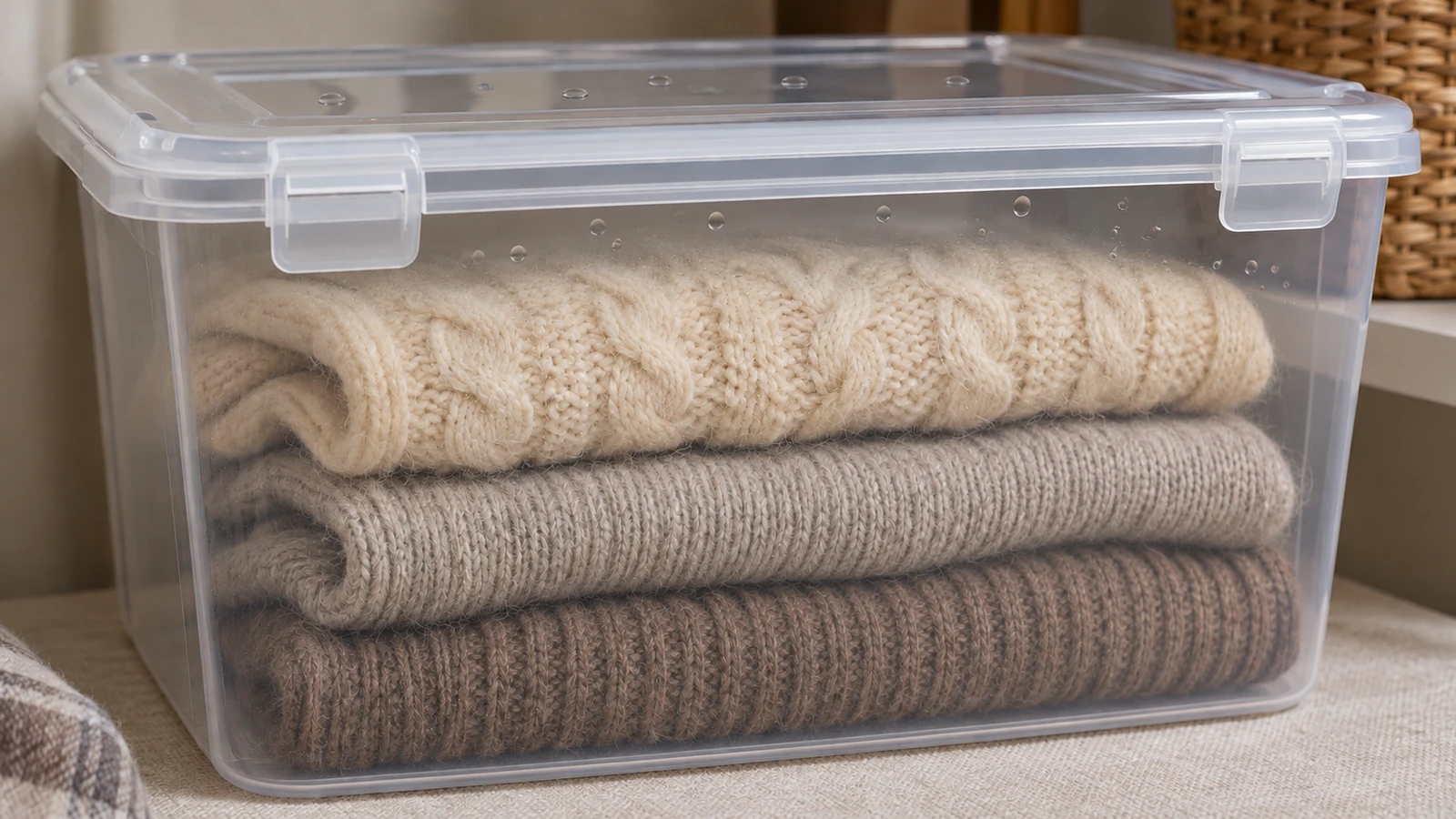
Sealed storage needs dry contents and a dry location. Damp wool or moisture left in a wiped container can create a different problem inside the bag. If condensation appears, remove the items, let them dry according to their care instructions, and correct the damp storage conditions before repacking.
Cedar blocks and lavender sachets do not replace cleaning and sealed storage. A strong scent is not a useful test of protection, and adding more fragrance leaves gaps in a container unchanged.
Mothballs are pesticides, not ordinary closet fresheners. If you choose to use them, follow the current product label, including its container requirements and precautions for children and pets. Never scatter them in an open closet.
Check the fabric as well as the container
After packing, check that each closure is fully shut and no garment is trapped in it. When you next take an item out, examine its folds and seams before wearing it or returning it to storage. Compare its condition with what you saw when packing.

Look for new thinning, webbing, larvae, or fresh damage. Check neighboring susceptible items if you find a problem. Over time, the clothes should show no fresh damage, and the bags or boxes should stay clean and fully closed.
Clothes-moth pheromone traps can help reveal adult activity nearby. They do not protect the fabric by themselves or replace inspection. For the choice of lure and setup, see our comparison of webbing moth traps.
If moth activity appears despite the routine
Keep the affected item apart from clean stored woolens and inspect the rest of its storage group. Check whether insects may have been packed with it or whether the enclosure has a gap. Larvae already on a garment can keep feeding inside a sealed container.
If you confirm activity, the next task is getting rid of clothes moths in the affected items and finding the source. Do that before returning them to the prevention routine. If you first notice a hole while unpacking, identify its cause before treating it as new moth activity.
When Should You Call a Professional?
Seek help when fresh damage keeps appearing despite addressing affected items, or when the source extends into inaccessible areas or furnishings you cannot treat appropriately. A textile cleaner can advise on garment-safe care; a pest professional can investigate a persistent source.
Make protection easy to maintain
Keep frequently worn woolens accessible and check them during ordinary use. As a piece drops out of regular wear, clean it for storage rather than leaving it untouched at the back of the closet.
Choose manageable storage groups so you can retrieve one sweater without emptying a crowded box. Close the bag or container again as soon as you finish, and keep worn pieces out of the clean long-term storage group.
Inspect secondhand garments, inherited blankets, and additions to a yarn stash before they join your existing textiles. Clean items that need it using a method suited to the material, and keep anything showing signs of pests separate until the problem has been addressed. Keep checking stored pieces periodically, including the ones that rarely come out.