Identification
Fungus gnat larvae in houseplant soil: what to look for
Recognize fungus gnat larvae by their translucent bodies and dark heads, check potting mix gently, and tell a likely breeding source from unrelated plant symptoms.
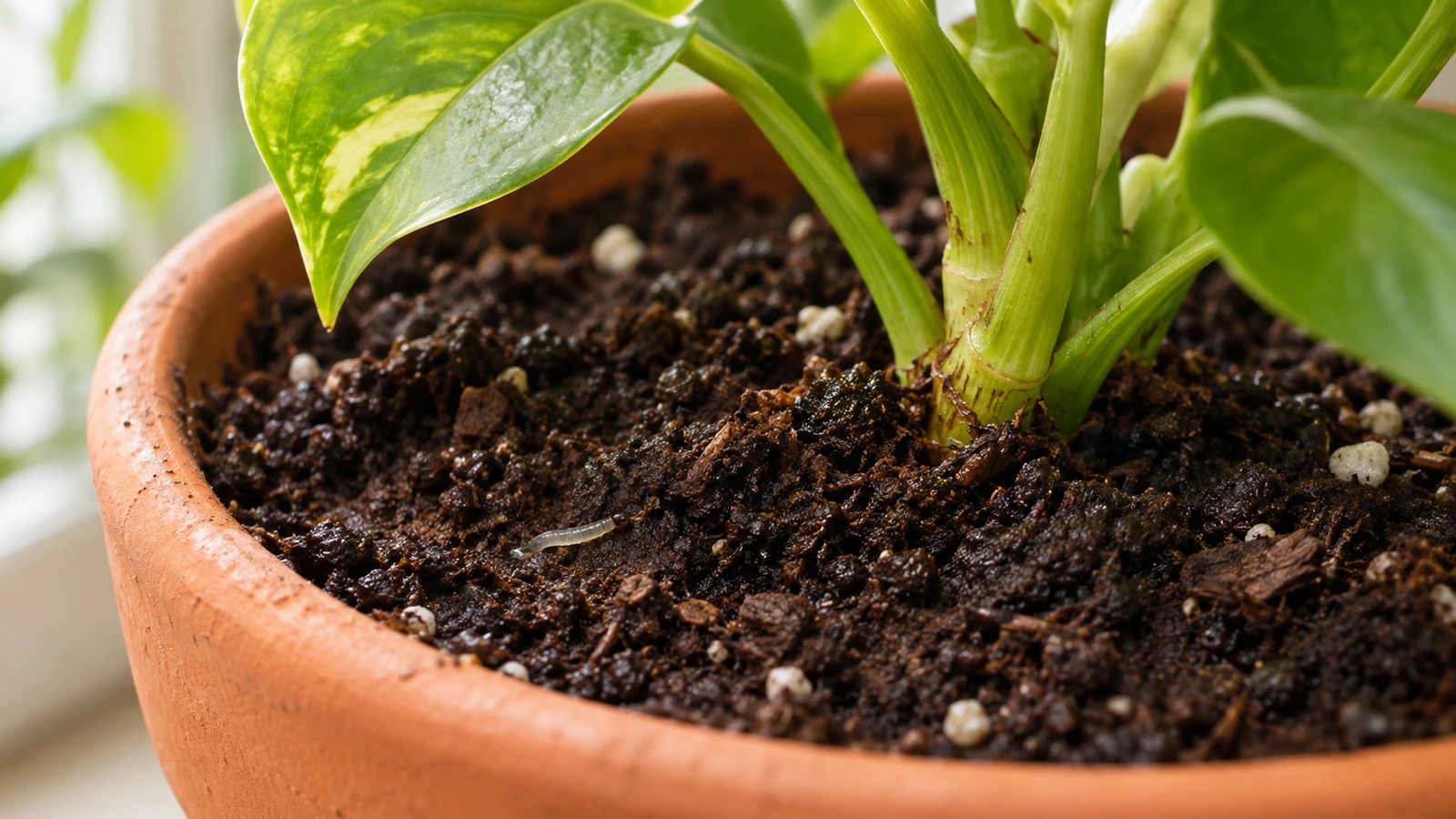
You notice a tiny pale worm moving through the potting mix, perhaps after watering a plant. It could be a fungus gnat larva, especially if small dark flies have been hovering around the pot. The important clue is not simply that the soil is wet or that something white is moving.
Look at the creature’s body, where it was found, and whether the same pot is producing adult gnats. These observations can help you identify a breeding source without pulling apart a healthy plant or treating every bit of soil life as a pest.
What fungus gnat larvae look like in potting mix
Fungus gnat larvae are slender, legless, and wormlike, with a whitish to nearly transparent body and a small, distinctly dark head capsule. Mature larvae are commonly about 1/4 inch long; younger ones are smaller and harder to see. That dark head is a more useful identifying feature than the body’s pale color alone.
They develop in damp potting mix, where they feed mainly on fungi and decaying organic matter. Some also feed on fine roots. Look near the upper layer of moist growing medium rather than on the leaves. A close view against dark soil may reveal slow wriggling movement.
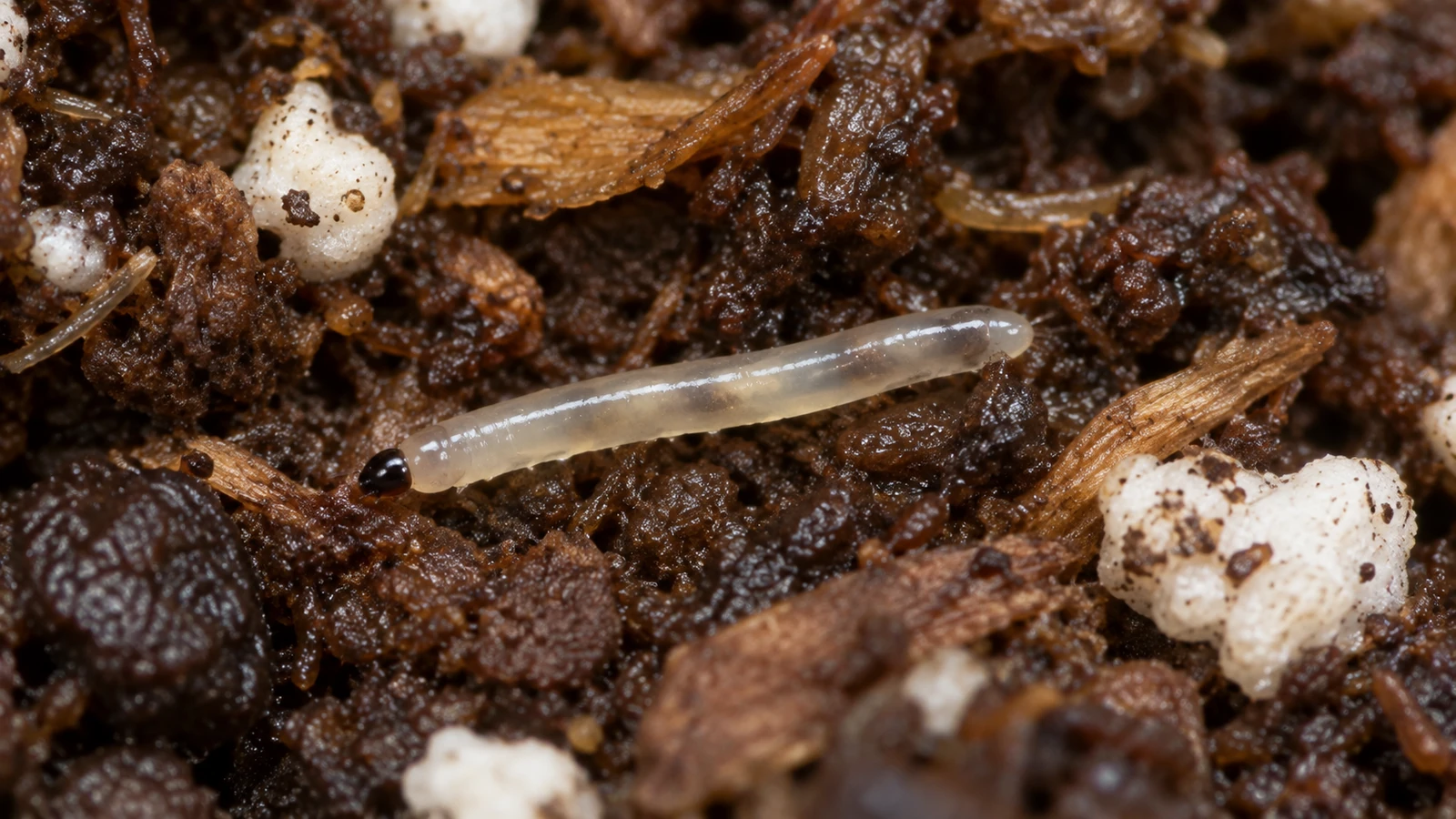
Identification in 30 Seconds
- Look for a thin, pale or translucent, legless body.
- Check whether one end has a clearly darker, shiny head.
- Note whether it is moving through damp potting mix rather than hopping across the surface.
- Look for small adult gnats repeatedly appearing near the same pot.
A fine root, potting-mix fiber, or strand of fungus can resemble a pale larva in a blurry photo. Watch for actual movement and a defined head before drawing a conclusion. Tiny animals that jump when disturbed are more likely to be springtails than fungus gnat larvae.
Check the suspected pot without disturbing the roots
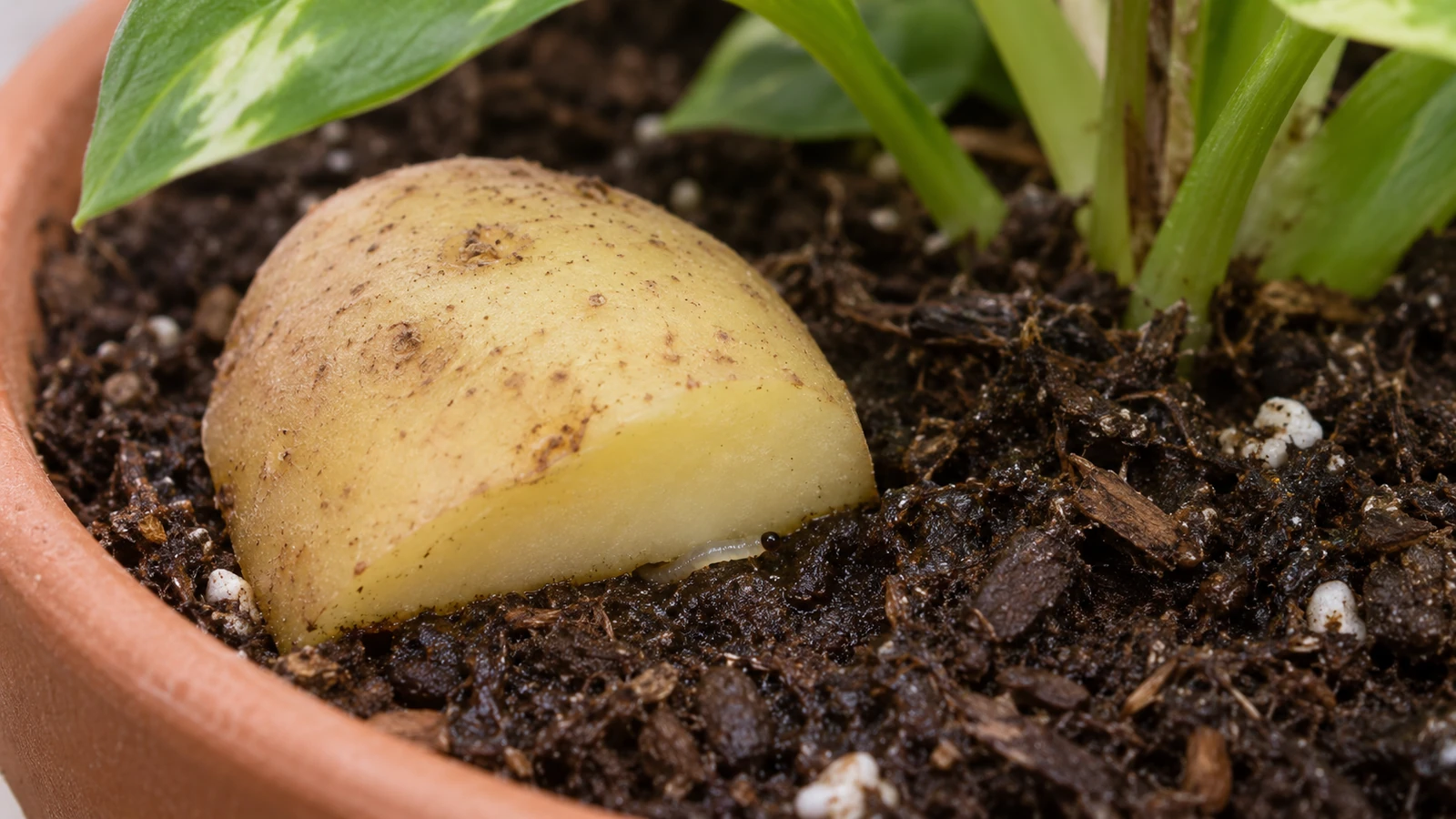
Start with the pot where you noticed the moving creature or where adults seem to emerge. Use good light and inspect the soil surface, the edge near the stem, and a small amount of loose mix just beneath the surface. You are looking for an intact dark-headed larva, not just pale flecks.
If the larvae are difficult to spot, rest a small piece of raw potato cut-side against the potting mix. Check the underside after a day or two and remove it afterward. Larvae may gather beneath it, making them easier to examine. This is a short diagnostic check, not a way to eliminate them.
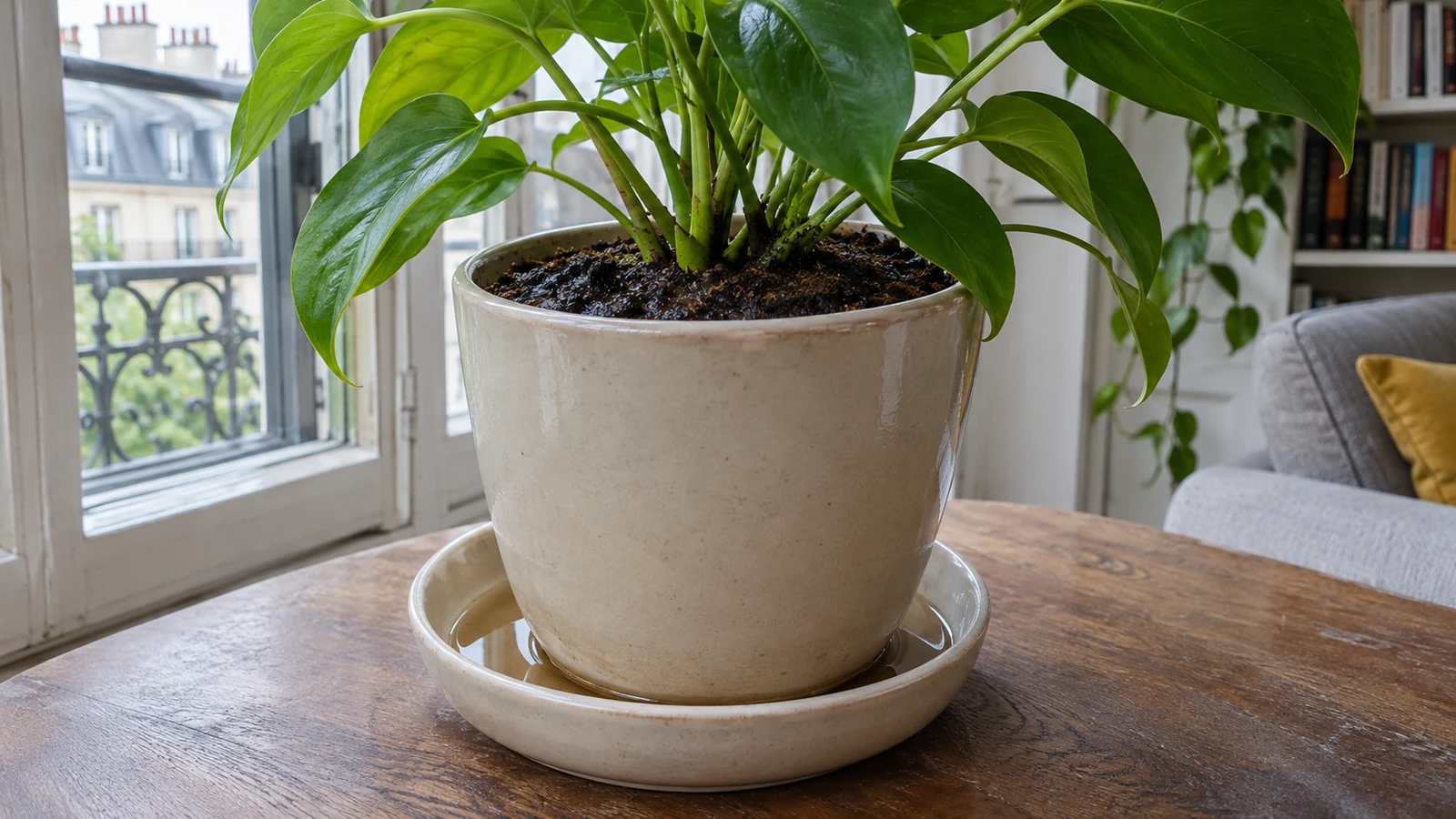
Compare nearby pots as well. A pot that stays moist and contains decomposing leaves or other organic material provides favorable conditions, but dampness alone is not evidence of larvae. Check the drainage hole and saucer for standing water, and avoid damaging roots just to search deeper.
Adult gnats may rest on the pot rim or fly up when a plant is moved or watered. Their presence helps narrow the likely source, but an adult seen by a window could have come from another pot. Use the insect’s appearance and the pot’s conditions together rather than relying on a single sighting.
Identification Mistakes
- Calling every pale thread or tiny soil animal a fungus gnat larva without checking for a dark head and wormlike movement.
- Treating yellow leaves, wet soil, or captured adult flies as proof that larvae are damaging that plant’s roots.
Key Clue
Finding translucent, dark-headed larvae in the same pot that repeatedly produces adult fungus gnats is strong evidence that the potting mix is a breeding source.
What to Watch For
Springtails also live in moist potting mix. They are tiny insects that often jump when disturbed, rather than moving as slender, legless larvae. Their presence calls for a different interpretation.
How to interpret what you find
An identifiable larva tells you more than the number of small flies in a room. Seeing multiple larvae in a pot, particularly alongside adults emerging from it, makes active development in that growing medium likely. Finding none in one quick check leaves room for a closer look at other pots.
Plant symptoms need their own assessment. Wilting, yellowing, and slow growth can follow poor drainage, watering problems, or unhealthy roots, even when fungus gnats are present. Use the observations together before deciding whether a control method is necessary.
Use this comparison to choose the next check:
| Observation | What it suggests | Useful next check |
|---|---|---|
| Pale, legless larvae with dark heads in damp mix | Fungus gnat larvae are likely present | Check whether adult gnats repeatedly emerge from that pot |
| Tiny white or gray insects that hop when disturbed | Springtails are a more likely explanation | Look closely at movement and body shape |
| Adult gnats near several pots, with no larvae seen yet | The breeding pot remains uncertain | Inspect the most consistently moist pots again |
| Yellowing or wilted plant, without identifiable larvae | Plant stress may have another cause | Check watering, drainage, and root health before blaming gnats |
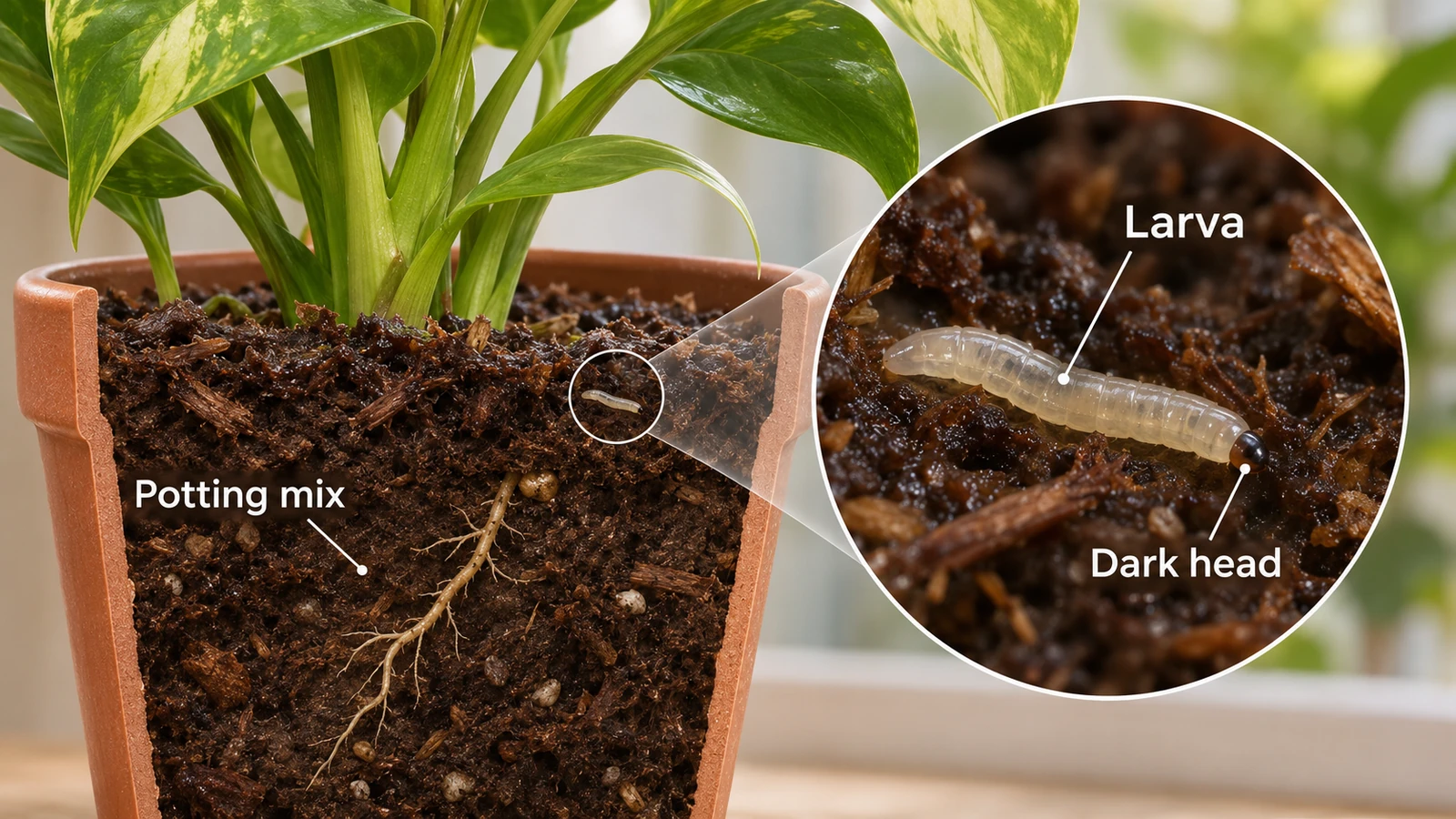
Are the larvae actually harming the plant?
For many established houseplants, a few fungus gnat larvae are more a sign of favorable breeding conditions than a cause of serious damage. Large populations can feed on delicate roots, and seedlings or newly rooted cuttings are more vulnerable than mature, well-established plants.
A plant that is struggling in persistently wet mix needs attention to its growing conditions as well as any insects. Check whether water drains freely, whether the saucer remains filled, and whether the plant’s watering needs are being met. If repotting is already necessary because of root problems, that is an opportunity to inspect the roots; don’t uproot an otherwise healthy plant solely to hunt for larvae.
Repeated dark-headed larvae in several pots, together with continuing adult activity, warrant more attention than one uncertain white speck. The aim is to confirm where development is occurring and whether a vulnerable plant is affected, not to assign an unsupported numerical infestation score.