Guide
Ant inspection: What a professional checks and when to call
An ant inspection should identify likely species, activity routes and possible nesting clues before treatment is proposed. See when professional help is worth it and what to ask.
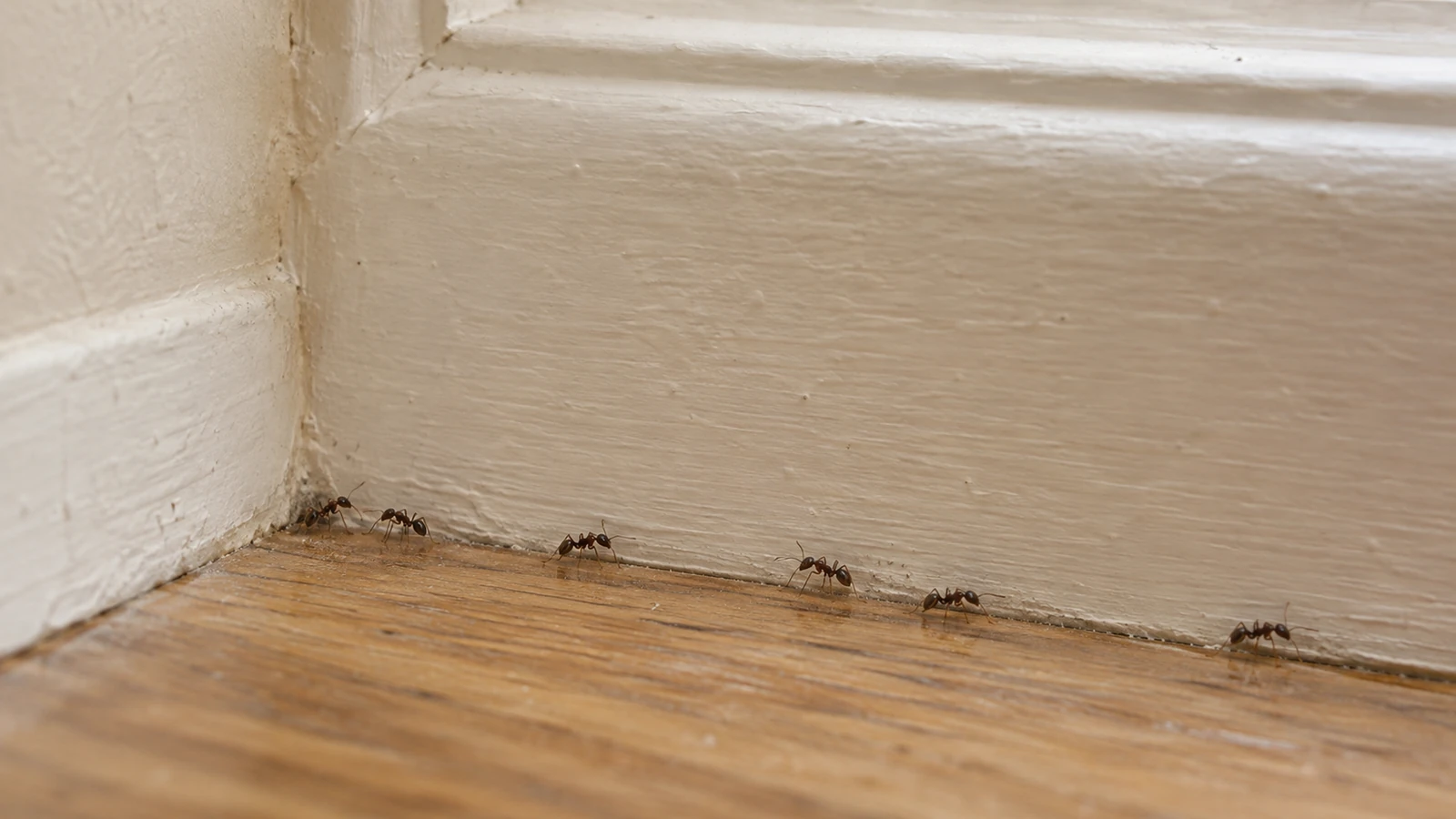
Ants keep returning to the same kitchen cabinet, even after you clean the counter. You can see where they disappear beneath the baseboard, but you cannot tell whether they are entering from outdoors or nesting somewhere in the building. Is it time to arrange an ant inspection?
A useful inspection should answer that question with evidence, not simply lead to a routine spray. Here is what a qualified pest professional can investigate, when outside help is worth considering, and what you should know before agreeing to treatment.
What an ant inspection can actually tell you
A professional ant inspection is an assessment of the insects, the places they travel, possible entry points, and conditions that allow the activity to continue. The aim is to distinguish occasional ants foraging from outdoors from an ongoing problem that needs more investigation or targeted control.
An inspector may identify an ant from a suitable specimen, trace active trails, check accessible areas near food and water, and look for possible nesting evidence. Some colonies are hidden or outside the property, so an inspection may narrow the possibilities without locating every nest. A responsible report distinguishes what was observed from what is only suspected.
Key Takeaways
- A few ants by an exterior door rarely justify an immediate service contract.
- Repeated indoor trails, concealed activity or possible wood-nesting evidence make a closer inspection more useful.
- A good visit considers ant identity, access, moisture, food sources and nest clues before proposing treatment.
- You can ask for findings and options without committing to pesticide application.
What a credible inspector looks for
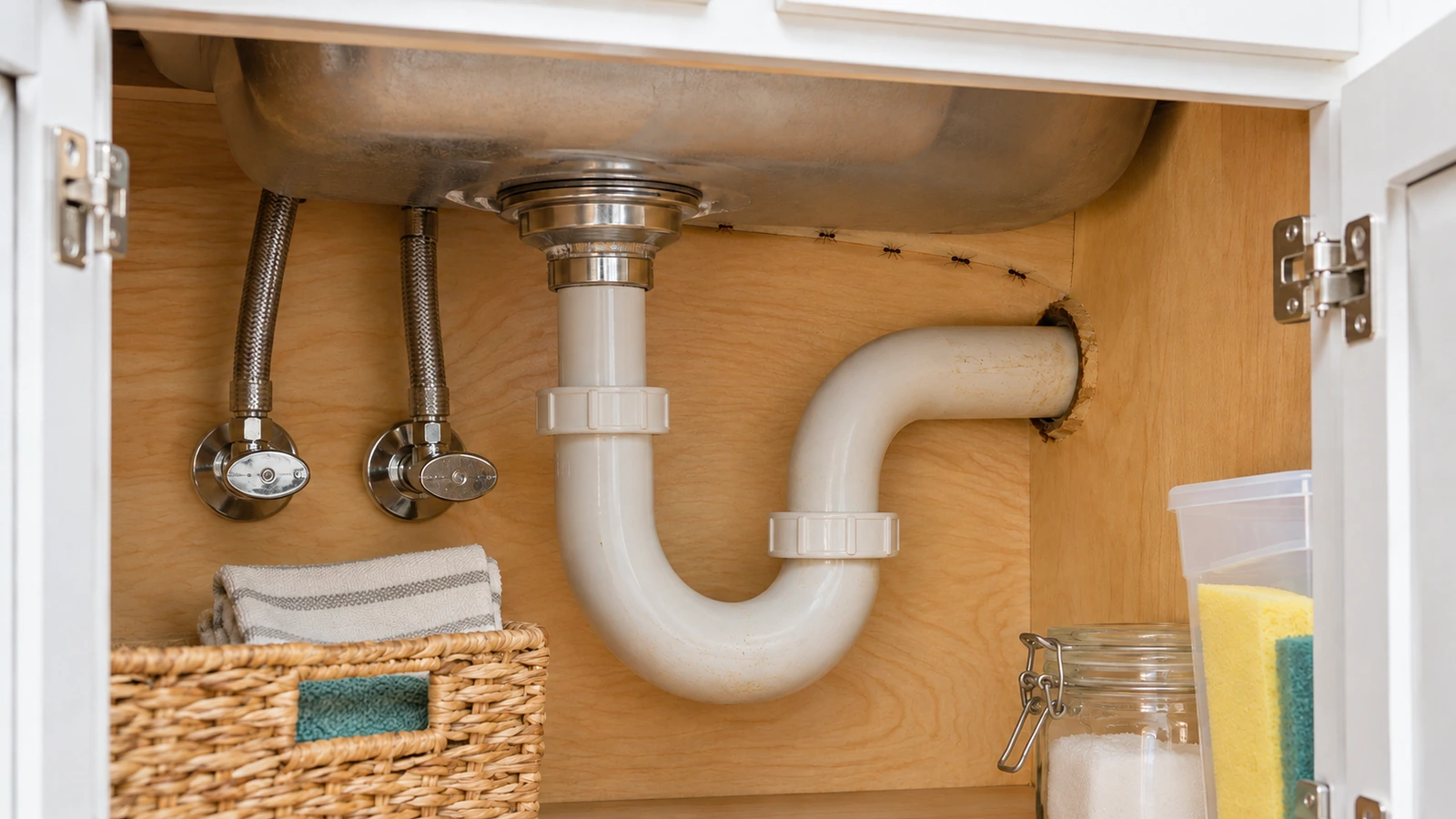
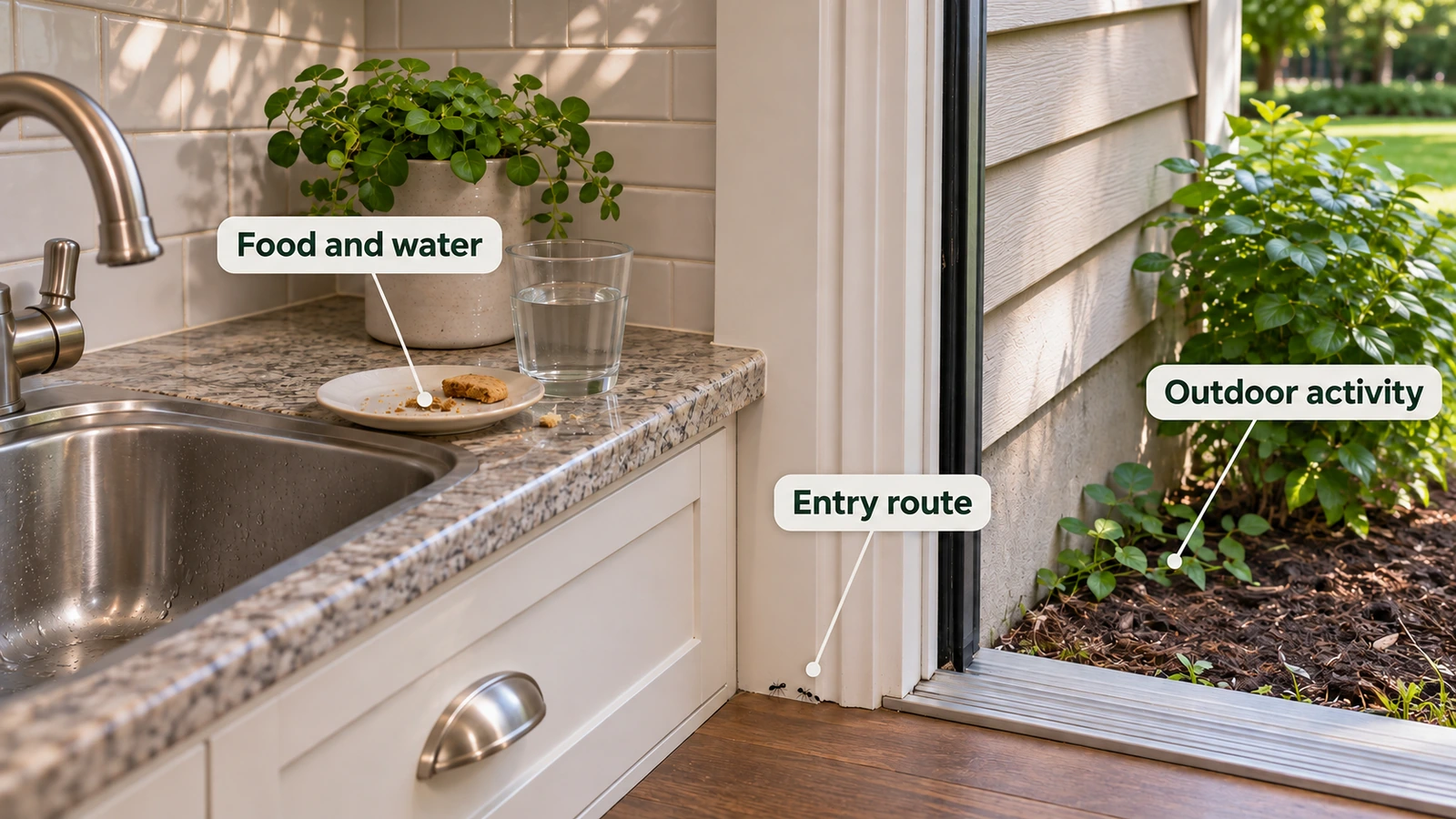
Inside the home, an inspector follows where ants appear and disappear rather than treating every visible worker as a separate problem. Common checkpoints include cabinet edges, sinks, plumbing penetrations, door frames, window gaps and accessible wall or floor junctions. The location of the trail is often more useful than the number of ants visible at one moment.
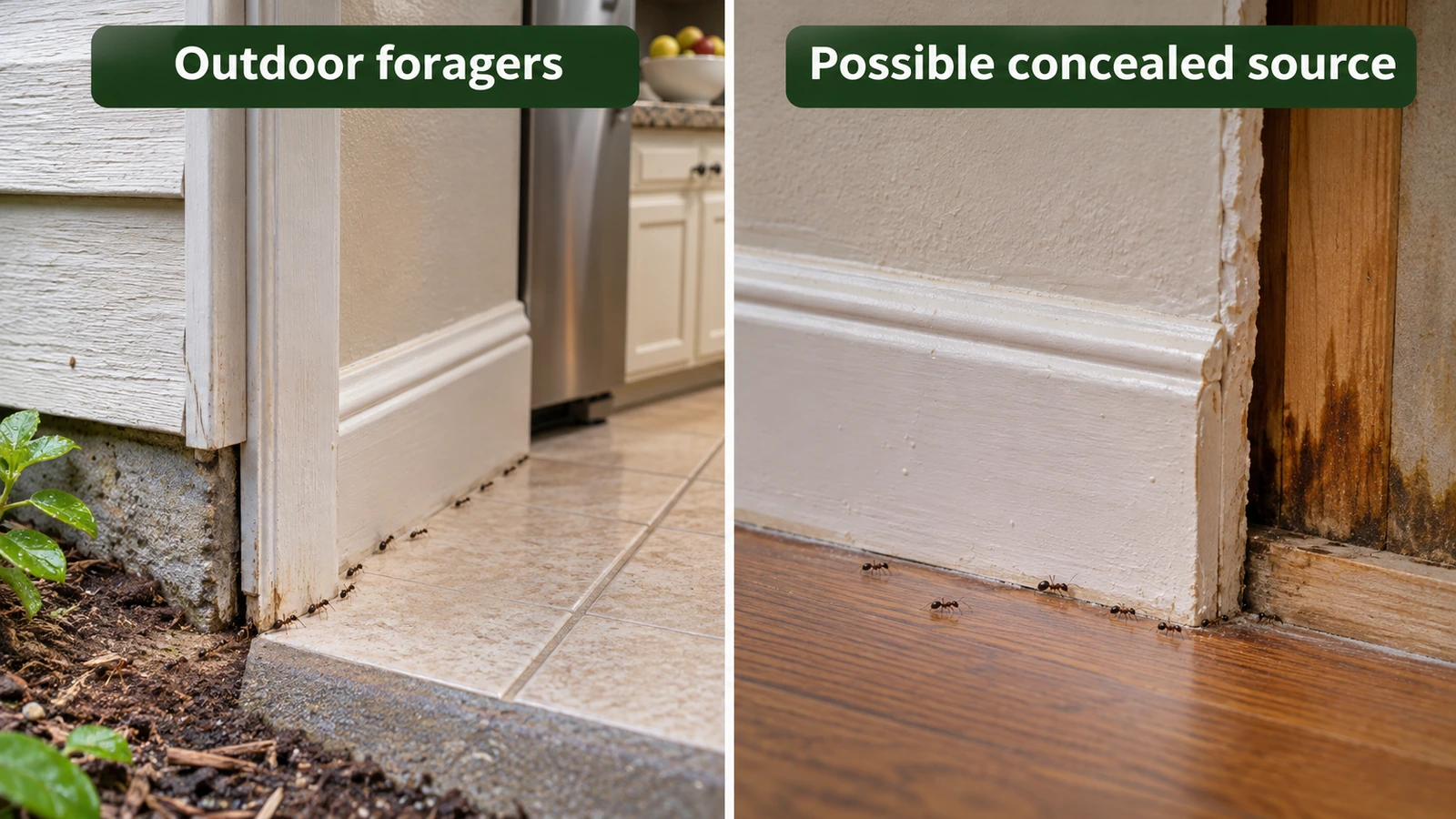
Outside, the same trail may lead to a foundation crack, a plant touching the siding, a damp area, or an outdoor nesting site. An inspector may check vegetation, mulch, utility entry points and other sheltered routes near the affected room. Not every outdoor colony needs to be eliminated.
If the species is uncertain, a clear specimen or photograph can help determine what belongs on the inspection list. Our guide to common ant types in the U.S. explains why size and color alone are unreliable shortcuts. The job of this visit is to connect the identification to the actual activity at your home.
Why the source matters more than the visible trail
Some ants enter from outdoor colonies to collect food or water, then return through a small gap. Others may nest in potted plants, concealed building spaces or damp materials, depending on the species. A line of workers near a kitchen sink identifies a route, not necessarily the nest.
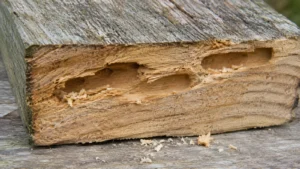
Carpenter ants deserve a more specific check when large ants recur around damp or damaged wood, or when suspicious sawdust-like debris appears. These ants excavate galleries in wood; they do not eat it. The presence of carpenter ants outdoors alone is not evidence of structural damage. See the separate guide to carpenter ant damage for the relevant physical clues.
That difference changes the next step: sealing a simple outside entry may solve a nuisance invasion, while recurring ants associated with damp wood may require locating moisture problems and investigating accessible cavities. The inspector should explain which explanation fits the available evidence.
When is a professional ant inspection worth it?
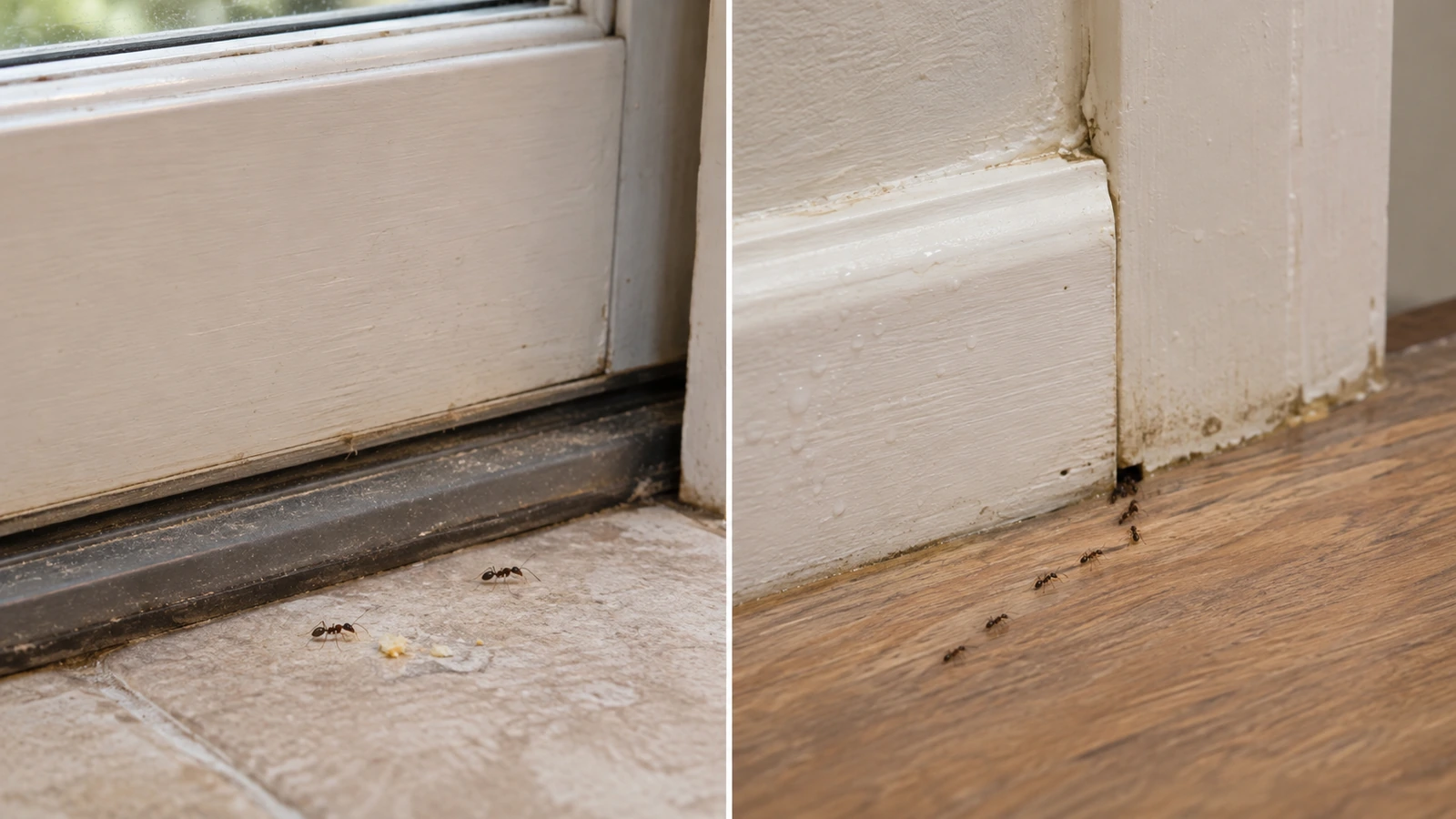
Start with the pattern. One brief trail leading to crumbs near an open door is usually a reasonable situation for cleaning, observing the entry route and trying basic exclusion. If the ants stop returning, a paid inspection may add little.
A closer assessment becomes more worthwhile when the activity persists despite sensible cleaning and exclusion, appears in multiple rooms, emerges repeatedly from inaccessible areas, or suggests a nest within building materials. Unexplained wood debris or moisture damage alongside suspected carpenter ants also raises the value of a targeted inspection.
Consider the observation, not an invented numerical threshold:
- Low concern: A few occasional ants near an exterior entrance, with an obvious food source and no recurring indoor activity. Start with household measures.
- Worth investigating: Regular trails returning from the same wall or cabinet, several indoor routes, or uncertainty about an inaccessible source. Record the pattern and consider an inspection.
- More time-sensitive: Ants and suspect wood debris near damp structural materials, or a stinging-ant nest where people or pets may disturb it. Keep clear of the area and seek appropriately qualified advice for the specific concern.
For a suspected carpenter-ant nesting problem, the separate guide on when a carpenter ant exterminator makes sense covers the species-specific service decision. A general ant inspection should not be sold as a substitute for evaluating possible structural damage.
Practical Tip
Before cleaning away a recurring trail, note the time, room and exact gap where ants enter or disappear. Keep one clear close-up photograph or safely collected specimen. That small record helps an inspector investigate activity that may be absent during the visit.
Watch For
Be cautious if a service proposal jumps straight to routine spraying without discussing ant identity, probable source or what was actually inspected. If ants emerge from an electrical outlet, do not open or probe the outlet yourself; report the location so it can be assessed safely.
What happens during the visit, and what should you ask?
A useful visit usually begins with questions about when and where ants were seen, what has already been tried, and whether the problem changes with weather or time of day. The inspector should examine the relevant accessible indoor and outdoor areas, look for entry and nesting clues, and discuss any limitations of the assessment.
The outcome may be as simple as repairing a door sweep, reducing a moisture source or monitoring a trail. If a colony or concealed nest appears likely, the professional should explain what additional evidence or access is needed, what targeted treatment may involve, and whether another trade is needed for moisture or damaged wood. An inspection is not proof that everything behind a wall has been seen.
Questions to ask before authorizing work
- Which ants do you think these are, and what observations support that identification?
- Where did you inspect, what evidence points to a nest, and what remains unverified or inaccessible?
- What can I correct without pesticides? If treatment is proposed, why does this particular method fit the species and site?
- What products or active ingredients would be used, where, and what precautions apply to people and pets?
- Will I receive the findings and proposed scope in writing? What follow-up would show that the problem has improved?
Ask whether the inspection itself is separate from any treatment agreement, what is included in the proposed service, and whether return visits are conditional or contractual. License and certification requirements vary by state; verify the provider’s applicable credentials rather than relying on a generic national claim.
Essential Steps
- Before booking: Decide whether the recurring pattern, concealed source or potential damage justifies a visit.
- Before arrival: Record the locations and preserve useful photographs or a specimen; do not dismantle walls, wiring or fixtures.
- During the inspection: Ask what was actually seen and what the suspected source is.
- Before approving treatment: Review the recommended method, limits, safety precautions and follow-up in writing.
After the inspection: prevent the problem from returning
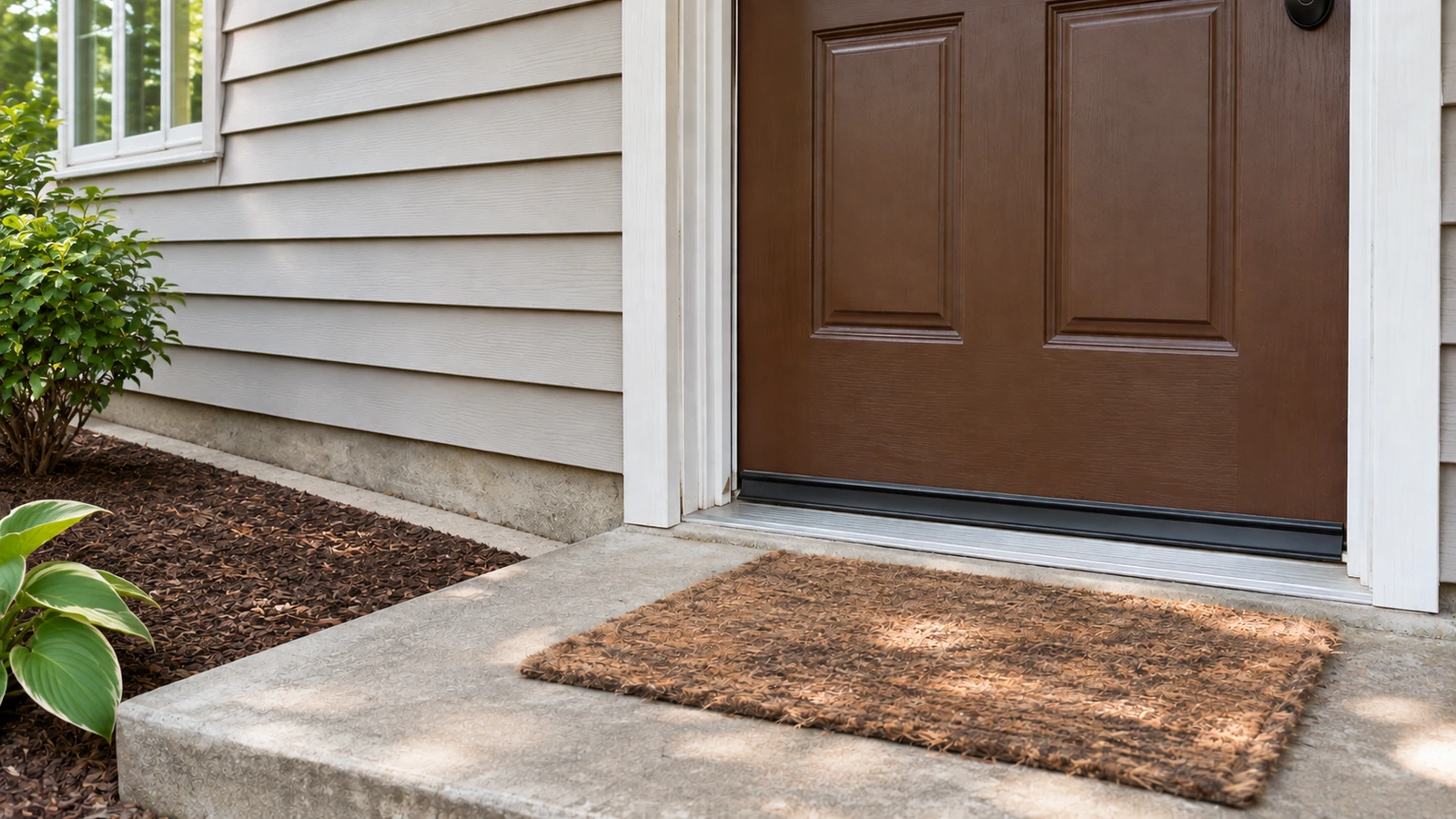
If the evidence points to ants foraging in from outside, the next steps may be ordinary maintenance: store food securely, clean spills, repair leaks, fit a door sweep and close confirmed entry gaps. Keep shrubs and mulch from providing convenient contact with the building. You do not need to remove every ant living in the yard.
If a concealed colony is suspected, agree on a specific plan tied to the ant and the location rather than a vague promise of total eradication. Check the affected areas for renewed activity and document what changes. An inspector may recommend continued observation rather than immediate treatment if the evidence remains uncertain.
The useful measure of a visit is whether it clarifies the source, helps you act proportionately and tells you what to check next. If activity persists after the agreed measures, return to the recorded evidence with the provider rather than repeating the same response without reassessment.
Explore this topic further: