Guide
Do You Need a Carpenter Ant Exterminator? What to Expect
A few carpenter ants may be outdoor visitors, but recurring activity or signs of nesting call for a closer look. Learn when to hire a professional and what a useful inspection and treatment plan should include.

You’ve noticed large ants crossing the kitchen floor again. A pest control company offers to spray around the house, but nobody has established where the ants are coming from. Will that solve the problem, or could a colony be nesting somewhere in the building?
A few carpenter ants may be visiting from outdoors. Persistent indoor activity, evidence of nesting, or an inaccessible suspected colony calls for a different response. Before hiring an exterminator, it helps to know what a useful inspection should establish, what treatment can accomplish, and what happens afterward.
What a carpenter ant exterminator is there to solve
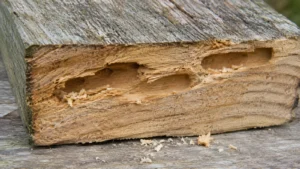
Carpenter ants excavate wood to make nesting galleries. They do not eat it. A colony may have a main nest outdoors and one or more satellite nests, sometimes inside a building. Killing visible workers does not necessarily reach those nests.
A carpenter ant exterminator should help establish the source of the activity, assess likely nesting areas, and recommend a response suited to what was found. That may involve treating a located nest, using bait, addressing an exterior route, or recommending monitoring before any pesticide application.
Pest control and building repairs are separate needs. A technician may identify moisture-damaged wood or a suspicious cavity, but eliminating ants does not restore decayed framing or fix a leaking pipe.
If you are dealing with unidentified household ants rather than a confirmed carpenter ant problem, start with our ants in the house guide.
Key Takeaways
- Occasional workers indoors, especially during warm weather, may come from an outdoor nest.
- Repeated indoor activity, nesting debris, or ants emerging from a building cavity are stronger reasons to request an inspection.
- A treatment plan should explain the suspected colony location and why the selected method fits.
- Effective long-term control may require moisture repairs and a follow-up inspection, not just insecticide.
When is a professional carpenter ant inspection worth it?
One or two carpenter ants moving through a home in warm weather may be foraging from an outdoor colony. That alone is not a reason to assume the structure is infested.
The situation becomes more concerning when workers repeatedly appear indoors, coarse wood shavings collect beneath the same opening, or winged ants emerge from within the building. Carpenter ant activity during winter or unusually cold weather also raises suspicion of an indoor nesting site.

Before paying for treatment, confirm that the insects are actually carpenter ants. Their size and color are useful clues, but they are not sufficient by themselves. Our carpenter ant identification guide can help with that first distinction.
Consider booking an inspection when:
- Ants repeatedly emerge from the same wall, window frame, ceiling junction, or other protected location.
- You notice fresh, coarse sawdust-like debris associated with woodwork or an opening in the structure.
- Large numbers of winged ants appear to originate inside the home, or carpenter ants remain active indoors during cold weather.
- You suspect a nest in an inaccessible area and cannot establish its location safely.
These observations justify a closer inspection, not an automatic conclusion that the building has serious structural damage. If wood is involved, our guide to carpenter ant damage explains the evidence and its limitations.
If you only see occasional outdoor foragers, practical measures may be enough initially. Remove accessible food sources, address moisture, observe where the ants travel, and avoid unnecessary spraying while you are trying to locate their route.
Why finding the nest matters more than spraying trails
Carpenter ant workers can travel considerable distances from their nest. A trail across a kitchen or along a foundation may be only one part of their activity.
The main colony may occupy a tree, stump, landscape timber, or other protected outdoor wood. Satellite nests can develop closer to the house or inside wall cavities, insulation, door frames, and other sheltered locations.
Moisture and decaying wood are important clues, although satellite nests may occupy relatively dry cavities too.
This is why professional inspection should consider both sides of the building envelope. Treating the ants walking along a baseboard may temporarily reduce sightings while leaving an established nest untouched.
An experienced technician may follow trails, examine moisture-prone areas, inspect accessible woodwork, and look for possible outdoor nesting sites. The precise nest location is not always found on the first visit. In that case, the company should distinguish confirmed findings from suspected locations and explain the next step.
A correctly selected exterior treatment can sometimes help control a colony whose workers use that route. Baits or direct nest treatments may be appropriate in other situations. The choice depends on colony location, ant activity, access, and the product label.

What to ask before agreeing to pest control service

A useful professional inspection produces more than a recommendation to spray. You should understand what evidence was found, where the colony is believed to be, and how the proposed treatment addresses it.
Ask about the technician who will actually perform the work. Licensing and pesticide applicator requirements vary among U.S. states, so verify that the company and the person applying pesticides hold the credentials required for the service in your area.
Before accepting a proposal, ask:
- How will you confirm the species and locate the colony? The inspection should consider relevant indoor and outdoor areas, not just the room where ants were seen.
- What evidence supports the proposed treatment? Ask whether a nest was located, a specific location is suspected, or only foraging workers were observed.
- Which method will you use, and why? Have the company explain any baiting, targeted nest application, void treatment, or exterior application in relation to its findings.
- Will any walls, trim, or enclosed spaces need to be opened? Clarify what access is proposed, who authorizes it, and who is responsible for closing or repairing the opening.
- What happens after treatment? Ask what activity to expect, when follow-up is appropriate, what a return visit covers, and what would trigger reassessment.
If pesticides are proposed, request the product information and applicable label precautions, including where the material will be applied and any instructions for occupants or pets.
Get the scope in writing. Clarify whether inspection, treatment, return visits, and any additional work are included in the arrangement. You can compare proposals without needing to accept an immediate sales pitch.
Practical Tip
Keep a short record of where and when ants appear. A clear photo or video of a trail can help the technician investigate even when the ants are inactive during the appointment.
Watch For
If a company proposes repeated spraying despite evidence suggesting an indoor nest, ask how that plan addresses the colony and how its effectiveness will be assessed.
What professional carpenter ant treatment can involve
An inspection does not always have to end with pesticide treatment. When the evidence points to occasional outdoor foragers rather than an established indoor nest, correcting entry routes and moisture conditions may be a reasonable first response.
Where nesting is confirmed or strongly suspected, a professional may recommend direct treatment of an accessible colony, appropriately placed bait, a targeted void application, or a suitable exterior treatment. These are different approaches, not interchangeable parts of a standard package.

Before the appointment
Keep your observations available. Note where the ants emerge, whether they follow the same route, and when activity is strongest.
Photograph suspicious wood debris before cleaning it away. Tell the technician about any sprays or baits already used, since these may affect the remaining activity or the treatment strategy.
Make relevant areas accessible when safe, particularly places where moisture problems or ant trails have been observed. Mention children, pets, aquariums, or other circumstances that may affect pesticide precautions.
Avoid opening walls or drilling into suspected nest cavities yourself.
What happens during inspection and treatment
The technician may inspect trim, accessible wall junctions, moisture-damaged areas, attics, crawl spaces, exterior wood, and possible routes between outdoor and indoor nesting sites.
If a nest is accessible, the company may recommend a targeted application using a product labeled for that use. A concealed nest may require specialist access to a void, but treatment should not involve drilling randomly through walls in the hope of encountering ants.
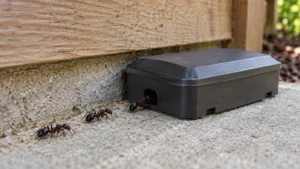
Baiting is another option. Its effectiveness depends partly on whether the ants accept the bait and carry it back to the colony. If they ignore the bait, the plan may need to change. For the differences among available bait types, see our carpenter ant bait guide.
Exterior treatments may be appropriate where they address an established route or outdoor source. A broad application without a clear explanation of the suspected colony and follow-up is less informative than a targeted plan based on an inspection.
What the pest control company may not repair
A pest technician can identify areas that deserve further investigation, but an insect treatment is not a structural assessment.
If the inspection reveals decayed joists, compromised framing, significant water damage, or other building concerns, a qualified building professional may need to evaluate and repair them.
Ask who will handle moisture correction, damaged wood, and any access openings made for treatment. Do not assume those repairs are included simply because the pest-control work is complete.
What to expect after treatment and how to prevent a return

The company should explain what was treated, what signs to monitor, and when to report continuing activity. A rapid drop in visible ants may be encouraging, but it is not the only measure of whether the colony has been controlled.
The expected response depends on the treatment. Directly treating a located nest differs from using a bait that workers must accept and carry through the colony. Agree on a follow-up plan appropriate to the method, rather than assuming every intervention should work on the same schedule.
If workers continue emerging from the original location, new trails appear, or fresh nesting debris accumulates, report those observations. The next step should be to reassess the source and treatment coverage, not automatically repeat the same application.
Reduce conditions that favor nesting
Treatment addresses the ants. Preventive maintenance helps make the property less suitable for future nesting and access.
Focus on the conditions that matter:
- Repair plumbing leaks, drainage problems, and sources of persistent moisture.
- Have decayed or damaged wood assessed and replaced where necessary.
- Keep firewood and loose timber away from the building, and address dead wood or stumps that harbor a colony when appropriate.
- Trim vegetation that provides direct access to siding or roofing, and seal identified entry gaps once active nesting has been addressed.
Continue observing areas where activity was previously concentrated. If the same pattern returns, the company should explain whether an additional nest, a missed route, or renewed access is a plausible cause.
Good to Know
In a rental or multifamily building, treatment may require access to shared walls, exterior areas, or building systems. Coordinate with the property manager before work affecting those spaces. Authorization and responsibility for repairs depend on local rules and agreements.
Explore this topic further: