Identification
Fleas in the House With No Pets: Where Are They Coming From?
Found fleas indoors even though you have no pets? Learn how to confirm the insects, investigate previous pets or nearby wildlife, and work out where to check next.
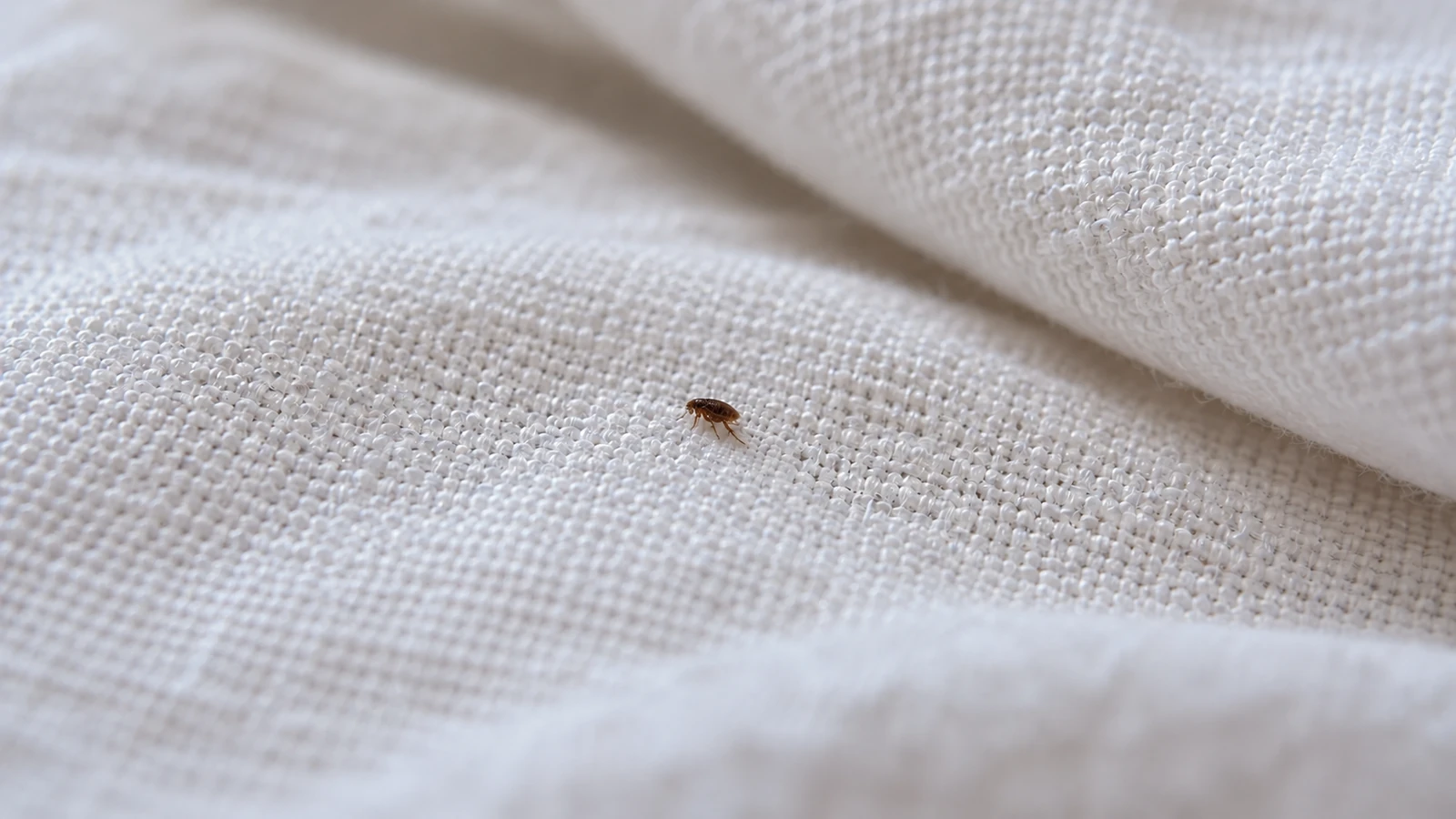
You move into a house with no pets, then notice tiny dark insects jumping from the carpet. Or perhaps you’ve lived there for years and suddenly find fleas around an entryway. Where could they be coming from when there’s no dog or cat in the home?
The answer may lie with animals that lived there before, wildlife sheltering nearby, or fleas picked up outdoors. Before choosing a cause, confirm what you’ve found and pay attention to where the insects appear. Their location and timing can tell you more than the absence of pets.
Are you sure the insects are fleas?
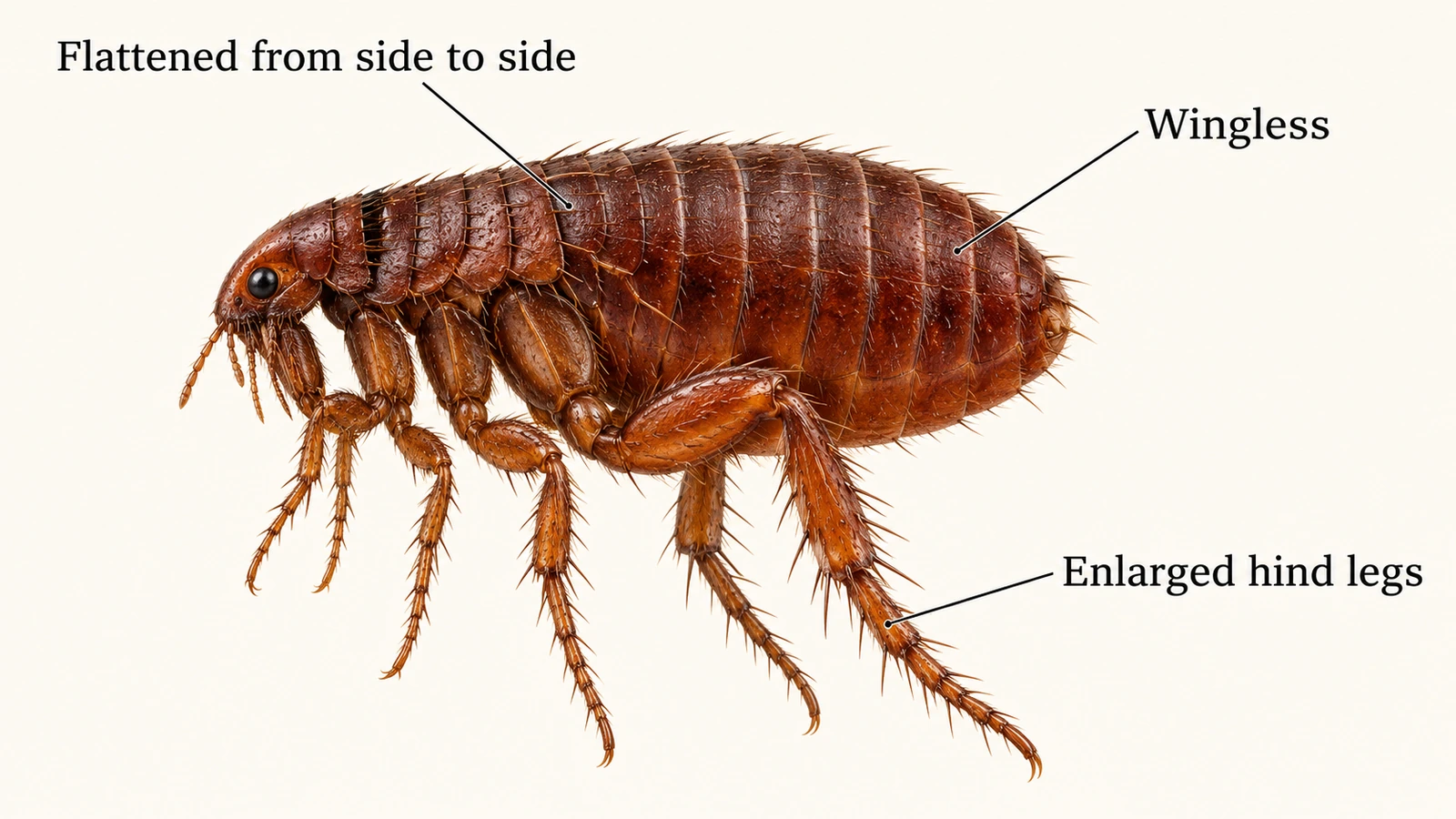
Adult fleas are small, dark brown to reddish-brown insects, usually about 1/16 to 1/8 inch long. They have no wings, their bodies are flattened from side to side, and their enlarged hind legs let them jump.
Finding a jumping insect near your ankles is a useful clue, but not enough to identify it. Springtails also jump and can look like dark specks, especially around damp floors, sinks, and houseplants. Bite-like marks alone are even less reliable because several other causes can produce similar skin reactions.
Identification in 30 Seconds
- Body: An adult flea is narrow when viewed from above and deeper from the side, with six legs and prominent hind legs.
- Movement: Fleas jump abruptly and then move through nearby fibers or across surfaces. Jumping by itself is not conclusive.
- Location: Confirmed fleas near carpets, upholstered furniture, or former animal resting spots are more suggestive than unidentified insects around a wet sink.
- Evidence: A clear specimen or close-up photograph is more useful than trying to identify the pest from bites alone.
If you can safely collect one insect in a small sealed container, examine it against a light background. The flea identification guide can help you recognize the adult’s shape without relying on size alone.
When the insects gather around damp soil or a bathroom drain, take a closer look before assuming they are fleas. The guide to tiny black bugs that jump explains the important look-alikes.
Where should you check for the source?

Start where you found the first confirmed fleas. A cluster in a carpeted bedroom points toward different possibilities than fleas appearing repeatedly beside an exterior door.
Look for a connection between that location and somewhere an animal could have rested, entered, or sheltered. A flea’s presence in one room does not establish where its original host lived.
Check these areas first:
- Carpets and upholstered furniture: Pay attention to rooms where previous occupants may have kept animals, particularly floor edges and protected spaces beneath furniture.
- Entry doors and porches: Notice whether fleas appear near a threshold, exterior mat, or sheltered spot where stray animals might rest.
- Accessible areas near attics and crawl spaces: Look for signs of animal activity, entry gaps, or repeated insect sightings near the same structural area.
- Shaded outdoor resting spots: Consider areas beneath decks, near sheltered foundations, or where feral cats and wildlife regularly spend time.
In a former pet resting area, tiny dark particles may include flea droppings. Flea dirt contains digested blood and can leave reddish-brown marks when moistened, although an unidentified stain is not sufficient evidence on its own.
Inspect accessible areas without entering wildlife nesting sites, disturbing droppings, or handling animals. If the source appears to be inside an attic, chimney, or crawl space, the investigation may need someone equipped to work there safely.
Identification Mistakes
- Assuming itchy marks alone establish that fleas are present.
- Ruling out a previous infestation simply because the home is clean and currently has no pets.
- Blaming rodents or wildlife before finding signs that connect them to the affected area.
Key Clue
The location of repeated, confirmed flea sightings is often more informative than a single bite. A former pet resting area, an exterior threshold, and a crawl-space opening suggest different sources to investigate.
What to Watch For
Fleas appearing near an attic, chimney, or crawl space may be associated with wildlife or rodents. Check for supporting animal activity, but do not handle nests, droppings, or trapped animals yourself.
How can fleas get into a home without pets?
A house does not need a resident dog or cat for fleas to be present. The strongest explanation depends on the home’s history, nearby animals, and the pattern of confirmed sightings.
Previous occupants may have left a developing flea population
This is an important possibility if fleas appear soon after you move into a house or apartment where animals previously lived.
Flea eggs can fall from an infested animal into carpeting, bedding, and other resting areas. Larvae develop in the surrounding environment, and the pupal stage is protected inside a cocoon. Adults can emerge later, including after a period when the home has been unoccupied.
Footsteps and other signs of a potential host can stimulate emergence. As a result, a room may seem flea-free during vacancy and then show activity when people begin using it again.
If you recently moved in, ask about previous pets or known flea problems. A clean carpet or newly painted room does not establish that every flea stage has been eliminated.
For the biological stages, see flea eggs and the life cycle. The separate guide to how long fleas can live without a host explains prolonged survival and delayed emergence in more detail.
Wildlife or rodents may be sheltering nearby
Squirrels, raccoons, opossums, rodents, and other mammals can carry fleas. Some use attics, chimneys, crawl spaces, or sheltered areas beneath buildings.
The animal may never enter the main living space. Fleas associated with its resting or nesting area can nevertheless become a problem nearby.
Clues worth investigating include animal sounds, visible entry openings, repeated activity near a particular building void, or evidence of nesting observed from a safe location.
Those signs strengthen a wildlife hypothesis. Without them, the source remains uncertain, and an indoor infestation left by a previous pet or an outdoor introduction may fit better.
Fleas can also come from the yard or porch
Outdoor flea activity is more likely around protected, shaded locations used by animals than across an exposed, sunny lawn.
Feral cats, neighborhood animals, or wildlife may spend time beneath decks, near porches, or in sheltered vegetation. Fleas encountered there can occasionally be carried into a house on clothing or shoes.
If confirmed fleas are found mainly around an entrance after outdoor activity, investigate the nearby environment. Repeated sightings deeper inside the home point toward a broader indoor investigation.
A single flea brought indoors is not the same finding as adults repeatedly emerging from a carpeted room.
The following patterns can help organize the possibilities without treating any one clue as definitive.
| What you observe | More plausible explanation | What would strengthen it |
|---|---|---|
| Fleas appear after moving into a home previously occupied by pets | Fleas developing in the indoor environment before you moved in | Confirmed specimens, previous pet history, and activity around former resting areas |
| Repeated fleas near an attic, chimney, or crawl-space area | A wildlife or rodent source close to the building | Evidence of animal occupation and a plausible route toward affected rooms |
| Occasional fleas around an exterior doorway or shaded porch | Outdoor exposure involving animals nearby | Repeated animal activity at that location and a matching pattern of flea sightings |
| Itchy marks but no identified insect | Fleas remain only one possible explanation | Collection and identification of an actual insect |

Does the problem appear isolated or ongoing?
First, compare the locations and frequency of confirmed sightings. One flea discovered after spending time outdoors is a different observation from live fleas repeatedly appearing in the same room.
Several adults emerging from carpeting shortly after a vacant property becomes occupied may point toward an older indoor flea population. But that pattern should be considered alongside the property’s history and any other likely animal sources.

Repeated flea activity across several rooms deserves a wider inspection. The visible adults may be only part of the problem, while immature stages remain in protected areas. The number you notice during one visit is not a reliable estimate of the entire population.
If fleas continue appearing or you find additional physical evidence, the guide to signs of a flea infestation can help distinguish isolated observations from a developing household problem.
Learn more:
If fleas are established inside the home, the guide to getting rid of fleas in the house covers the separate treatment process and follow-up.