Explanation
Can fleas live in human hair? What actually happens
Learn how brief flea contact differs from a scalp infestation, why head lice behave differently, and which observations help identify an insect found in hair.
You notice a tiny insect in your hair after sitting with a pet, or something dark falls out while you’re brushing. Could a flea have been living on your head?
Finding an insect in your hair raises two separate questions: what was it, and could it remain there? The distinction matters because common household fleas behave very differently from head lice, even though both can come into contact with people.
Quick Answer
Yes, a flea can get into human hair, remain there temporarily and potentially bite. But common pet fleas do not normally establish a lasting infestation on the human scalp. They are better adapted to furry animal hosts, while their eggs and immature stages usually develop in the surrounding environment.
Why fleas can get into your hair without living there
The cat flea is the most common household flea in the United States and is found on both cats and dogs. Adult fleas are adapted to moving through animal fur and feeding on blood. They can also jump onto people during contact with an infested animal or when emerging from a resting area.
A flea that reaches your hair may move among the strands or remain there for a time before leaving. Human hair offers some temporary cover, but the scalp is not the usual long-term habitat of common pet fleas. Finding one in your hair tells you that contact occurred, not how long it stayed.

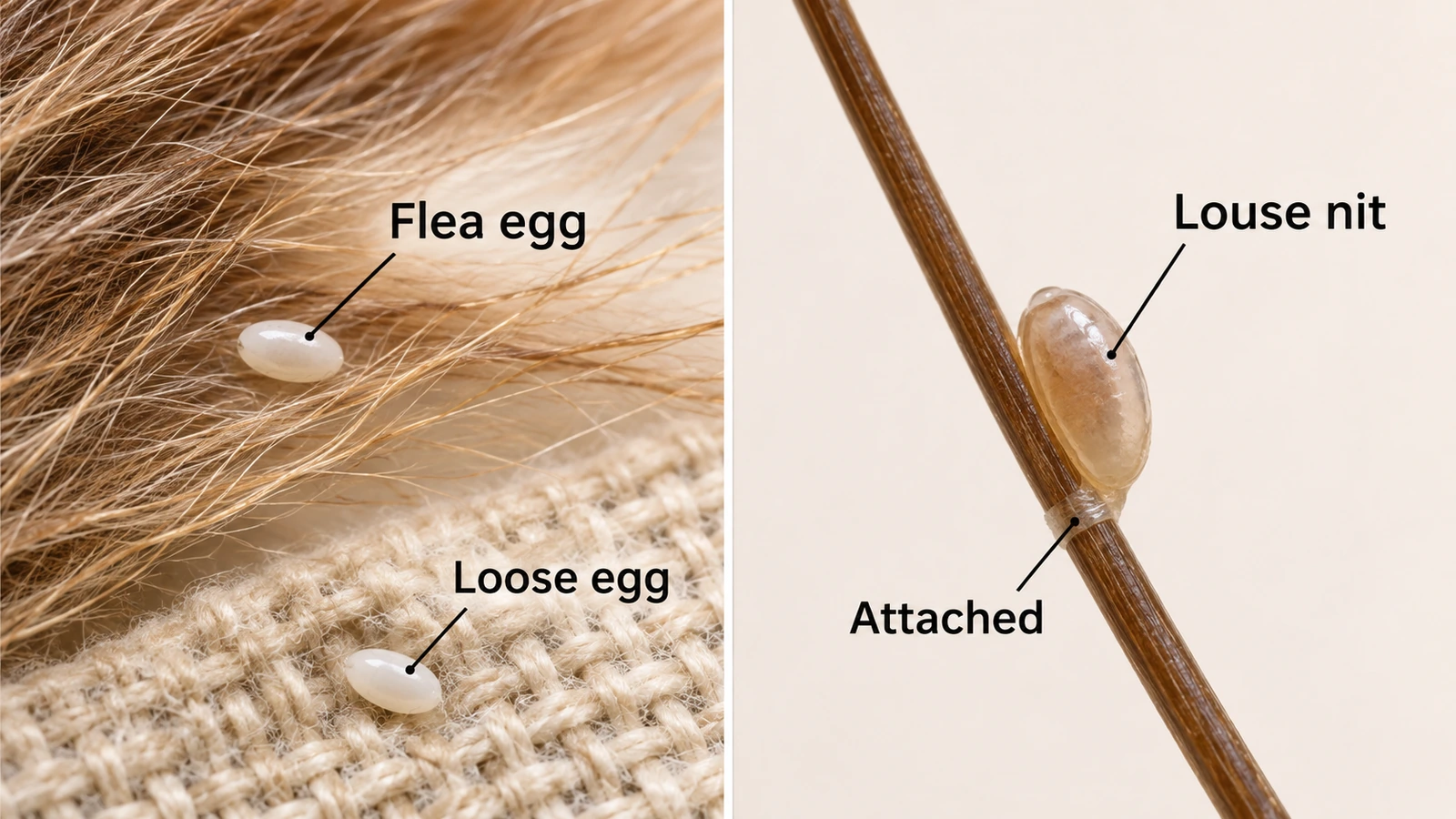
The flea life cycle helps explain the difference. Female cat fleas lay eggs that are not glued to the host’s fur. Those eggs commonly fall into bedding, carpets and other places where animals rest. Larvae develop in the environment rather than attached to hair shafts, and adults eventually emerge to seek a host.
An adult flea can feed on a person without establishing a continuing population in their hair. That is why finding fleas repeatedly around someone often calls for checking pets and the surrounding home, rather than assuming the insects are breeding on the scalp. For more on flea bites and human exposure, see our guide to fleas and people.
How are fleas in hair different from head lice?

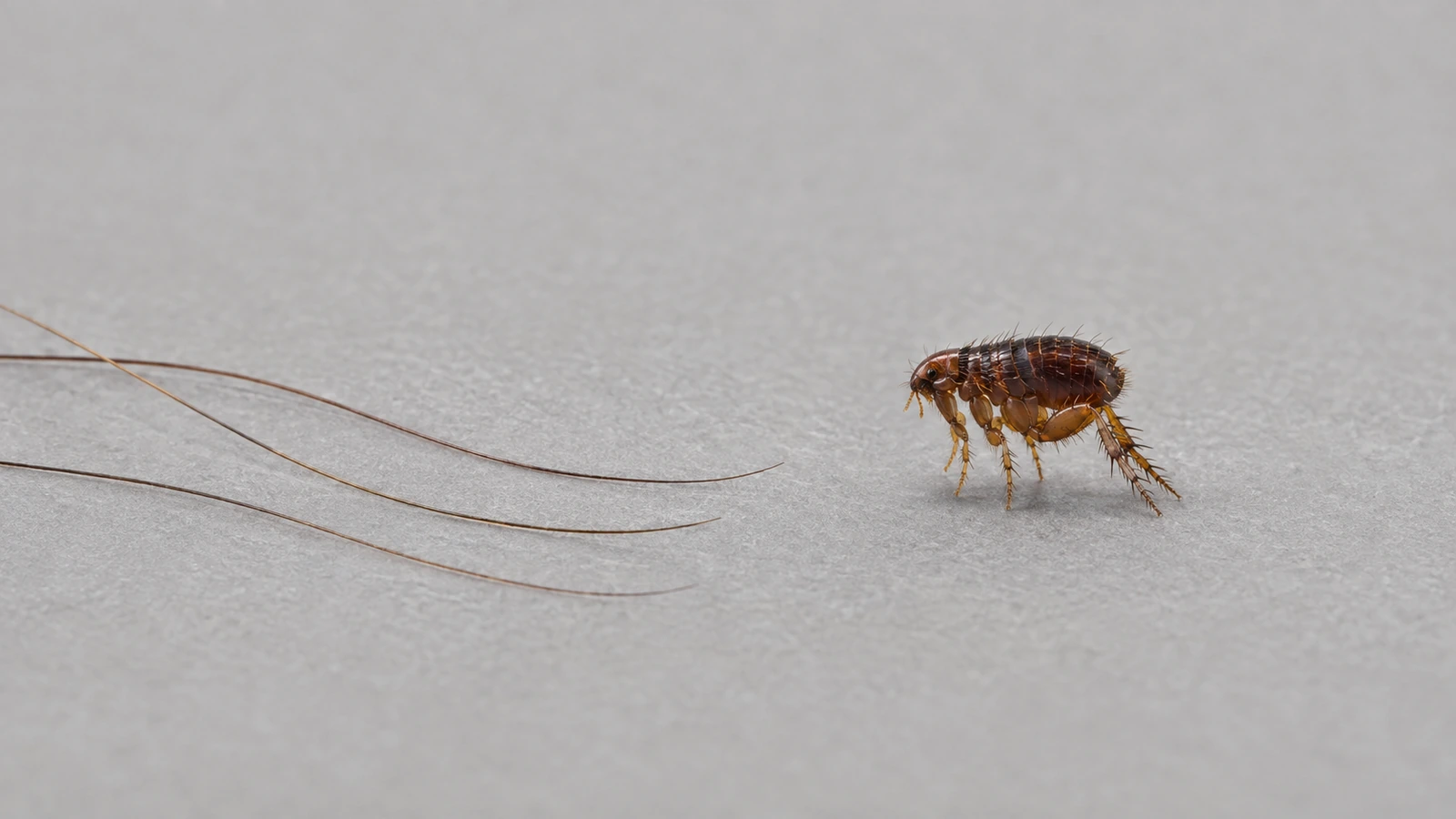
A flea is a small, wingless insect with a body compressed from side to side and enlarged hind legs suited to jumping. It is usually dark brown to reddish brown. These features help it move through animal fur and transfer between surfaces and potential hosts.
Head lice are built for a different way of life. They crawl rather than jump, and their legs have specialized claws that grip human hair. They live close to the scalp, feed on human blood and attach their eggs, called nits, firmly to individual hair shafts.
A small insect that clearly jumps is more consistent with a flea or another jumping insect than with a head louse. An insect crawling among scalp hairs, especially alongside firmly attached nits near the scalp, makes head lice a more relevant possibility. The actual body shape and movement remain more informative than color alone.
Loose dandruff, hair-product residue and other particles can also be mistaken for eggs or insects. Itching or a crawling sensation without a visible specimen cannot establish whether fleas or lice are present. If the insect cannot be identified from what you saw, the next useful step is to obtain clearer evidence rather than guess.
Good to Know
Fleas can also appear in homes without dogs or cats. Wildlife around a building, visiting animals or earlier animal activity may provide a source. When an actual flea is found, pet ownership is useful context, but it is not the only clue to where the insect came from.
What should you check if you find something in your hair?
Start with what you actually observed. If you can safely remove a suspected insect, a clear photograph or a specimen in a closed container can help establish its identity. Note whether it jumped, crawled or was simply found among the hair.
Use these observations to choose the next check:
- An insect that jumps: Examine its body shape and hind legs. Compare it with what fleas look like. A blurry image or a brief movement alone may leave the identification uncertain.
- An insect crawling on the scalp: Look for evidence consistent with head lice, particularly live crawling lice or firmly attached nits near the hair roots. If the findings are unclear, a healthcare professional can help assess them.
- Repeated confirmed flea sightings: Look for a possible source in pets, their bedding and the places where they regularly rest. A veterinarian can advise on appropriate flea protection for an animal. If no pets live in the home, consider whether animals have had access to the building or surrounding areas.
If you have scalp itching but have not found an insect, the itching itself provides little information about flea exposure. Persistent irritation, sores or unexplained scalp symptoms are better assessed by a healthcare professional than treated on the assumption that fleas are involved.
What to Watch For
Do not apply flea products intended for pets, household insecticides or improvised pesticide mixtures to human hair or the scalp. Suspecting a flea does not establish a reason for chemical treatment. Identify the insect or obtain appropriate medical advice before choosing a treatment.
Explore this topic further: