Identification
Fire ants vs. red ants: what clues really distinguish them?
Identify clues that point toward fire ants or other reddish ants in the U.S. Compare workers and nests safely, then choose a sensible next identification step.
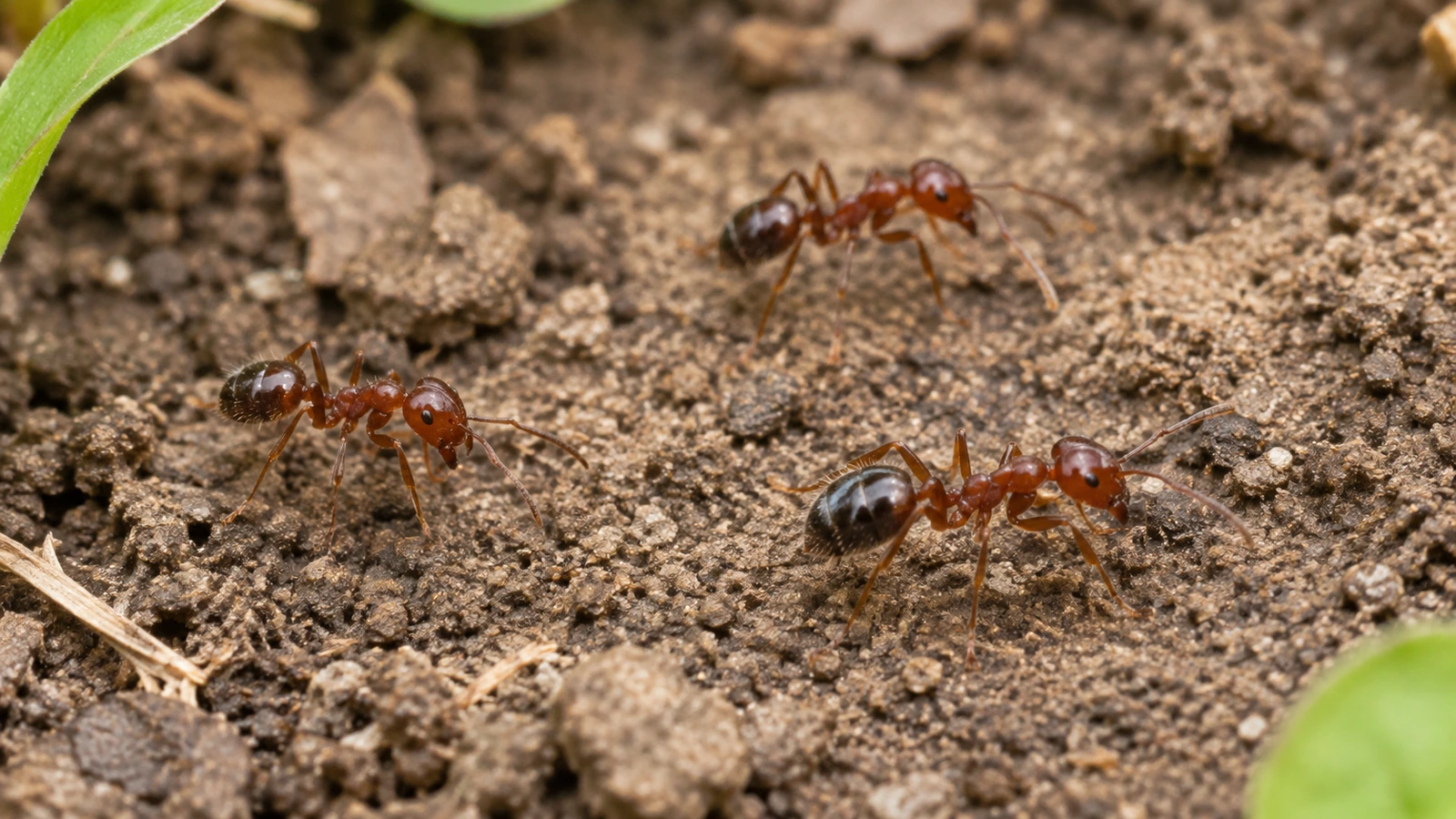
You spot several reddish ants crossing a patio. Someone calls them fire ants; someone else says they’re just red ants. Neither name tells you exactly what you’re looking at.
In the United States, "red ant" is often a description of color rather than a species name. Red imported fire ants are one possibility, but native harvester ants, reddish field ants and red-and-black carpenter ants can also fit that description. Their size, body shape, nesting habits and location provide better clues than color alone.
What do fire ants look like compared with other red ants?
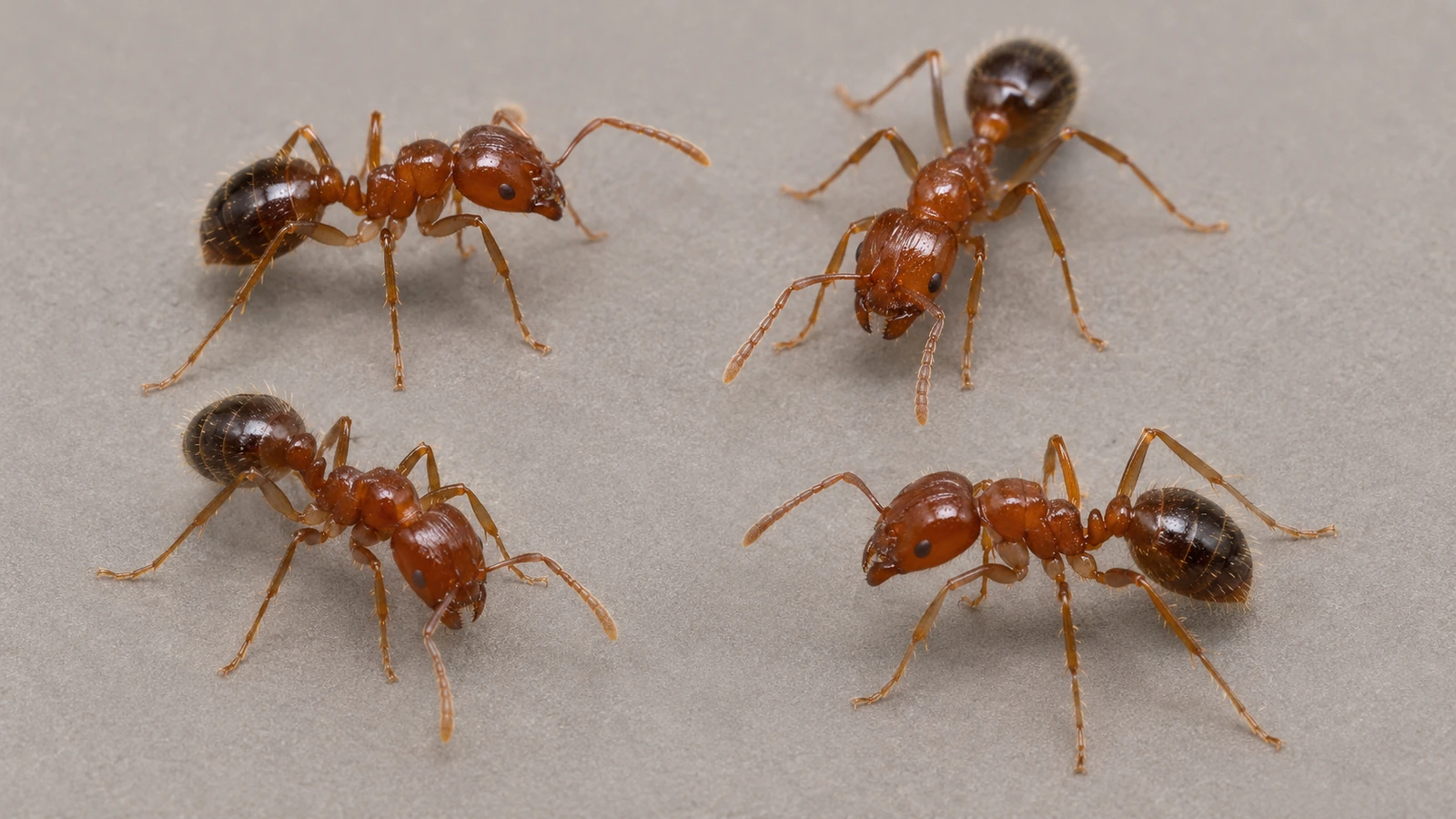
A red imported fire ant (Solenopsis invicta) worker is small, generally around 1/16 to 1/4 inch long. Workers are typically reddish brown, often with a darker abdomen. One colony may contain noticeably different-sized workers, from small individuals to larger ones. That variation can be useful when several ants from the same group are visible.
Other reddish ants may be larger, more robust or differently proportioned. Some harvester ants have a substantial head and heavier-looking body. Certain carpenter ants have reddish body sections and a dark abdomen. A single ant’s color, even bright red, is not enough to identify it as a fire ant.
Identification in 30 Seconds
- Color: A reddish body fits several kinds of ants. Imported fire ants are often reddish brown with a darker abdomen, not necessarily bright red.
- Worker sizes: Small and larger workers moving together can support a fire ant identification, but other ants also vary in size.
- Body shape: Look for the narrow waist and overall proportions. Tiny differences between waist segments usually need magnification.
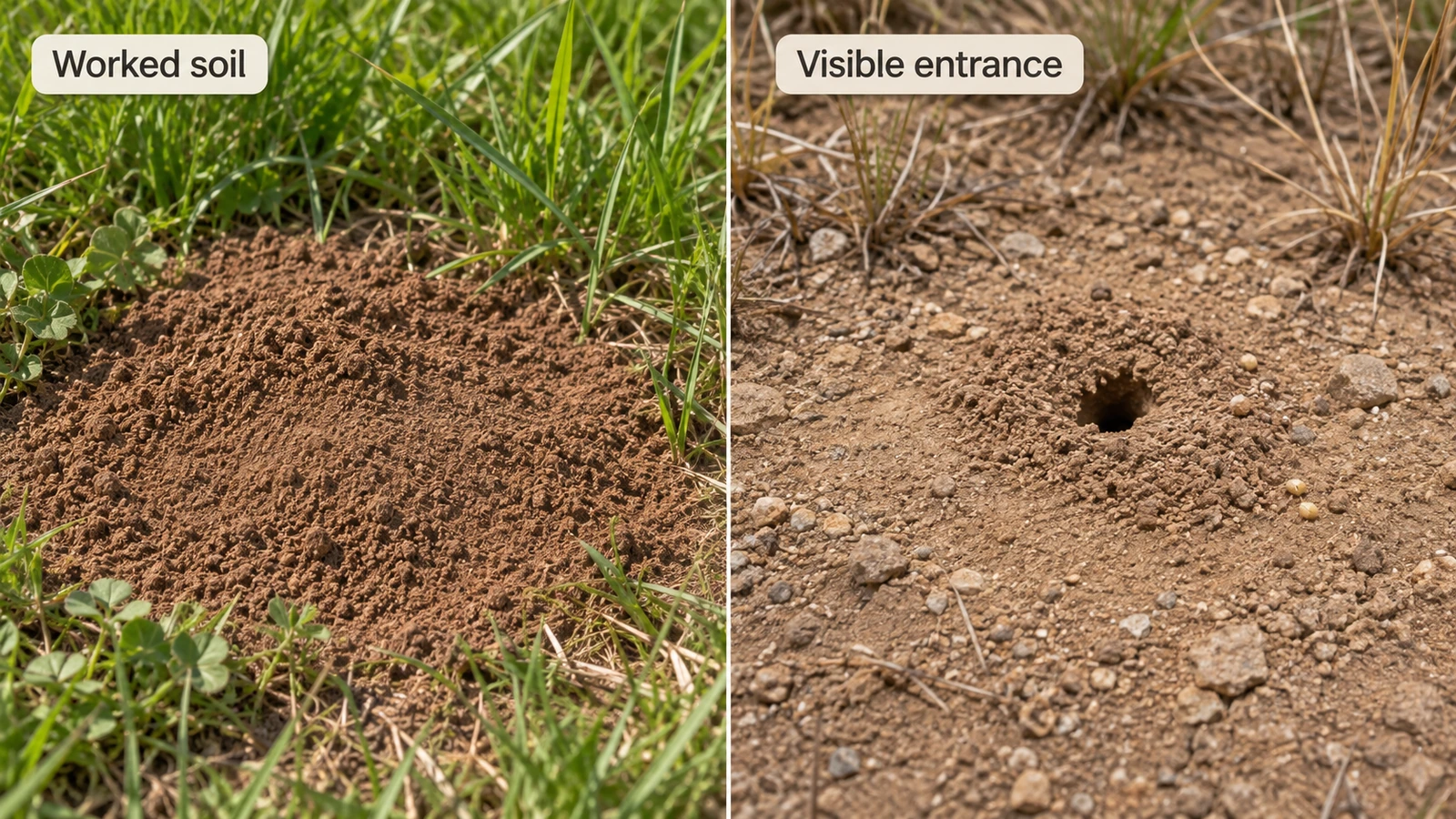
- Nest context: Loose worked soil without an obvious top entrance may fit imported fire ants; a bare patch with a visible entrance may suggest harvester ants.
- Location: Imported fire ants are established across much of the southern U.S. and parts of California. A reddish ant elsewhere deserves a wider range of possibilities.
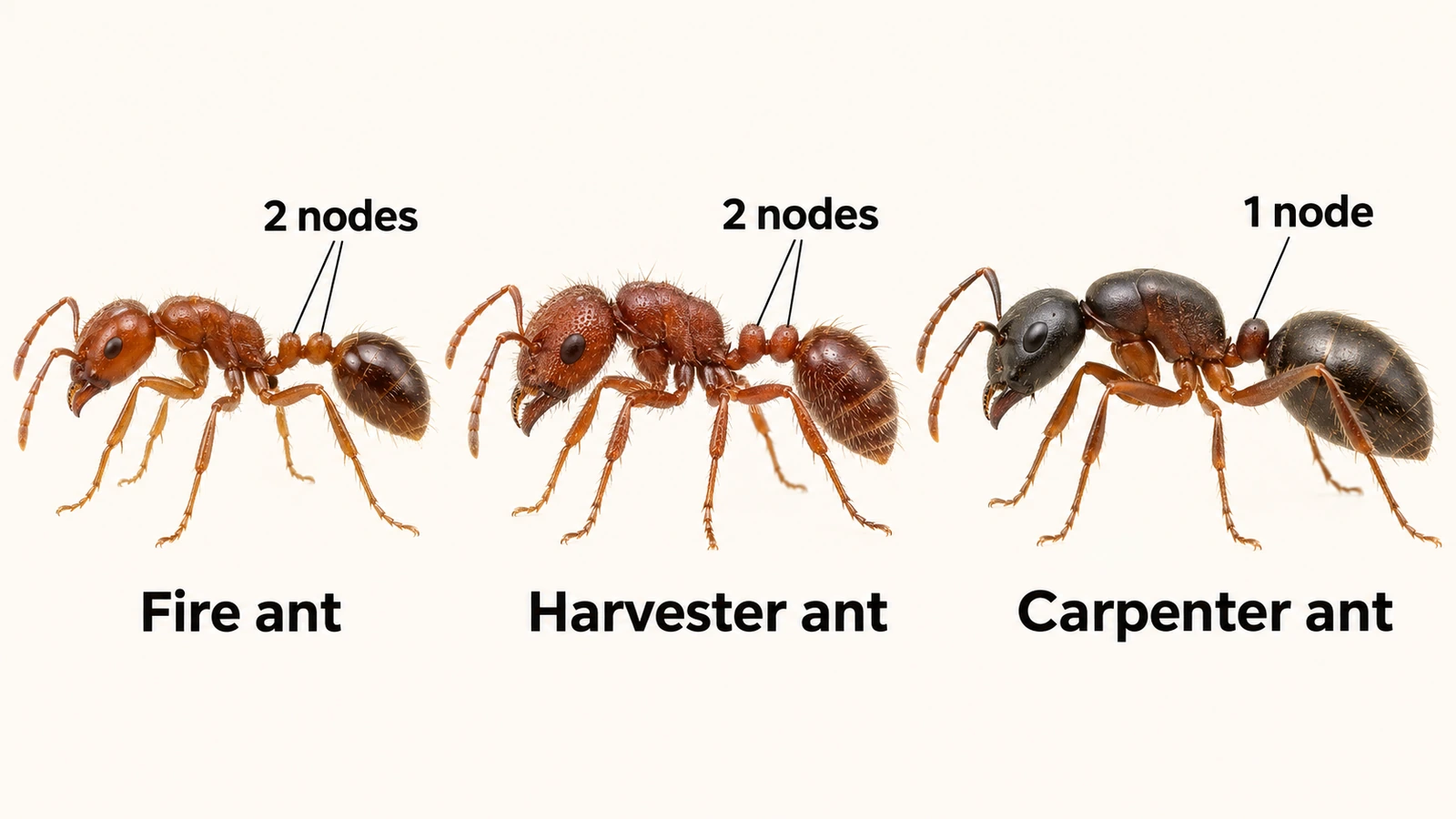
With a sharp magnified view, red imported fire ants have two small waist segments, or nodes, and antennae made up of ten segments ending in a two-segmented club. These are useful identification characters, but they are generally too small to assess reliably from a casual glance.
Two waist nodes are not exclusive to fire ants. Harvester ants also have two, while carpenter ants and field ants have one. These details help narrow the possibilities when they are clearly visible; they should not be guessed from a blurry photograph.
How can you compare red ants without disturbing a nest?
Start with ants already moving away from the nest. You may be able to observe their size, color and normal foraging activity from a safe distance. Use a camera’s zoom when possible, rather than placing your hands or face near an unfamiliar colony. Do not kick, poke, open or pour anything into a mound to test its occupants.
The nesting setting can add useful context. Red imported fire ants often build loose soil mounds in open, sunny areas. Their tunnels usually connect to the surface away from a conspicuous central opening. Some harvester ants clear vegetation around a visible nest entrance and may carry seeds. Field ants can also build noticeable mounds, so soil shape alone is not a species identification.
Record what you can observe safely:
- Region: Note the state and general setting, such as a lawn, dry open soil, wooded edge or area next to a building.
- Size: Estimate the workers’ length from a familiar nearby surface or a photograph. Avoid moving closer just to measure them.
- Normal activity: Watch whether workers are carrying seeds, following trails or moving around an undisturbed nest.
- Useful photographs: Capture the whole ant if possible, preferably from above and from the side, without disturbing its surroundings.
If several differently sized workers are visible, note that as well. One large red ant walking across a sidewalk cannot reveal how much size variation exists within its colony.
Identification Mistakes
- Calling every reddish ant a fire ant based on color alone.
- Treating a soil mound or a painful sting as proof of one particular species.
- Deliberately disturbing a nest to see whether the ants swarm or attack.
Key Clue
A group of small, reddish-brown workers of noticeably different sizes near a loose soil mound in an established imported fire ant region is a stronger match than a single large red ant seen in isolation. The combination matters more than any one feature.
What to Watch For
Harvester ants can also deliver painful stings, and some native fire ants closely resemble imported species. Never use a sting or a colony’s reaction to deliberate disturbance as an identification test.
Which other red ants might you be seeing?
Red harvester ants are a common source of confusion in parts of the southern and western United States. Depending on the species, their workers are often larger and more robust than red imported fire ant workers. Many forage for seeds around exposed soil, and some colonies have a clearly visible entrance surrounded by an area with sparse vegetation. Like fire ants, harvester ants have two waist nodes, and some can sting.
Reddish carpenter ants may have a red or reddish-brown middle section and a darker head or abdomen. They are often larger than imported fire ant workers, although size ranges overlap. Carpenter ants have a single waist node and may forage around wood, trees, fences or buildings. Their color does not establish where a colony is nesting.
Field ants, including members of the genus Formica, may be red, brown, black or combinations of those colors. Some nest in soil and build mounds that can be mistaken for fire ant mounds. They have one waist node, and several species occur in cooler parts of the United States where imported red fire ants are not normally established.
None of these examples represents every reddish ant in the country. If your observation fits more than one possibility, compare it with the broader types of ants in the U.S. rather than forcing a species name.
The following comparisons help prioritize what to check:
| Observation | More likely possibility | What to verify |
|---|---|---|
| Small reddish-brown workers of varying sizes near loose worked soil | Imported fire ants are plausible | Regional presence, worker features and nest context |
| Larger reddish ants near a bare soil patch, sometimes carrying seeds | Harvester ants are plausible | Body proportions, nest entrance and normal foraging |
| Larger red-and-black ants around wood or structures | Carpenter ants are plausible | Single waist node and overall body shape |
| Reddish ants associated with soil mounds in a cooler northern region | Field ants or other native ants are plausible | Regional species and a clear body view |
| One red ant photographed without scale or nesting context | Identification remains open | Obtain a clearer image and location details |
How confident can you be in the identification?
Location changes which species are plausible. Red imported fire ants are well established in much of the southern United States and in parts of California, but they are not equally common nationwide. In a northern state, a large reddish ant may be a field ant or another native species. Geographic context narrows the possibilities without replacing morphological identification.
A single worker provides limited information. Several matching observations, such as a mixture of worker sizes, a compatible nest and a location where imported fire ants are established, support a stronger preliminary identification. Distinguishing imported fire ants from closely related native fire ants may still require specialist examination.
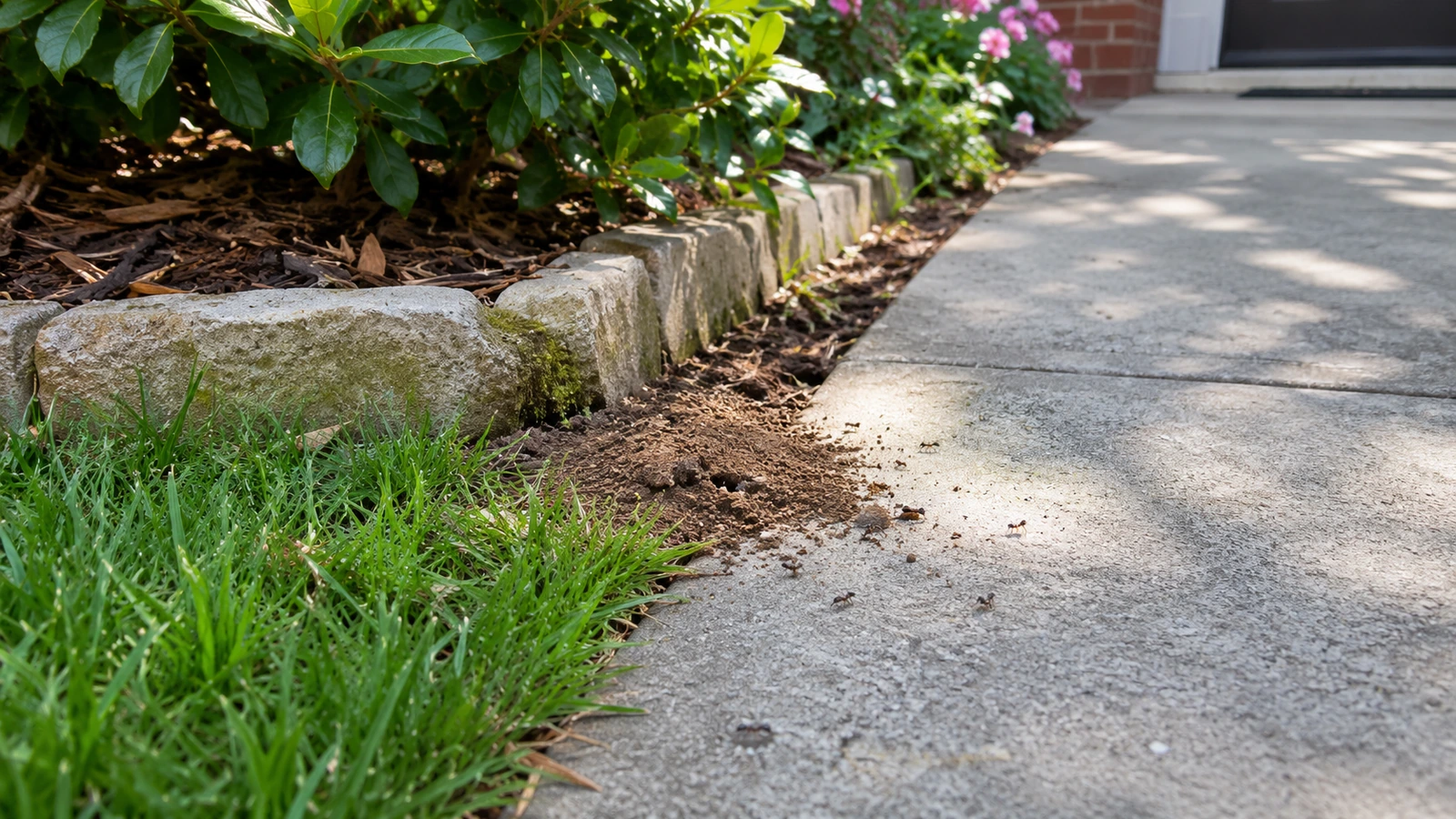
The practical importance also depends on where the ants are. An unidentified red ant crossing an isolated patch of soil is different from a suspected stinging colony beside a frequently used walkway or play area. Keep children and pets away from a potentially hazardous nest while the identification is being clarified, without trying to provoke the ants.
If the distinguishing features cannot be seen, a clear photograph and the observation location are useful for a local Cooperative Extension office or qualified pest professional. You do not need to handle a nest or collect workers from an active mound to begin asking for identification help.
Good to Know
"Fire ant" does not refer only to the red imported fire ant. Native fire ants, including the southern fire ant, may occur in the United States and can be similar in size and color. Even a good ordinary photograph may not reliably separate closely related species.