Identification
Tiny black bugs that jump like fleas: what to check
A tiny jumping black speck can be a flea, springtail, or flea beetle. Compare its body shape, location, and supporting signs before deciding what to check next.
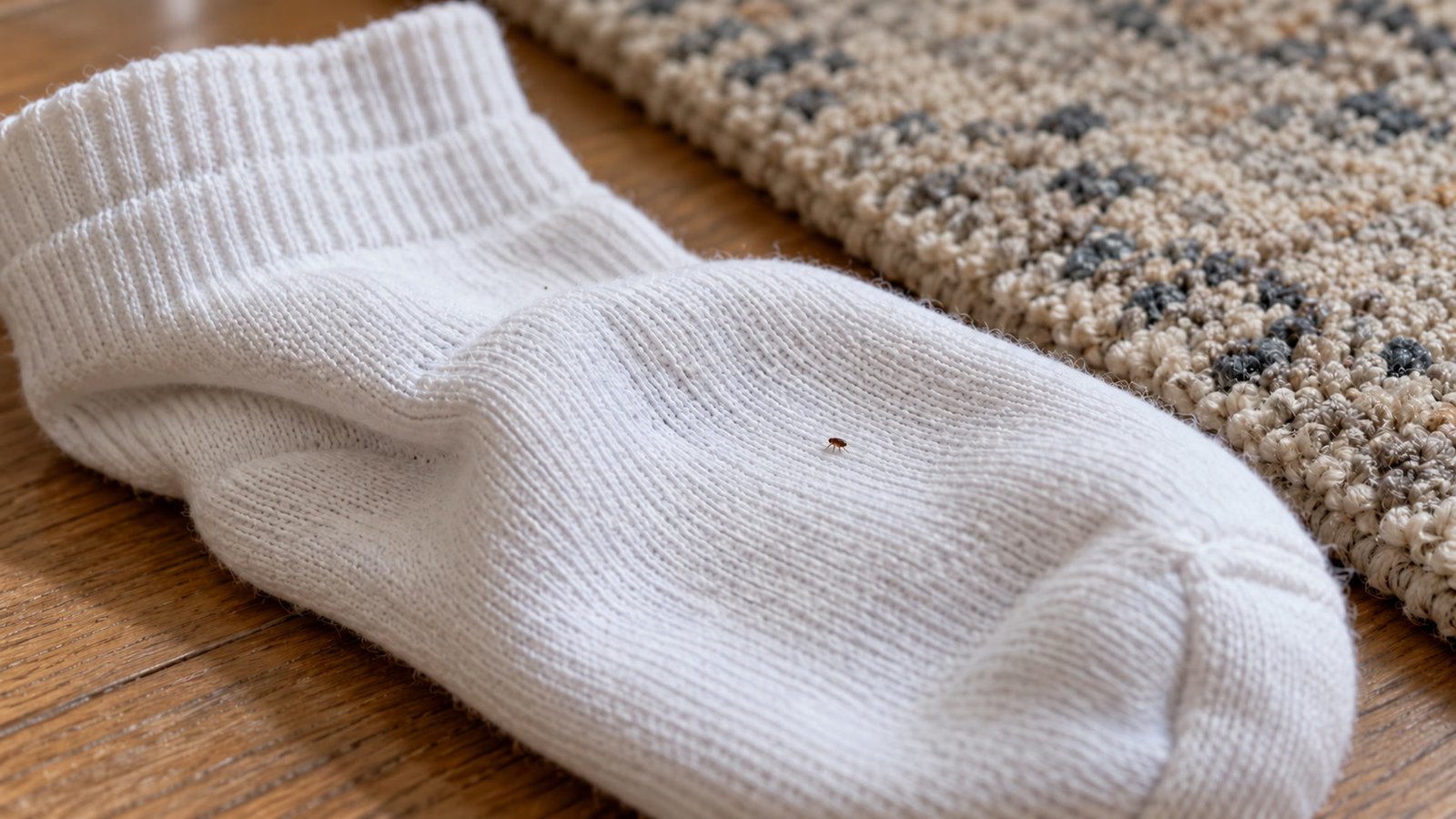
You touch a tiny dark speck on the bathroom floor, and it suddenly jumps away. Later, you notice another near a rug or houseplant. The movement looks familiar, but is it actually a flea?
Fleas are only one possibility. Springtails and flea beetles can also look like tiny black jumping bugs, and each points to a different place to investigate. A closer look at the insect’s body, where it was found, and nearby physical clues can help you choose the right next step without treating the wrong pest.
What Does a Flea Look Like Among Tiny Black Jumping Bugs?
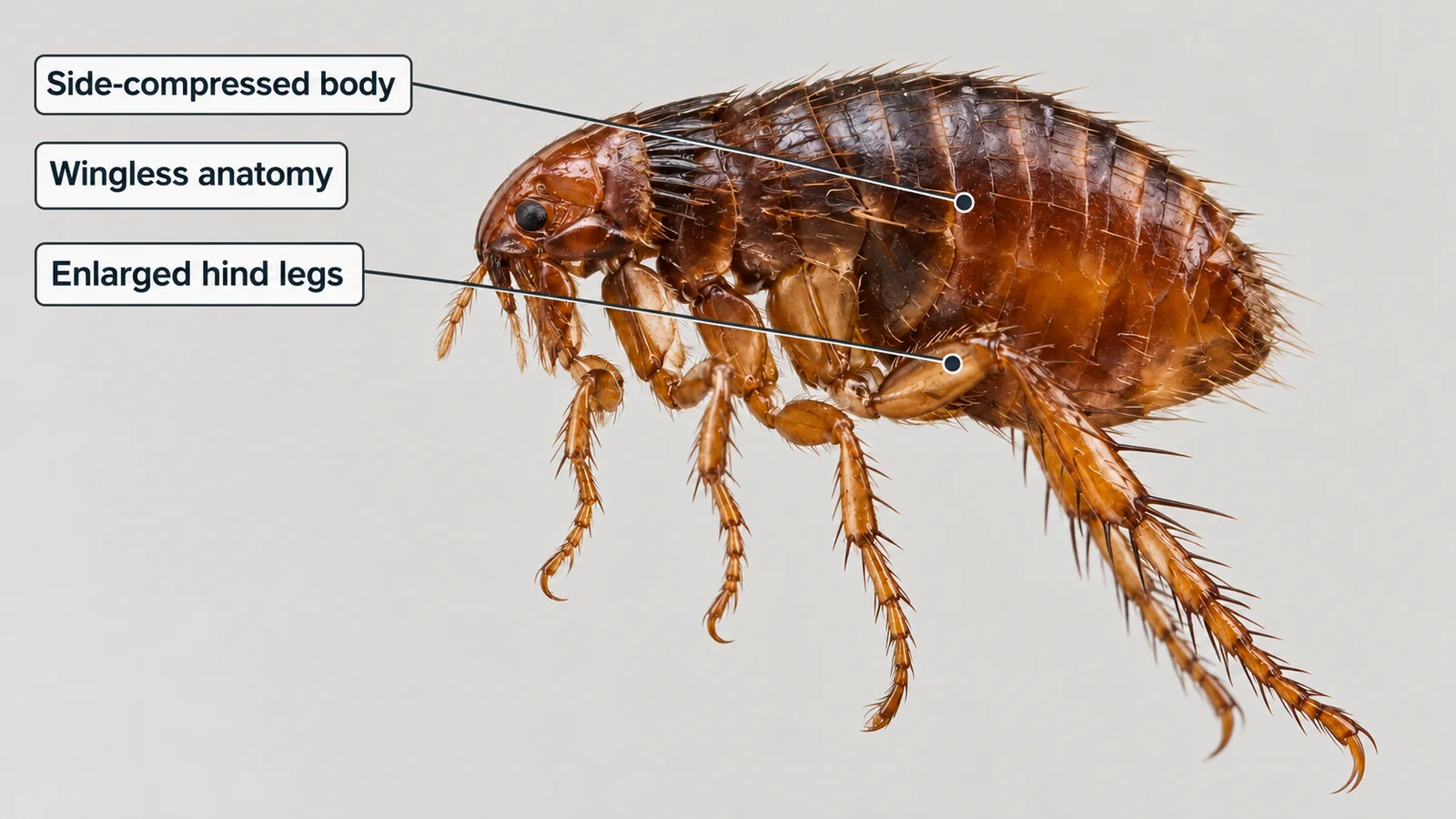
Adult fleas are small, wingless insects, generally about 1/32 to 1/8 inch (1 to 3 mm) long. They range from reddish brown to very dark brown and may appear almost black without magnification. Their bodies are flattened from side to side, with strong hind legs adapted for jumping.
A flea viewed from the side has a distinctive tall, narrow profile, with a small head and a rounded abdomen. Its body is relatively hard, and its legs extend beneath it. These features are more useful than color alone when examining a captured specimen.
Identification in 30 Seconds
- Size: Adult fleas are commonly around 1/32 to 1/8 inch (1 to 3 mm) long.
- Color: Dark reddish brown to nearly black, depending on the insect and lighting.
- Body: Wingless and compressed from side to side, with a small head and a rounded abdomen.
- Legs: Six legs, including a strong rear pair adapted for jumping.
- Context: An insect found on an animal, in its resting area, or jumping onto clothing deserves a closer flea check.
Does a Black Flea Look Different?
“Black flea” usually describes how a flea appears, not a separate species. An adult flea’s naturally dark coloring, combined with its tiny size, can make it resemble a moving black dot.
The cat flea (Ctenocephalides felis) is the flea most commonly associated with cats and dogs in the United States. Despite its name, it occurs on both animals. Identifying a flea to species requires a close examination of anatomical features, so the animal on which it was found is not enough.
A dark insect that jumps could be an adult flea. Flea larvae are different: they are pale, wormlike, and do not jump.
Where Did You See the Jumping Bugs?
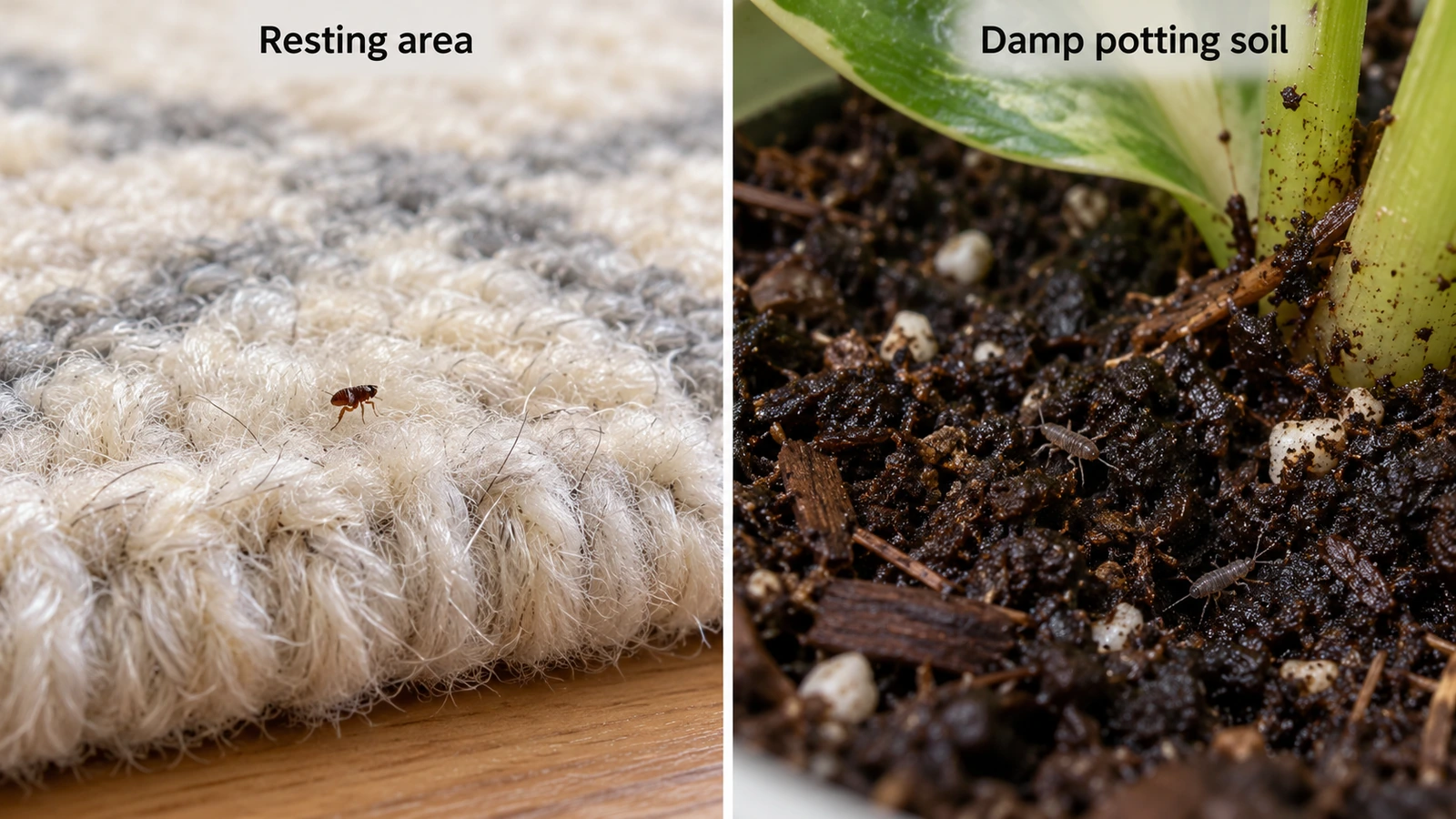
Location is one of the quickest ways to narrow the possibilities. Fleas are worth investigating around pets, carpets, upholstered furniture, and places where animals rest. Springtails often appear near moisture, including sinks, window tracks, and damp potting soil. Flea beetles are more closely associated with plants and foliage.
Start where you actually saw the insect rather than inspecting every room. Look at the surrounding surface, note whether several insects are present, and check what happens when one is gently disturbed. The goal is to connect its movement with its body shape and habitat.
Near a Pet, Rug, or Upholstered Furniture
If you have a cat or dog, use a fine-toothed flea comb to examine the fur, especially around the base of the tail and other areas the animal may have difficulty grooming. Look for small moving insects and dark, pepper-like specks.
Those specks may be flea dirt, which contains digested blood. Place a few on a damp white paper towel. Flea dirt often produces a reddish-brown stain as it becomes wet. This is useful supporting evidence, particularly when combined with a captured flea.
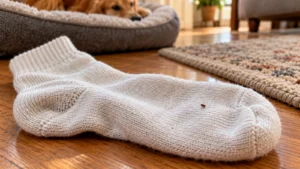
You can also wear light-colored socks and walk slowly through the area where the insect was seen. Adult fleas may jump onto the fabric and become easier to spot. Check the socks promptly, preferably over a light surface where you can capture an insect if one appears.
An empty comb or a single negative sock check means you have not detected fleas during that check. If the original observation remains convincing, examine the same area again rather than immediately widening the search.
Around a Sink, Window, or Houseplant
Several tiny dark insects jumping when you touch damp soil, move a flowerpot, or disturb a wet bathroom surface make springtails a strong possibility.
Springtails thrive around moisture and decaying organic matter. Many species jump by releasing a small springing structure beneath the abdomen. Some are slender; others are rounded, so their appearance varies.
If the insects are concentrated around a wet planter or a persistently damp window track, inspect that moisture source before assuming the home has fleas.
On plant leaves, another possibility is a flea beetle. These small, often shiny beetles jump when disturbed. Tiny feeding holes or pits in nearby leaves are useful additional clues.
Capture One Before It Disappears
A clear specimen is often more useful than several blurry photographs. Try to guide the insect into a small transparent container with a secure lid. Photograph it against a plain background, ideally from the side as well as from above.
Include a millimeter ruler or another reliable scale reference beside the container. If your phone cannot focus closely enough, move it farther away and crop the image. A magnifying glass or clip-on macro lens can help reveal legs and body proportions.
Identification Mistakes
- Assuming that every tiny black insect that jumps is a flea.
- Using itchy skin or bite-like marks as a substitute for identifying the insect.
- Treating a damp bathroom or houseplant area for fleas without examining the jumping insects found there.
Key Clue
A strong flea identification combines the narrow, side-compressed body and enlarged jumping legs of an adult flea with a plausible host or resting-area context. Capturing the insect makes these features much easier to assess.
What to Watch For
A photograph taken only from above may hide the side profile that helps distinguish a flea. If the insect still looks like an unrecognizable black speck, prioritize obtaining a clearer view rather than assigning an identity from the jump.
Is It a Flea, Springtail, Flea Beetle, or Something Else?
A flea has a compact, side-compressed body and powerful jumping legs. It feeds on blood as an adult and is associated with warm-blooded hosts. Finding one on an animal or catching several on light clothing in an animal resting area makes fleas a more convincing explanation.
Springtails also jump, but their body proportions and habitats differ. They often have visible antennae and may be elongated or globular. Damp soil, wet bathrooms, and clusters around moisture point toward them. Springtails do not feed on blood or bite people and pets.
Flea beetles are actual beetles, not fleas. They commonly have a shiny, rounded or oval body with hardened wing covers. Their association with plant foliage, particularly leaves with small feeding holes, helps distinguish them from household fleas.
Other small insects can appear to leap when they suddenly fly or drop from a surface. Bed bugs, for example, move by crawling rather than jumping. If an insect near a bed never actually jumped, its identification needs a different set of clues.
Compare your observation with the next useful check:
| What you observed | More consistent with | Next useful check |
|---|---|---|
| Dark, narrow-bodied insect jumping onto a sock or found in fur | Possible adult flea | Examine its side profile and check for additional flea evidence |
| Several tiny jumping insects near wet soil, a sink, or a damp windowsill | Springtails | Inspect moisture conditions and capture one for a closer body comparison |
| Small, shiny dark beetles jumping from leaves | Flea beetles | Check the plant for small feeding holes and examine the wing covers |
| Small insect crawling on bedding without an observed jump | Another household insect, potentially including a bed bug | Examine body shape and obtain a clear specimen |
| Only a fleeting black dot with no usable photograph | Identification unresolved | Revisit the location and capture the next specimen before treatment |

How Strong Is the Evidence That You Have Fleas?
One tiny black jumping insect, without a clear view of its body, leaves several possibilities open. A captured flea with recognizable anatomy is stronger evidence. Finding additional fleas in the same resting area or characteristic flea dirt on an animal strengthens the case further.
The location and pattern matter, too. Several insects repeatedly appearing around a damp plant pot point toward a different explanation from insects jumping onto socks beside a frequently used pet bed. Look for a consistent combination of observations rather than treating each clue as a separate diagnosis.

If You Keep Finding Jumping Insects
Record the room, surface, and approximate location each time. Capture a specimen when possible, and compare it with the earlier findings. Check whether the insects keep appearing in the same damp corner, on the same plant, or around places used by animals.
Repeated findings in several pet resting areas justify checking for broader flea activity. That is a different question from identifying one insect, and it requires looking at the distribution of evidence throughout the home.
What If You Don’t Have Pets?
The absence of a dog or cat does not automatically rule out fleas. Wildlife, visiting animals, or previous animal activity can sometimes explain their presence.
But a home without pets should still be assessed from physical evidence. A group of tiny insects jumping in wet potting soil is more consistent with springtails than with a flea problem simply because both kinds of creatures can jump.
Learn more: