Guide
Oriental cockroaches: how to identify them and stop repeat sightings
Learn the traits that distinguish an Oriental cockroach, where to look for damp hiding places and entry points, and how to choose targeted control and monitor the results.

A shiny, nearly black cockroach appears beside a basement drain. A few days later, another turns up by the garage door. Spraying the insects you can see might feel like progress, but it can leave the source untouched.
Oriental cockroaches often live in cool, damp places at ground level, including outside the home. The useful first question is whether they are occasionally entering from nearby shelter or repeatedly emerging from an active hiding place. Their appearance, location, and pattern of activity can help you decide what to inspect and how much treatment is actually needed.
Understanding the Oriental Cockroach
The Oriental cockroach (Blatta orientalis) is a large, dark cockroach associated with moist, sheltered environments. Unlike German cockroaches, which commonly establish themselves around indoor kitchens and appliances, Oriental cockroaches can live and reproduce outdoors near foundations, beneath debris, and in damp utility areas. They can also occupy basements, crawl spaces, and other protected parts of a building.
These roaches are mostly active after dark and tend to remain near the ground. They can travel along rough surfaces and plumbing routes but have difficulty climbing smooth vertical surfaces. Adults cannot fly. Their habits make the boundary between the house and its surrounding environment especially important.
Key Takeaways
- Adults are usually dark brown to almost black, glossy, and about 1 to 1¼ inches long, with noticeably shortened wings.
- Damp basements, crawl spaces, foundation gaps, shaded mulch, and utility areas are more useful places to investigate than random upper-level rooms.
- An isolated adult near an exterior entrance calls for a different response than repeated trap captures or young roaches in the same indoor area.
- Effective control combines moisture correction, removal of hiding places, exclusion, targeted treatment when justified, and continued monitoring.
How to Identify an Oriental Cockroach
Adult Oriental cockroaches have broad, flattened bodies and a glossy dark brown to black appearance. Females are generally wider and may reach about 1¼ inches long. Males are typically closer to 1 inch. Their long antennae and spiny legs are typical cockroach features.
Wing shape is particularly helpful. Adult males have wings that cover much of the abdomen but end before its tip. Adult females have only small, rudimentary wing pads and can appear almost wingless. Neither sex flies, even though the male’s wings are visible.

Look Beyond the Color
Check several features before deciding what you found:
- Body shape: A broad, oval, flattened body with long antennae and spiny legs.
- Adult wings: Shortened wings on males and tiny wing pads on females, rather than long wings extending over the whole abdomen.
- Young stages: Nymphs are wingless, generally smaller, and can be reddish brown when young, becoming darker as they develop.
- Location: Activity near damp, ground-level shelter supports the identification, particularly when the insect’s physical features also match.
A young Oriental cockroach can look quite different from a large adult. If you only have a small, blurry insect, take a clearer photo or capture a specimen in a monitoring trap before selecting a species-specific treatment.
If the shape, size, or markings do not fit, compare other common cockroach species before treating.
Is an Oriental Cockroach a Water Bug?
“Water bug” is a loose common name. Some people use it for Oriental cockroaches, others for different large roaches or genuine aquatic insects. The name alone cannot identify the species. If that is how the insect was described to you, the water bug vs. cockroach comparison can help narrow it down.
Where Oriental Cockroaches Live and Why They Enter Homes
Outside: Damp Shelter Near the Foundation
Oriental cockroaches often hide beneath leaf litter, mulch, stones, boards, and other debris that provides shade and retains moisture. They may also occupy spaces beneath porches, around utility structures, near garbage storage, and in protected ground-level cavities.
A damp planting bed pressed against a foundation can provide shelter close to a doorway or wall opening. The roaches may spend much of their time outside, then move indoors while searching for food, water, or additional shelter.
Inside: Basements, Crawl Spaces, and Plumbing Areas
Indoors, inspect damp basements, crawl spaces, laundry rooms, utility rooms, floor-drain areas, and the spaces around sinks, water heaters, and washing machines.
Leaks are not the only moisture source. Condensation, poor drainage, wet foundation materials, and humid enclosed spaces can also maintain favorable conditions. An apparently clean room can still be attractive if moisture and shelter remain available behind or beneath it.
How They Get Through the Building
Common routes include gaps beneath exterior doors, foundation cracks, openings around pipes, and poorly screened vents. Cockroaches may also move along plumbing or through compromised drainage systems and adjacent building cavities.
Start with the location where the insect was found, then trace the closest wall, floor joint, pipe penetration, or exterior access point. Seeing a roach beside a drain is a reason to inspect that area, not a reason to assume every roach entered through the drain itself.
Outdoor movement can increase after heavy rain or during hot, dry conditions when available shelter changes. Seasonal patterns vary by region and climate, so use your actual sightings and monitoring results rather than assuming one nationwide cockroach season.

How to Check Whether Oriental Cockroach Activity Is Ongoing

Begin close to the original sighting. With a flashlight, inspect reachable floor-and-wall junctions, the backs of utility appliances, plumbing penetrations, and damp corners. Check the corresponding exterior wall for wet debris, gaps, or sheltered ground. Avoid entering unsafe crawl spaces or opening utility equipment.
Next, place several cockroach sticky traps flat against walls in likely travel routes. Useful locations include basement corners, the area near a garage or exterior door, and dry floor-level positions close to suspected plumbing or drainage activity. Number and date the traps, and keep them away from children and pets.
What the Pattern Tells You
- One adult near an exterior entrance: A visitor from an outdoor hiding place is plausible. Inspect that entrance and the nearby exterior area before committing to indoor treatment.
- Repeated catches beside the same damp wall or pipe: Focus on moisture, concealed access, and shelter associated with that location.
- Several nymphs indoors: Young cockroaches strengthen the case for nearby ongoing activity. The refuge may be inside, beneath, or immediately outside the structure.
- Captures around multiple ground-level rooms: Look for connected routes such as a crawl space, shared plumbing chase, or continuous foundation gap instead of treating each room as a separate problem.
- A sudden increase after a weather change: Outdoor movement may explain some of the activity. Persistent captures after conditions settle deserve closer investigation.
Check traps daily for the first several days to identify where catches are concentrated. Comparing positions over about a week can provide a useful initial picture. Record the number and approximate stage of the roaches in each trap.
A trap that catches several insects is more informative than a vague impression that you are seeing fewer roaches. After corrective work, compare catches in the same locations over a similar observation period. Continued nymph captures after the adults seem to disappear are a reason to keep investigating rather than declaring the problem finished.
Practical Tip
Put one monitoring trap close to a suspected exterior entry point and another farther along the nearest interior floor-level route. Comparing their catches can help you decide whether to concentrate the next inspection at the building boundary or deeper inside.
Watch For
Repeated activity from an inaccessible crawl space, damaged drainage connection, or shared utility cavity may involve a source outside the room you are treating. Killing visible roaches without addressing that source is unlikely to provide lasting control.
How to Get Rid of Oriental Cockroaches
The most effective response starts where Oriental cockroaches are actually living or entering. For this species, that often means investigating moisture and shelter outdoors or around the foundation rather than applying insecticide throughout the house.
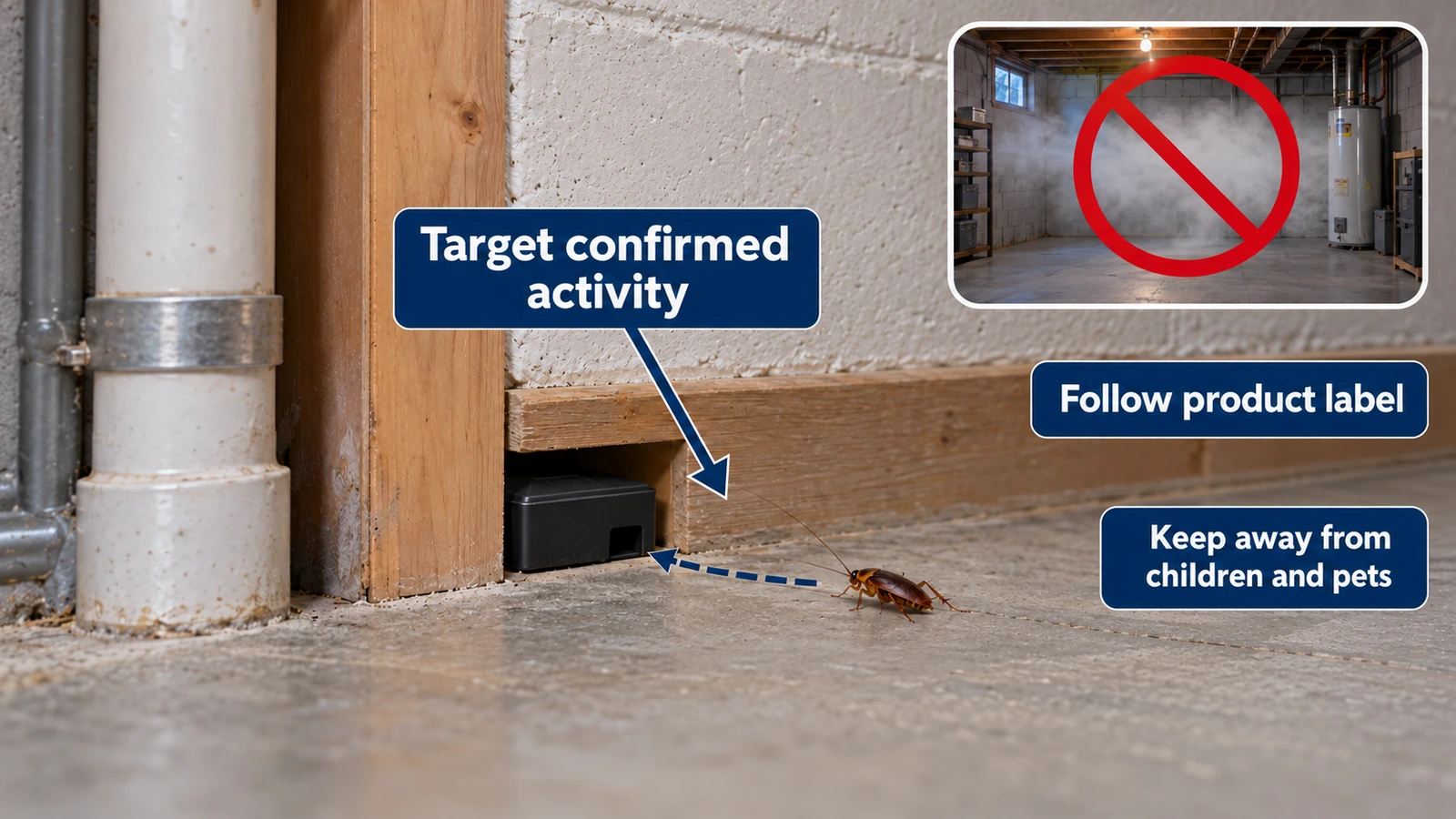
If the problem is limited to an occasional entrant, correcting the nearby access point may be enough. If traps confirm recurring activity, combine repairs and exclusion with a cockroach treatment labeled for the intended location and use. Keep all pesticide applications consistent with the current product label and away from children, pets, and food-contact areas.
Correct Moisture Problems and Remove Harborages
Repair dripping pipes and persistent leaks. Check whether gutters, downspouts, irrigation, or surface drainage are leaving the foundation wet. Improve ventilation where condensation is contributing to dampness.
Outside, remove leaf accumulations, boards, cardboard, and other unnecessary debris beside the building. Reduce dense, moisture-retaining vegetation and excess mulch immediately against the foundation. Keep garbage covered and clean up accessible food waste.
Inside, remove clutter around utility areas and vacuum accessible cracks and floor edges where activity has occurred. Moisture control and cleanup make the location less favorable and help other measures work more effectively.
Choose a Treatment That Fits the Activity
Different control tools have different purposes:
- Sticky traps: Use them to locate activity and measure changes. They are monitoring tools, not a stand-alone solution for a continuing population.
- Cockroach gel baits or bait stations: These can help when placed close to confirmed hiding or travel areas, in locations allowed by the label. Some bait stations have openings too small for large Oriental cockroach adults, so check that the format is appropriate rather than assuming every roach station will work equally well.
- Outdoor cockroach baits: Where the product label specifically authorizes outdoor use, these can help target activity near suitable sheltered areas around the building. Protect them from moisture, runoff, and unintended access, as directed by the label.
- Insecticidal dusts: Certain labeled products can be useful in dry, inaccessible cracks and voids. They are poorly suited to wet locations and should never be scattered openly where occupants may contact them.
- Targeted perimeter treatments: In some recurring outdoor-invasion situations, a properly labeled exterior treatment may help reduce entry. It is a supporting measure, not a substitute for repairing moisture problems and structural openings.
Baits work where roaches encounter them; placing one far from the activity and expecting it to attract insects throughout the building is a common mistake. Check the product directions for placement, reapplication, permitted surfaces, and exposure restrictions.
Do not spray insecticide over or beside bait placements unless the specific label permits the combination. Sprays can interfere with bait acceptance. Avoid room-wide foggers and bug bombs: they may miss protected hiding places, disperse roaches, and introduce unnecessary exposure or fire risks. Never pour insecticides into drains or sewer lines.
If you need a control method beyond a straightforward bait placement or accessible repair, choose the method based on the confirmed site of activity, not simply on which product promises the fastest kill.
When Professional Help Makes Sense
A few isolated Oriental cockroaches do not automatically require an exterminator. Start with identification, inspection, moisture correction, exclusion, and monitoring.
Professional help becomes more useful when catches remain substantial despite reasonable measures, multiple areas are involved, nymphs continue appearing, or the suspected source is inside inaccessible foundations, crawl spaces, or shared building infrastructure.
Ask the pest-control professional to identify the species, explain the likely hiding places and entry routes, describe where treatment will occur, and establish how results will be checked. If a defective floor drain, sewer connection, or persistent plumbing leak is involved, building maintenance or a qualified plumber may also be needed.
Essential Steps
- Confirm the insect’s identifying features with a clear photo or specimen.
- Inspect the nearby moisture sources, exterior hiding places, and ground-level access routes.
- Place and label sticky traps to identify where activity is concentrated.
- Repair moisture problems, remove shelter, close entry points, and use an appropriately labeled treatment only where justified.
- Compare trap catches after the changes and investigate remaining activity before repeating or expanding treatment.
How to Prevent Oriental Cockroaches from Returning

Prevention works best when the ground-level environment no longer provides an easy combination of moisture, shelter, and access. You do not have to eliminate every insect outdoors. The goal is to keep nearby populations from finding favorable conditions at the building boundary.
Maintain the repairs that reduced activity and watch for new moisture after storms, irrigation changes, or plumbing problems. If you live in a multiunit property, recurring activity near shared utility spaces may need coordinated attention rather than repeated treatment of a single apartment.
Keep the Building Boundary Less Inviting
- Maintain effective exterior door sweeps and weather stripping, especially on garage, basement, and service doors.
- Seal appropriate gaps around pipes, foundation joints, and wall penetrations without obstructing required drainage or ventilation.
- Keep wet leaves, firewood, unused materials, and excess mulch away from the foundation.
- Fix leaks promptly and correct drainage that repeatedly leaves soil or concrete wet beside the building.
- Keep trash containers closed and avoid leaving accessible food residue around ground-level storage areas.
Leave a few monitoring traps in the locations that previously showed activity and inspect them periodically. New captures should prompt a check for renewed moisture, a failed seal, or a nearby outdoor refuge rather than automatic repeat spraying.
Good to Know
An Oriental cockroach found in a smooth bathtub or sink may have climbed or fallen into it and become trapped because it cannot easily scale the sides. That discovery alone does not establish that it came up the drain. If sightings repeatedly center on the same drain, investigate its water seal, connections, and surrounding gaps. Plumbing faults need repair, not pesticide poured down the pipe.
Frequently Asked Questions
Are Oriental Cockroaches a Health Concern?
Oriental cockroaches can move between garbage, drains, other contaminated environments, and living spaces. Their activity can contaminate surfaces, while cockroach debris may contribute to indoor allergen exposure. Clean affected food-contact areas, protect stored food, and address repeated indoor activity. An isolated sighting is not, by itself, a medical emergency.
Can Oriental Cockroaches Become a Problem in Apartments?
Yes. They may occupy damp basements, ground-floor areas, shared utility spaces, or sheltered exterior locations around an apartment building. Repeated sightings in several units can involve common access routes. Document the locations and trap results so building management can investigate the shared source rather than treating each apartment independently.
Explore this topic further: