Identification
Cockroach droppings: how to identify them and clean up
Found dark specks in a cabinet or pellets behind an appliance? Compare their appearance and location, check for current activity, and decide how to clean up safely.
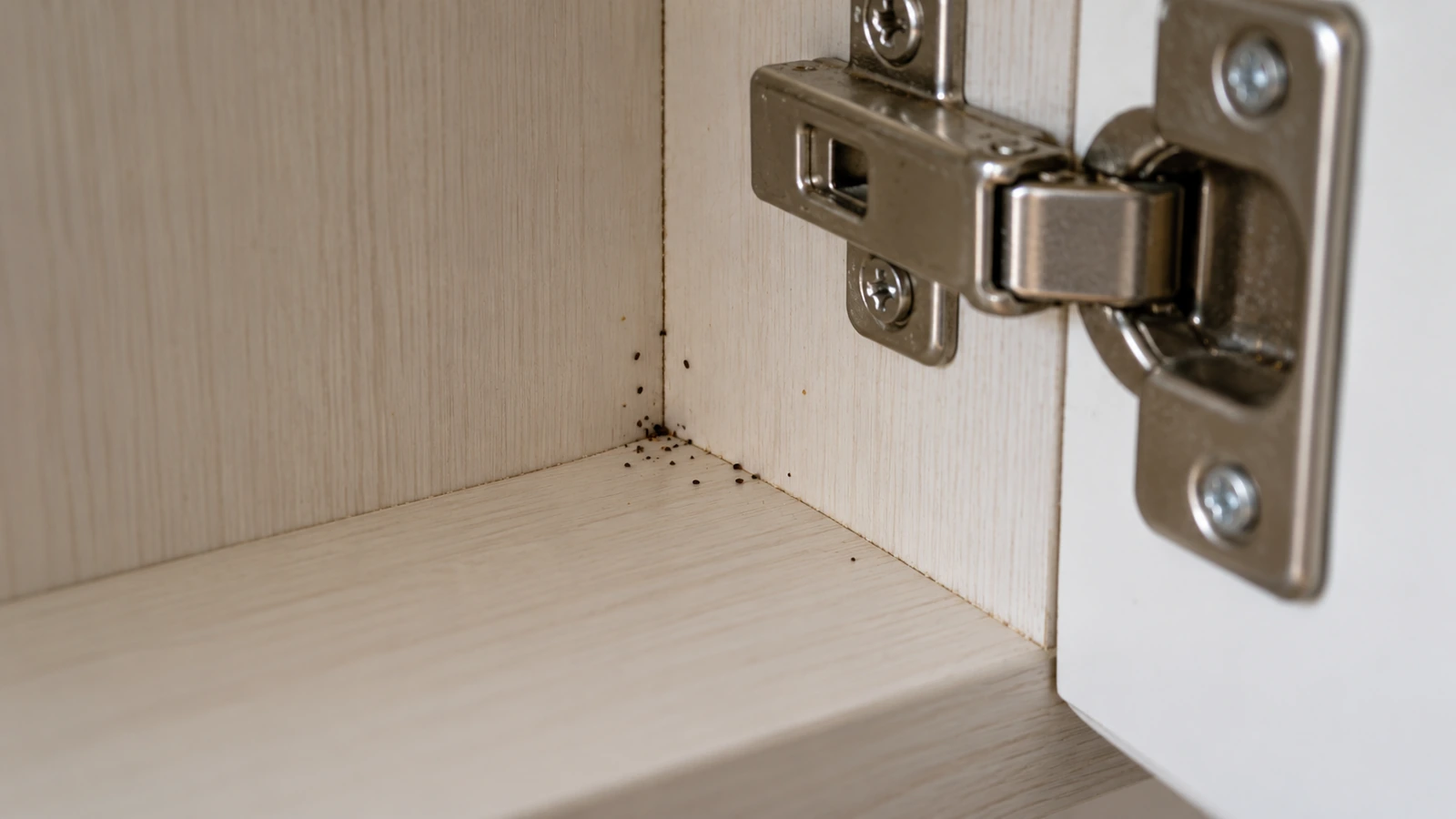
Cockroach droppings can look like tiny dark flecks, brown-black spots, or larger pellets with lengthwise ridges. They are useful evidence, but ordinary debris and waste from other pests can look similar. The most useful diagnosis combines what the material looks like, where it appears, and whether you can find an identifiable insect nearby.
What Do Cockroach Droppings Look Like?
German cockroach droppings often appear as clusters of tiny brown-to-black dots or pepper-like specks. You may notice them along a cabinet joint or in another sheltered spot near food and water. Cockroach fecal material can also leave dark spotting or smears, so it does not always look like a pile of loose pellets.
Larger cockroaches can leave more distinct pellets. American cockroach droppings may have blunt ends and ridges running along their length. A clear close-up can reveal those details, but the appearance of a dropping alone is not a dependable way to identify the cockroach species.

Cockroach vs. Mouse Droppings
Mouse droppings are commonly about 1/8 to 1/4 inch long. They generally look smoother than the ridged pellets of an American cockroach, and their ends may be pointed or rounded. Large-roach and mouse droppings can overlap in size and shape: “small means roach, large means mouse” is not a reliable rule.
Look for supporting evidence, such as gnawed packaging or an actual rodent sighting.
Other Materials That Can Look Similar
- Drywood termite pellets: small, fairly uniform pellets may accumulate beneath a tiny opening in wood. Under magnification, they have six flattened sides. Ridges alone do not prove a pellet came from a cockroach.
- Bed bug spotting: dark stains around a mattress, bed frame, or resting area deserve a different inspection. Location helps, but a dark spot or smear alone does not identify either pest.
- Cockroach egg cases: an intact case is a small capsule, rather than scattered fecal specks. If the object has a defined capsule shape or seam, compare it with cockroach egg cases.
- Household debris or old bait: crumbs, coffee particles, deteriorating material, and previous treatment residue can create confusion. If you find a brown dab inside cabinet hardware, check whether bait was placed there before removing it.
A Quick First Check
Look for a Pattern
- Compare both the particles and the surface around them.
- Check whether they cluster along a sheltered edge near other pest evidence.
Check for Look-Alikes
- For smooth larger pellets, investigate possible rodent activity.
- For grains falling beneath wood or hardware, inspect the source above them.
Where to Check When You Find Suspicious Droppings

Start at the deposit and examine the nearest accessible hiding places with a flashlight. In a kitchen, check cabinet corners and hinges, the underside of a counter, gaps around sink plumbing, and edges beside or beneath appliances. Use the concentrated patch to guide the inspection of nearby routes and hiding places.
Keep this first inspection focused:
- Record the finding before cleaning. Take a close-up and a wider photo showing its location. Include a size reference beside the material without touching it. Note the date and whether the area was recently cleaned or treated.
- Look for an insect you can identify. Check nearby seams for a live or dead cockroach, shed skin, or egg case. If you also see small insects, use the roach nymph identification guide to check them separately.
- Use a nearby insect sticky monitor. Place it along an edge close to the suspect area, following its directions and keeping it away from children and pets. Check it daily for several days and record the location of each catch. This is a monitoring aid, not a complete treatment.
Inspect only what you can reach safely. Do not open electrical housings or pull out a heavy appliance just to investigate a few particles.
Avoid a False “Test”
- Do not crush, smell, or rub suspected droppings onto damp paper to identify them. A smear is not a reliable cockroach test, and handling the material adds unnecessary exposure.
Save the Better Evidence
If a monitor catches an insect, photograph it clearly before discarding the monitor. An identifiable specimen is more useful than another blurry picture of a black speck.
Keep Other Explanations Open
A cockroach sighting does not identify every nearby pellet. If some material still looks like rodent waste, keep that possibility open when choosing how to clean it.
How to Interpret What You Find
Compatible-looking droppings make cockroaches a possibility. Similar marks in a sheltered area, together with an identifiable cockroach caught nearby, provide stronger evidence. A dark particle by itself does not justify calling the home infested.
Use the combination of clues to decide which explanation to follow:
| What you observe | What it supports | Useful next check |
|---|---|---|
| Dark specks and a cockroach caught beside the same area | Current cockroach activity near that location | Identify the insect and use a control plan suited to it. |
| Marks in an untouched corner, with no current sightings or catches | Material of unknown age; current cockroach activity is unconfirmed | Establish a clean baseline and continue nearby monitoring. |
| Smooth pellets with gnawed packaging or a rodent sighting | A rodent explanation that needs attention | Use rodent cleanup precautions and investigate that evidence. |
| Similar grains repeatedly collecting below one point in wood or hardware | A source above the deposit that needs identification | Examine the material above the deposit and inspect nearby hiding places for fresh signs; record repeat findings by location to track activity. |
Is There Ongoing Activity, and How Far Does It Extend?
After photographing and safely cleaning an accessible patch, compare the same spot on later checks. New material on a previously clean surface gives you a clearer observation than marks of unknown age. Combine that observation with dated sightings or monitor catches to judge whether cockroaches are currently using the area.

Weigh other signs of a cockroach infestation alongside where the deposits recur. Repeated findings in separate areas call for a wider assessment. A single untouched corner containing many old specks cannot tell you how many roaches are present now, and a blank monitor after one night does not rule them out.
If you have just moved in, uncovered the space behind an appliance, or had pest treatment, the timing matters. Droppings found today may have been deposited earlier; color and dryness cannot date them reliably. Compare the marks with earlier photos and look for fresh signs when assessing a treatment.
Learn more:
For a broader overview of identification, household signs, and control options, read our cockroach guide.