
Identification
Tiny Ants in the House or Kitchen: What Are They?
Tiny ants around the kitchen sink or pantry? Learn how to distinguish ants from look-alikes, follow their trails, identify likely causes, and decide what to check next.
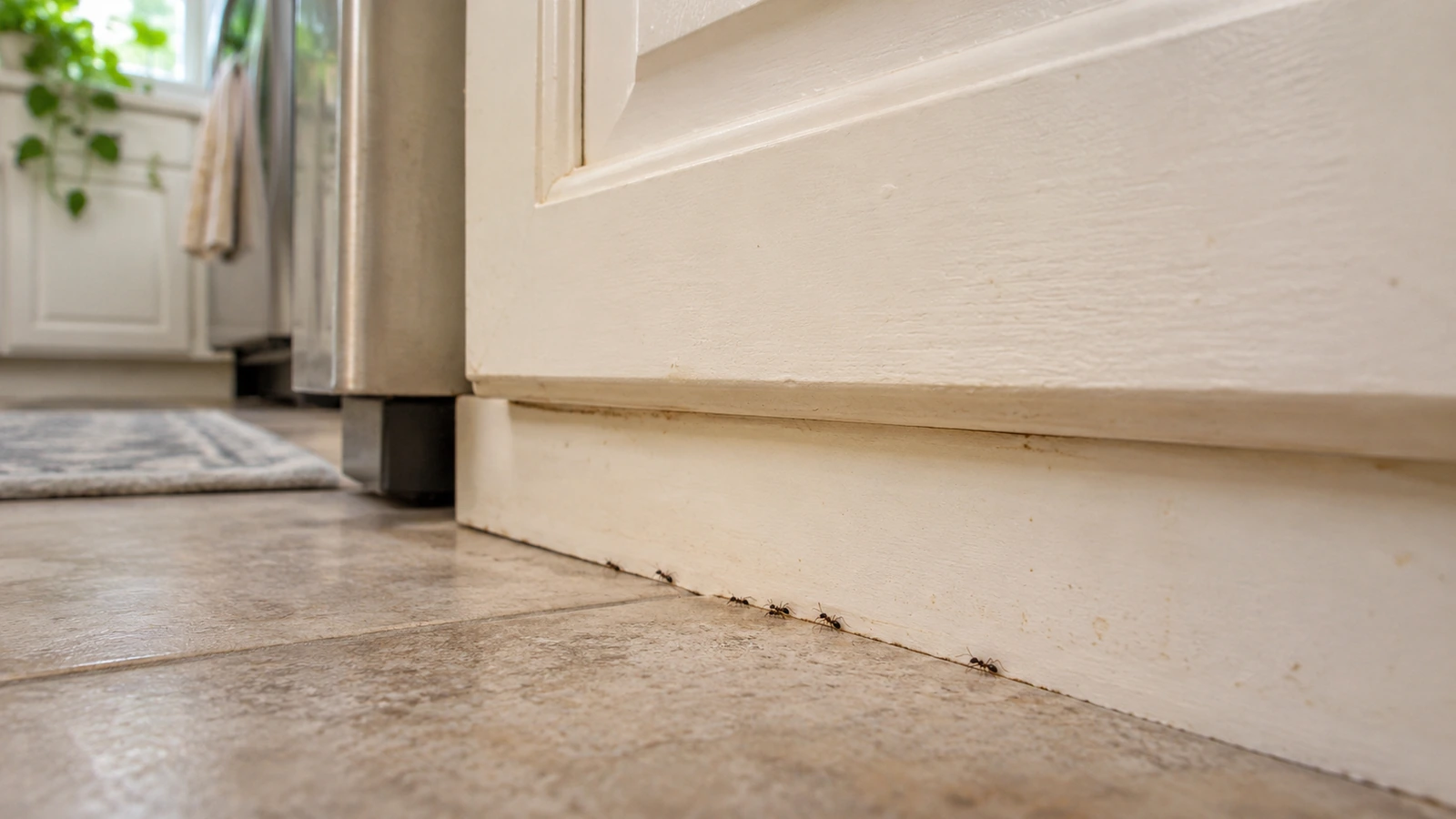
One morning, tiny dark insects appear beside the kitchen sink. You clean the counter, but more arrive from the window trim. Are these little black ants, and are they nesting somewhere in the house?
Their color is only part of the answer. The more useful clues are how the insects move, where their trail leads, and whether they keep returning to the same places. Those observations can help you distinguish a few foraging ants from a more persistent problem.
Are those tiny moving dots actually ants?
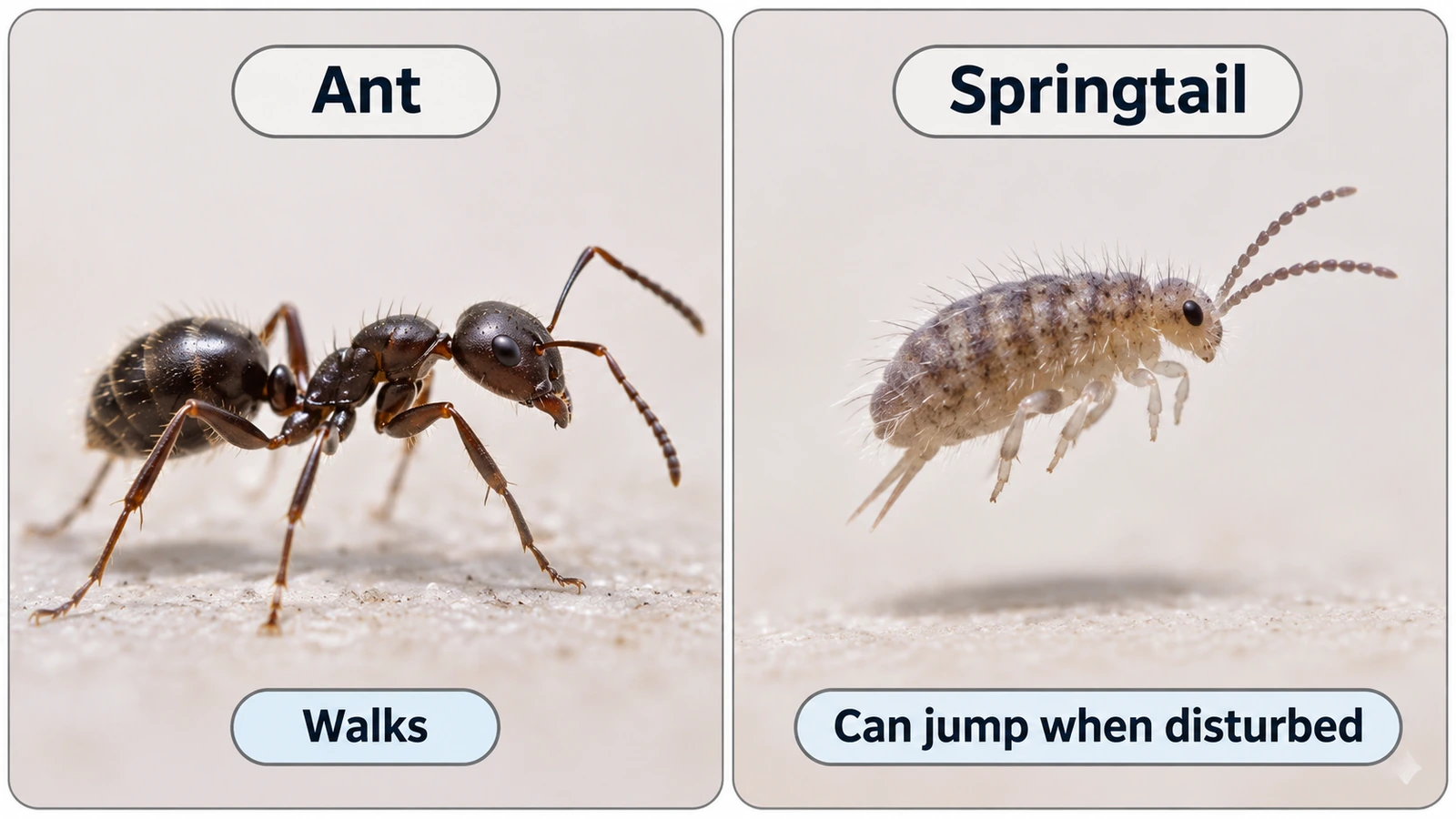
Many household ants are only around 1/16 to 1/8 inch long. At that size, dark insects can look like pepper grains until they move. Under magnification, an ant has six legs, a narrow waist, and elbowed antennae.
Watch how they move. Ants walk and may follow repeated routes toward food or moisture. Springtails, which are sometimes mistaken for tiny ants, can suddenly jump when disturbed and are often associated with damp surfaces.

Identification in 30 Seconds
- Body: Six legs, a narrow waist, and elbowed antennae are useful clues when you can see them clearly.
- Movement: Repeated walking paths favor ants; sudden jumping suggests a different insect-like household pest, such as a springtail.
- Location: A trail toward crumbs, pet food, or a sink suggests foraging activity, not necessarily a nest in that exact spot.
- Color: Black, brown, yellow, or partly translucent workers can belong to different species. Color alone is not enough to identify them.
A close-up photograph or a hand lens can reveal details that are invisible at normal viewing distance. If you cannot see the body clearly, keep the identification provisional rather than choosing a species from a blurry image.
Some pale ants blend into light cabinets, while others show a dark head against a much lighter abdomen. Check the waist and antennae before assuming they’re ants, and use the color pattern only as a clue, not a species identification.
Where are the tiny ants coming from?

Follow the insects for a short stretch before wiping them away. A steady path across a backsplash or counter often connects a hidden opening with food or water.
Check both ends of the route. The place where you first notice the ants may be a feeding stop, while the colony itself could be outdoors, beneath a concrete slab, or inside a concealed building void.
The most useful places to inspect are:
- Window and door trim: Look for ants passing through a gap and check whether the same route continues outside.
- Sink cabinets and pipe openings: Look for moisture, dripping plumbing, and workers appearing along cabinet seams.
- Pantry shelves and pet-feeding areas: Check whether ants repeatedly visit exposed food, crumbs, or spilled liquids.
- Baseboards and houseplants: Follow activity along wall edges or near damp potting soil.
You do not need to dismantle cabinets or open electrical outlets to investigate. If ants are emerging from an electrical fixture, note the location without spraying or disturbing the wiring.
Notice whether the trail travels in both directions, and whether different ants appear to be following the same route.
Identification Mistakes
- Calling every tiny dark ant a little black ant.
- Assuming that ants seen near food must be nesting directly beneath it.
- Treating jumping insects around damp soil as ants without checking their movement.
Key Clue
A repeatable route between a small opening and a food or moisture source is strong evidence of ant foraging. Follow that route before disturbing it to learn more about where the insects are entering.
What to Watch For
Very small, pale yellow ants repeatedly appearing in warm rooms or through several interior gaps deserve careful identification. Pharaoh ants are one possibility, and indiscriminate insecticide spraying can contribute to colony spreading.
What kind of tiny ants could they be?
Several household species fit the description of tiny ants in a kitchen. The location, body appearance, and regional context help narrow the possibilities.
Small, uniformly dark ants
Little black ants (Monomorium minimum) are genuinely tiny, with workers around 1/16 inch long. They can follow trails into food cabinets and pantries.
But odorous house ants, pavement ants, and other small species can also appear dark on a kitchen counter. The name “tiny black ants” is a description, not a confirmed species identification.
If the workers appear consistently small and dark, the little black ant identification guide covers the distinguishing characteristics and behavior of Monomorium minimum.
Dark heads with pale legs or abdomens
In Florida and other warm areas, ghost ants are another possibility. Their dark head and middle section contrast with pale legs and abdomen, making them especially difficult to see on some surfaces.
They may forage around kitchens, bathrooms, and plants, and can nest both indoors and outdoors.
For the dedicated regional identification, see ghost ants in Florida.
Tiny pale yellow ants in warm buildings
Pharaoh ants can establish themselves in protected indoor spaces, including wall voids and cabinet cavities. They are particularly relevant in heated buildings where colonies can remain active year-round.
They may travel along plumbing and other concealed routes. Their small size and yellowish appearance are clues, but other small ants can look similar.
Accurate identification matters because disturbing pharaoh ant colonies with unsuitable insecticide treatment can encourage workers and queens to establish additional nesting groups.
The aim at this stage is to narrow the possibilities, not to assign a species based on one visual trait.
An individual sighting also says less about the colony than the overall pattern of activity. Use the observations below to decide what to verify next.
| What you observe | What it may indicate | What to check next |
|---|---|---|
| One or two tiny ants on a single occasion | Foragers searching for food or water | Remove accessible attractants and check whether they return |
| A repeated line from a window or door seam | A foraging route connecting indoor resources with an entry point | Follow the route toward the exterior |
| Persistent activity near the sink after cleaning | Moisture or a concealed access route may be involved | Inspect plumbing gaps, leaks, and nearby cabinet seams |
| Ants appearing from several interior gaps | Indoor nesting or multiple foraging routes may be involved | Record the locations and obtain a clearer identification |
| Tiny dark creatures jumping around damp soil | Springtails or another look-alike rather than ants | Examine their body shape and investigate the moisture source |
Is this a minor visit or a continuing problem?
A handful of ants on one day suggests a different situation from trails that reappear after accessible food and moisture sources have been addressed. Frequency and the number of affected areas are more informative than a single sighting.
A long trail can originate from an outdoor colony. Conversely, only a few ants may be visible even when activity repeatedly emerges from concealed interior gaps. The number of workers on the countertop is not a reliable estimate of colony size.
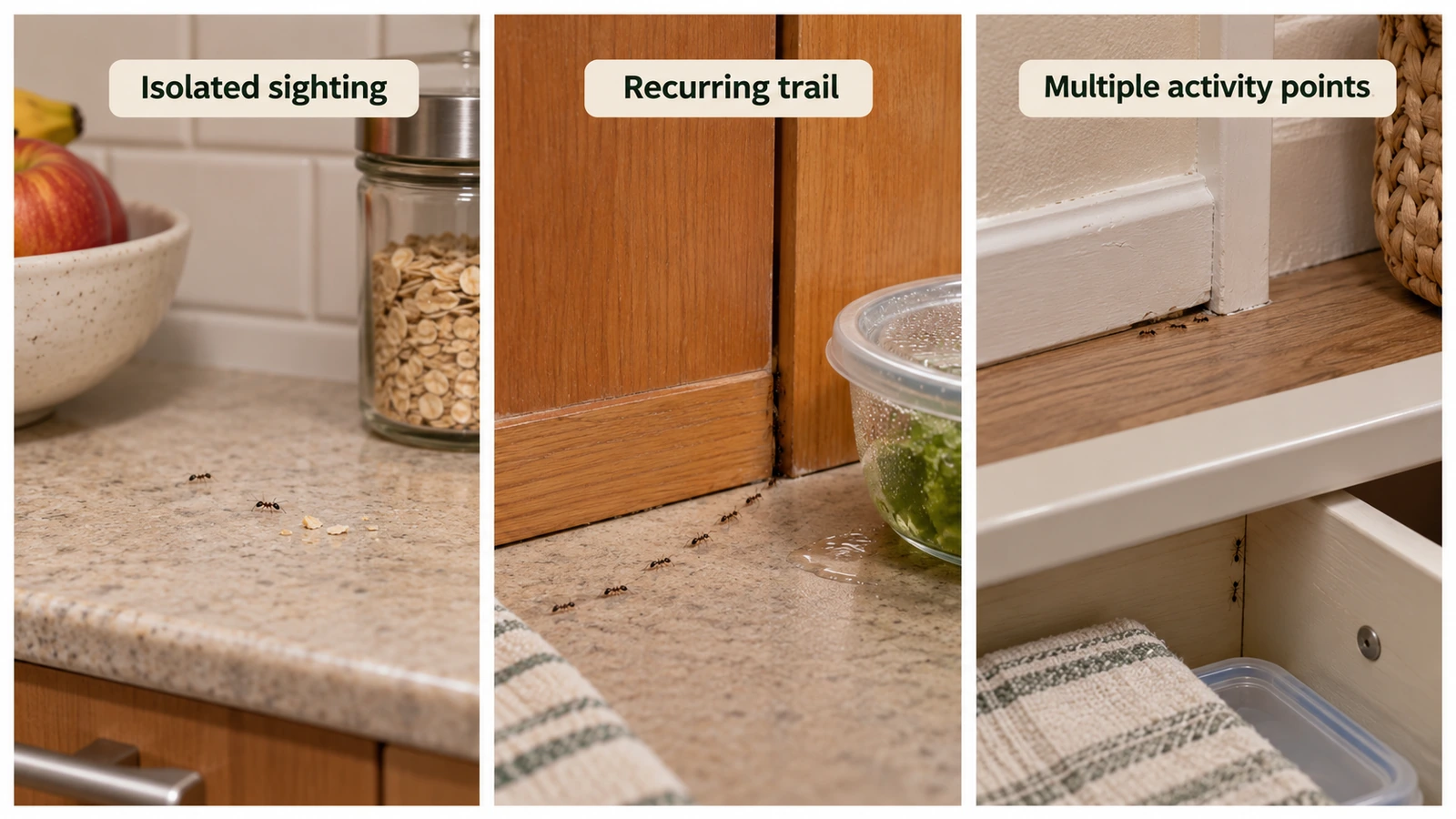
A short-lived trail linked to a spill is often a manageable nuisance. Repeated activity inside food-storage areas, across several rooms, or along shared walls calls for a closer investigation.
If the insects are difficult to identify, keep a clear photograph or an intact specimen for reference. Record where they appear and whether the same route persists. Those observations are more useful than assigning an unsupported infestation score.
Learn more:
For colony-level treatment options, baiting principles, and longer-term control, read the guide to getting rid of ants.


