How-To
Ant hills in your yard: when to leave them and how to treat them
Learn what an ant hill in your yard means, when to leave a mound alone, how to handle possible fire ants, and how to choose and monitor a safe, targeted response.
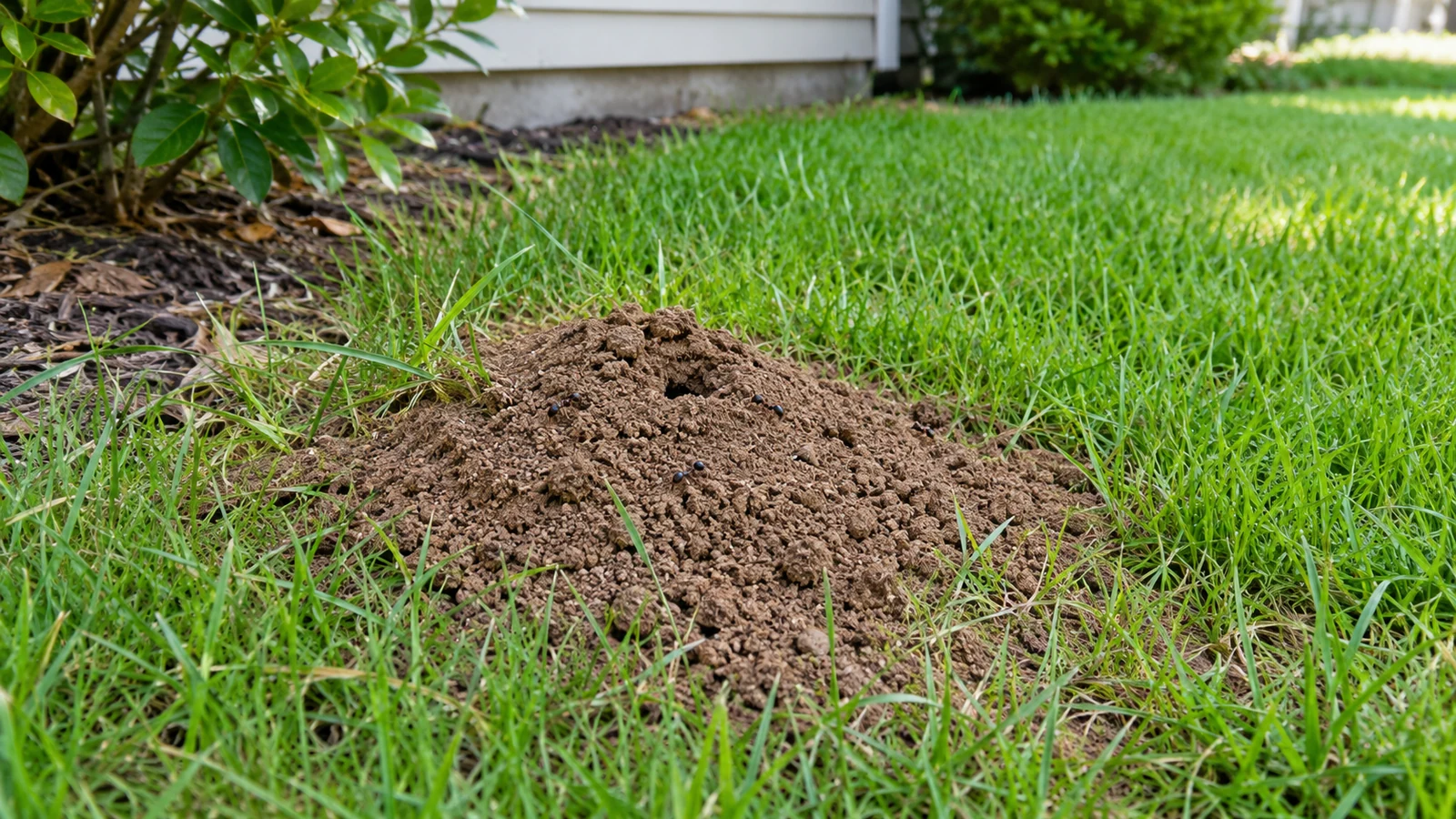
A little pile of loose soil beside the lawn can be an ant hill. So can a larger mound along a walkway or garden edge. The soil alone tells you very little about the type of ant living there or whether the colony is causing a problem.
Start by looking at the location and visible activity from a safe distance. Many outdoor ant nests can be left alone. If the mound creates a sting hazard, interferes with a frequently used space, or is linked to persistent nuisance activity, a targeted response may make sense.
- Difficulty: Basic for a visual check; treatment depends on the ant and product instructions.
- Equipment: Closed-toe shoes and a flashlight or camera; a product labeled for the ant and location only if treatment is needed.
Check the mound before deciding to act
Look for ants traveling over nearby soil or following paths along the ground. A heap of dirt without visible workers may be old, temporarily quiet, or unrelated to ants. Observe it without digging, kicking, flooding, or testing how the insects react.
Where the mound sits matters. A small colony in a quiet corner of the yard may be worth tolerating: many ants prey on other insects, and their soil activity seldom causes serious lawn damage. A mound in a play area, beside a busy door, or where people walk barefoot deserves more attention.
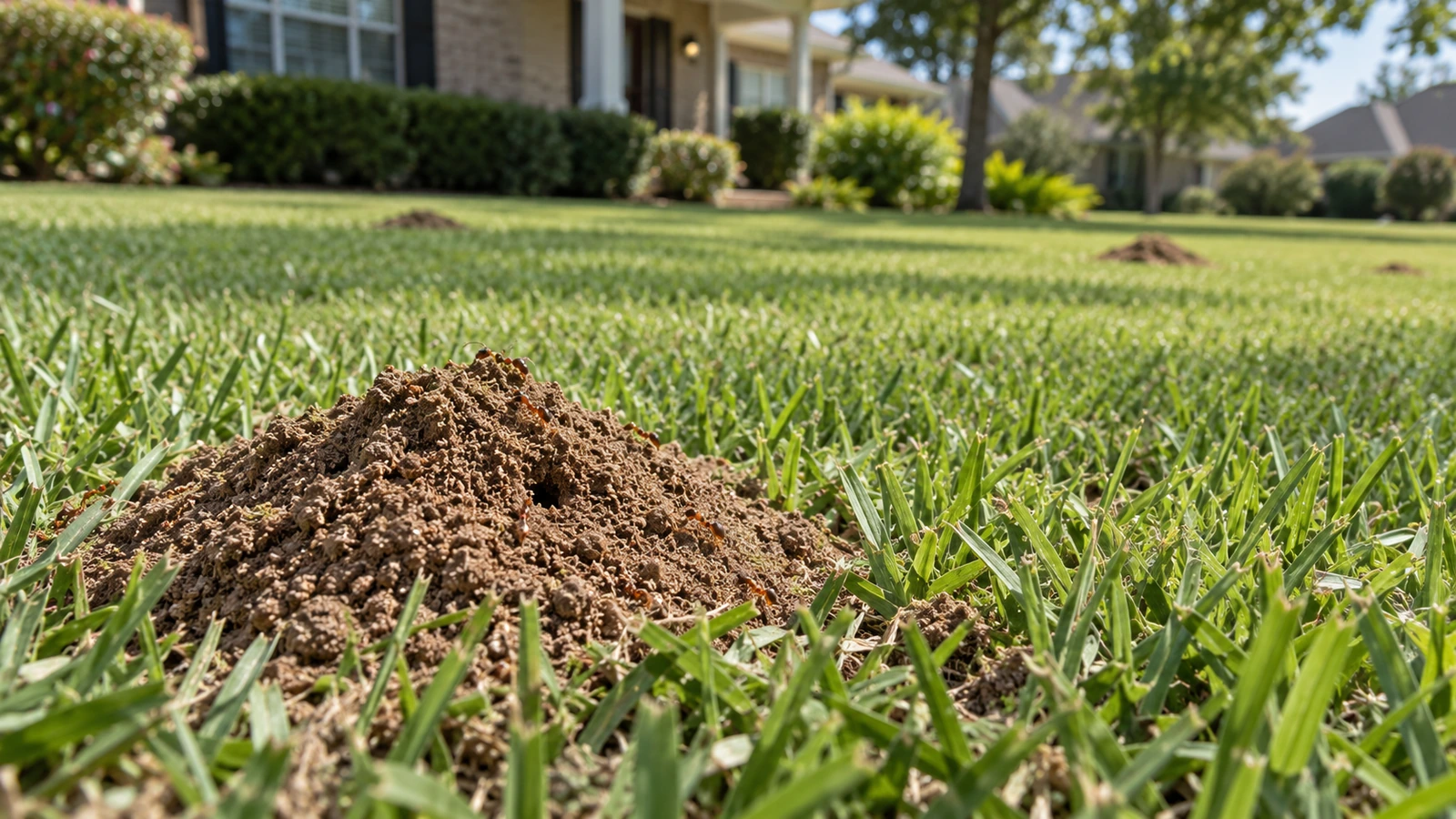
In regions with imported fire ants, a soft mound with no obvious central entrance can be a warning sign, but mound shape and color cannot confirm the species. Some fire ants rush out and sting when disturbed. If you are unsure, compare the visible workers and the setting with our guide to what fire ants look like without provoking the nest.
If soil is coming up through patio joints, the issue may call for the more specific approach in ants between pavers. If the ants are regularly entering the home, follow their indoor route separately in our guide to ants in the house.
Before You Start
Keep children and pets clear of any mound where stinging ants may be present. Never stand over an unidentified active mound or open it to find the queen. If safe identification is not possible, leave it undisturbed and seek local Extension or qualified pest-control advice before attempting treatment.
Choose the right response to an ant mound
An ant hill is usually a visible sign of soil being moved from a nest below ground. Flattening the pile does not necessarily affect the colony. First decide whether the ants need controlling at all; only then choose a method suited to the species and the area.
A bait and a direct mound treatment serve different purposes. A bait depends on foraging ants taking it; a labeled contact mound treatment is intended to reach ants at a particular nest. Neither should be chosen simply because the pile looks large.
Step 1: Leave a low-risk mound alone
If the mound is away from entrances and regular activity, the ants are not creating a sting concern, and the ground remains usable, no insecticide is needed. Note the spot and check whether it continues to interfere with the yard. Resist the urge to scrape away an active mound just to make the soil look level.
Step 2: Consider a suitable bait for a mound that needs control
Where the ants are identified and a bait is labeled for that species and site, place it where workers will forage, exactly as the label directs. For imported fire ants, granular bait is commonly placed around an active mound or spread over an appropriate area rather than dumped on the top. It must remain attractive to foragers, and wet weather can reduce performance.
Bait is not an instant fix. Allow the labeled period for results before deciding whether more action is needed. For the differences among bait formulations and placements, see fire ant bait options.
Step 3: Consider direct mound treatment when a local hazard needs faster attention
For a confirmed troublesome fire ant mound near a frequently used area, an outdoor product specifically labeled for individual mound treatment may be more appropriate than waiting for a slow bait alone. Products differ in whether they are applied as a drench, dust, or other labeled formulation. Follow the instructions for that product, and do not disturb the mound beforehand.
This is a treatment decision for a particular colony, not a reason to broadcast insecticide over the entire yard. For choosing between labeled approaches, see fire ant treatment types.
Step 4: Protect the surrounding area during any treatment
Read the label before applying anything. Check that it covers the ant, outdoor site, method, equipment, weather conditions, and required precautions. A product suitable for turf may not be approved near vegetables, water, or certain ornamental plants.
Keep children and pets out of the area for the period required by the label. Prevent granules, spray, or rinse water from entering drains or running onto a sidewalk, driveway, or neighboring property. Do not increase the dose or combine products to speed up the result.

Avoid shortcuts that create new problems

A mound that has been kicked open can expose someone to stings and, with some ants, prompt the colony to move deeper or relocate. Take particular care around suspected fire ants. If the mound lies where someone needs to mow or walk, keep the area out of use until the risk has been addressed.
Treatments also fail when the application does not match the product. Granular contact insecticides and granular baits are not interchangeable. Bait needs to be found and carried by foraging workers, while a mound drench follows its own directions.
- Do not pour boiling water, gasoline, bleach, or improvised mixtures into an ant hill. These can injure people, harm the yard, or fail to control the colony.
- Do not scatter bait into heavy rain, mix it with spray, or repeatedly reapply it ahead of the product’s instructions.
- Do not treat every mound in sight. Confirm the need and the ant before using a pesticide.
Check whether the response worked
Return to the same area when ant activity is normally visible. Watch from a safe distance for workers using the mound, new loose soil, or a trail leading away from it. A pile of dirt may remain after colony activity has declined, so the height of the mound is a poor measure of success.
A contact treatment and a bait do not have the same expected response time. Use the product’s stated observation or reapplication guidance rather than judging a bait ineffective the next morning. New mounds nearby may belong to different colonies and need their own assessment.
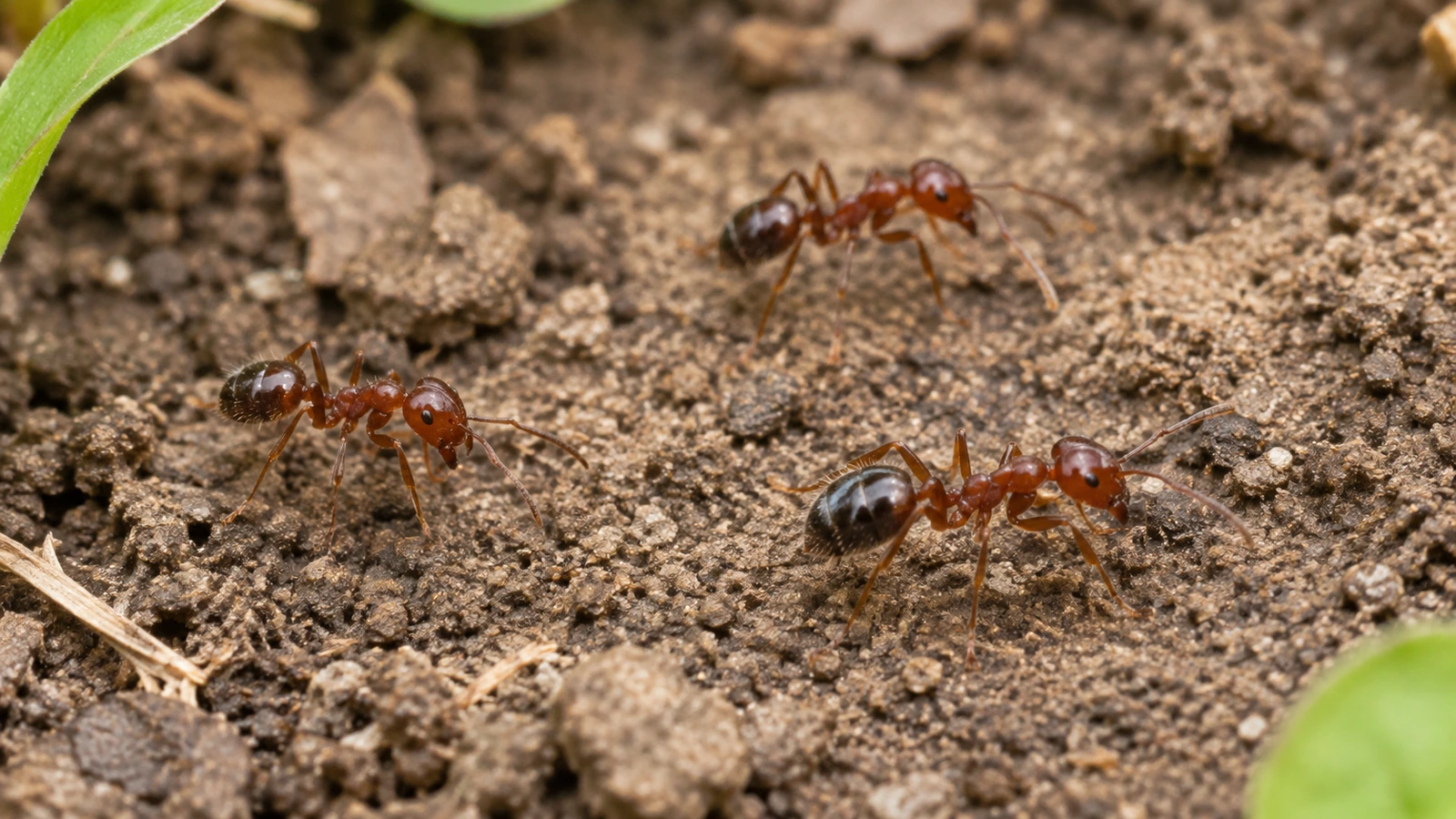
If you chose to leave a low-risk mound alone, the goal is simpler: the nest stays out of the way, with no new sting concern or interference with normal use of the yard.
Expected Result
A successful response is less ant activity and less conflict at the problem spot, not necessarily a perfectly flat patch of soil. An untouched, harmless mound can also be a successful outcome.
If the mound stays active
Check what actually happened before using more product. Did you identify the ants? Was the bait taken, and was it exposed to rain? Did the application match the mound and the label? If the answers are unclear, correct the assessment rather than increasing the amount used.
Where several new mounds appear or ant traffic extends well beyond one site, treating the same pile repeatedly may miss the wider problem. Keep the original mound decision separate from broader yard management.
When Should You Call a Professional?
Consider professional help when aggressive stinging ants occupy a play area or main access route, the nest is difficult to reach safely, the species remains uncertain in a high-risk location, or labeled efforts have failed and the activity persists. A small, nonthreatening mound in an unused part of the yard rarely needs that response.
Keep monitoring without overtreating
After a treatment, revisit the spot at the intervals given by the product label. Look for renewed worker movement and fresh soil, and record whether the original problem location is still usable. Reapply only when permitted; the next mound may not be the same colony.
If ant activity now involves multiple parts of the yard, garden, or building perimeter, move from a single-mound decision to a broader outdoor plan rather than automatically treating every new dirt pile.
Explore this topic further:
Outdoor ant control: how to get rid of ants around the house