
Identification
Casemaking clothes moth: How to recognize the larva and its case
Learn to recognize the casemaking clothes moth’s portable larval case, separate it from webbing and look-alikes, and inspect vulnerable fabrics before deciding what to do.
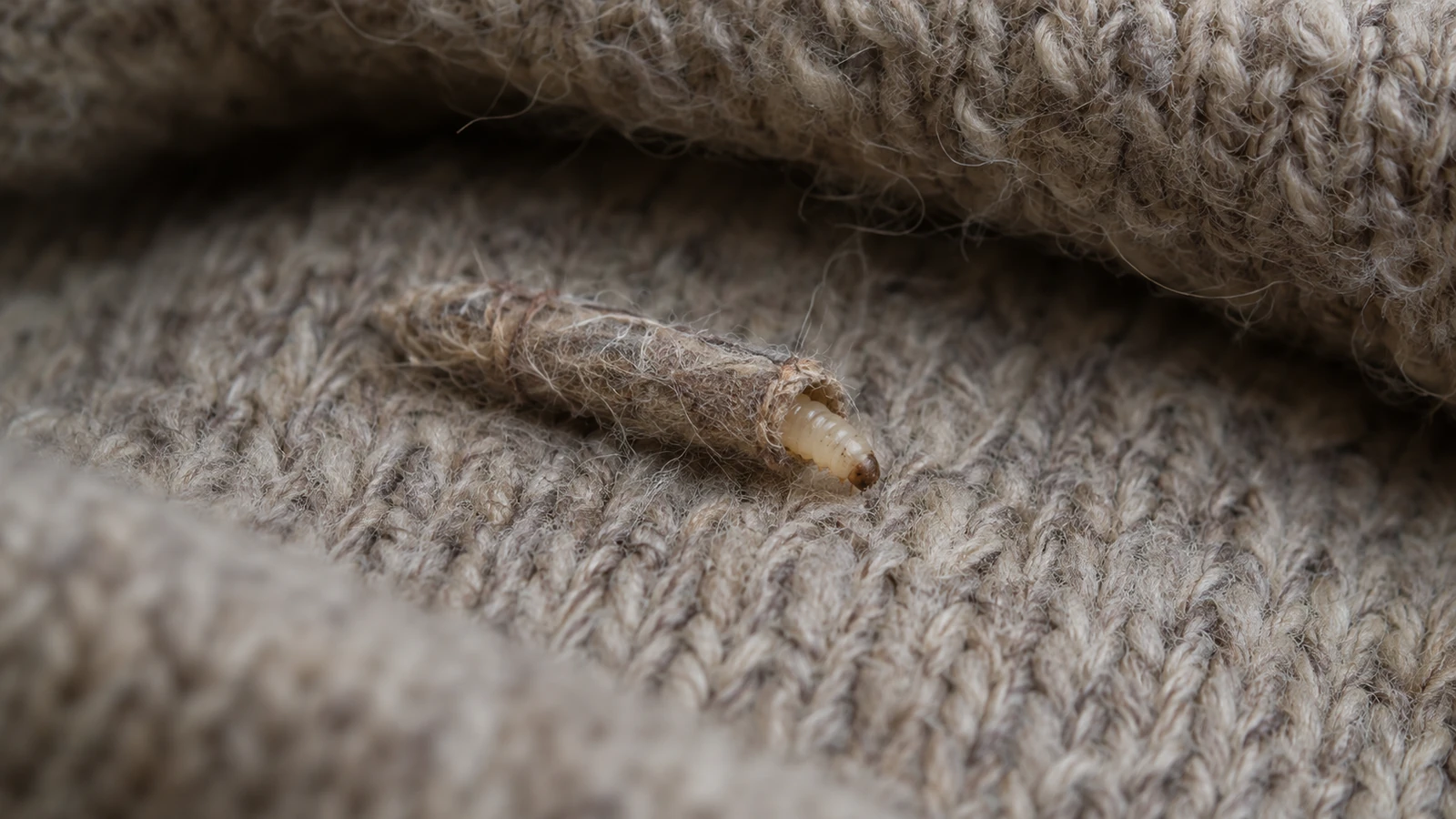
A narrow, lint-colored object on a wool sweater seems to move. Under a closer look, a pale head appears at one end, and the entire little tube travels with it. That is the kind of finding that makes a casemaking clothes moth worth investigating.
The species behind this particular fabric pest is Tinea pellionella. Its larva builds a portable shelter, but not every tiny case found indoors belongs to this species. The case, the insect inside it, and the material where you found them are the clues to put together.
What a casemaking clothes moth looks like
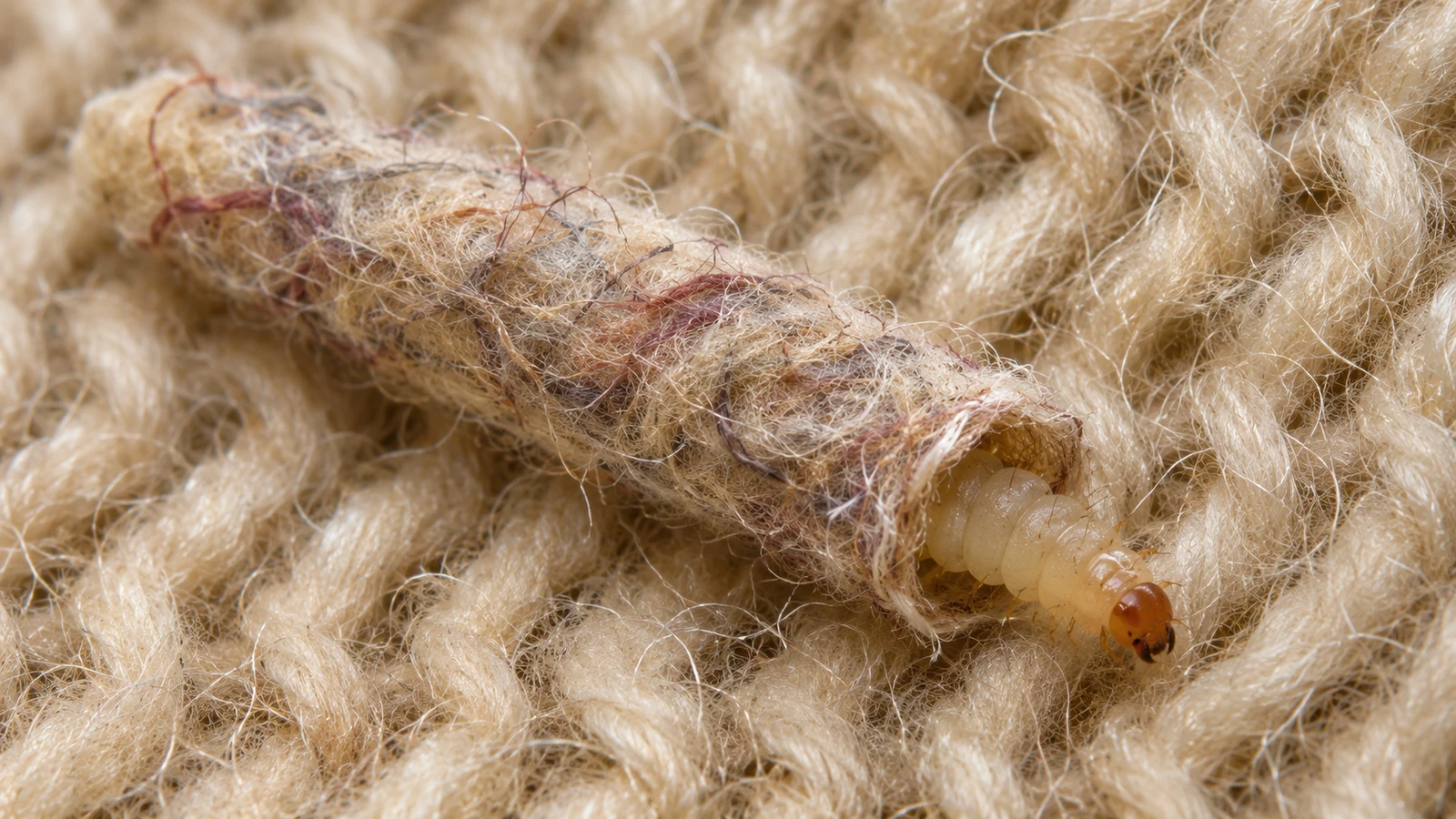
The most useful feature is a small larva carrying a narrow silk case as it feeds. The case incorporates fibers and other material, often resembling the wool or other textile beneath it. A cream-colored larva with a darker head may extend from either end, then withdraw into the tube when disturbed.
The adult is a small, buff-brown moth, approximately 1/4 inch long at rest. Its narrow, fringed forewings may show three darker spots, although those markings can wear away. Adult wing color helps with identification, but a larva carrying a case beside fabric-feeding traces is more revealing.
Identification in 30 Seconds
- Look for a slender, portable silk case on wool, cashmere, fur, felt or other vulnerable animal-fiber material.
- Watch for a pale larva protruding from the case and carrying it when it moves.
- Check the fabric nearby for shallow grazing, thinned fibers or irregular holes.
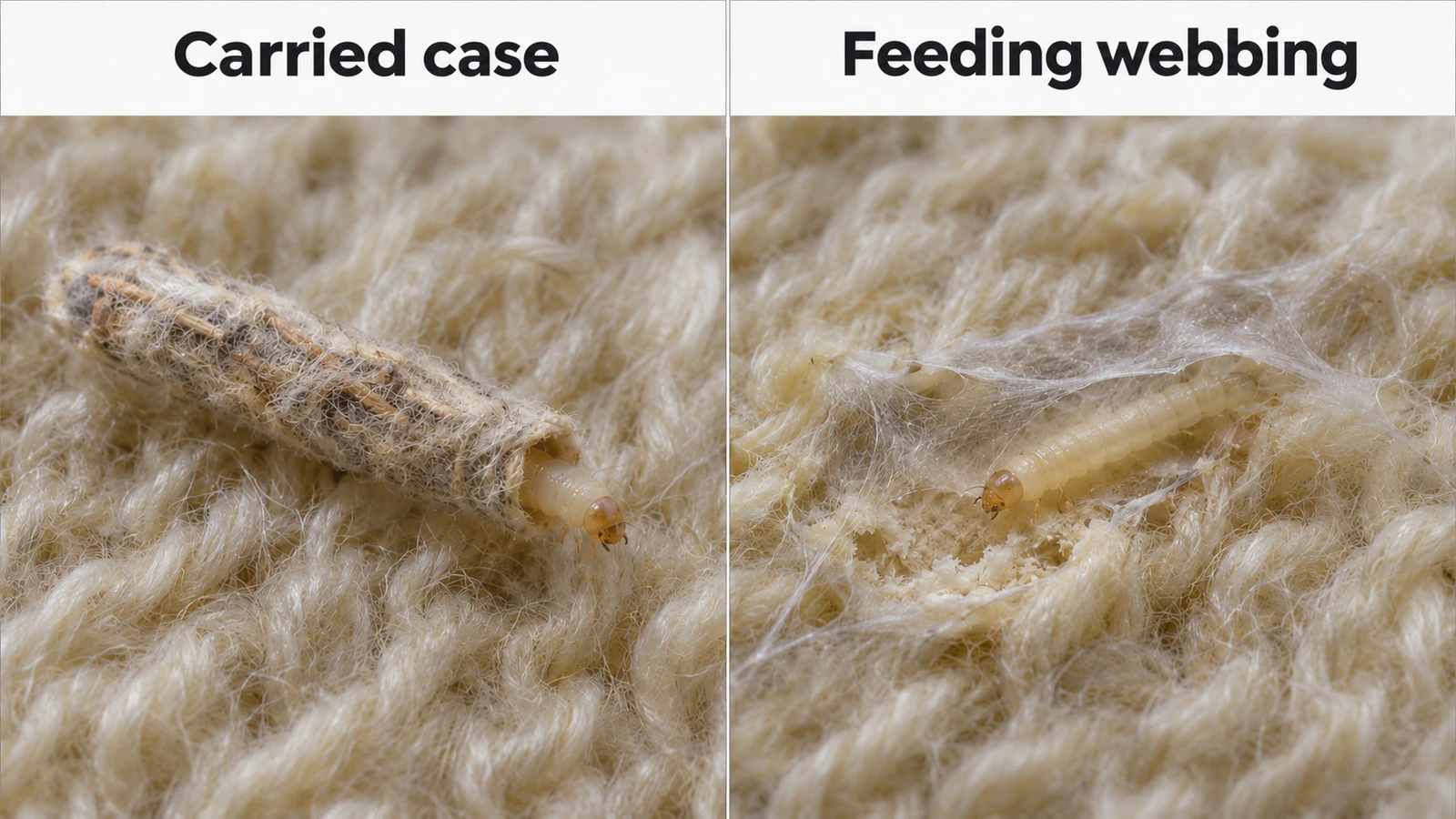
- Distinguish the carried case from patches of feeding silk left on fabric by webbing clothes moth larvae.
A mature case may be around 3/8 inch long. Its color can closely match the fabric, so a motionless case may look like a short thread or piece of lint. The case can also be temporarily attached to the material. Movement and a visible larva are especially helpful clues, while an empty case calls for a closer check of the surrounding textile.
Where to check for cases and feeding traces
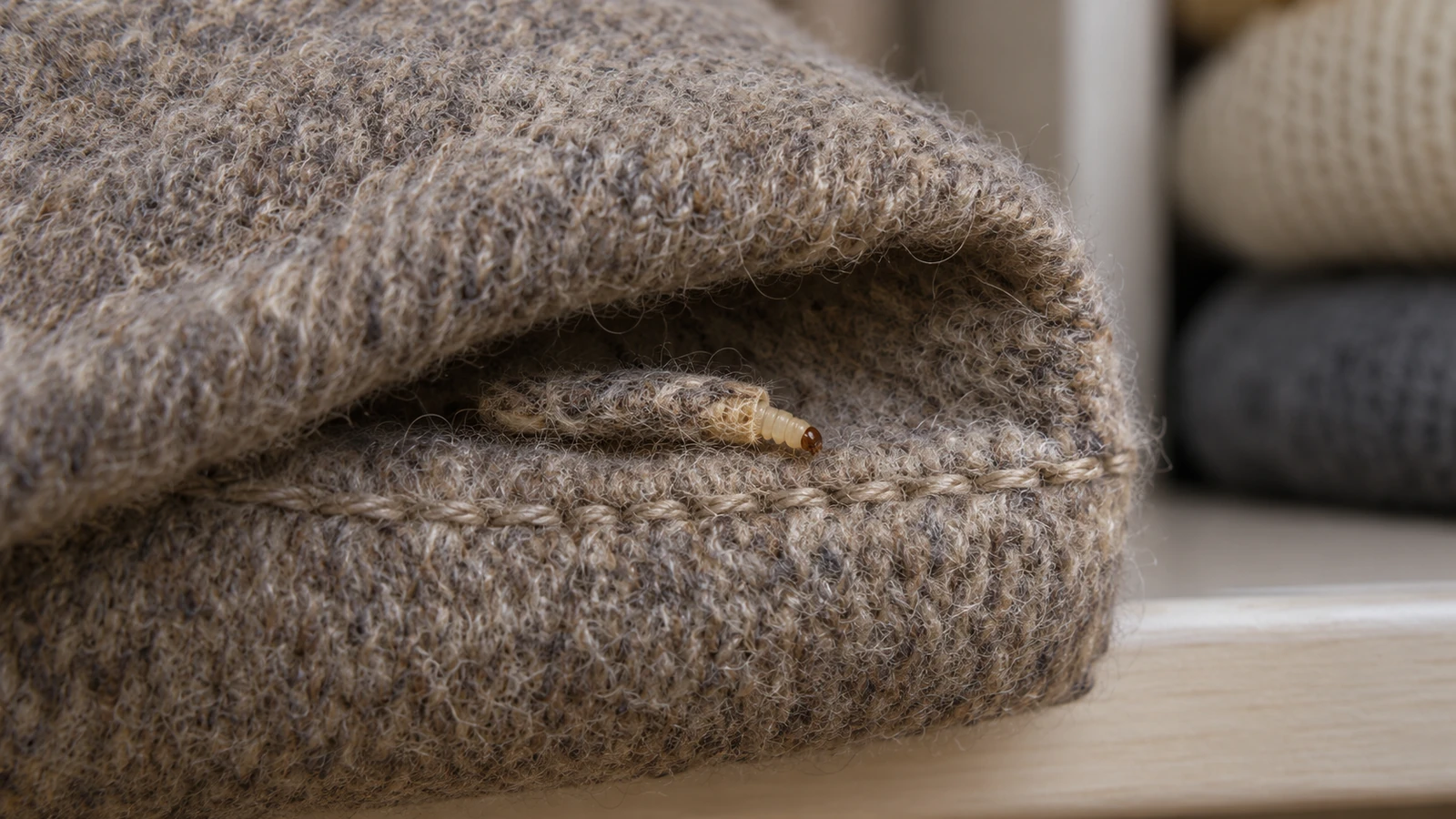
Start with the garment or textile where the object appeared. Turn back the collar of a wool coat, separate sweater folds and check the underside of cuffs, seams and linings. These sheltered surfaces are often easier to overlook than the front of a garment.
Next, inspect nearby stored woolens, yarn, fur trim, felt, feather-filled items or wool rugs when the first finding points toward a shared storage area. A case close to the color of the fabric can disappear against a fold or rug edge.
Use bright light and, if possible, a magnifier. Check the following in order:
- The case itself: Photograph it in place before disturbing it. Look for a larva emerging from an opening; if the case is empty, keep that distinction in mind.
- The fabric directly beneath it: Search for short grazed areas, surface thinning, loose fibers and small granular droppings, not just holes.
- The nearest vulnerable items: Inspect the adjacent wool or cashmere pieces, especially their hidden folds, rather than emptying every closet immediately.
- The storage contact points: Look along shelf seams, box corners and accessible rug edges where fabric, lint or pet hair has remained undisturbed.
If you find an intact specimen, keep it in a small, closed clear container for identification. A photo showing the case, the larva if visible, and the material it came from is far more useful than a blurred close-up of an isolated speck.
Identification Mistakes
- Calling every small case on a wall a casemaking clothes moth; household casebearers can look similar.
- Naming the species from a single hole or a faint adult wing marking.
- Confusing a hairy carpet beetle cast skin with a silk case.
Key Clue
A slender case that moves with a pale larva on vulnerable fabric, together with nearby fiber grazing, strongly favors a casemaking clothes moth.
What to Watch For
A seed-shaped case on a wall, far from affected fabric, may belong to a household casebearer. Check the insect and its feeding context before assigning the species.
Casemaking moth or webbing moth: What the evidence means
Casemaking clothes moth larvae carry their own silk tubes while feeding. A larva can turn around inside the case and feed from either end. That carried shelter is the central distinction from the more familiar webbing clothes moth, Tineola bisselliella.
Webbing clothes moth larvae make silk sheets or temporary feeding tunnels over the material. They leave those structures behind when they move to another spot. A patch of fixed webbing on wool therefore points to a different feeding pattern than a portable tube traveling with a larva.
Two other look-alikes deserve a brief check. Carpet beetle larvae are typically bristly and leave hairy shed skins rather than silk cases. Household casebearers, sometimes called plaster bagworms, may carry flatter, seed-like cases and appear on walls or in dusty corners. A wall sighting by itself is a poor basis for identifying Tinea pellionella.
Use the pattern below to choose your next check.
| What you find | Most useful interpretation | What to check next |
|---|---|---|
| A narrow moving case with a pale larva on wool, plus fiber grazing | Casemaking clothes moth is likely | Examine adjacent animal-fiber textiles for larvae, cases and fresh damage |
| Silk patches or feeding tunnels on wool without a carried case | Webbing clothes moth is more plausible | Look beneath the silk and nearby folds for feeding larvae |
| A bristly larva or a hairy, segmented shed skin | Carpet beetle is a stronger alternative | Preserve the specimen and compare its hairs and body |
| A flatter case on a wall, with no textile evidence | Household casebearer or another case-bearing moth is possible | Check the larva, case shape and nearby feeding material |
Is this an isolated finding or an active fabric problem?
A single empty case in a drawer, with no feeding signs on nearby wool, calls for a focused inspection. A living larva in a portable case beside freshly grazed fibers is much stronger evidence of activity.
Several occupied cases, new thinning on multiple stored garments, or related signs in a nearby wool rug suggest a broader source. Count affected items and locations with actual feeding evidence rather than judging the situation by the number of adult moths flying through a room.
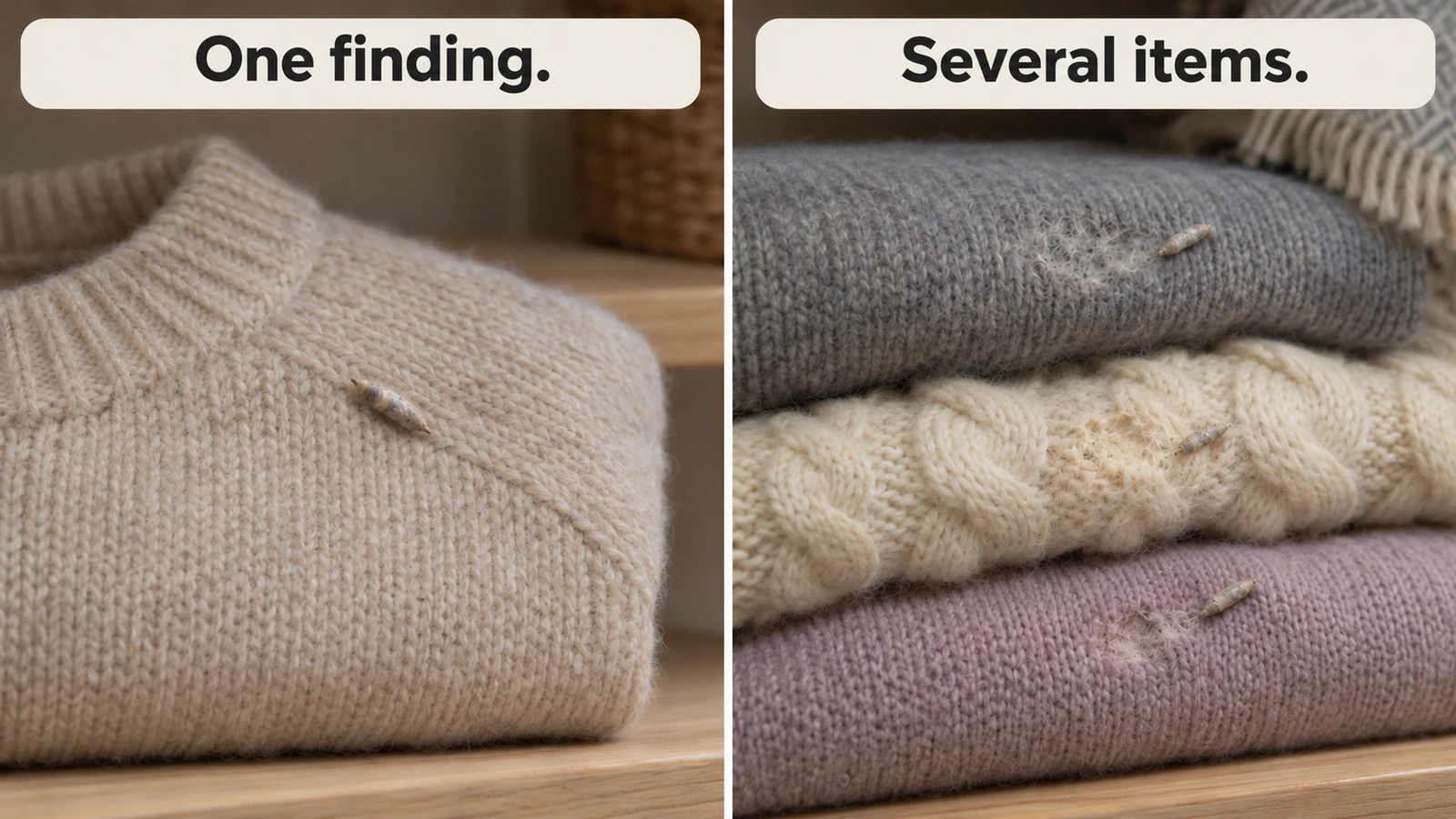
Keep track of the specific textiles with larvae, cases or fresh grazing. That record helps you see whether the evidence stays in one item or turns up across separate storage locations. It also makes a difficult specimen easier to discuss with a local Extension office or pest professional if identification remains uncertain.


