Identification
Pantry moth larvae: How to recognize them and where to look
Identify a suspected pantry moth larva by its head, legs, body, and webbing. Then use its location to decide which dry foods or nearby hiding places deserve a closer look.
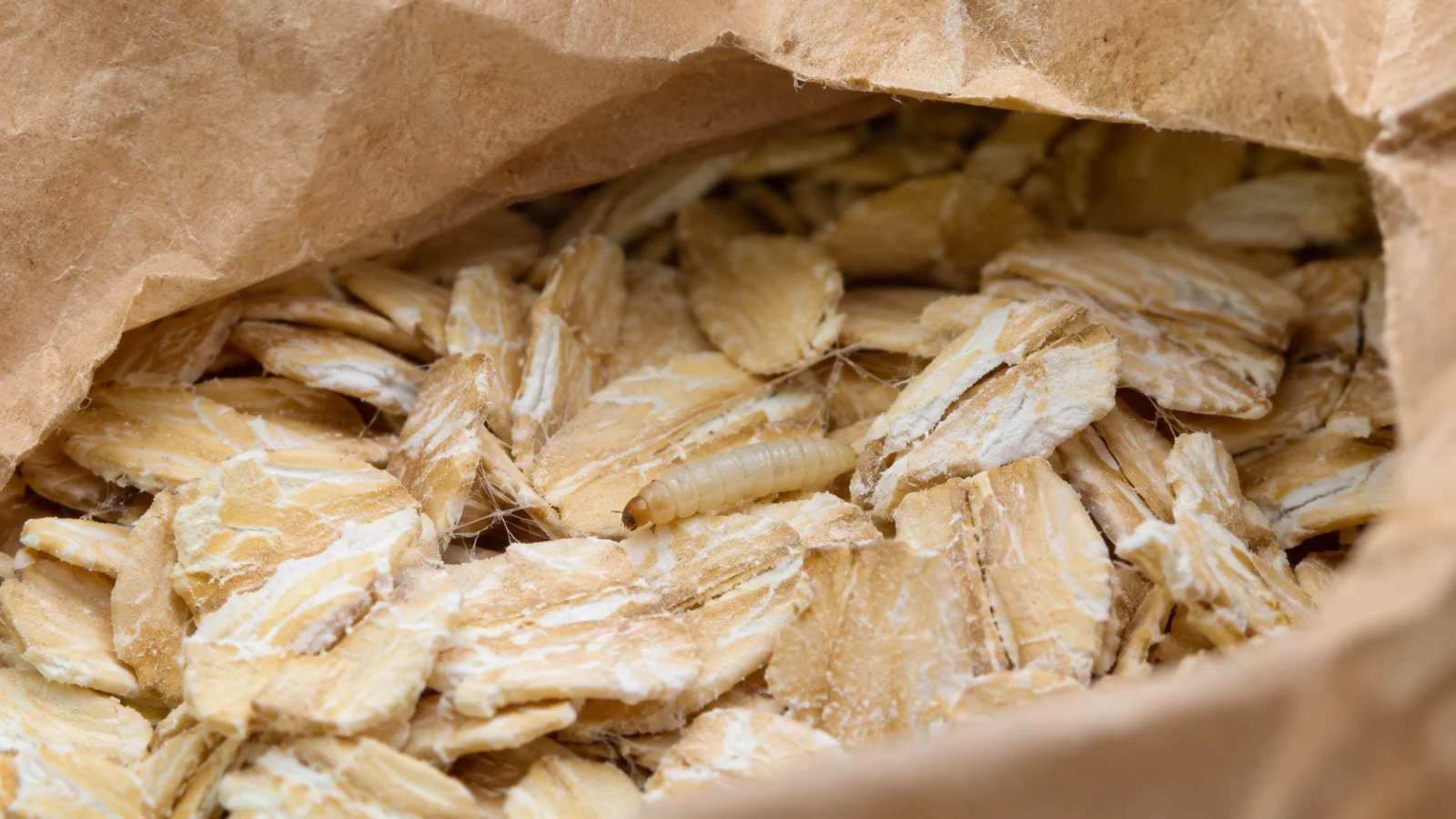
You spot a cream-colored caterpillar creeping along a kitchen wall, but the cereal boxes look untouched. It may have come from a food package, or it may be a different insect altogether. The body details matter, and so does the surface where you found it.
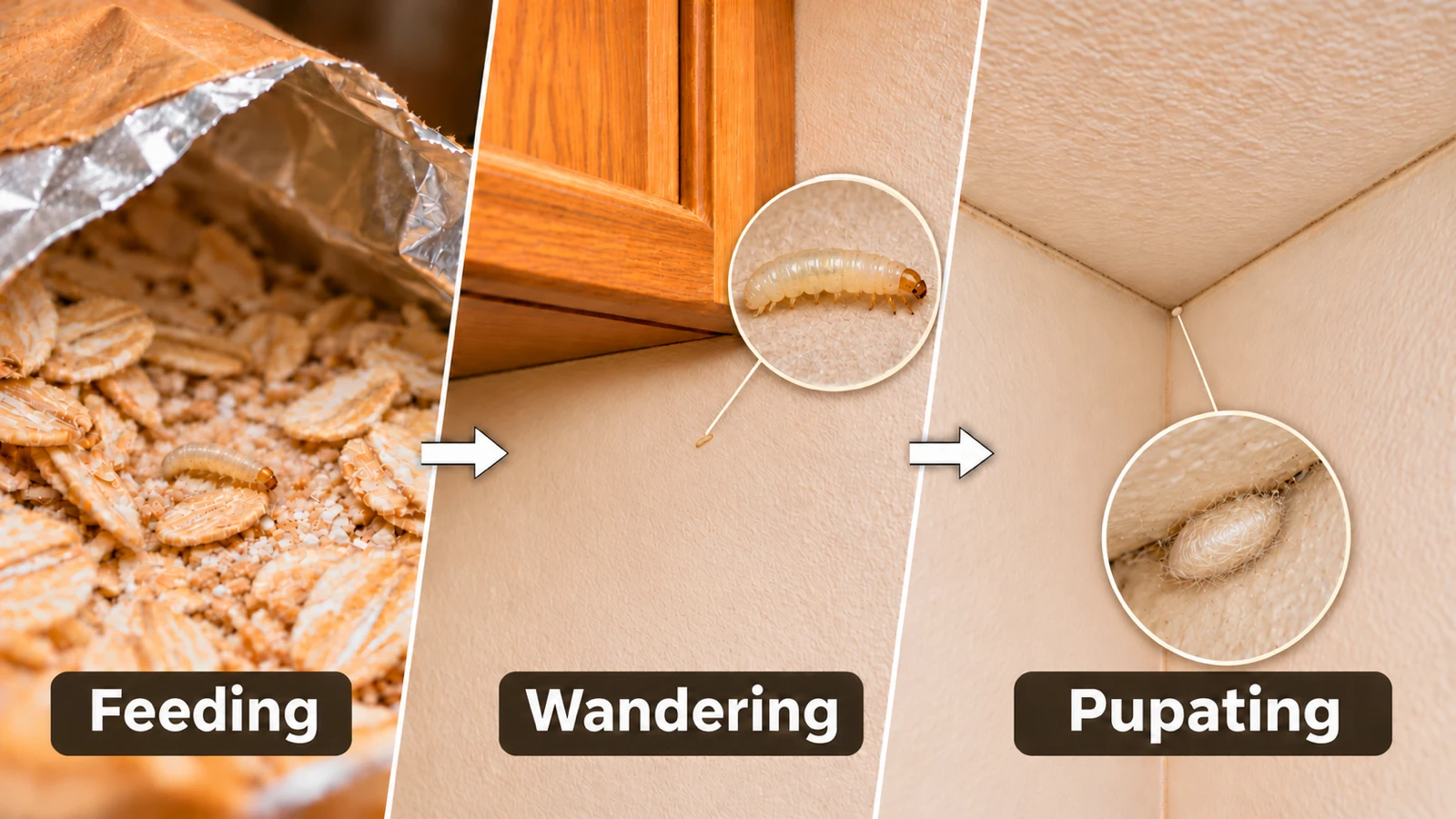
Pantry moth larvae feed in stored dry foods, then some leave that food to find a sheltered place to pupate. That makes a ceiling sighting useful evidence without making the ceiling the source.
What pantry moth larvae look like
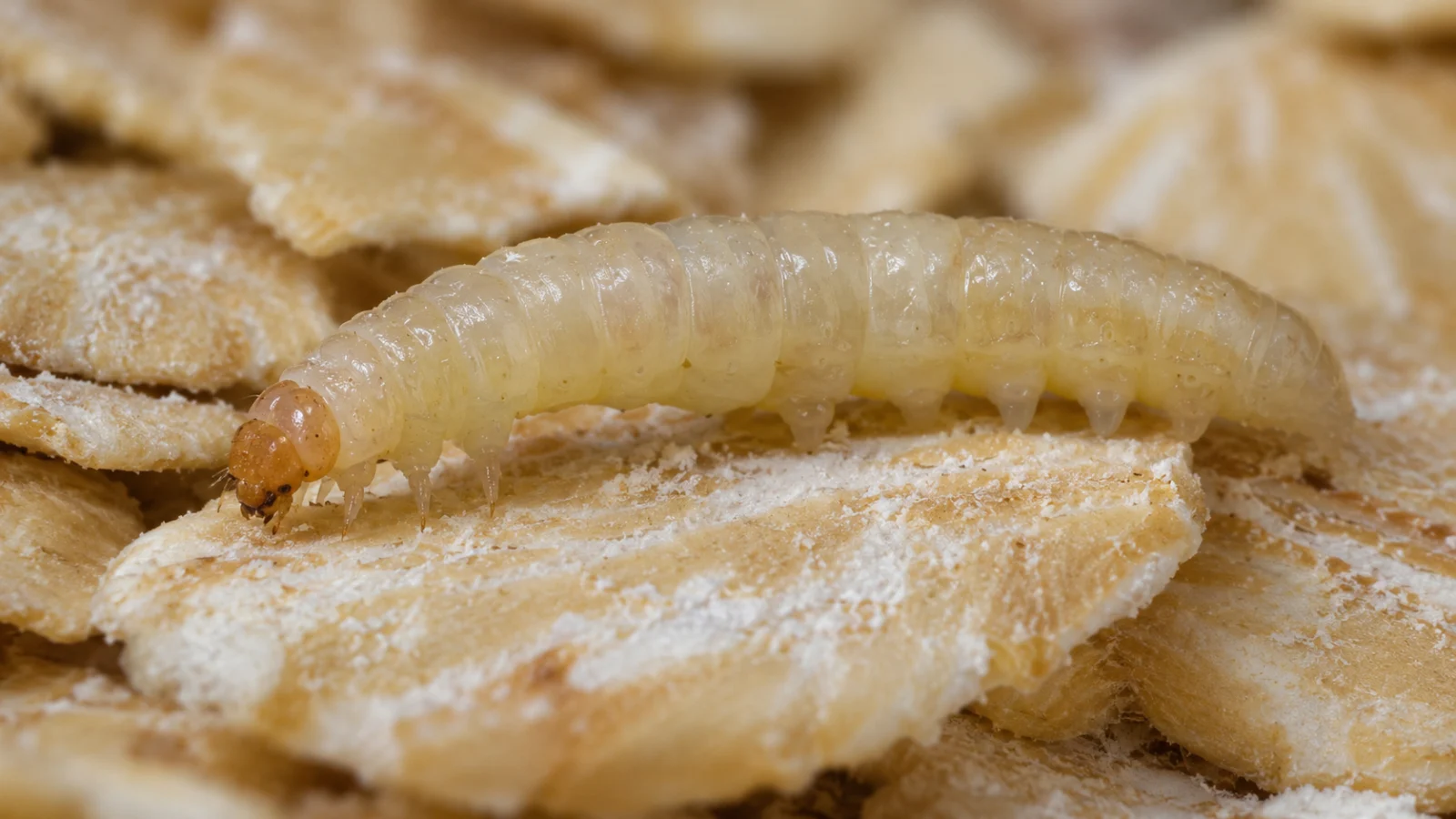
A typical pantry moth larva is a small, segmented caterpillar with a cream or off-white body and a distinct tan or brown head. Some look yellowish, pinkish, or faintly green depending on what they have eaten. Fully grown Indianmeal moth larvae are commonly around 1/2 inch (13 mm) long; young larvae can be much smaller.
Look closely for three pairs of small legs just behind the head and short, fleshy prolegs farther back underneath the body. Those gripping prolegs help distinguish moth caterpillars from many beetle larvae. A hand lens is more useful here than judging the exact shade of white.
Identification in 30 Seconds
- Pale, clearly segmented caterpillar with a darker, defined head.
- Tiny legs near the head and additional soft gripping prolegs beneath the abdomen.
- Up to about 1/2 inch (13 mm) when mature, often much smaller when young.
- Silk threads or clumped dry food nearby strengthen the pantry moth identification.
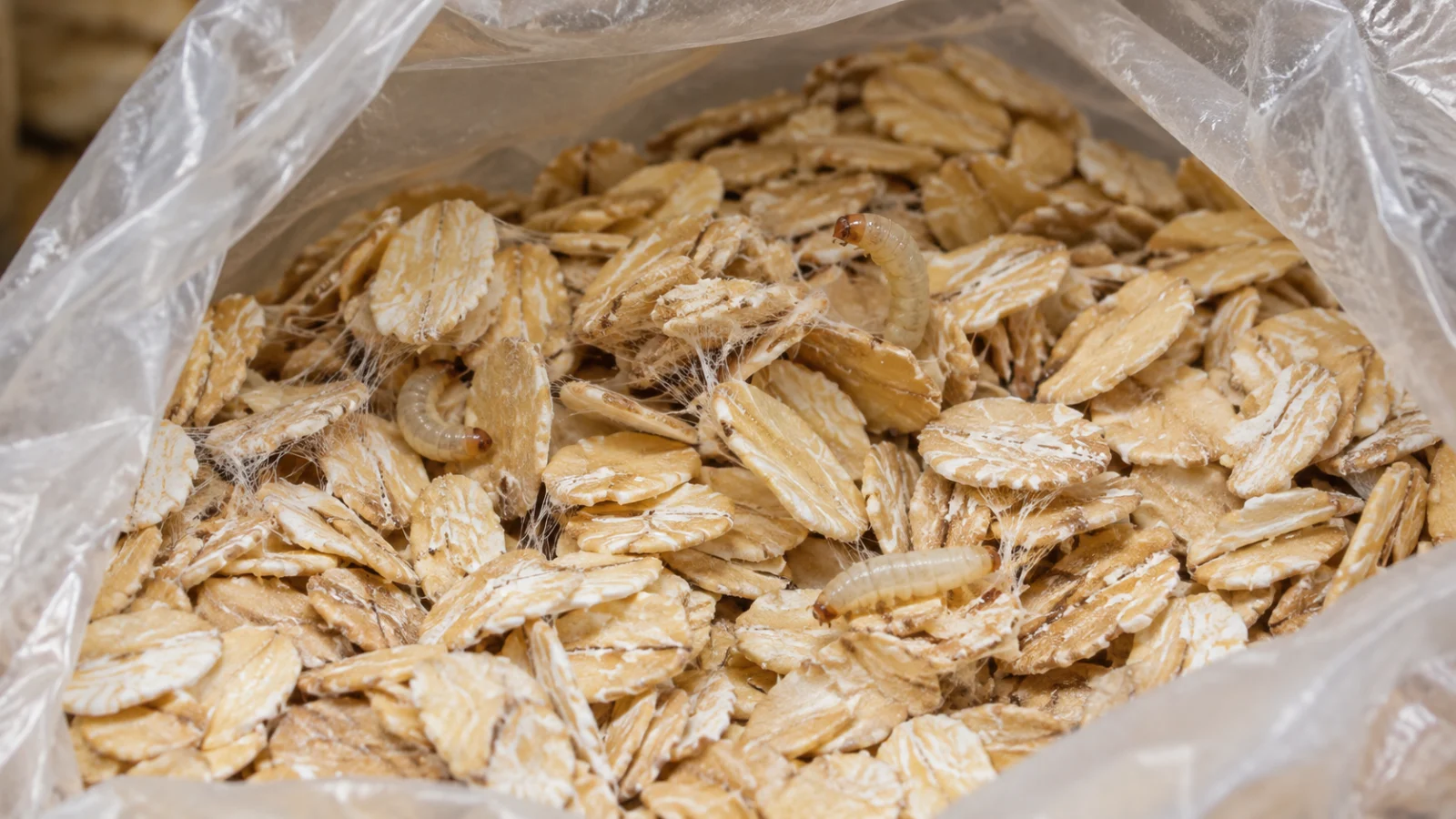
The larva, not the flying adult, feeds in flour, grains, seeds, and other dry foods. Fine silk may run across the food surface or hold crumbs together. A lone pale larva without visible legs or food-related clues still needs a closer check.
Inspect the food, then follow the trail
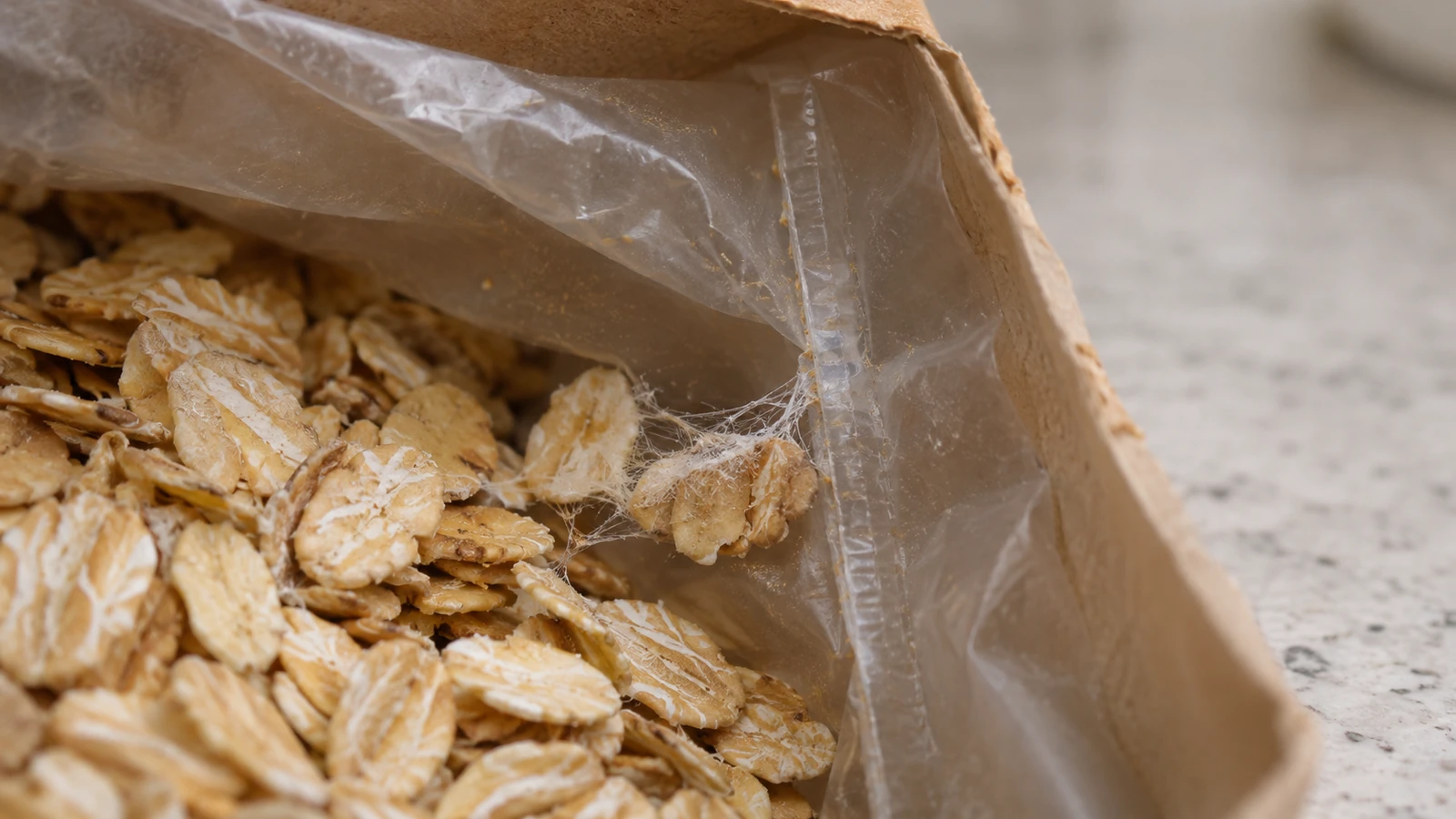
When a larva is inside a food package, start there. When it is on a wall or ceiling, check stored dry foods in the room first, but do not assume the package directly below it is the source. Mature larvae can travel away from food before forming a cocoon.
Pull inner bags out of cardboard boxes and look along sealed seams, folded corners, and the surface of the food. Search cereals, oats, rice, flour, nuts, dried fruit, dry pet food, and birdseed, including bags stored outside the main pantry.
Look for webbing that bridges grains, clumps that do not belong, more larvae, or silk tucked into the edges of a package. A clean-looking box exterior can hide a problem inside the liner. If you find a suspect item, keep it contained while checking whether the signs occur anywhere else.
For a cupboard-wide source checklist, follow how to identify a pantry moth infestation.
Identification Mistakes
- Calling every pale kitchen worm a pantry moth larva without checking its head and legs.
- Treating a ceiling sighting as proof that the shelf immediately below is infested.
- Checking only the box front and missing webbing inside an inner bag.
Key Clue
A caterpillar with a distinct head, supported by silk binding dry food together, makes a pantry moth diagnosis much more convincing than body color alone.
What to Watch For
Some beetle larvae resemble small caterpillars, while fly maggots generally lack the head and legs seen in moth larvae. The surrounding material helps settle close calls.
Interpret a larva by where you found it
An active feeding site and a resting place mean different things. Silk-wrapped fragments inside a bag point to larvae feeding there. A cocoon on a ceiling edge can belong to a larva that traveled from another food source, so search in a wider area rather than just below it.
Look-alikes change the picture. Fly larvae are legless and often linked to wet or decaying material; many beetle larvae lack the fleshy abdominal prolegs of moth caterpillars. A hairy, bristly larva near fabrics is more suggestive of a carpet beetle. If repeated evidence is centered on wool or other animal-fiber fabrics rather than dry foods, shift to a clothes moth identification check.
Use the strongest matching clues to choose your next inspection:
| What you found | What it suggests | Where to check next |
|---|---|---|
| A pale larva inside grains with silk and clumps | Strong evidence of feeding by a stored-food moth larva | The package’s folds and nearby dry goods |
| One pale caterpillar at a ceiling edge, with no food signs yet | A possible wanderer seeking a pupation spot; the source may be elsewhere | Pantry goods, pet food, and birdseed, including nearby rooms |
| A hairy, tapered larva near rugs, wool, or lint | A carpet beetle or another textile-associated pest is more likely | Fabrics and lint-rich edges instead of only pantry shelves |
| A legless maggot in wet, spoiled material | A fly larva is a better fit | The source of the moist or decaying material |
How serious is a single larva?
One larva on a wall is a reason to investigate, not a measure of infestation size. Multiple larvae in one bag, fresh silk across the product, or the same evidence in several packages make an active stored-food problem more likely. Count affected products and kinds of evidence, not merely the insects you can see on a ceiling.
An isolated cocoon in a cabinet gap suggests a larva reached a pupation spot at some point, but the cocoon alone cannot tell you whether any food is still infested. Empty cocoons can also remain after the adult moth has emerged.
If you cannot find matching evidence in dry foods, photograph the insect clearly or save a sample for identification. Repeated sightings warrant a broader check, especially of rarely used goods and pet or bird supplies kept in garages, closets, or utility rooms.
Good to Know
Larvae inside a tightly closed pet-food bin may have arrived with the food before it was put in the bin. The lid’s fit tells you little about when that batch became infested; examine the contents and any remaining original packaging.
Learn more: