Comparison
Pantry moth traps: which type should you choose?
The most useful pantry moth trap is one whose lure matches the insect you actually have. Compare sticky-card designs, replaceable lures, and what captures can tell you about activity in stored food.
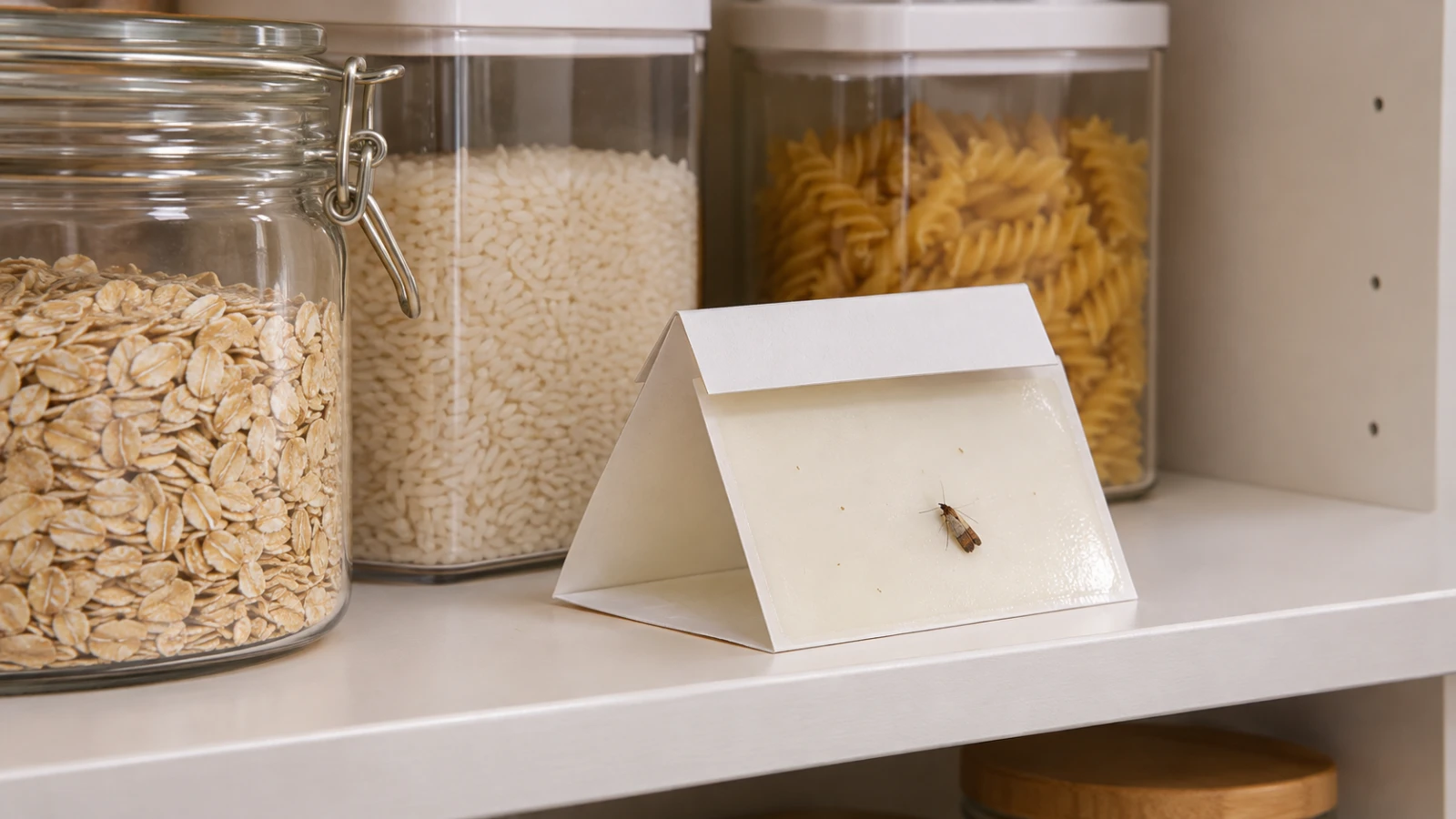
Two packages can both say "moth trap" and still do different jobs. One contains a pheromone lure for food-infesting moths, another is intended for clothes moths, and a plain sticky card may have no attractant at all.
If moths are turning up around your pantry, start with the target insect, not the most persuasive claim on the box. A well-matched trap can help you monitor flying adults, but choosing one is only part of dealing with an infestation in stored food.
The buying criteria that matter most
Start with the lure’s target list. Indianmeal moths are common food-storage pests, and many pantry moth traps use a sex pheromone that attracts their adult males. Some lures also attract related stored-product moths, but the exact range depends on the formulation. A clothes moth lure is not an interchangeable substitute.
Then look at the actual contents of the package. A trap housing, glue card, and pheromone lure may be sold together or separately. A replacement liner without its compatible lure will not give you the same targeted monitoring as a complete kit.
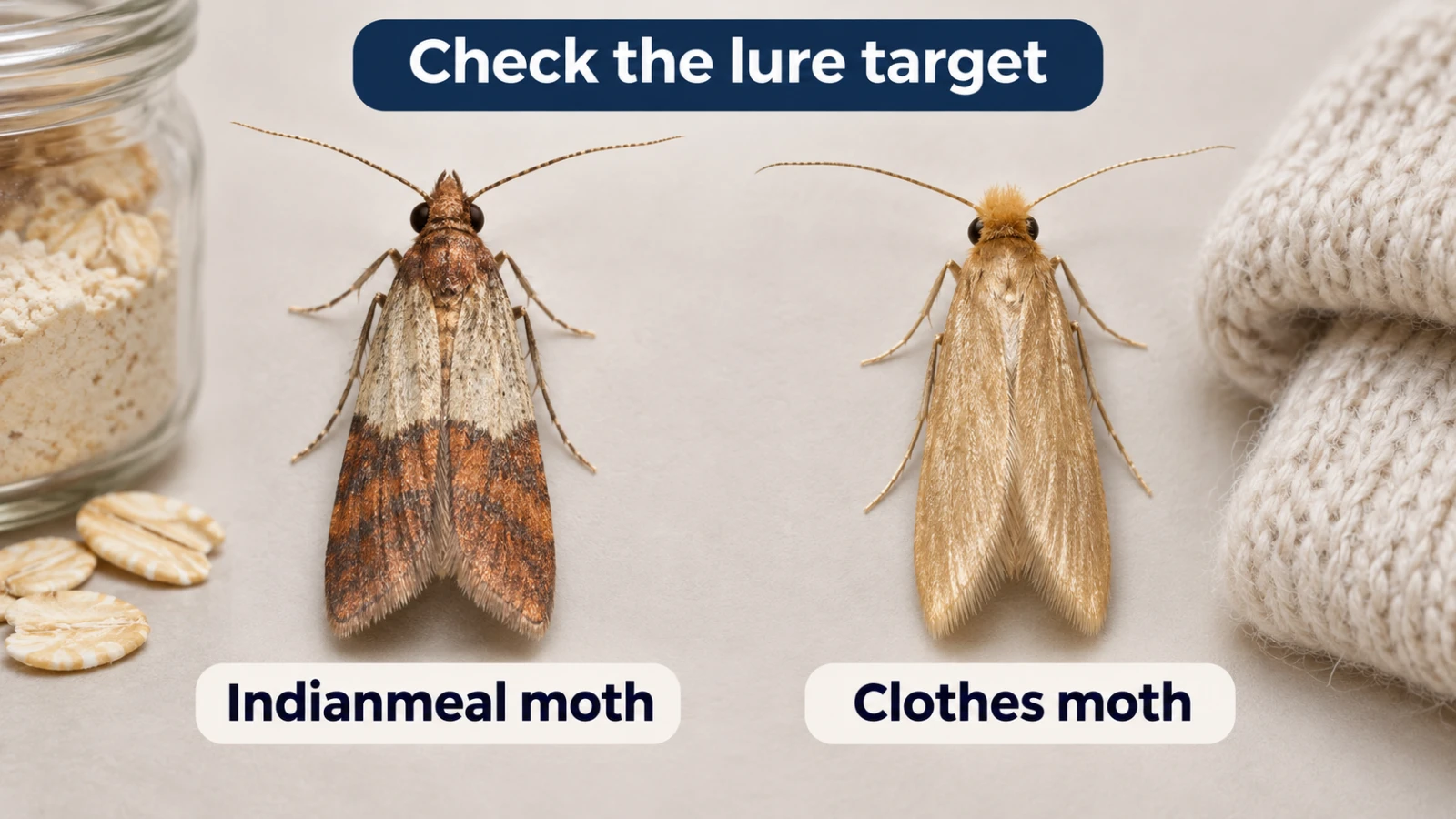
Compare the following before choosing:
- Target pest: Look for a named food-infesting moth or a clearly stated group of stored-product moths. If the insect is still uncertain, identify it before judging which lure fits.
- Lure included: Check whether an attractant is supplied, how it must be fitted, and whether replacement lures are available for that trap.
- Glue exposure: A folded or enclosed trap can reduce accidental contact; an open board may be easier to inspect in a protected spot.
- Use location: Check the instructions for where the trap may be placed and keep adhesive and lures away from direct contact with food or food-preparation surfaces.
- Replacement needs: Read the product’s actual lure-life and glue-replacement directions. Dust, heavy catches, and an expired lure can make a trap less useful.
- Ongoing cost: Compare which lures and sticky inserts you will need to replace, not just the number of trap housings in the box.
Treat a manufacturer’s claimed coverage area or lure lifespan as a specification for that product, not proof of a universal catching distance or a guaranteed reduction in an infestation.
Pantry moth trap formats compared
The table compares how each setup is normally used. It is not a ranking of brands or a claim that one housing has been independently tested against another.
| Trap format | Useful when | Check before buying | Main limitation |
|---|---|---|---|
| Folded pheromone sticky card | You want a compact, protected trap for a pantry or cabinet | The targeted moths, included lure, and approved placement | Captures flying adults; glue and lure still need attention |
| Flat pheromone glue board | You can inspect a protected, undisturbed surface easily | Whether a matching pheromone lure is supplied | Exposed glue is more vulnerable to dust and contact |
| Reusable holder with lure and liner refills | You expect to monitor repeatedly and can obtain compatible parts | Lure species, replacement availability, and separate schedules | Extra components do not guarantee more moths caught |
| Plain sticky card without pheromone | You want a supplementary check for insects passing through | That no targeted lure is included | Incidental catches and empty cards are weak evidence about pantry moth activity |
Placement and catches: the important tradeoffs
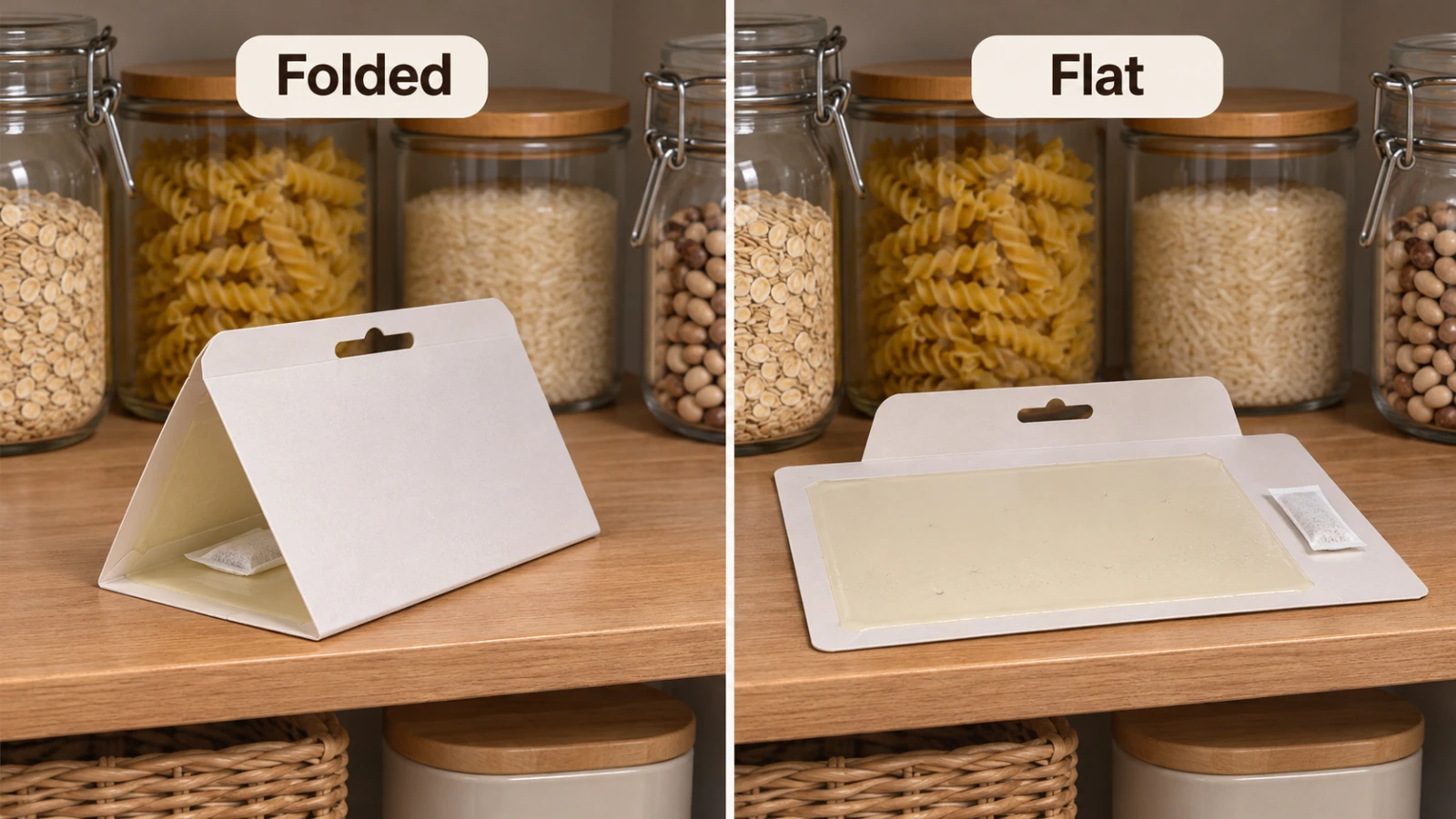
Put a suitable trap in or near the dry-food storage area where you have actually observed moth activity, following the product directions. A folded design can fit neatly on a shelf; a flat board needs a spot where its adhesive will not be touched or covered. Neither format compensates for using the wrong lure.
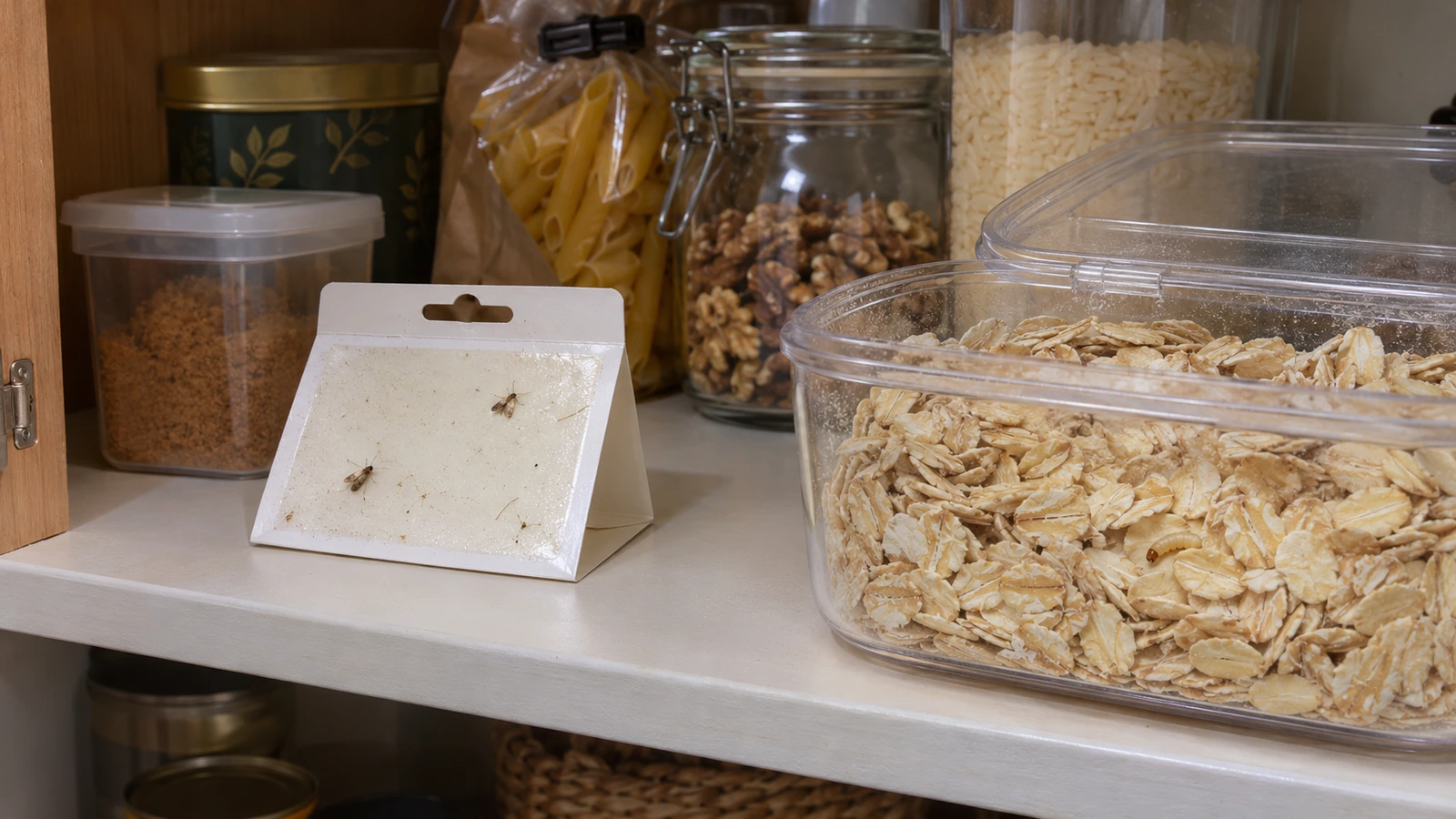
A pheromone trap for Indianmeal moths primarily catches responsive adult males. One busy trap shows that adult moths are present, but its position, lure freshness, airflow, and glue condition influence the catch. Comparing two different traps at different locations is not a reliable infestation-size test.
Check the trap regularly and keep its placement consistent while comparing catches over time. Replace the lure or sticky insert according to its instructions, or sooner when the adhesive has become dusty or full. Do not assume every brand has the same replacement interval.
Most importantly, a trap is not a map to an infested package. Adults can fly away from where larvae developed, and mature larvae may crawl elsewhere before pupating. Fresh captures are a reason to inspect stored dry foods again, not proof that the shelf underneath the trap contains the source.
A review describing many moths stuck to a card is evidence of captures in that setting, not an independent test of larval control. For stronger claims about eliminating an infestation, look for evidence that the food source was also found and removed.
Match the lure before the trap shape
Choose a trap that lists the moth you have, then pick the housing and replacement arrangement you can use safely and maintain consistently.
What to Watch For
Pheromone traps usually target adult males. Eggs and feeding larvae in stored food can remain even when the sticky card catches many moths.
Which pantry moth trap is right for your situation?
You have confirmed a food-infesting moth
Choose a pheromone trap whose stated targets include that moth. For one pantry, a folding sticky-card kit with the correct lure is often the simplest starting point. A refillable holder can make sense for longer monitoring if you can find the right replacement components.
Your moth is not yet identified
Do not buy several traps on the assumption that every small household moth responds to the same pheromone. An empty trap could mean a mismatched lure, poor placement, or no current flight activity. First establish whether you are dealing with a food moth, a clothes moth, or something else.
Moths keep appearing after you removed affected food
Keep a suitable trap as a monitor, but look for fresh webbing, larvae, or overlooked dry-food sources rather than adding more traps automatically. A pantry moth cleanup and control plan is still needed when food infestation continues; trapping adults does not eliminate eggs or larvae inside stored products.
Explore this topic further:
Pantry moths: how to identify an infestation and find its source