
Identification
Bed bugs in the bathroom: How to identify what you found
A small insect on a bathroom tile can be alarming, but its location is only one clue. Learn what to photograph, which features distinguish bed bugs from bathroom look-alikes, and when to inspect nearby rooms.
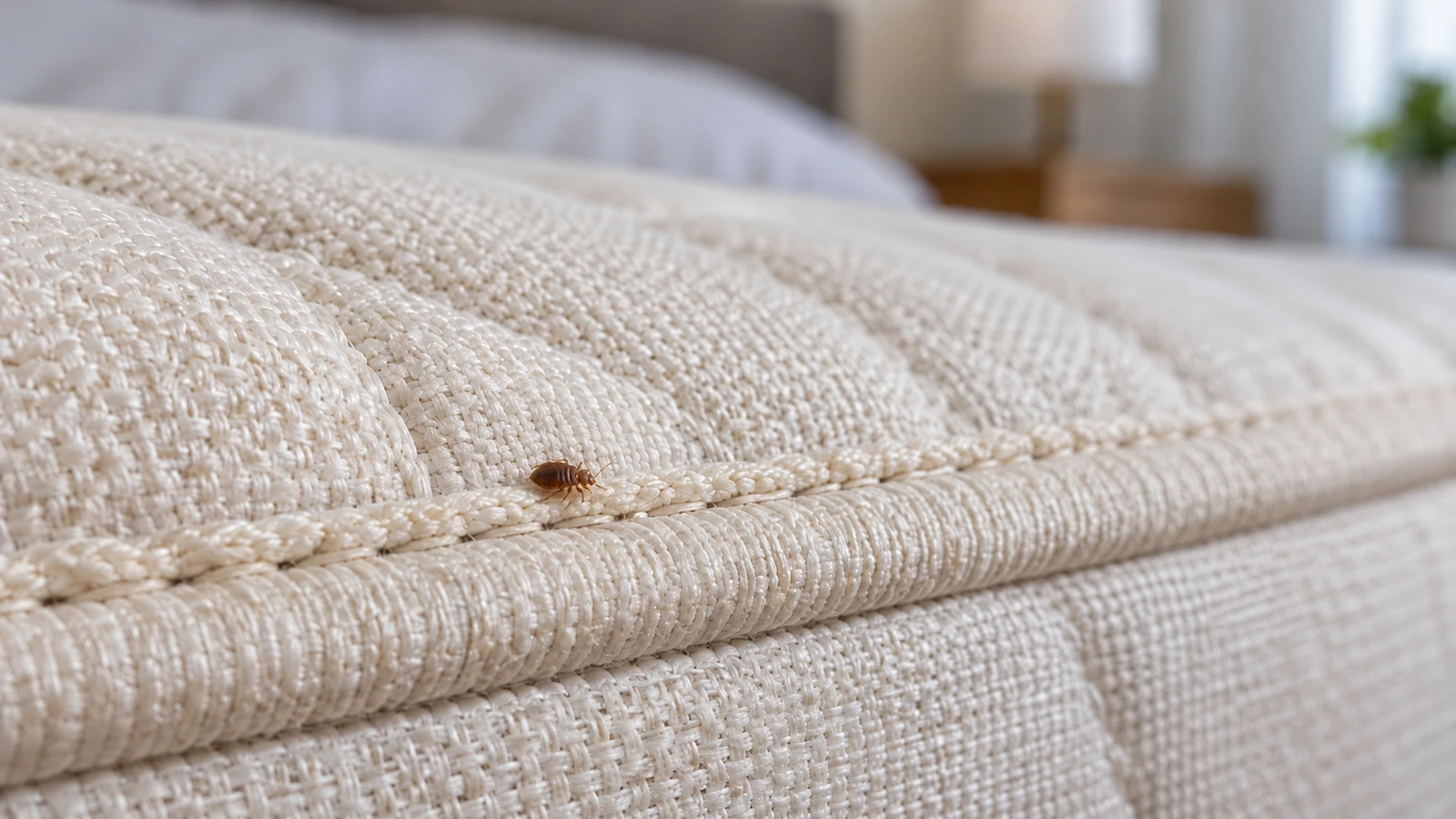
You notice a small brown insect crawling along the bathtub or bathroom floor. It resembles a bed bug, but the bathroom seems like an odd place to find one. Should you search the bedroom, or could this be a different household insect?
Bed bugs can turn up in bathrooms, but the location is a poor way to identify an insect. Start with its body shape and a clear record of where you saw it. Then check the few nearby places that can help you decide whether the discovery deserves a wider inspection.
What does a bed bug in the bathroom look like?
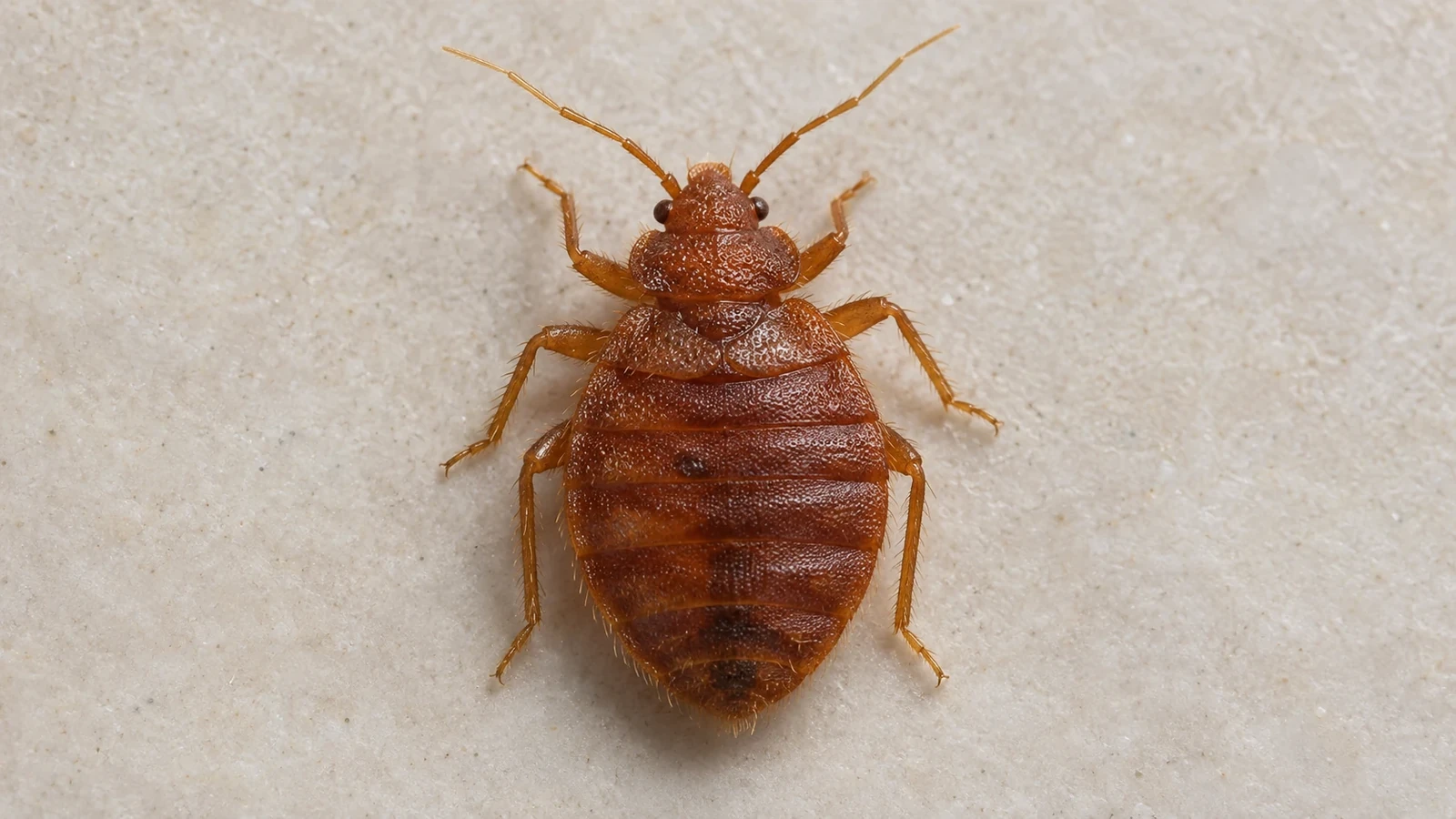
An unfed adult bed bug is broadly oval, flattened, wingless, and reddish brown. Adults are typically about 3/16 to 1/4 inch (5–7 mm) long, roughly the length of an apple seed. You should be able to make out six legs and a segmented abdomen in a good close-up.
A recently fed bed bug may look fuller and more elongated. Younger bed bugs, called nymphs, are smaller and often pale before feeding. If you are comparing a tiny specimen with an adult, use these bed bug life-stage photos rather than relying on color alone.
Identification in 30 Seconds
- Body: Broadly oval and flattened when unfed, not long and wormlike.
- Legs and wings: Six legs, with no functional wings; bed bugs crawl rather than jump or fly.
- Size: Adults around 3/16 to 1/4 inch; nymphs can be much smaller.
- Best evidence: A sharp view of the insect from above or an intact specimen.
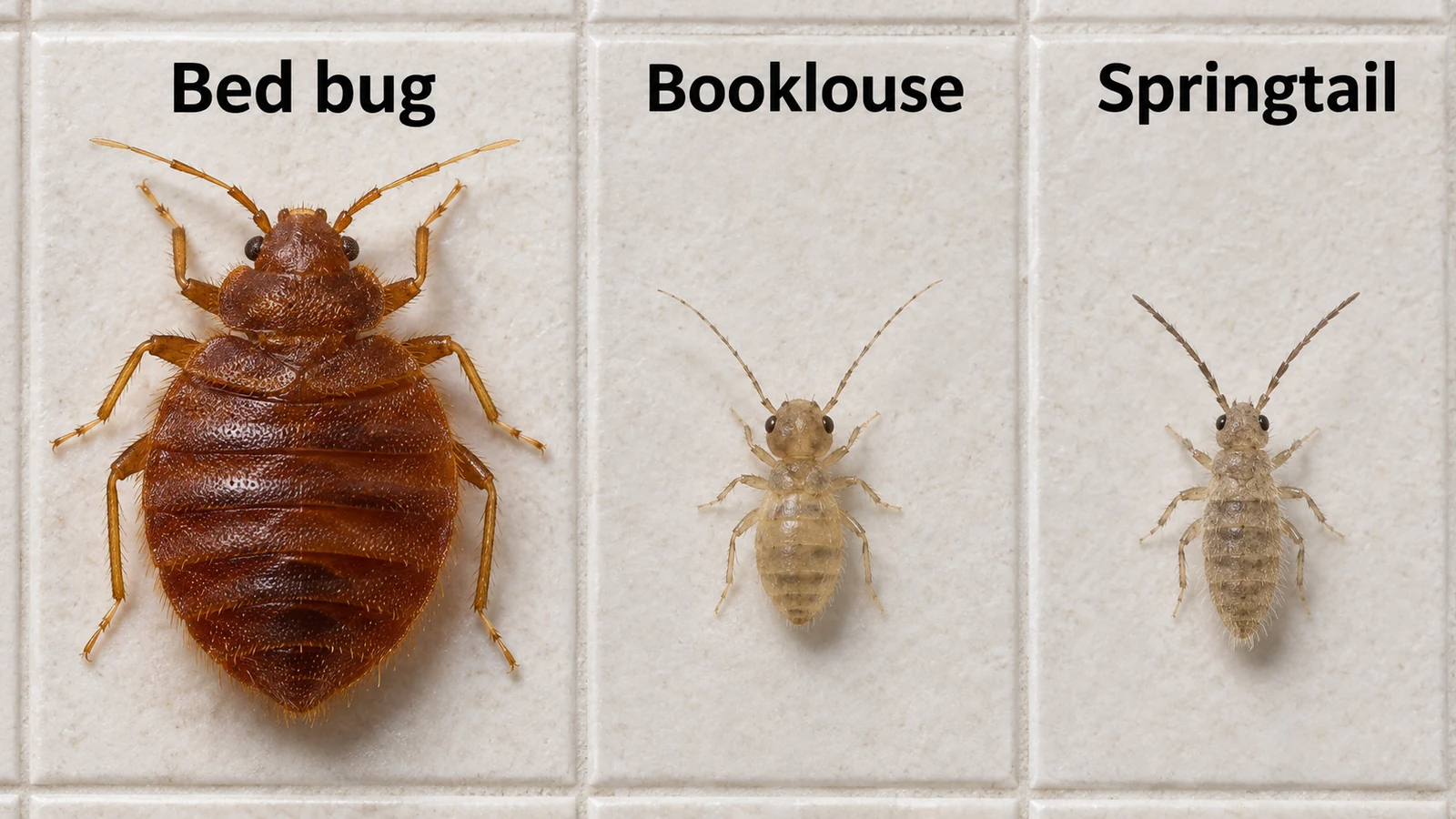
Bathrooms also attract insects that prefer moisture. Booklice are generally tiny, often pale, and have relatively large heads. Springtails are also small and may suddenly jump when disturbed. Young cockroaches tend to have very long antennae and small appendages at the rear.
Those details are a useful first filter, not a full comparison of every household pest. For a broader visual check, see bugs that look like bed bugs.
Check the insect and the exact spot where you found it
Before wiping down the area, take a sharply focused photo of the insect from above. Put a small ruler beside it, in the same plane, if possible. A wide photo showing the sink or tub is useful for recording the location, but it rarely shows enough detail to identify the insect.
If you can safely capture it, use a clear container and a piece of stiff paper, then secure the specimen in a closed, escape-proof container. An intact specimen is especially useful when a photo is blurred or the insect is very small.
Next, make a short check around the discovery point:
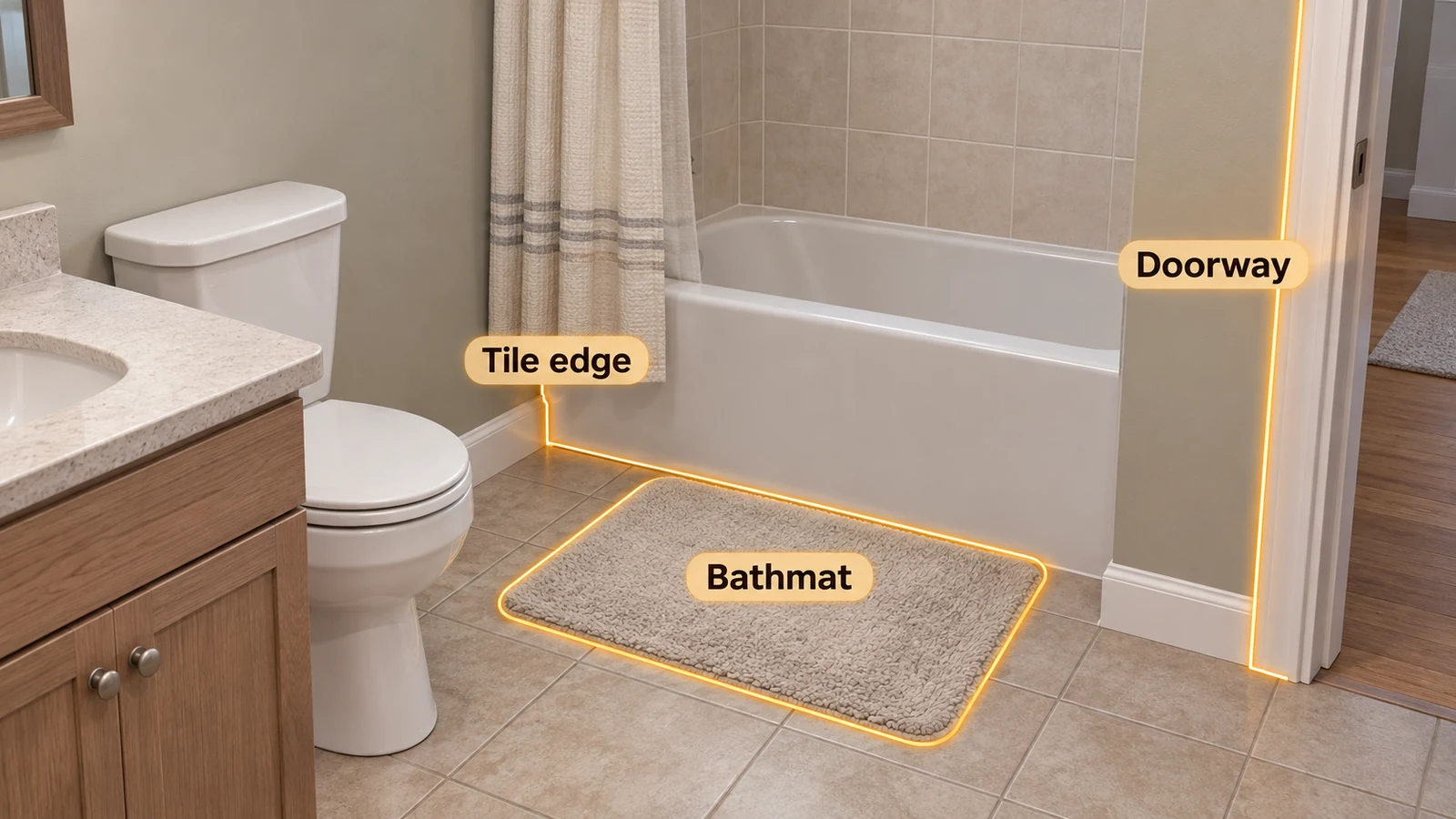
- Bathtub or tile: Look at accessible joints, nearby baseboards, and the edge of the tub. An insect found inside the tub may simply have become trapped on the smooth surface.
- Bathmat, towel, or hamper: Examine the item and where it was resting before carrying it to another room.
- Doorway or pipe opening: Inspect the reachable trim and gaps around the opening, noting any connection to an adjacent room.
- Unusual spots or fragments: Photograph them before cleaning, but keep their identity open until you have a matching insect or other convincing evidence.
You do not need to remove tiles, dismantle plumbing, open electrical fittings, or spray the bathroom to investigate a single sighting.
Identification Mistakes
- Calling a dark speck beside the drain a bed bug without seeing an insect.
- Mistaking a tiny springtail that jumps for a bed bug nymph.
- Assuming the place where the insect appeared reveals the room or apartment it came from.
Key Clue
The strongest starting point is a clear specimen showing the characteristic broad, flattened body. A second matching insect or distinctive signs near a sleeping area makes the next inspection more informative.
What to Watch For
A young bed bug can be pale and much smaller than an adult. Size and color are useful only alongside body shape; an uncertain specimen may need expert identification.
What a bathroom sighting actually tells you
A correctly identified bed bug on the bathroom floor deserves follow-up, but it is not evidence that the bug breeds in the bathtub or comes from the drain. Bed bugs feed on blood and usually shelter closer to places where people sleep or rest.
An insect could have crossed a nearby doorway or traveled through a gap between rooms. In multi-unit buildings, movement through wall openings is also possible. You cannot choose among those explanations from the bathroom location alone.
Marks on grout, rust-colored stains, and skin welts are weak evidence without a matching insect or a pattern of physical signs. Repeated sightings, specimens at different life stages, or characteristic signs around a nearby bed provide more information about whether activity is established.
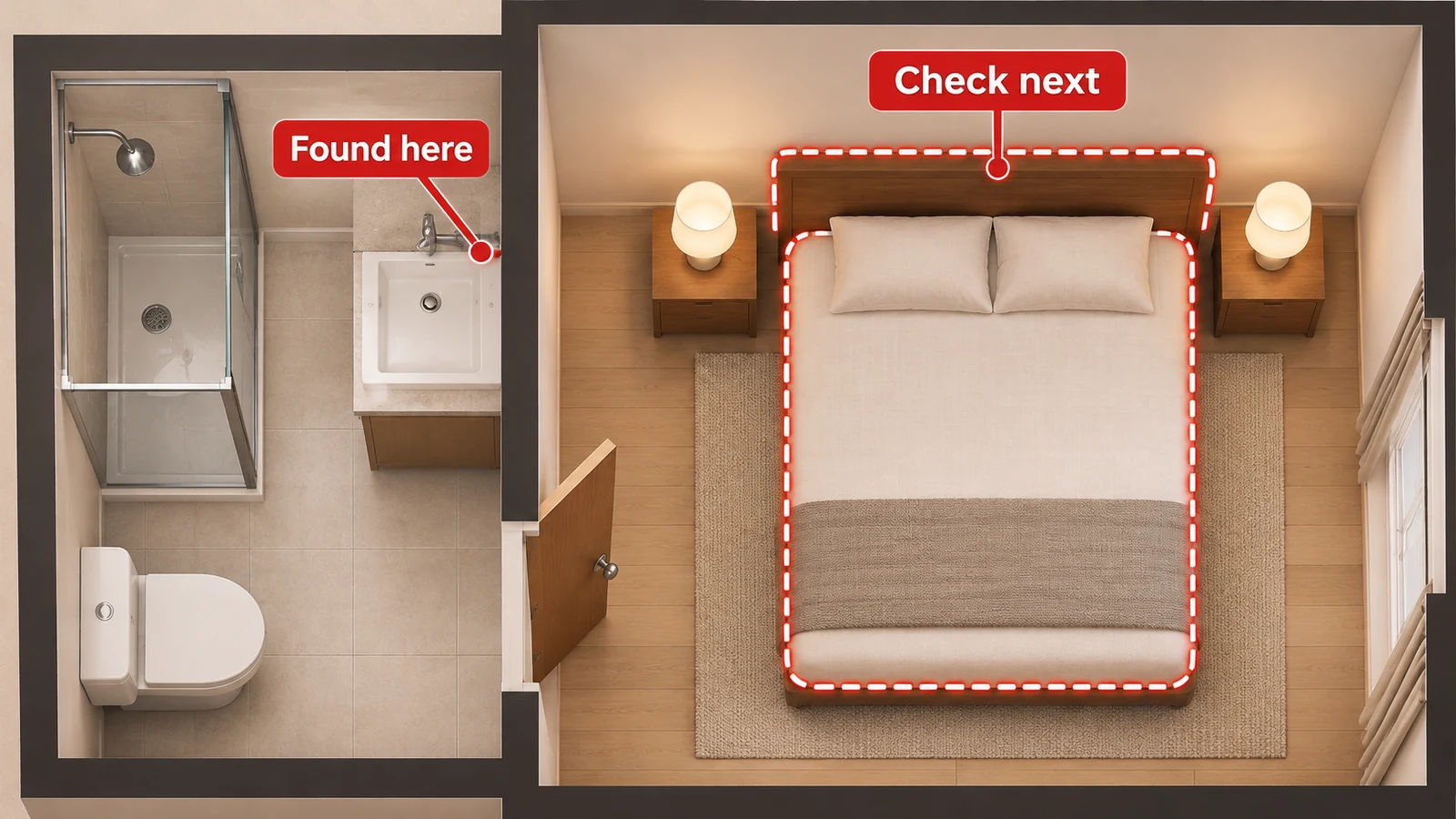
The practical question is where the next piece of evidence is most likely to be found.
Use this table to choose the next check rather than treating every bathroom observation the same way.
| What you found | What it suggests | What to check next |
|---|---|---|
| One clearly identified bed bug on bathroom tile | A real sighting, with the source still unknown | The nearest sleeping or resting area |
| Tiny insects that spring away near damp grout | Springtails are more plausible than bed bugs | A close specimen and the moisture source |
| Dark dots near the sink, with no insect collected | The marks are not yet identified | A close photograph and any fresh, matching physical signs |
| More confirmed bed bugs or cast skins near the bathroom doorway and adjoining room | Activity may extend beyond the original sighting | The connected resting area and accessible nearby cracks |
How far should you inspect beyond the bathroom?
Start with the nearest bedroom or another place where someone regularly rests, especially if it shares a doorway or wall with the bathroom. Make a focused check of accessible mattress edges, bed-frame joints, headboard seams, and nearby furniture. If the insect was found on a towel or laundry item, check that item too.
Finding another confirmed insect, a recognizable shed skin, or a cluster of characteristic dark spots close to a resting place makes a wider inspection more worthwhile. If this first check turns up nothing, preserve the specimen or photos and remain alert for fresh signs rather than pulling apart unrelated rooms.
In an apartment building, keep a record if similar insects repeatedly appear beside a shared wall or plumbing penetration. Those details help building management or a qualified inspector decide whether connected spaces need attention. They do not, by themselves, identify another unit as the source.

