Comparison
Cockroach traps: which types work and what they’re for
Compare the common roach trap formats by purpose, placement, safety, and real limitations, so you can choose a monitor or control device that fits what you’re seeing at home.

Search for cockroach traps and you’ll find folded cardboard boxes, flat glue boards, small plastic bait stations, and plug-in gadgets in the same results. They aren’t simply different versions of one product. Some catch roaches so you can see where they’re moving. Others are meant to reduce a population without holding the insects inside.
A few small roaches appearing repeatedly behind your refrigerator call for a different response than one large roach turning up near a patio door. The right choice starts with what you’re seeing and what you need the device to accomplish.
What Matters Most When Choosing a Roach Trap
The first distinction is whether you need information or population control.
A sticky monitor physically holds the cockroaches that encounter its adhesive. A bait station is designed to expose feeding roaches to an insecticide. The first gives you visible evidence of activity; the second may help control the insects without producing a visible catch.
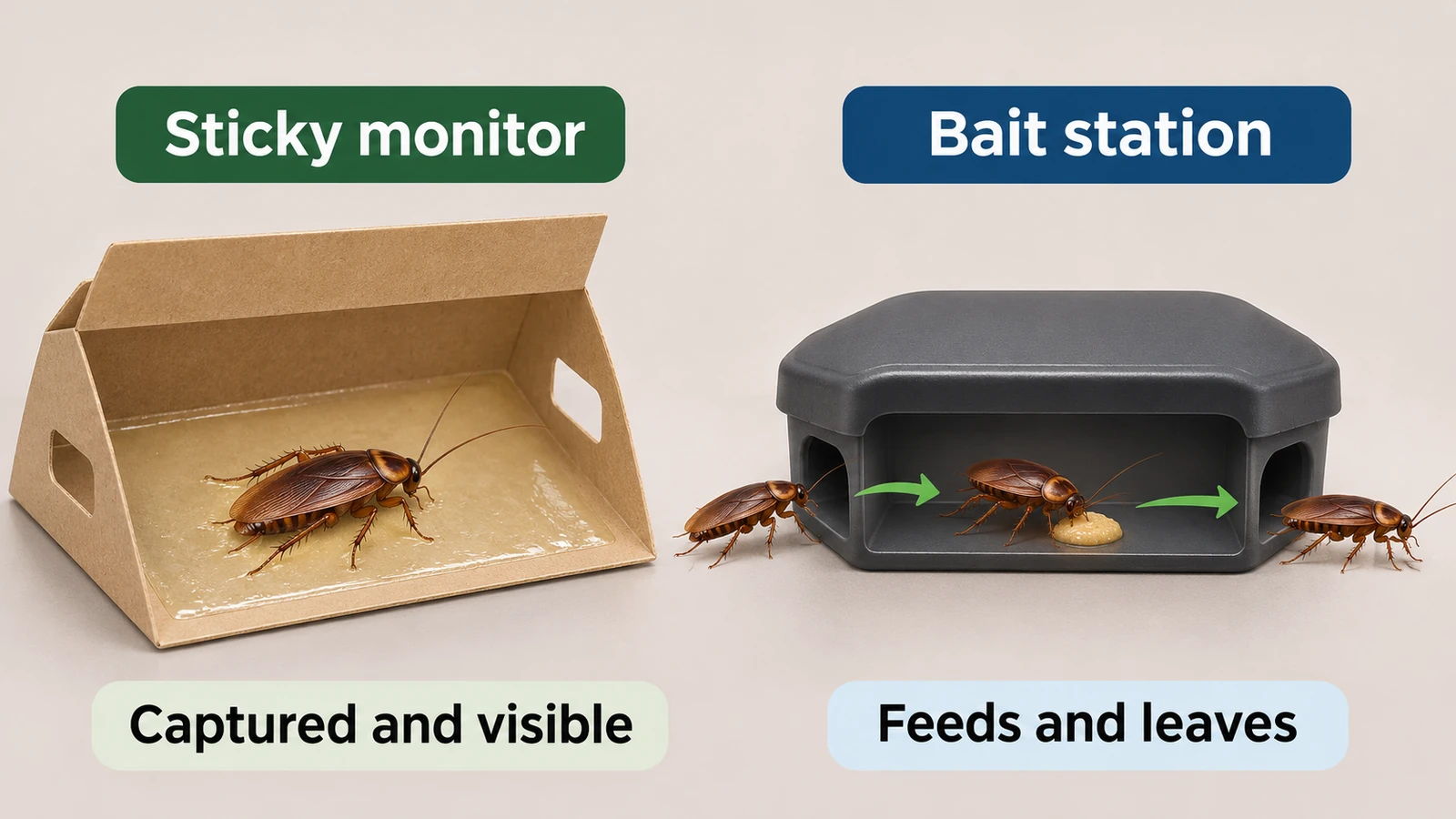
That difference also changes how you judge the result. A sticky monitor can show where roaches have been traveling and whether catches are changing. A bait station is evaluated through the wider pattern of cockroach activity, not by counting insects inside it.
How We Compared the Options
This comparison evaluates device mechanisms and their practical uses, not brand popularity or unverified customer ratings. The criteria are the job each device performs, the cockroach problem it suits, the conditions it needs, how readily you can assess its results, and its safety and labeling requirements.
No head-to-head product tests were conducted for this comparison. The aim is to identify which format fits a situation, rather than award a universal winner.
The cockroach pattern matters. German and brown-banded cockroaches can establish indoor populations. American, Oriental, and some other larger species may enter from outdoors. Repeated small roaches near appliances make indoor monitoring and control particularly relevant; an occasional large roach by an exterior door puts more emphasis on identifying entry routes.
The available space matters. A flat board may fit an accessible, dry shelf or cabinet corner. A folded monitor can be easier to protect and inspect beside a baseboard. For either format, a trap near cockroach activity is more informative than one placed in the middle of an open room.
The label matters. Check whether the package contains adhesive, an attractant, or an insecticidal bait. For a registered pesticide bait station, check the EPA Registration Number, active ingredient, labeled pests, permitted locations, and current directions. Additional state requirements may apply.
A mechanical device may display an EPA Establishment Number. That identifies the production establishment; it is not an EPA endorsement or proof that the device works.
If you also see recurring droppings, shed skins, or other evidence, signs of a cockroach infestation can help you interpret the activity before choosing a control product.
Cockroach Trap Comparison at a Glance
The most useful comparison is by what each format actually does.
| Type | Main function | Best suited to | Main limitation |
|---|---|---|---|
| Flat glue board | Physically captures and displays roaches | Basic monitoring in dry, protected areas | Exposed adhesive; limited population control |
| Covered sticky trap | Captures roaches inside a tunnel or housing | Discreet monitoring near walls, cabinets, and appliances | Only catches roaches that enter |
| Attractant-enhanced sticky trap | Combines adhesive with a food or species-oriented lure | Monitoring when the particular lure suits the target roach | Attraction varies; not a colony treatment |
| Insecticidal bait station | Delivers insecticidal bait to feeding roaches | Controlling established activity when the product is suitable and labeled for the location | No visible catch count; results depend on bait acceptance and proper use |
An effective choice may involve more than one format. Monitoring and treatment serve different purposes, and using one does not necessarily replace the other.
Trade-offs That Matter After You Buy

A flat glue board is easy to inspect, but its exposed surface can collect dust or become wet. A folded sticky trap offers more protection and concealment, though it still depends on roaches entering it.
Neither format compensates for a poor location. A small monitoring trap along a known travel route can be more informative than a large adhesive board sitting untouched in an open area. A design that is easy to check and replace is often more useful than a complicated one that you rarely inspect.
Attractants may help some monitors draw nearby cockroaches toward the adhesive, but they don’t provide a reliable measure of whole-home control. Differences in species, placement, and competing food sources can matter more than a package’s claims.
Bait stations offer a different trade-off: they can contribute to sustained population reduction, but you cannot watch each insect feed. They also introduce pesticide-label requirements. Use only stations labeled for the intended location and keep them inaccessible to children and pets. Do not place them on food-preparation surfaces or use them in ways the label prohibits.
A roach gel bait is another insecticidal bait format, not a physical catch trap. It can serve a different placement need, but choosing and applying gel is a separate task from comparing these devices.
When you’re looking for cockroach traps that work, be clear about what success means. For a monitor, success may be identifying where activity is concentrated. For a bait station, success means a meaningful reduction in cockroach activity as part of an appropriate control approach.
Find the Active Area
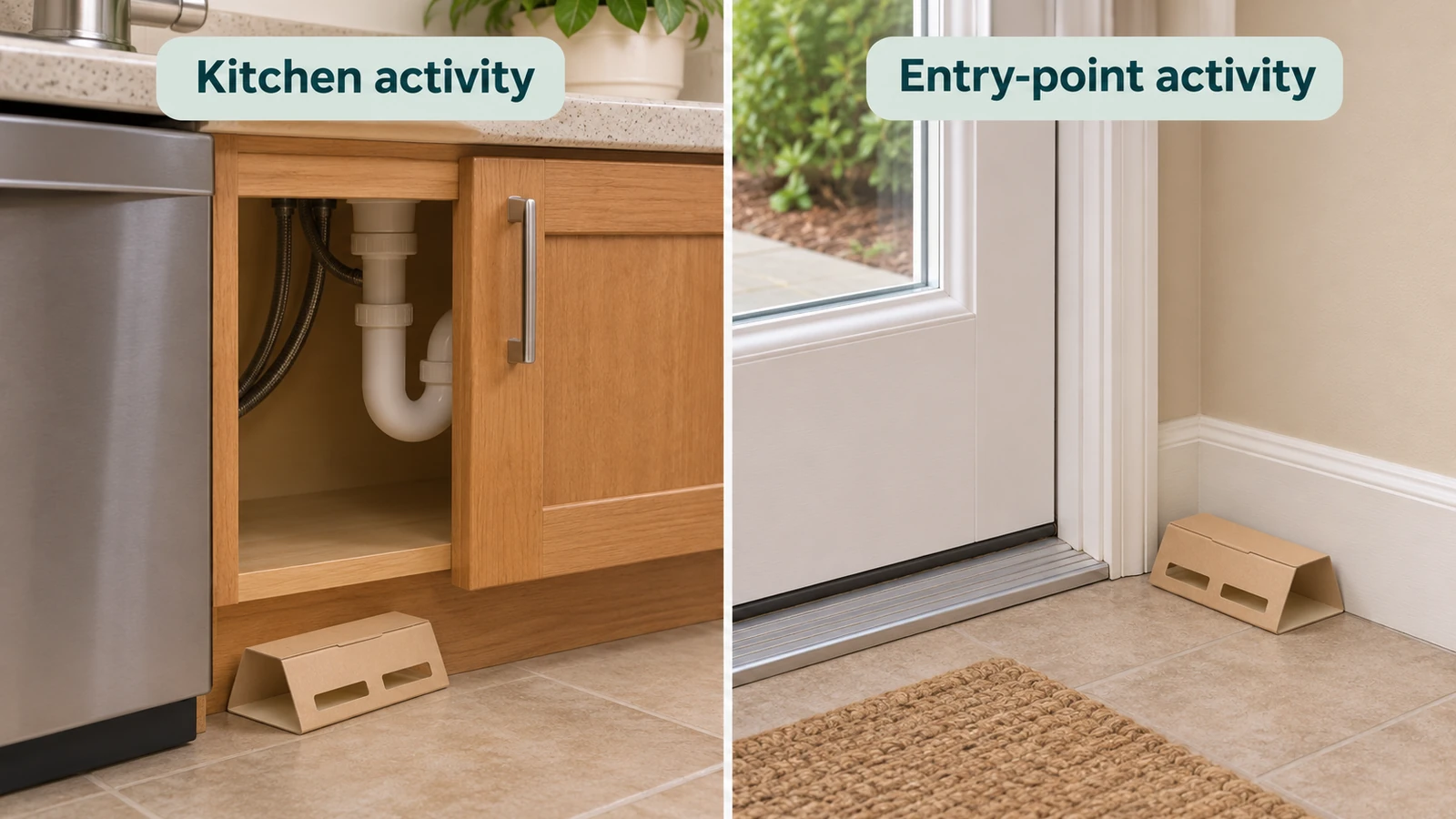
A few inexpensive, well-positioned adhesive monitors can reveal whether activity is concentrated around plumbing, kitchen appliances, or an exterior entry. That information is useful even when the monitors themselves catch only a small portion of the roaches present.
What to Watch For
Don’t compare catch totals from traps used in different places or over different periods as though they were controlled product tests. A drop in catches can reflect changed placement, a blocked entrance, or worn-out adhesive rather than a real reduction in activity.
Which Cockroach Trap Should You Choose?
Match the Device to What You’re Seeing
Choose based on your immediate question, not on a promise that one product handles every infestation.
- One large cockroach near an exterior door: Start with a covered or otherwise protected sticky monitor near the suspected entry route. Check the door sweep and nearby gaps. A single visitor doesn’t automatically justify indoor insecticide treatment.
- Small roaches appearing repeatedly around a sink, stove, or refrigerator: Use sticky monitors to identify active areas. An appropriately labeled insecticidal bait station may also help control an established population.
- You have already started a treatment and want to know whether activity is continuing: Choose adhesive monitors that can be checked consistently. Buying more bait stations solely to count captured roaches won’t answer that question.
- Children or pets can reach the intended location: Avoid accessible exposed glue and never assume a bait station is childproof or petproof. Choose a genuinely inaccessible location that complies with the product instructions, or use another appropriate approach.
- The area is wet, dusty, or exposed to weather: A standard indoor cardboard glue trap may quickly lose usefulness. Select a format suited to the conditions and follow any indoor or outdoor restrictions on the packaging.
If you’re still unsure which cockroach you’re dealing with, start with the cockroach identification and control overview. Species and the pattern of sightings can change which problem you’re trying to solve.
Why a Sticky Monitor and a Bait Station Can Complement Each Other
When an indoor population needs treatment, these two devices can serve complementary jobs. The sticky monitor helps identify and track activity. A suitable insecticidal bait station can expose feeding roaches to a control product.
Keep those purposes separate. You don’t need to add pesticide to the glue surface or turn a monitoring trap into a homemade bait station. The value of the combination is that one device helps you observe the problem while the other addresses part of its control.
For a persistent infestation, the devices are tools within a broader approach that also addresses food, water, hiding places, and access points.
Frequently Asked Questions
Do cockroach traps need a pheromone or food lure?
Not necessarily. Plain adhesive monitors can catch roaches that encounter them along their normal routes. Some attractant-enhanced products are useful for particular monitoring purposes, but the lure must suit the target insect. Placement remains important, and an added scent doesn’t guarantee better catches in every home.
Can I use the same roach traps indoors and outdoors?
Check the product’s intended use. Many cardboard sticky monitors are designed for protected, dry locations and become less useful when exposed to rain, dust, or debris. Insecticidal bait stations must only be used in the indoor or outdoor locations specified on their current labels. Avoid placing traps where they can harm non-target wildlife.
Explore this topic further: