
How-To
How to prevent bed bugs at home and while traveling
Reduce the risk of bringing bed bugs home with practical checks for used furniture, travel bags, and everyday belongings. Learn which signs call for a closer inspection.

Bed bugs can enter a home unnoticed in a suitcase, a used chair, or other belongings. A few well-timed checks can reduce that risk without turning everyday life into a constant search for insects.
The most useful prevention habits happen before you bring something home, while you travel, and when you notice a possible warning sign. This routine focuses on those decisions, not on treating a home that has no evidence of bed bugs.
For an overview of the pest, its behavior, and available control options, start with our bed bug guide.
- Difficulty: Basic for everyday precautions; some used furniture is difficult to inspect thoroughly.
- Equipment: A bright flashlight and a clear area for inspecting belongings. Sealable bags may be useful when an item is suspected of carrying bed bugs.
Prepare a Simple Bed Bug Prevention Routine
You do not need to inspect every possession every day. Concentrate on the situations most likely to introduce bed bugs into your home.
Before starting, identify a convenient place to check incoming belongings. A well-lit entryway, utility area, or other uncluttered space with a hard floor makes it easier to examine an object before taking it into a bedroom or placing it on upholstered furniture.
Keep these three situations in mind:
- Incoming items: Used furniture, mattresses, upholstered goods, luggage, and belongings from a place where bed bugs may have been present deserve attention before entering living spaces.
- Overnight stays: Check the sleeping area before settling in and keep luggage away from beds and other likely hiding places.
- Everyday observation: When changing bedding or cleaning around frequently used beds and couches, notice unusual spots, shed skins, or insects instead of overlooking them.
Most of the routine involves observation and sensible handling. Special equipment is optional, and preventive insecticide applications are not part of a normal household routine.
Before You Start
Do not spray luggage, furniture, mattresses, or rooms with insecticide simply as a precaution. A product must be specifically labeled for its intended use, and routine spraying is not a substitute for inspection. Never use foggers, household ovens, space heaters, or improvised heating methods to prevent a suspected bed bug introduction.
Five Practical Steps to Reduce the Risk of Bringing Bed Bugs Home
The goal is to interrupt the most common opportunities for bed bugs to hitchhike into your home. Make each check at the moment it matters, then return to ordinary habits when there is no specific reason for concern.

Step 1: Inspect used furniture before accepting it
A secondhand couch may look spotless on the outside while hiding insects in its seams or frame. Inspect it before purchase or pickup, ideally while it is still outside your home.
Use a flashlight and pay particular attention to:
- Upholstery seams, folds, piping, and cushion edges.
- The underside of the furniture and any accessible fabric dust cover.
- Wooden joints, screw holes, cracks, and gaps in the frame.
- Areas around armrests, reclining mechanisms, and other sheltered parts.
Look for live insects, dark fecal spotting, pale shed skins, and small eggs. A clean-looking surface is not enough when the important hiding places are inaccessible.
Be especially cautious with discarded mattresses, box springs, couches, and upholstered chairs left at the curb. Passing up a free item is preferable to bringing an unidentified infestation into your home.
If a seller cannot allow a reasonable inspection, or you discover convincing bed bug evidence, do not bring the item inside. Large upholstered items can be especially difficult to inspect or treat completely.
Step 2: Check other secondhand items and potentially exposed belongings
Bed bugs can also travel in bags, clothing, boxes, and objects with sheltered seams or crevices. Give extra attention to belongings obtained from a known or suspected infested location.
For used textiles, examine folds, seams, and attached accessories before putting them away. Launder or dry items when appropriate for the fabric, following their care instructions.
For backpacks, bags, and other belongings, check pockets, zippers, lining edges, and folds where an insect could hide.
Do not automatically treat every item from a thrift store or every package delivered to your door. Focus on the item’s origin, its construction, and any evidence you find.
When there is a credible reason to suspect bed bugs, keep the item separated from beds, couches, and other belongings while deciding how to inspect or handle it.
Step 3: Take a few precautions when staying away from home
Before unpacking in a hotel or other temporary accommodation, briefly inspect the sleeping area. Pay attention to visible mattress seams, nearby bed-frame or headboard areas, and the luggage rack.
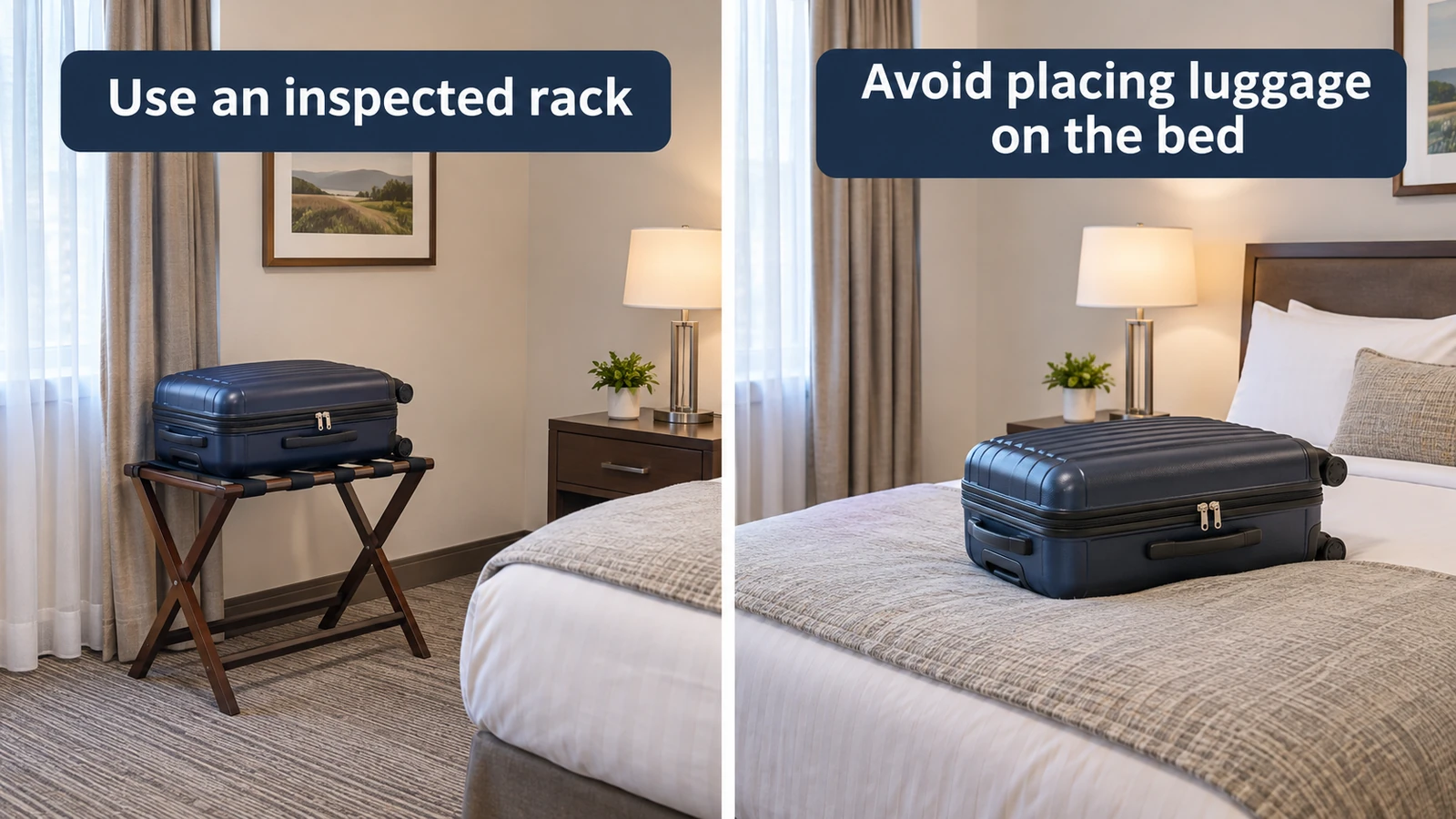
Inspect the rack before using it. Keep your suitcase on a suitable rack away from the bed rather than on the mattress or floor, and avoid spreading clothes across upholstered furniture.
Our hotel-room bed bug inspection guide explains the inspection itself in more detail.
If you discover convincing evidence, notify the accommodation provider and request another suitable room or lodging arrangement. Take care not to move exposed belongings directly onto another bed.
Step 4: Unpack thoughtfully after a trip
When you return home, avoid putting your suitcase on your bed. Open it in a convenient, well-lit area where you can examine the bag and manage the contents.
Check the suitcase’s seams, zipper tracks, pockets, handles, and other narrow spaces. Move clothing to the laundry without leaving it piled on a bed or couch.
Drying heat can kill bed bugs when the item and dryer settings permit effective treatment. If you suspect exposure, follow appropriate fabric-care instructions and keep potentially exposed items contained until they can be handled.
For clothing-specific precautions after suspected exposure, see how to check and treat clothes for bed bugs.
A more detailed post-trip luggage routine is useful when there has been a credible exposure, but an ordinary trip without suspicious findings does not automatically call for intensive treatment of everything you packed.
Step 5: Make early observation part of normal household habits
When you change sheets, take a moment to notice the mattress edges, bed frame, and nearby furniture. In rooms where people regularly sleep or rest, watch for new marks or insects in sheltered areas.
Reduce clutter near beds and couches so hiding places remain easier to inspect. Keep frequently used belongings organized rather than letting piles accumulate around sleeping areas.
If you live in an apartment or another multi-unit building, stay attentive to credible reports of bed bug activity in connected spaces. Follow building procedures for reporting suspected activity rather than applying pesticides as a precaution.
You do not need an elaborate daily inspection schedule. Make careful checks when a meaningful exposure occurs, and use ordinary cleaning and bedding changes as opportunities to notice new evidence.

Prevention Mistakes That Can Give a False Sense of Security
A quick look at a clean surface is useful, but bed bugs often shelter in places that are not immediately visible. Prevention works best when the check matches the object and its likely hiding places.
Avoid these common mistakes:
- Trusting appearance alone. A freshly cleaned couch, suitcase, or room may still contain insects hidden in seams or cracks.
- Assuming an expensive hotel is automatically free of bed bugs. The price or cleanliness of accommodation cannot replace a basic room check.
- Treating every return from travel as an infestation. Without suspicious evidence, ordinary luggage inspection and sensible laundry handling are more appropriate than indiscriminate treatment.
- Relying on sprays or repellents as a preventive barrier. Products do not replace careful inspection and can create unnecessary exposure when used without a valid reason.
- Buying devices instead of checking the source. Mattress encasements and bed-leg interceptors can help in some situations, but they do not prevent bed bugs from arriving in luggage or furniture.
A useful prevention routine is selective. Pay closer attention when an object comes from a known infested location or an item cannot be inspected adequately, while keeping ordinary low-risk activities manageable.
When Should Prevention Turn Into a Bed Bug Inspection?
Prevention is appropriate when there is no specific evidence of an infestation. Once you find a suspicious insect or physical trace, the next task is to determine what it is and where it came from.

The most useful warning signs include:
- A live insect that resembles a bed bug, particularly around a mattress seam, bed frame, couch, or recently introduced item.
- Repeated dark fecal spots concentrated along fabric seams, furniture joints, or other likely hiding places.
- Pale shed skins or small eggs found in sheltered areas, especially alongside other characteristic evidence.
A single unexplained stain needs closer examination rather than an immediate assumption. Bite-like marks on the skin are also difficult to identify by appearance alone, since several insects and non-insect causes can produce similar reactions.
Start with the area most closely connected to the suspected introduction. If the concern began with a used chair, inspect that chair and the nearby resting area. If you discovered a bug in luggage, inspect the suitcase and the places where you unpacked it.
A bed bug signs checklist can help organize the observations before you decide whether an infestation is present.
Expected Result
An ordinary prevention check should leave you with a clear next action: accept and use an item after a reasonable inspection, continue normal precautions after travel, or keep a suspicious item separate while investigating specific evidence.
What to Do If You Find Something Suspicious
Do not begin treating the entire home because of one uncertain mark. First, identify the object or location involved and preserve the evidence when possible.
If you find an insect, photograph it clearly or collect it in a secure container for identification. Avoid crushing or discarding a specimen that could help confirm what you found.
If the suspected source is a newly acquired object, keep it out of bedrooms and other resting areas while you assess it. Avoid carrying potentially infested belongings from room to room.
Check the nearest sleeping or resting area for additional physical signs. Look around mattress seams, bed-frame joints, upholstered furniture, and other likely hiding places.
If bed bug activity is confirmed, prevention alone is no longer the appropriate response. Move to a targeted inspection and the bed bug treatment plan rather than repeatedly applying general preventive precautions.
When Should You Call a Professional?
Professional inspection is worth considering when you repeatedly find suspected bed bugs but cannot identify the source, when activity may extend into multiple rooms or units, or when a complicated piece of furniture cannot be assessed safely.
In multi-unit housing, notify the property manager or landlord when credible evidence is found so the appropriate inspection and response can be coordinated under local procedures.
A single uncertain insect or isolated skin reaction does not automatically require professional treatment. Identification and a focused inspection come first.
The table below helps distinguish situations where routine prevention is sufficient from those that call for closer investigation.
| Situation | What it tells you | Appropriate next step |
|---|---|---|
| A used upholstered chair has inaccessible seams or an underside you cannot examine | Important hiding places remain unchecked | Arrange a suitable inspection before accepting it, or decline the item |
| You return from an ordinary trip with no suspicious findings | There is no specific evidence requiring treatment | Inspect your luggage, handle laundry normally, and continue routine observation |
| You notice clustered dark spots along a mattress seam | The marks may indicate activity but need examination | Inspect nearby seams and the bed frame; document what you find |
| You find a live bed bug in a newly acquired item | A possible introduction needs immediate attention | Keep the item contained, inspect nearby areas, and determine whether treatment is needed |
| You notice itchy marks without finding physical evidence | The cause remains uncertain | Examine sleeping areas and relevant belongings before deciding on pest treatment |
Keep the Routine Useful Over Time
Build prevention around recurring situations rather than arbitrary inspection deadlines.
Check secondhand furniture before it comes home. Use basic room and luggage precautions when traveling. During ordinary bedding changes, remain aware of new physical signs around places where people sleep.
After a credible exposure, pay closer attention to the affected belongings and nearby resting areas. If evidence appears, investigate promptly rather than waiting for a scheduled inspection date.
Optional monitoring devices or bed bug encasements may make some hiding places easier to manage or activity easier to detect. They are aids to observation, not purchases that every household must make.
Explore this topic further:


