How-To
How to get rid of cockroaches: a step-by-step control plan
If roaches keep appearing in your home, killing the ones you see is rarely enough. This step-by-step plan shows you how to locate active areas, remove what keeps cockroaches alive, choose targeted control methods, and track whether the problem is actually getting better.

By


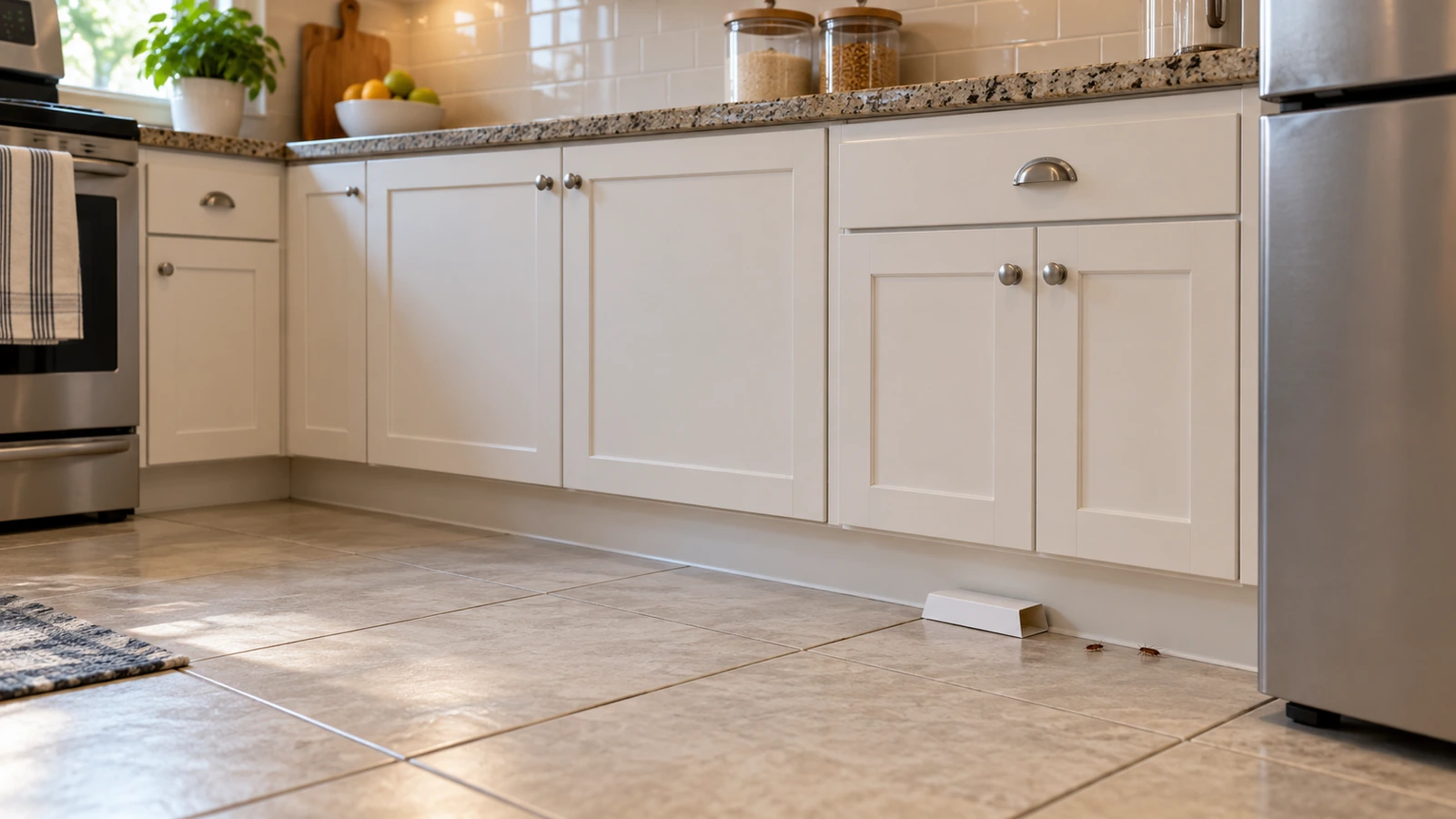
Getting rid of cockroaches starts with understanding where the activity is coming from. A population breeding behind kitchen appliances requires a different response from large roaches entering through gaps around doors, drains, or other openings. Both situations can produce repeated sightings, but treating them the same way often wastes time.
The goal is to reduce the population at its source, not simply make roaches disappear for a night. That means combining cleaning, moisture control, physical removal, exclusion, appropriate treatments, and follow-up checks. You can handle many localized problems yourself, while widespread or persistent infestations may require professional help.
Before You Start: Identify the Activity and Prepare Your Home
First, determine whether you’re dealing with roaches living and reproducing indoors or insects arriving from another area.
German cockroaches commonly establish themselves in kitchens and bathrooms, especially around appliances, cabinets, and plumbing. Brownbanded cockroaches can also reproduce indoors but may occupy warmer, drier locations elsewhere in the home. American and Oriental cockroaches are often associated with outdoor environments or damp building areas, although they can also become established inside some structures.
If you are uncertain about the species, review the common cockroach types and signs before choosing a treatment.
Repeated sightings of small roaches, especially different-sized baby cockroaches near the same hiding areas, strongly suggest nearby breeding activity. Finding cockroach egg cases provides another useful clue, although an old or empty case does not prove the infestation is still active.
You don’t need to identify every hiding place before beginning. You do need enough information to avoid treating areas where the roaches aren’t spending their time.
Preparation checklist
Before applying any treatment, gather the essentials and establish a starting point:
- Locate the main activity. Check accessible areas beneath sinks, around refrigerator and stove edges, behind drawers, near plumbing openings, and along baseboards. Look for live roaches, droppings, shed skins, or egg cases.
- Set up sticky monitors. Position cockroach glue traps along walls and near suspected hiding areas, keeping them away from children and pets. Put additional monitors near exterior doors if large roaches may be entering from outside.
- Record what you find. Note the date, trap location, approximate number of roaches caught, and whether adults or nymphs are present. A simple phone note is sufficient.
- Prepare cleaning equipment. Have a flashlight, vacuum with a crevice attachment, cleaning supplies, sealable disposal bags, and containers for exposed food.
- Identify safe treatment locations. Check which gaps and cabinet areas are accessible without dismantling electrical equipment, disconnecting gas appliances, or disturbing plumbing.
If activity is heavy, don’t delay necessary control measures just to collect several days of trap data. Start monitoring as you begin the plan, then use the first observations as your baseline.

Before you act:
Never spray pesticides into electrical outlets, appliance motors, switches, or inaccessible electrical cavities. Don’t remove electrical covers or pull out heavy or gas-connected appliances unless you can do so safely. Any pesticide must be specifically labeled for the pest, application site, and intended use.
How to Get Rid of Cockroaches Step by Step
Work from the areas with confirmed activity outward. In a typical kitchen infestation, that usually means focusing first on the spaces around the refrigerator, stove, sink cabinet, dishwasher, and nearby food-storage areas rather than treating every room equally.
The most effective approach combines removing accessible roaches and their resources with targeted control of the insects that remain hidden. Follow the steps in order, adjusting the treatment area to the species and the evidence you’ve collected.
Step 1: Remove food and water sources
Begin by removing food and moisture that help roaches survive, including food sources that compete with bait.
In the kitchen, clean grease and food residue from accessible areas around appliances, wipe up crumbs beneath cabinet edges, wash dishes, and store exposed food in tightly closed containers. Empty trash regularly and clean residues from the outside of garbage cans.
Don’t overlook the smaller sources. Pet food left out overnight, grease beneath a stove, food trapped under an appliance, and moisture inside a sink cabinet can all sustain cockroach activity.
Repair dripping faucets and leaking pipes. Dry standing water where practical, including around sinks and beneath appliances. If condensation repeatedly forms around plumbing, address the underlying moisture problem rather than simply wiping it away.
Cleaning alone may not eliminate an established infestation. Its immediate purpose is to make the environment less favorable and improve the effectiveness of the remaining control measures.
Step 2: Remove accessible roaches, egg cases, and debris
Use a vacuum with a crevice attachment to remove live roaches you can reach, along with visible egg cases, shed skins, and debris around active hiding places.
Vacuuming can quickly reduce the number of insects present, particularly when several roaches are concentrated in accessible cabinet corners or beneath movable objects.
A vacuum with HEPA filtration is preferable when cockroach debris or allergens may be present. Empty the contents carefully into a sealed bag and dispose of them outside the living area. Clean contaminated hard surfaces afterward.
Avoid scattering roaches by repeatedly disturbing the same hiding place without being prepared to remove them.
This step helps reduce the population immediately, but it doesn’t replace treatment of insects deeper inside cracks and other inaccessible spaces.
Step 3: Block entry points and reduce hiding places
Next, correct the gaps and sheltered conditions that allow roaches to enter, move between areas, or remain concealed.
Seal accessible cracks around cabinet joints, baseboards, and pipe penetrations where appropriate. Repair damaged screens and install door sweeps or weatherstripping where exterior doors leave visible openings.
Remove unnecessary cardboard, stacked paper, and clutter around active areas. These materials provide shelter and make inspection and cleaning more difficult.
For larger roaches entering from outside, pay particular attention to exterior doors, damaged screens, openings around utility lines, and damp areas near the building.
For an established indoor population, focus on access and shelter without sealing over an unresolved plumbing or electrical problem. You still need to reach the actual activity zones for monitoring and treatment.
Step 4: Use targeted cockroach bait when treatment is needed
For an established indoor infestation, properly selected cockroach baits are often more useful than repeatedly spraying visible insects.
Baits combine an attractive food material with an insecticide. Roaches must encounter and feed on the bait for it to work, so placement matters as much as product selection.
Choose a cockroach bait labeled for your location and intended application. Different cockroach bait options suit different conditions, but the central rule is the same: place the product near confirmed activity, not randomly throughout the house.
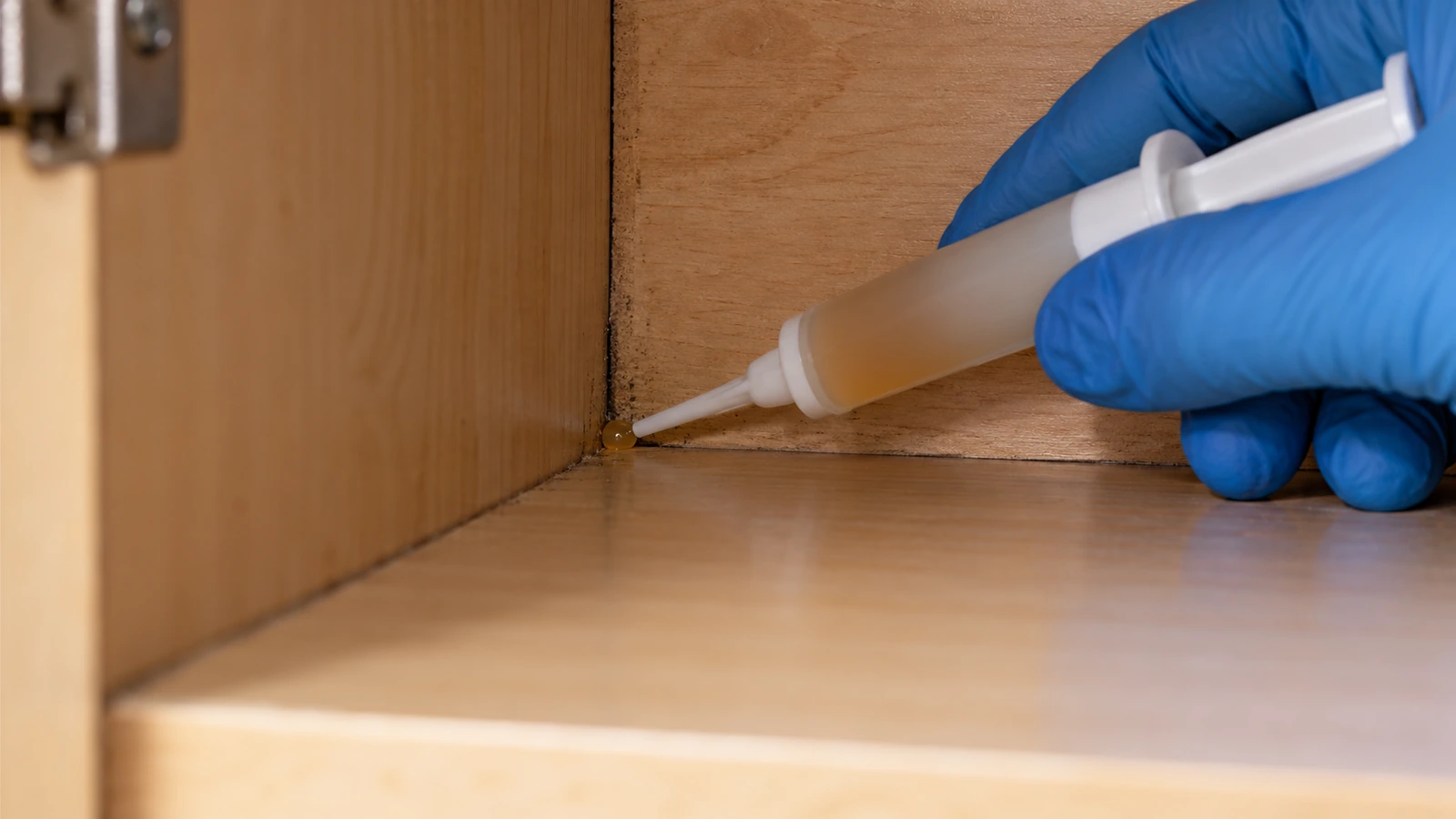
Depending on the product’s label, suitable locations may include protected cabinet corners, gaps near appliance edges, or areas along known roach travel routes. Gel baits are generally applied as small, separate placements rather than large exposed deposits.
Enclosed bait stations can be a more practical choice where children or pets might otherwise reach insecticide. They must still be positioned and used according to their labels.
Keep bait away from food-contact surfaces, accessible dishes, and areas that are routinely washed. Don’t apply it inside outlets or electrical equipment.
Check bait periodically. If it has been consumed, contaminated, or dried out, follow the label’s instructions for replacement or reapplication.
Step 5: Expand control only where the evidence points
If the activity is concentrated around a kitchen appliance, keep the initial treatment focused there. If monitors reveal another active area, extend the same cleaning, removal, and targeted-control approach to that location.
The species also matters. German cockroach activity often requires sustained attention to indoor hiding areas. Brownbanded cockroaches may require checks beyond the kitchen, including higher or drier locations.
If large roaches are repeatedly entering from outdoors, prioritize exclusion, moisture reduction, and removal of nearby shelter. Outdoor baiting may be appropriate where a product is specifically labeled for that use, but indoor treatment alone won’t reliably stop continuing entry.
Never apply insecticides to public sewers, storm drains, or utility infrastructure.
In an apartment or multi-unit building, repeated roach activity may involve neighboring units, shared walls, plumbing routes, or common spaces. Report the locations and monitoring results to building management when coordination is needed. Treating one unit may not be sufficient if an active source remains elsewhere in the building.
Mistakes That Can Undermine Cockroach Treatment
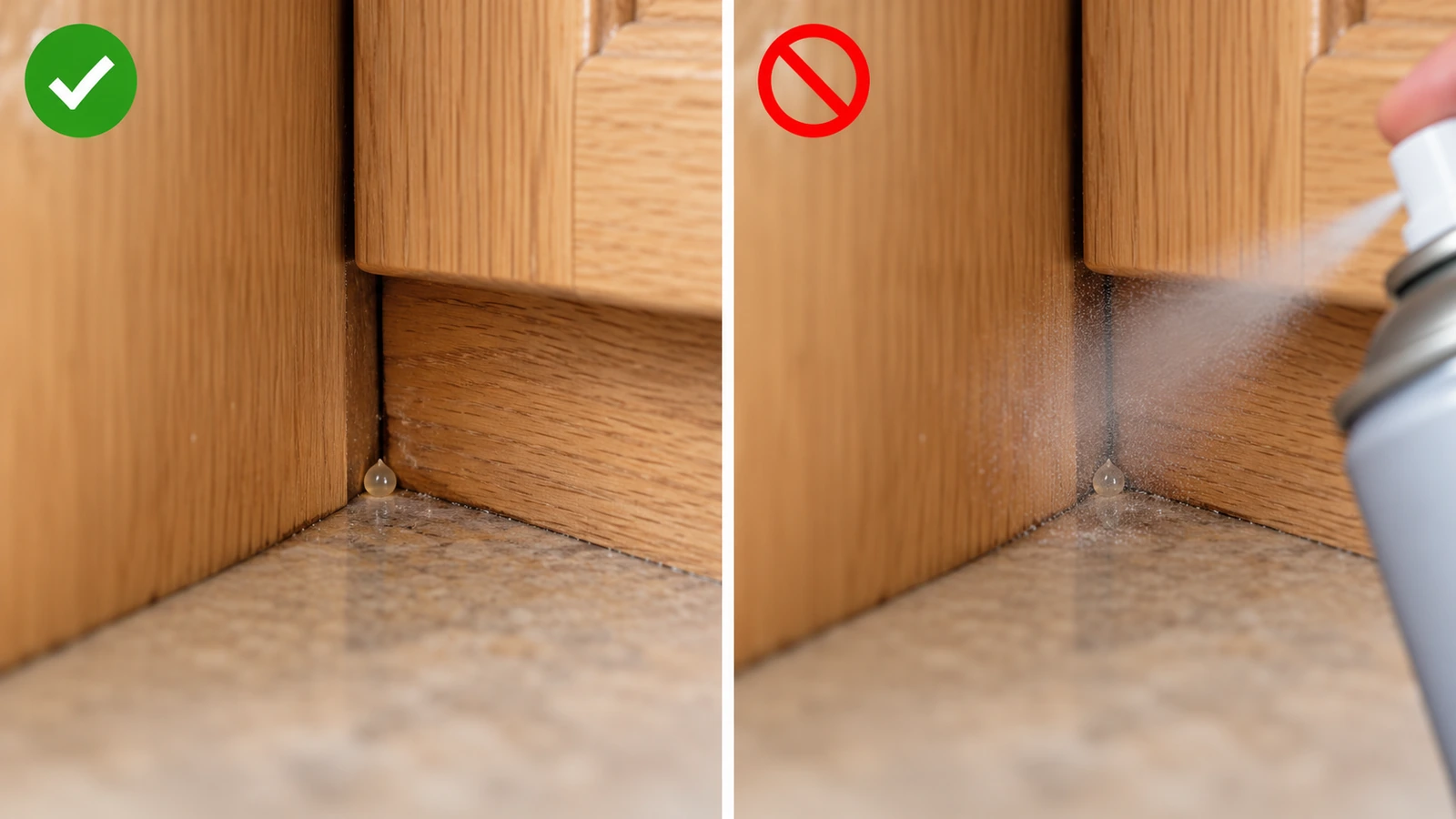
One of the most common mistakes is trying to compensate for an incomplete plan by applying more pesticide. Killing exposed roaches with an aerosol spray may provide immediate relief, but it does not necessarily reach the population hiding behind cabinets or appliances. Some sprays also repel roaches or interfere with bait feeding.
Natural ways to get rid of roaches can be useful when they involve effective physical measures such as vacuuming, removing food and moisture, and sealing entry points. However, vinegar, essential-oil sprays, and improvised household mixtures are not dependable substitutes for controlling an established breeding population.
Keep these points in mind while treatment is underway:
- Don’t contaminate bait with sprays. Repellent insecticides applied in or around bait placements can discourage roaches from feeding. If you’ve already sprayed an area, check the product’s directions before making changes and select an appropriate uncontaminated bait location.
- Don’t spread insecticide across entire rooms. Broad applications to floors, countertops, or exposed surfaces can create unnecessary exposure without reaching hidden cockroaches. Use only labeled application sites.
- Don’t rely on bug bombs or foggers. Roaches can remain protected inside cracks and cavities while pesticide disperses through occupied spaces. Foggers also introduce significant exposure and fire risks.
- Don’t scatter powders indiscriminately. Boric acid and desiccant dusts are pesticides or pest-control substances, not harmless household cleaners. They require appropriate products, careful application, and safe locations; inaccessible void treatments may be better handled professionally.
- Don’t assume more bait means better control. Excessive or poorly placed gel can be wasted, contaminated, or exposed to people and pets. Follow the product label.
- Don’t destroy your monitoring baseline. If you constantly move traps or change several treatment methods at once, it becomes harder to tell which areas remain active and whether the population is declining.
If you’ve used several sprays, powders, or baits already, don’t immediately add another product. Establish what was applied, where it was applied, and whether those applications are compatible before proceeding.
How to Tell Whether the Cockroach Treatment Is Working
The most useful measure of progress is the change in activity over time, not the number of roaches you kill on a particular day. Keep sticky monitors in the same locations and compare catches over similar monitoring periods. Record what you find rather than relying only on memory.
Look at the full pattern. Fewer catches near the refrigerator, fewer live roaches during checks, and less fresh evidence around a previously active cabinet suggest improvement. A single empty trap, however, proves very little if roaches are still being seen elsewhere.

How long does it take to get rid of roaches?
There is no reliable elimination deadline for every home.
Targeted bait treatments may take seven days or longer before a noticeable decline appears. A small, localized problem can improve relatively quickly, while an established population with multiple hiding places, reproducing females, and immature roaches may require repeated follow-up over several weeks.
The time also depends on species, infestation size, access to hidden areas, competing food sources, the treatment used, and whether new roaches continue entering the property.
Check monitors frequently enough to identify active areas during the initial phase, then review the trend over the next one to two weeks. Follow any product-specific inspection or reapplication intervals on the label.
What if you still see roaches after treatment?
A few sightings after treatment do not automatically mean the method has failed.
A roach moving slowly may have encountered an insecticide, but its condition alone cannot confirm that the wider population is being controlled. Similarly, finding small nymphs can reflect earlier egg development or continuing reproduction.
What matters is whether new activity is declining, holding steady, or spreading.
Use these indicators together:
- Trap captures: Are catches decreasing when the same traps are checked over comparable periods?
- Live activity: Are you seeing fewer roaches during routine inspections, especially in previously active areas?
- Fresh evidence: Are new droppings, egg cases, or other signs still appearing after accessible surfaces were cleaned?
- Treatment condition: Is bait still present and usable where needed, or has it dried out, been removed, or become contaminated?
- Activity distribution: Is the problem becoming concentrated in fewer locations, or are new areas showing repeated activity?
Dead roaches, an occasional surviving adult, or one newly discovered egg case should be interpreted alongside these observations, not treated as definitive proof of success or failure.
What to Do If the Roaches Aren’t Going Away
If activity remains high, don’t restart the entire process blindly. Look for the weakest part of the plan: an untreated hiding place, continuing food or water access, ineffective bait placement, outdoor entry, or movement from another unit.
The situation you observe usually points toward the next reasonable correction.
| What you’re seeing | Possible explanation | What to do next |
|---|---|---|
| Roaches remain concentrated near one appliance | The main hiding area is still active, or bait is poorly positioned | Recheck accessible gaps, remove competing food, and adjust labeled bait placement near the active route |
| Bait remains untouched while roaches are still present | The bait may be too far from activity, dried out, contaminated, or unattractive to that population | Check its condition and placement; consider a suitable alternative formulation if necessary |
| Large roaches keep appearing near doors or lower-level rooms | Continuing entry from outside or a damp building area is possible | Inspect and correct access points, monitor the entry area, and address nearby moisture or shelter |
| Small nymphs appear after adult sightings decline | Some immature roaches may be emerging from eggs already present, or breeding may still be occurring | Continue monitoring and reassess whether the number of new nymphs is falling or staying high |
| Traps are empty but live roaches are still being spotted | The monitors may not be close to the actual travel routes | Reposition additional monitors where sightings occur and compare results |
| Activity spreads or repeatedly returns in an apartment building | An untreated source may remain in another unit or shared area | Document the locations and request coordinated inspection and control |
If you have followed the plan correctly but catches remain substantial or activity spreads, reassess the species and treatment strategy rather than simply increasing the dose or frequency of pesticide use.
Professional help becomes more appropriate when roaches are widespread, repeatedly appearing during the day in significant numbers, inaccessible hiding areas are involved, sensitive occupants face exposure concerns, or reasonable targeted control efforts have failed.
Knowing when to call a cockroach exterminator is particularly important when the problem extends into shared building spaces or requires treatments that cannot be applied safely by the resident.
A qualified pest control professional should be able to explain where the infestation is active, what treatment is planned, and how its effectiveness will be checked.
Keep Monitoring After the Roaches Disappear
A few days without a sighting is encouraging, but it isn’t enough to confirm that an established infestation has ended.
Continue checking monitors in previously active locations after visible activity declines. Repeated low or zero catches, together with the absence of new evidence, provide a stronger indication of control than one quiet evening.
You can gradually reduce the frequency of checks as conditions remain stable. Keep the accessible areas clean and dry, maintain necessary repairs, and replace or remove bait only as appropriate under its label.
If roaches reappear later, first determine whether they represent renewed indoor activity or new entry from outside. That distinction will tell you whether to restart targeted treatment or focus on the access route.
Once control has been achieved, the next priority is to prevent cockroaches from coming back without continuing unnecessary pesticide applications.