Identification
Wood roaches: how to identify them and what indoor sightings mean
Identify common U.S. wood roaches by their wing shape, body markings, and habitat, then decide whether an indoor sighting calls for exclusion or a closer inspection.
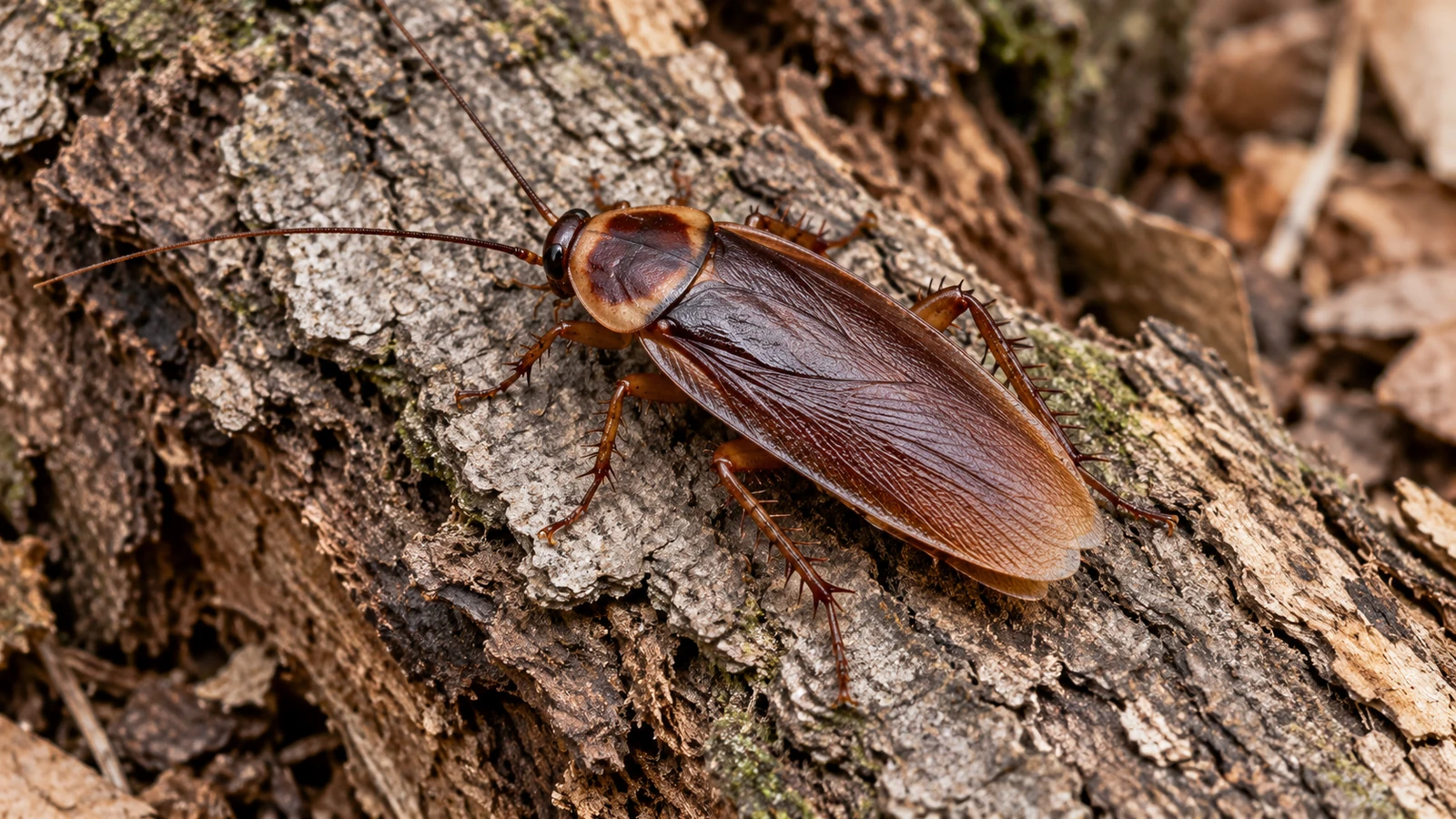
A brown roach appears on your windowsill after dark, or one runs across the floor just after you bring in firewood. Before treating the room, check the insect itself and how it may have entered.
Many wood roaches live outdoors and only wander inside accidentally. Other cockroaches can look similar but establish themselves in buildings. The difference matters because the right response may be as simple as removing one insect and closing an entry point.
What Does a Wood Roach Look Like?
Wood roaches are real cockroaches, not a separate kind of insect. In the United States, the name commonly refers to several outdoor species in the genus Parcoblatta. They have flattened, oval bodies, long antennae, and spiny legs. Their color ranges from light reddish brown to dark brown, and their size varies considerably by species and sex.
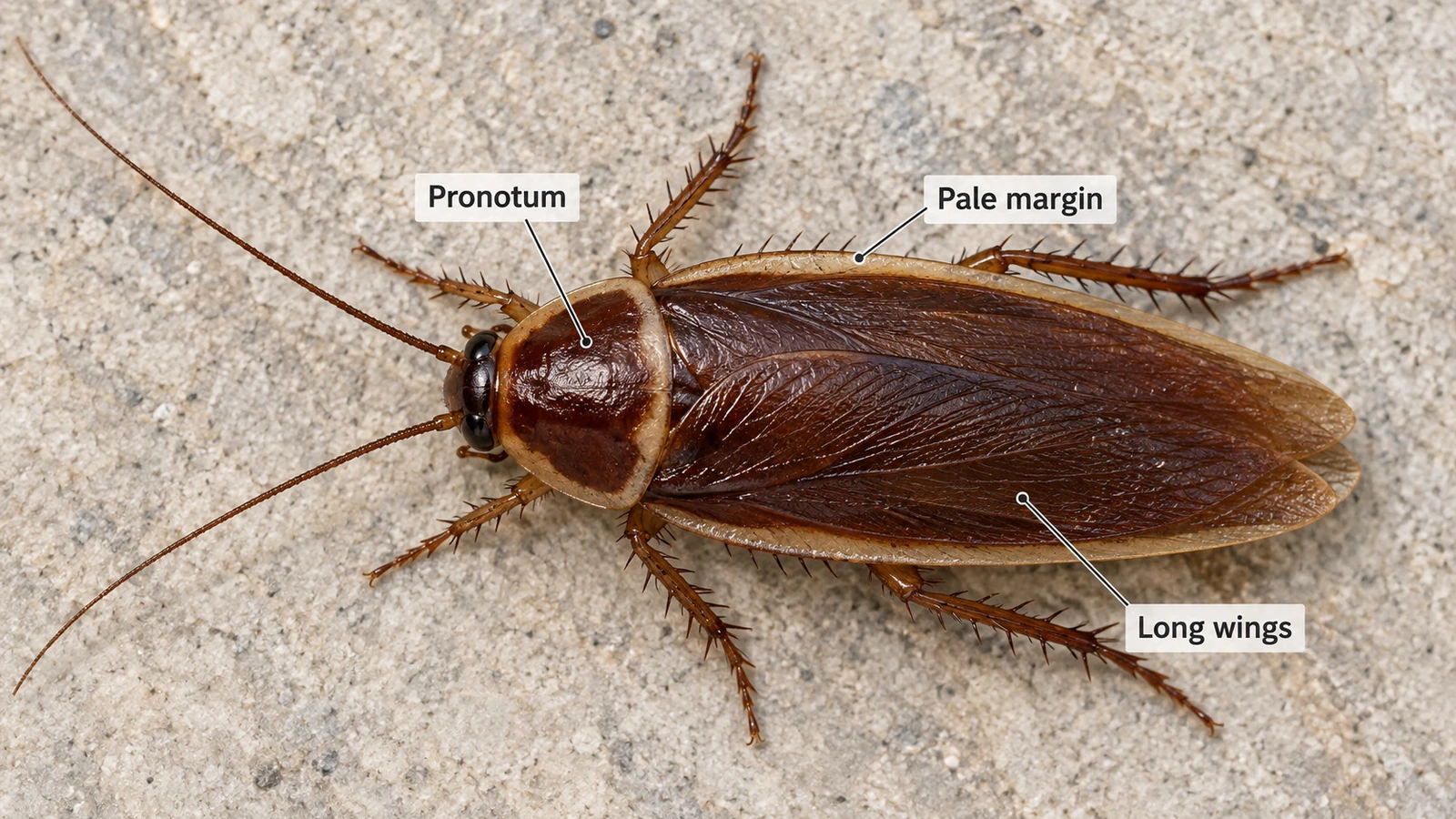
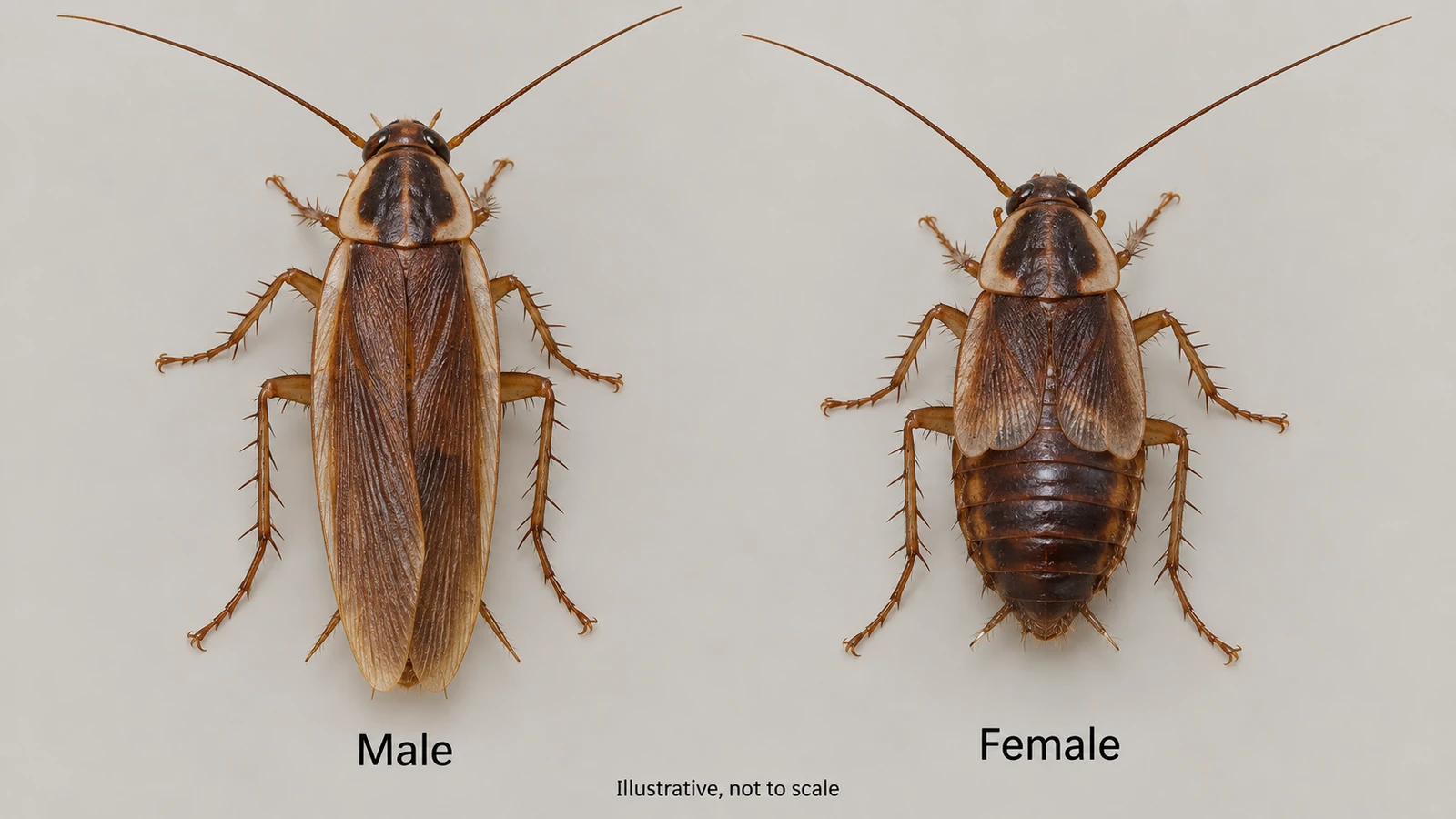
One useful feature is the shield immediately behind the head, called the pronotum. Many wood roaches have a lighter border around this shield. On adult males, pale edging may also be visible along the wings. Look at the shape and position of these markings rather than relying on the overall brown color.
Adult males typically have long, developed wings covering the abdomen and can fly. Females are often broader and darker, with short wings or small wing pads, and cannot fly. Immature wood roaches, called nymphs, lack fully developed wings and can resemble small, short-winged adults.
Identification in 30 Seconds
- Body: Flattened and oval, with long antennae and spiny legs.
- Markings: Often a pale border around the shield behind the head, sometimes continuing along the edges of the male’s wings.
- Wings: Adult males generally have long wings; females have shorter wings or wing pads.
- Setting: A wooded yard, porch light, leaf litter, or firewood nearby makes an outdoor wood roach more plausible.
The Pennsylvania wood cockroach (Parcoblatta pennsylvanica) is a familiar example, particularly in the eastern United States. Adult males grow to about 1 inch long, while females are usually about 1/2 to 3/4 inch. Another species, the Virginia wood cockroach (Parcoblatta virginica), is generally smaller. These species can look different from one another, and their common names do not limit them to Pennsylvania or Virginia.
You may also hear the names wood cockroach, tree roach, or tree cockroach. The first is a standard name for this outdoor group, but tree roach is less precise. In some regions, people use it for other large outdoor cockroaches as well. The name someone gives an insect is therefore a starting point, not a species identification.
A nymph or short-winged female can be especially hard to identify to species from a casual photograph. Try to establish whether the insect belongs to the wood-roach group before attempting a more specific identification.
How to Check a Wood Roach Found Indoors
Start with a clear photograph or a captured specimen. A view from above should show the shield behind the head and the length of the wings. Include a ruler or familiar object beside the insect for scale if you can do so safely. Avoid making the identification from a blurry side view or the color alone.
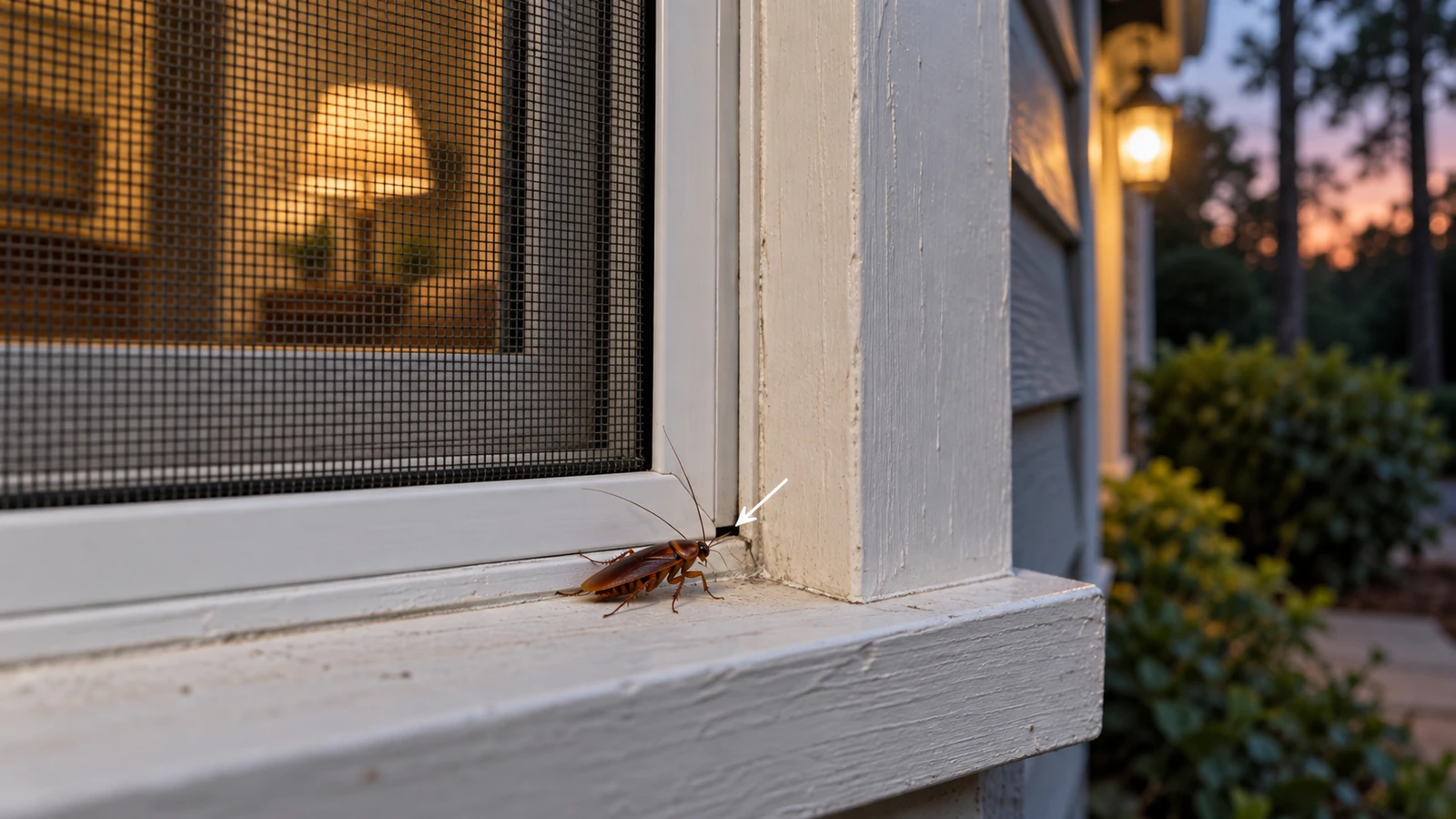
Next, inspect the area where you found it. A wood roach beside an exterior door, on a window screen, or near a porch light tells a different story from repeated sightings deep inside kitchen cabinets. Look for a plausible route from the outdoor habitat into the house.
Check these clues:
- Porch lights and windows: Flying males are attracted to lights and may enter through an open window, a damaged screen, or a gap near a door.
- Firewood: Roaches hiding under bark or between logs can be carried indoors, including females or nymphs that would not have flown in.
- Nearby outdoor shelter: Damp leaf litter, rotting logs, wet mulch, clogged gutters, and loose bark provide the humid conditions wood roaches favor.
- Indoor evidence: If you also find numerous small roaches, egg cases, or repeated activity around indoor food and water sources, examine those insects separately rather than assuming they are wood roaches.
Where and when the insect appeared are useful clues, but the specimen should still fit the identification. A brown roach near a tree is not automatically a wood roach.
Identification Mistakes
- Identifying a wood roach from its brown color or size alone.
- Mistaking a short-winged adult female for a nymph without checking other features.
- Assuming several roaches near the same outdoor light must be breeding inside the house.
Key Clue
A pale border around the shield behind the head, combined with an adult male’s long wings and an outdoor entry point, makes a wood-roach identification more plausible.
What to Watch For
Small roaches of different sizes appearing repeatedly in kitchen cabinets, around plumbing, or far from exterior openings deserve a closer identification. That pattern is less typical of accidental wood-roach visitors.
What Do the Clues Tell You?
Wood roaches spend their lives primarily in outdoor habitats. They shelter under bark, in decomposing wood, and among damp leaves, where they feed on decaying organic matter. When an adult male appears at a lighted window in late spring or summer, an outdoor origin is a strong possibility.
The Pennsylvania wood cockroach is particularly well known for males flying toward lights during the warmer months. Females and nymphs are more likely to be carried indoors on firewood or enter near ground-level shelter. Seasonal activity varies with the species and region.
Unlike German cockroaches and certain other household pests, Parcoblatta wood roaches ordinarily cannot establish breeding populations in living spaces. The comparatively dry indoor environment is unsuitable for them, and individuals that remain inside generally die within days.
That also means several sightings do not necessarily indicate an indoor colony. Repeated arrivals at the same window or porch can result from continuing activity outside. What matters is whether the insects are entering repeatedly or actually living and developing within the building.
The common wood roach vs. cockroach question is really about which cockroach you have found. Wood roaches are cockroaches. A German cockroach, for example, typically has two dark parallel stripes on the shield behind its head and can reproduce indoors. Other large household-associated roaches may also resemble outdoor wood roaches. Use those distinctions to decide whether a more detailed comparison is needed.
Use the observations together to choose your next check:
| What you observe | What it suggests | What to check next |
|---|---|---|
| A long-winged adult near a porch light or window | An outdoor wood-roach visitor is plausible | Wing markings, screens, and nearby lights |
| A short-winged roach after carrying in firewood | A female wood roach or another outdoor hitchhiker is possible | The specimen and the wood storage area |
| Several adults appearing near exterior doors over successive evenings | Repeated entry from outside may explain the sightings | Door gaps, light attraction, and outdoor shelter |
| Small roaches or mixed life stages repeatedly found deep indoors | Another cockroach species may be present | Collect a specimen and inspect indoor hiding areas |
Does a Wood Roach Indoors Mean an Infestation?
Usually not, once the insect has been reliably identified as a wood roach. An adult found near a doorway or on the floor after firewood was brought inside is consistent with an accidental visitor.
Assess the pattern before deciding how serious it is. Record the location of each sighting and whether you found a winged adult, a short-winged insect, or an immature roach. Multiple outdoor visitors entering on different nights are not the same as a population reproducing indoors.

If sightings continue, adhesive monitoring traps intended for indoor insect monitoring can help show where roaches are appearing. Position them near suspected entry points and, if necessary, in a separate indoor area where activity concerns you. Follow the trap instructions and keep them out of reach of children and pets.
Compare the locations and the insects caught. Activity concentrated near exterior entrances supports an entry problem. Repeated captures of different life stages in sheltered areas far from outside openings are a reason to reconsider the species identification.
Do not use an arbitrary number of sightings as the definition of an infestation. A heavily wooded property may have many outdoor wood roaches during their active season without an established indoor population. The location, life stages, and evidence of continued indoor activity are more informative than the count alone.
Learn more: