Identification
Palmetto bug vs. cockroach: what did you actually see?
Found a giant roach on the porch or in the bathroom? Size and color alone can mislead. Check the markings, wings, and setting to narrow down what you saw.
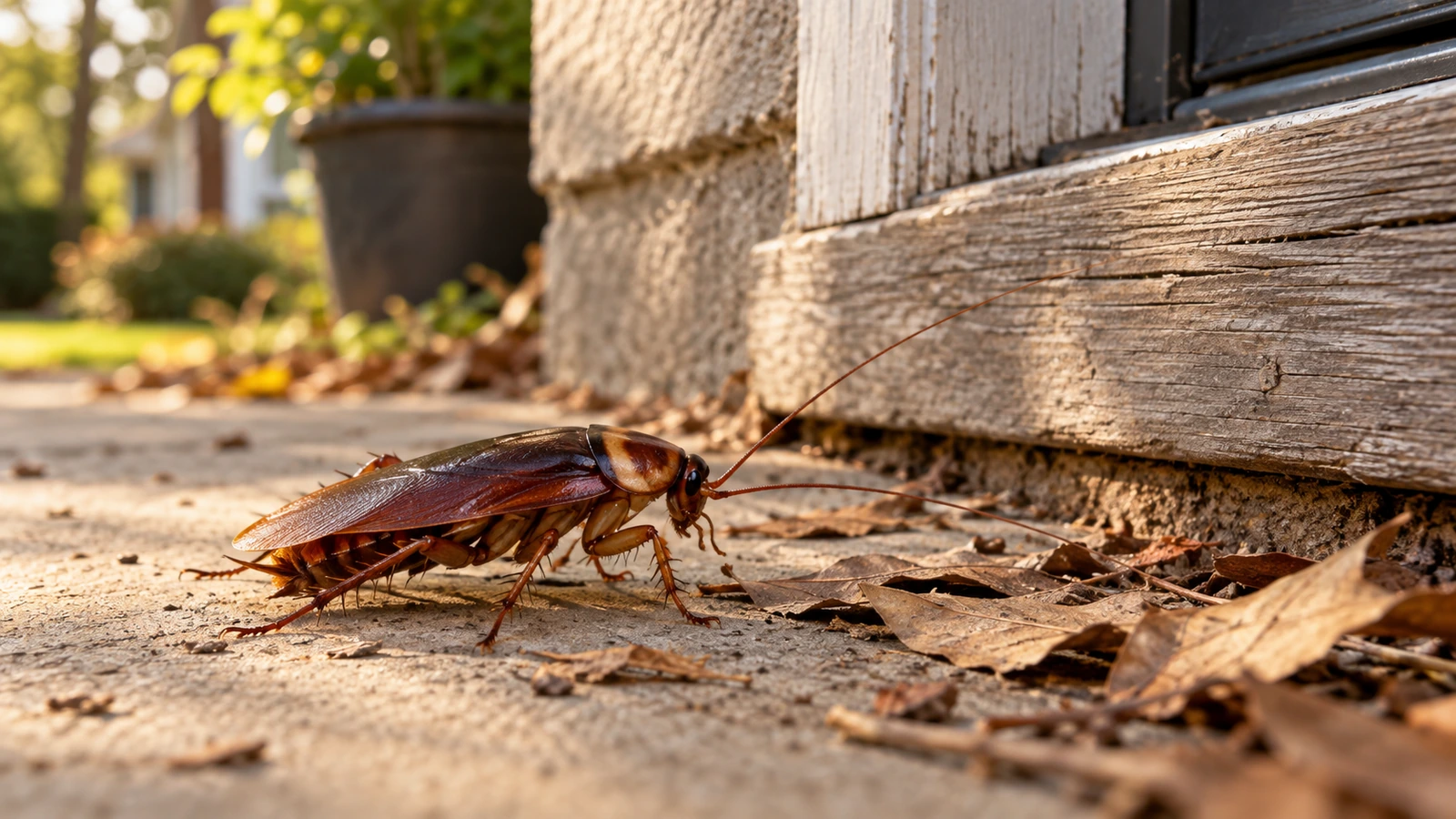
Yes, palmetto bugs are cockroaches. The difference is mainly the name: “palmetto bug” is a regional nickname applied to several large roach species, especially in the southeastern United States. It is not a separate kind of insect or the name of one particular species.
If a large insect just crossed your porch or bathroom floor, the nickname won’t tell you whether it wandered inside or has a hiding place nearby. Its markings, wings, and the pattern of sightings will help you figure out what to check next.
What Does a Palmetto Bug Look Like?
Most insects people call palmetto bugs are large adult cockroaches, often around 1¼ to 2 inches long, excluding their antennae. They have flattened, oval bodies, long antennae, and spiny legs. Depending on the species, they may be reddish brown, dark mahogany, or nearly black.
Three familiar examples are the American cockroach, the smokybrown cockroach, and the Florida woods cockroach. All can be called palmetto bugs, but they do not look or behave exactly alike. Markings on the shield behind the head and the length of the wings are usually more helpful than color or size alone.

Identification in 30 Seconds
- Reddish brown, with long wings and a pale yellow border on the shield behind the head: possibly an American cockroach.
- Uniformly dark mahogany, glossy, with long wings covering the back: possibly a smokybrown cockroach.
- Broad, very dark, with short wing pads rather than full-length wings: possibly a Florida woods cockroach, especially within its southeastern range.
- Small, tan, about ½ to ⅝ inch long, with two dark parallel stripes behind the head: check for a German cockroach instead of relying on the nickname.
Flight is another clue, but not a species name tag. American and smokybrown cockroaches have developed wings and can fly. Adult Florida woods cockroaches cannot. If yours took flight, see why some cockroaches can fly to understand what that observation can tell you.
How to Check the Cockroach You Found

If the insect is still visible, take a clear photo from above without touching it. Include a familiar object nearby for a rough size reference, ideally in the same plane as the insect. Compare the length of its body without the antennae, which can make a roach appear much larger than it is.
Look closely at the shield directly behind the head. Does it have a pale border, or is the whole insect evenly dark? Then look at the back: do long wings cover the abdomen, or are there only short wing pads? A blurry side-view photo can easily hide these details.
If the roach has disappeared, record what you actually noticed rather than trying to reconstruct markings from memory. Note its approximate size, color, whether it flew, and where you first saw it. Check nearby door gaps, window screens, plumbing openings, or sheltered outdoor areas as appropriate. Also look for additional roaches or egg cases in the immediate area.
Identification Mistakes
- Assuming every insect called a palmetto bug is an American cockroach.
- Identifying a species from flight, size, or dark color alone.
- Treating one large roach indoors as proof that cockroaches are breeding inside the home.
Key Clue
A clear view of the shield behind the head and the wings, combined with the location where the insect appeared, usually tells you more than the name someone gave it.
What to Watch For
Young cockroaches have not developed adult wings, and some other dark cockroaches also have reduced wings. A short-winged or wingless-looking insect is not automatically a Florida woods cockroach.
Which Cockroach Fits What You Saw?
The nickname is shared, but the physical clues are not identical. Compare several characteristics together, especially if the insect was found in or around a home.
These patterns can help narrow down the possibilities and guide your next inspection.
| What you observed | Possible identification | Where to check next |
|---|---|---|
| Roughly 1½ to 2 inches long, reddish brown, pale-edged shield behind the head, long wings | American cockroach | Damp lower-level spaces, areas near drains, and possible exterior entry points |
| Around 1½ inches long, uniformly dark mahogany, glossy, with full-length wings | Smokybrown cockroach | Sheltered vegetation, tree cover, roofline openings, attics, and crawl spaces |
| Roughly 1¼ to 1½ inches long, broad, dark body with short wing pads | Florida woods cockroach | Leaf litter, logs, woodpiles, and items recently brought indoors from outside |
| Around ½ to ⅝ inch long, tan, with two dark parallel stripes behind the head | German cockroach, not the usual meaning of palmetto bug | Warm kitchen or bathroom hiding places, especially near appliances, cabinets, and plumbing |
These are identification leads, not guarantees. A young cockroach may look quite different from an adult of the same species, and the surrounding habitat does not identify an insect by itself.

Does Seeing One Palmetto Bug Mean an Infestation?
One large adult appearing near a door or window may have entered from outside. This is particularly plausible where large outdoor cockroaches live in nearby vegetation, mulch, or sheltered structures. Florida woods cockroaches rarely establish themselves indoors, while American and smokybrown cockroaches can persist in suitable damp or protected parts of buildings.
The number and pattern of sightings matter more than the nickname. Here is how to judge what deserves attention:

- One occasional large adult near an entry point: check the opening and surrounding outdoor shelter. With no other evidence, monitoring is a reasonable first response.
- Repeated large adults in a basement, utility area, attic, or similar location: investigate moisture, sheltered spaces, and possible routes from outside or other parts of the building.
- Several roaches of different sizes, egg cases, or repeated captures indoors: look more closely for a nearby source rather than assuming every insect simply wandered inside.
A small, tan, two-striped roach repeatedly seen in a kitchen raises a different concern from a large outdoor species near a patio door. Identifying the insect correctly is what makes the next decision useful.