Explanation
Cockroach life cycle: stages, reproduction, and lifespan
A cockroach’s development and lifespan vary widely by species. Learn how eggs hatch, nymphs mature, and overlapping generations can keep an infestation going.
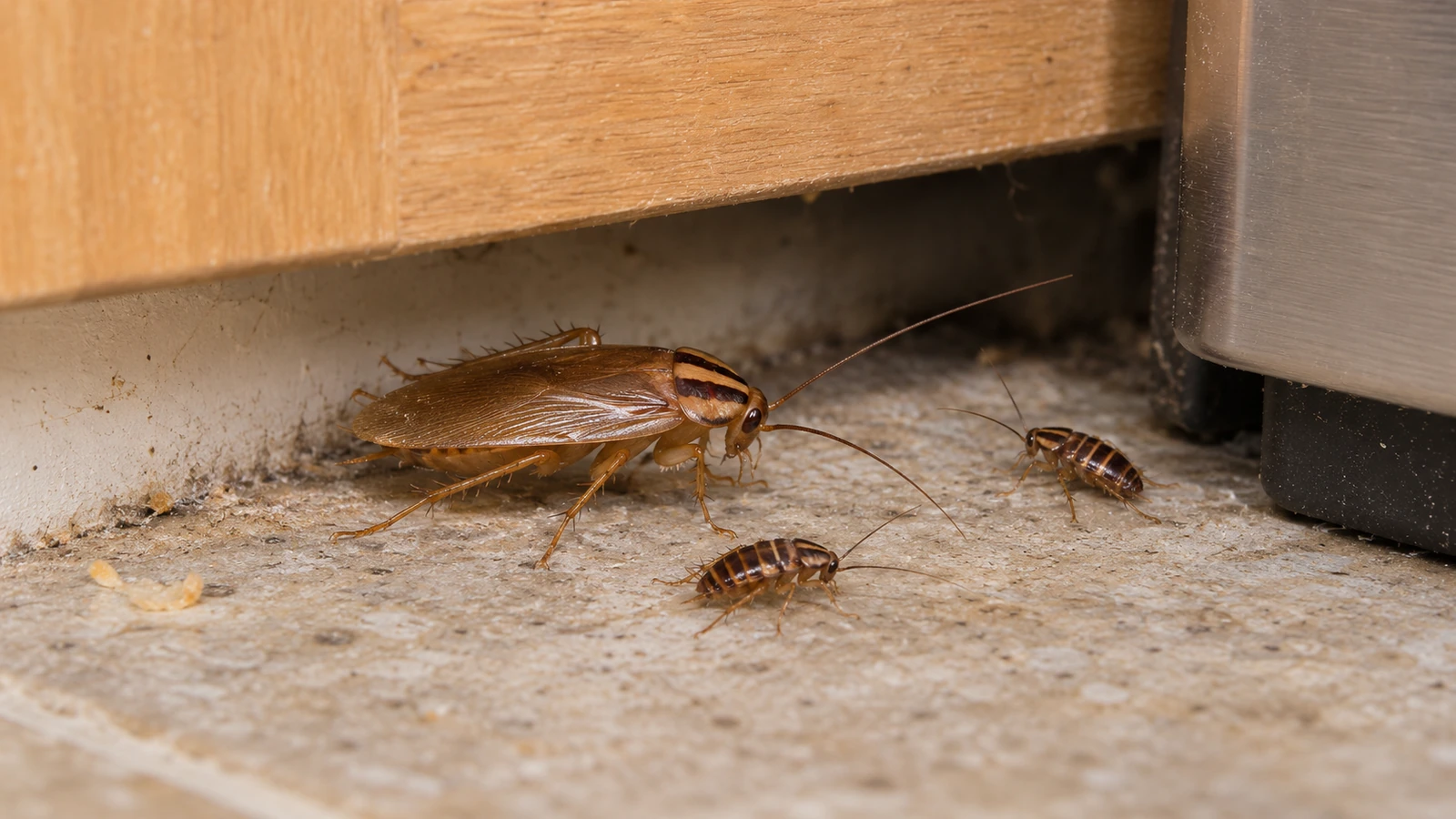
You spot a few small roaches near the refrigerator, then a much larger one a week later. Are you seeing the same generation growing up, or several generations sharing a hiding place? Cockroaches develop gradually, and the different stages of their lives can overlap in the same home.
Quick Answer
Cockroaches go through three stages: egg, nymph, and adult. German cockroaches can reach adulthood in about three months, while American cockroaches often take many months. Adults may live for several more months or longer than a year, depending on the species and conditions.
The three stages of the cockroach life cycle
Unlike flies or butterflies, cockroaches have no pupal stage. They hatch as small, active insects that grow into adults through a series of molts. This is called incomplete metamorphosis.
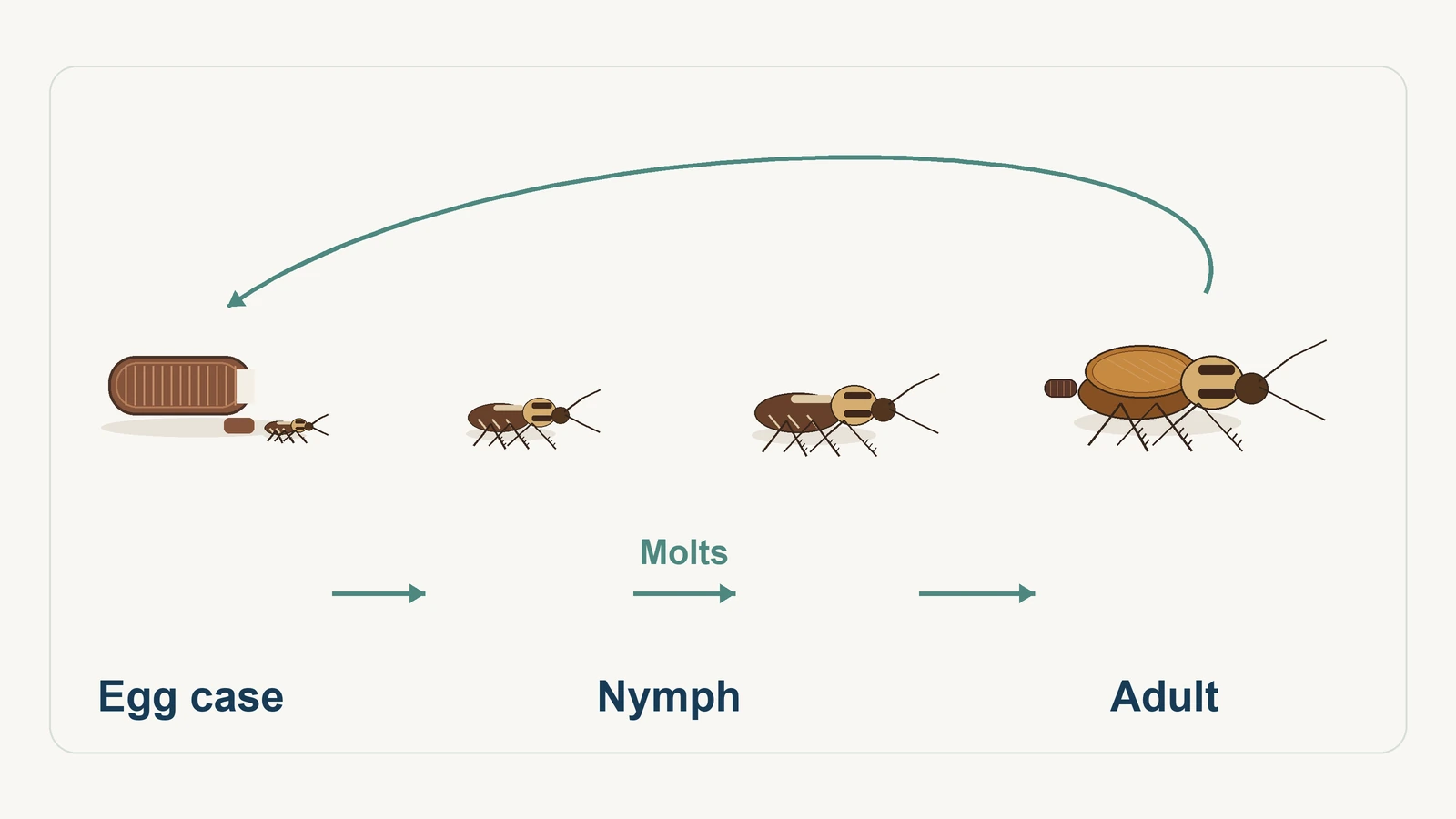
Egg: the next generation begins inside a capsule
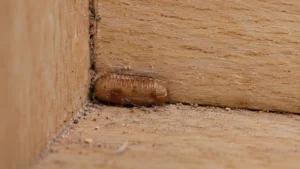
Female cockroaches enclose their eggs in a protective capsule called an ootheca. A single German cockroach egg case typically holds 30 to 40 eggs, while an American cockroach egg case usually contains around 14 to 16.
German cockroaches carry the capsule until shortly before the eggs hatch, sometimes even during hatching. American cockroaches deposit their capsules much earlier, leaving them in sheltered locations where the embryos continue developing. These different reproductive strategies help explain why cockroach egg cases can be found either attached to a female or separately.
Nymph: growing through successive molts
When the eggs hatch, the young roaches are called nymphs. They begin feeding and seeking shelter without waiting for adulthood. As their bodies grow, they shed their rigid outer covering several times. Each developmental stage between molts is known as an instar.
German cockroaches most often molt six times before adulthood. Their nymphs lack fully developed wings and are generally smaller than the adults, which measure roughly half an inch in length. American cockroaches can undergo more molts before becoming mature.
Immediately after molting, a roach may look pale or almost white. Its new outer covering gradually hardens and darkens over the following hours. If you are unsure what you found, learn how to identify roach nymphs before drawing conclusions from size or color alone.
Adult: reproduction starts a new cycle
The final molt produces an adult. Cockroaches stop molting once they reach adulthood. After reaching sexual maturity, females can produce the next generation of eggs. Many species develop wings at this stage, although the wings of some adults remain short or reduced.
A German cockroach female can produce several egg cases over her lifetime, with four to eight being a commonly reported range. Because her offspring can mature while she is still alive, reproduction can continue across overlapping generations. A household population can consequently grow much faster than the number of visible adults suggests.
How long do cockroaches live?
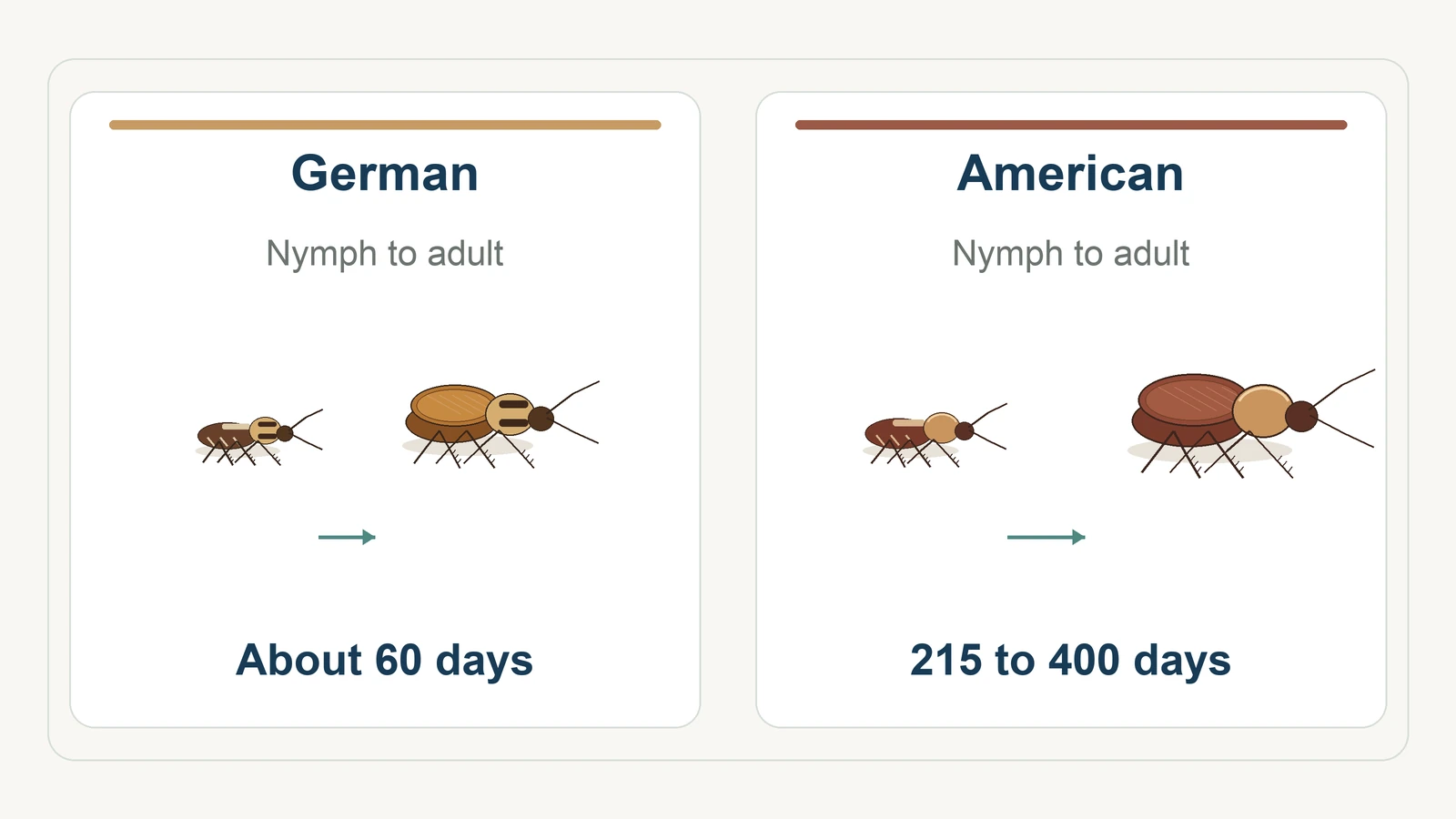
There are two different time periods to consider: development from egg to adult, and the lifespan of the adult itself. A roach that takes three months to mature has not necessarily reached the end of its life.
German cockroach nymphs can mature in about 60 days at room temperature. Adult females commonly live another 20 to 30 weeks. American cockroaches develop more slowly: their nymphs may take roughly seven to thirteen months to mature, and adult females can live for around a year or longer.
Why the timing varies
Species is only part of the explanation. Temperature, access to food and moisture, and suitable shelter also influence how quickly nymphs develop and how long roaches survive.
A warm kitchen with food, moisture, and protected crevices can support continuous German cockroach reproduction, even during winter. Brown-banded cockroaches can reproduce in warmer, relatively dry areas away from kitchens, whereas Oriental cockroaches are often associated with cooler, damp locations and more seasonal development.
The temperature inside a hiding place matters more than the outdoor weather alone. A heated building can remain favorable to roaches long after temperatures outside have dropped.
Good to Know
A cockroach’s normal lifespan describes how long it lives under a given set of conditions. In a vacant apartment, the more relevant question is how long it can survive without food or water.
What the life cycle means for a roach problem at home
Why young roaches can appear after adults disappear
Egg cases that remain viable can hatch after adult activity has declined. Nymphs that were already hidden may also begin appearing. Finding a small roach after treatment therefore calls for continued monitoring rather than an assumption that the entire infestation has returned.
Repeated catches of new nymphs, particularly alongside adults, are more concerning than one isolated sighting. They can indicate that development is continuing in a protected area or that roaches are entering from another source.
Monitor the stages, not just the number of roaches
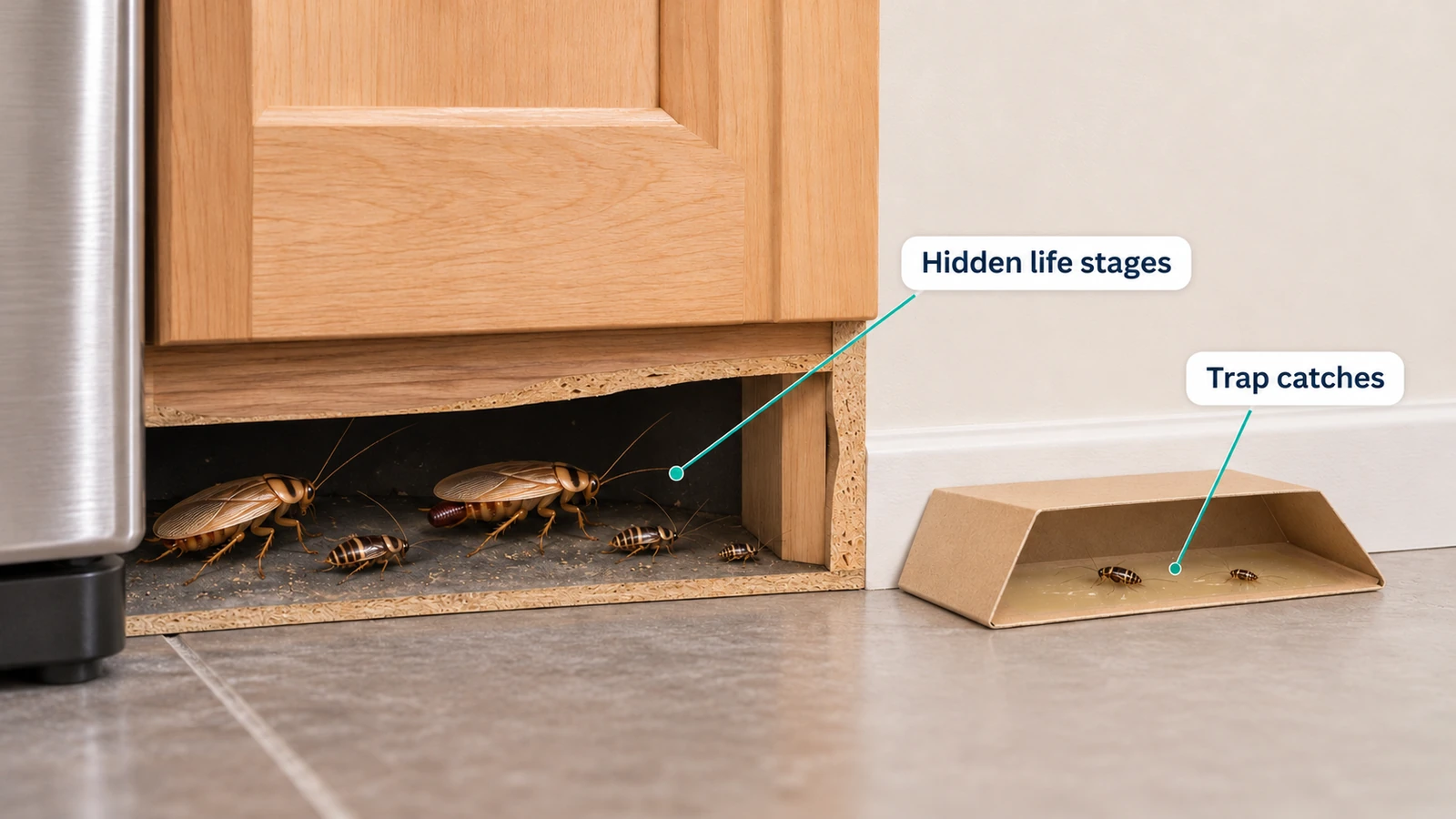
Sticky traps placed near likely hiding areas, such as along cabinet edges and beside appliances, can help you see changes in activity. Compare catches from the same locations over similar periods. Note whether you are finding newly hatched nymphs, larger nymphs, adults, or a mixture.
A falling catch count with fewer young roaches is encouraging. Continued catches of nymphs in the same area deserve attention, even if you rarely see adults. In an apartment building, recurring activity near shared walls or plumbing may also warrant checking whether roaches are moving between units.
What to Watch For
The size of a nymph cannot reliably date an infestation. Growth rates vary, different generations overlap, and roaches can be introduced at any stage. Use the pattern of catches and their locations instead of trying to assign an exact starting date.
Here are reported development times and adult female lifespans for four common U.S. pest cockroaches. These are biological reference values from varying conditions, not deadlines for a particular home.
| Species | Egg stage | Nymph stage | Adult female lifespan |
|---|---|---|---|
| German | 14 to 35 days | 6 to 31 weeks | 20 to 30 weeks |
| American | About 45 days | 215 to 400 days | About 440 days |
| Brown-banded | 37 to 103 days | 8 to 31 weeks | 13 to 45 weeks |
| Oriental | About 60 days at room temperature | 24 to 130 weeks | 5 to 26 weeks |
Explore this topic further: