Identification
American vs. German cockroach: how to tell them apart
Use visible markings, body length, and life stage to distinguish American from German cockroaches, then check what a sighting reveals about activity at home.
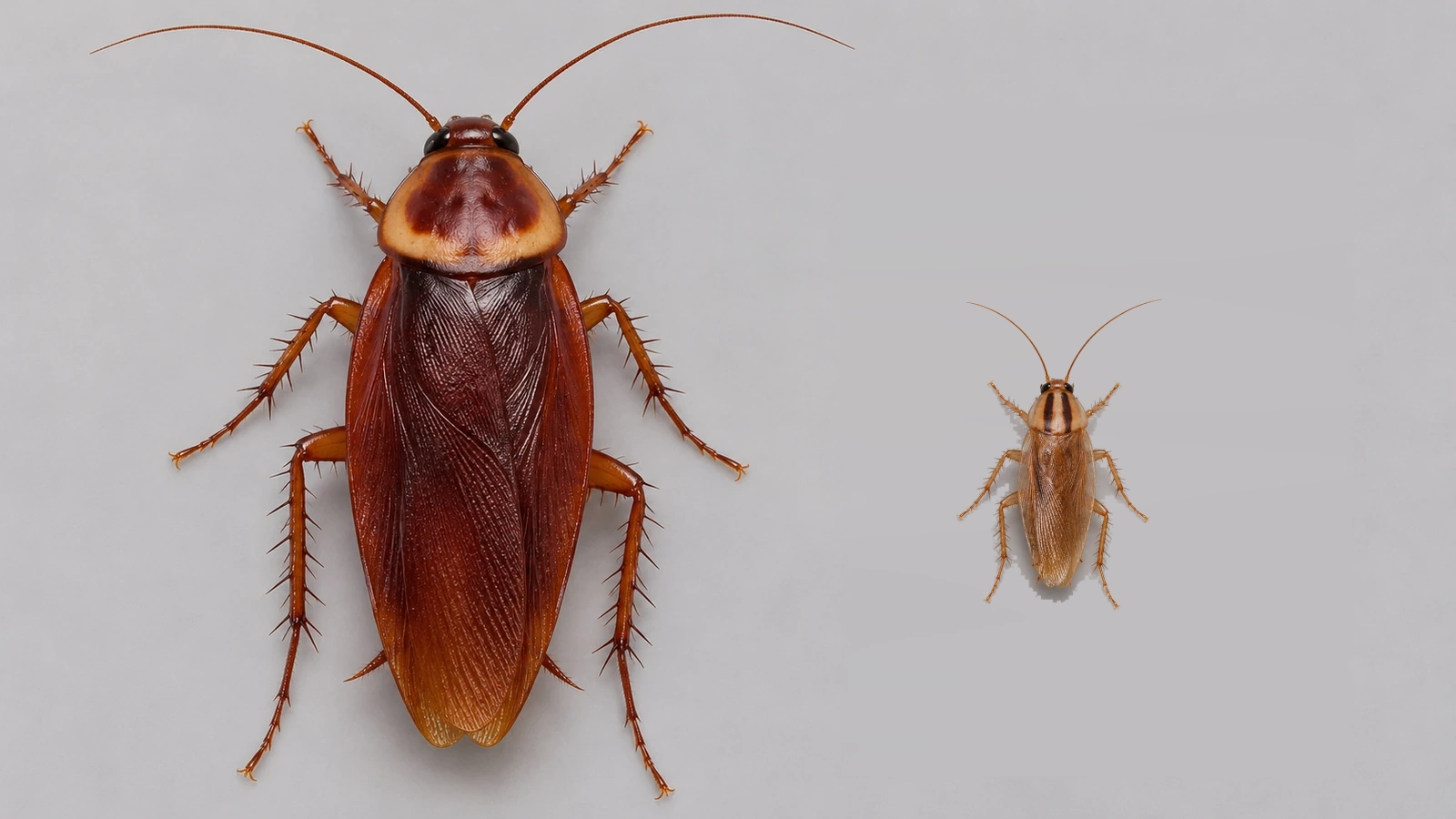
You spot a roach running across the bathroom floor. It looks dark and fairly small, but the photos you find online show insects of different sizes and shades. Is it a German cockroach, or could it be a young American cockroach?
The distinction matters because these species often live in different parts of a building and call for different follow-up checks. Start with the insect’s life stage and the markings behind its head. Where you found it is useful supporting evidence, but it should not make the decision for you.
Check size and the markings behind the head
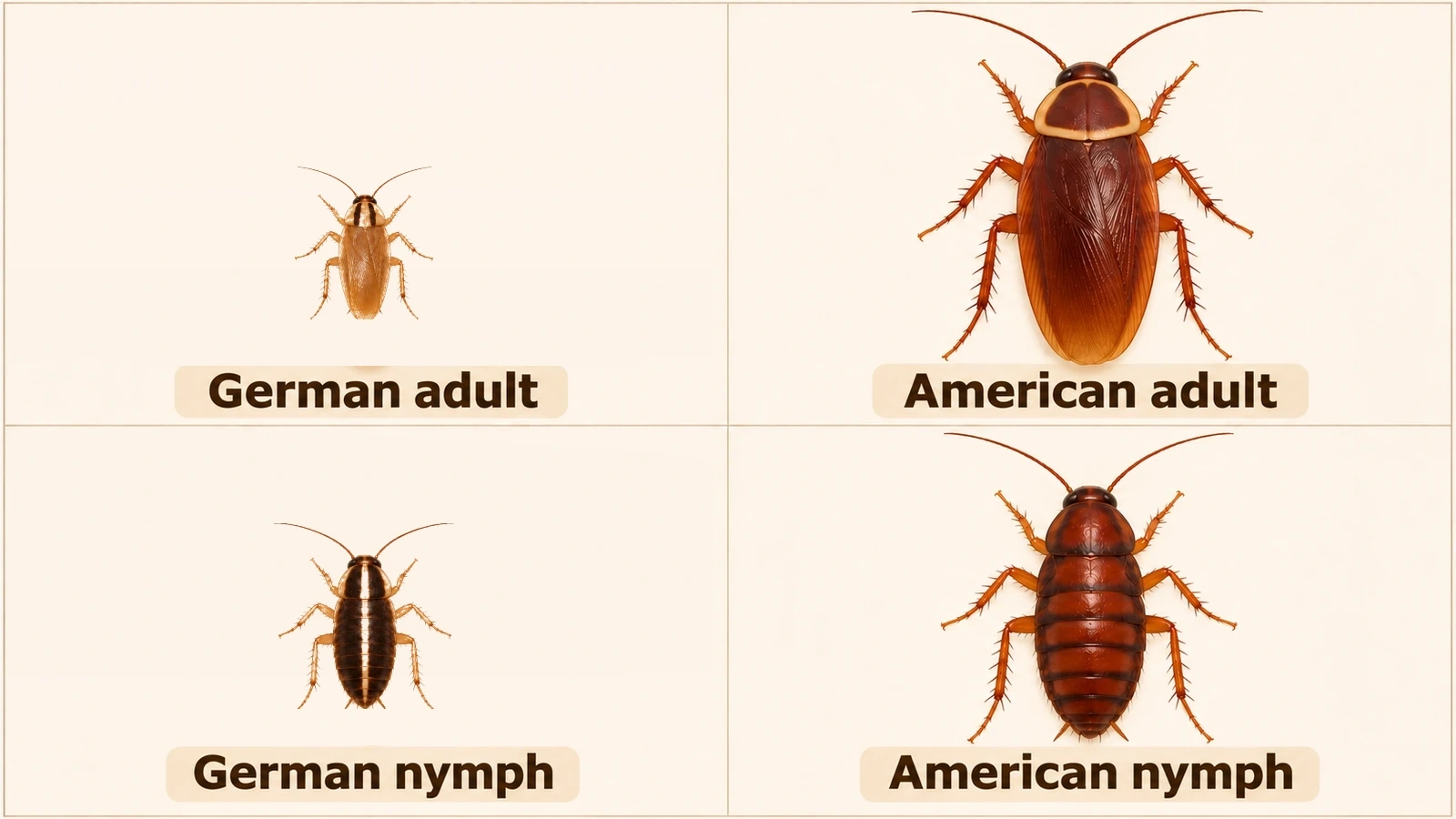
A fully grown German cockroach is about 1/2 to 5/8 inch long. An adult American cockroach is much larger, often around 1 1/2 inches and sometimes approaching 2 inches. Measure the body without its long antennae. Those sizes describe adults, not young roaches.
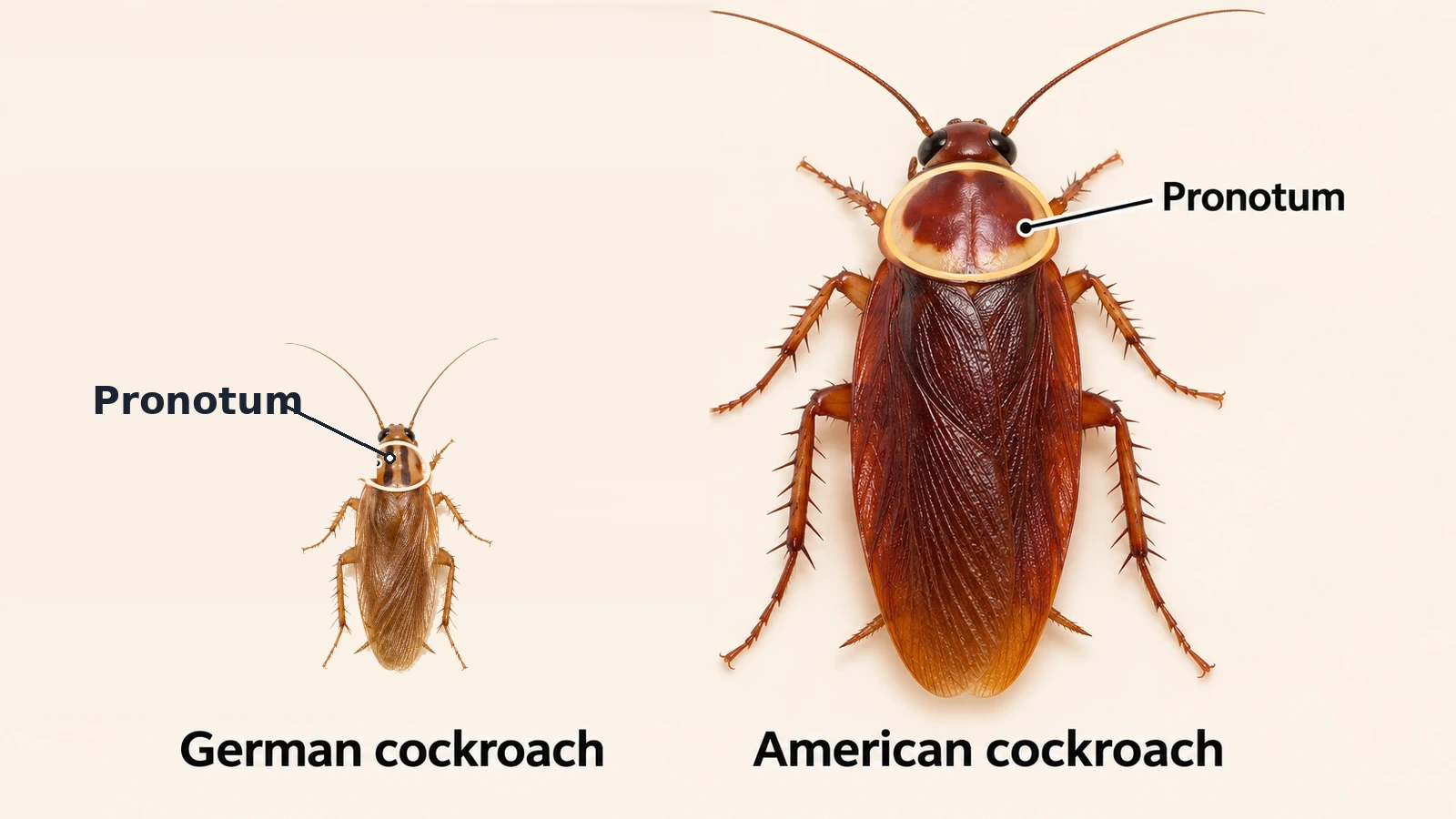
The most useful markings sit on the pronotum, the shield just behind the head. German adults have two dark, parallel stripes running lengthwise across this shield. American adults are reddish brown, with a pale yellowish border around the shield rather than the German cockroach’s paired stripes.
Identification in 30 Seconds
- Small, fully winged adult with two dark stripes behind the head: German cockroach is the stronger match.
- Large, fully winged reddish-brown adult with a pale-edged shield: American cockroach is the stronger match.
- Small or wingless specimen with unclear adult markings: check whether it is a nymph before deciding.
Both species have wings as adults and lack fully developed wings when young. German cockroaches usually run rather than fly. American adults can fly, particularly in warmer conditions. Flight is helpful context, but it cannot identify either species on its own.
Make three checks before deciding
If the insect is still visible, take a clear photograph from above or examine a safely contained specimen. A blurry side view often hides the markings behind the head. Look for fully developed wings as well as the pattern on the shield, since a young American cockroach can be similar in size to an adult German cockroach.
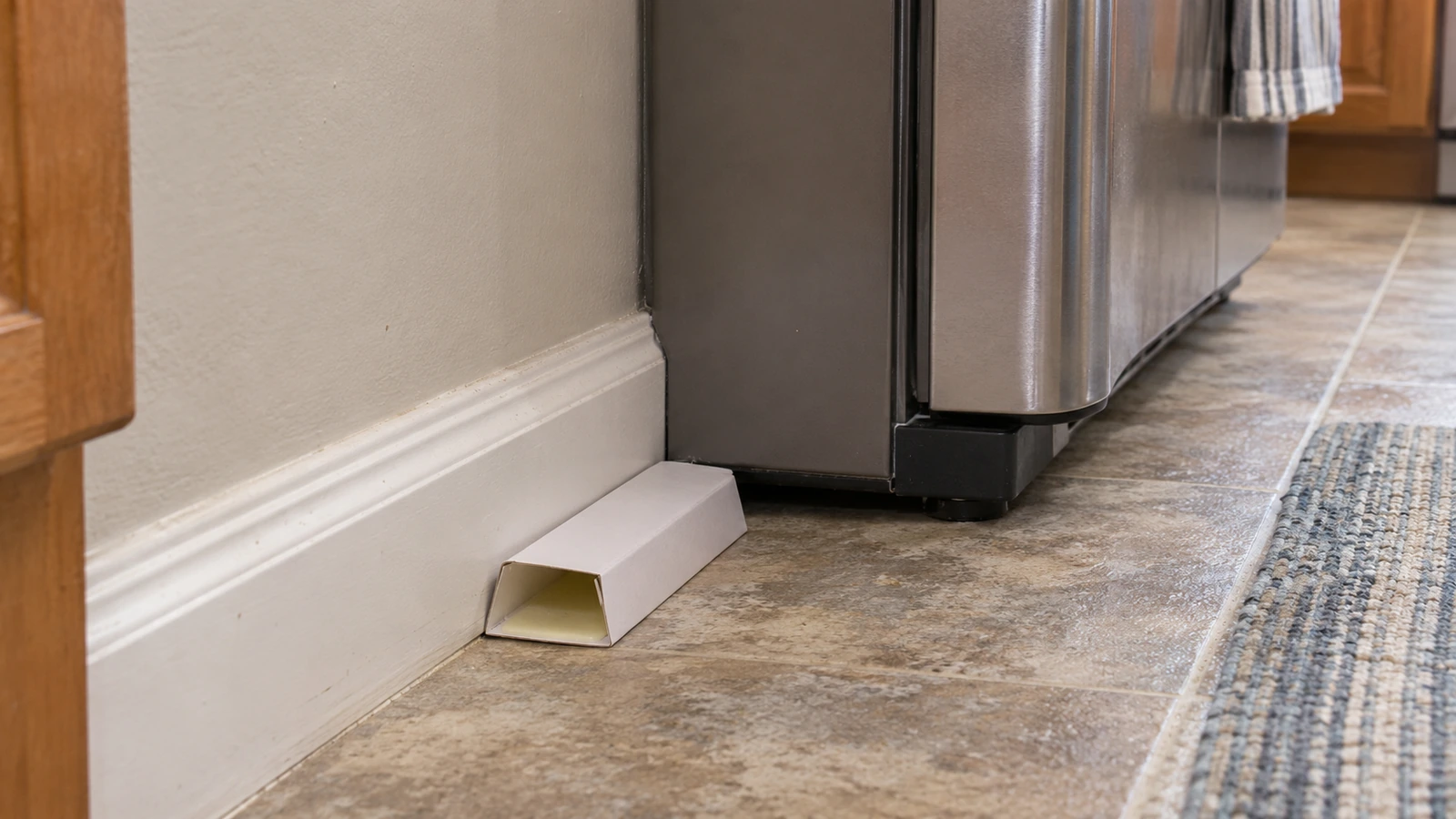
If the insect has disappeared, cockroach sticky monitors can help collect a specimen and reveal where activity is concentrated. Place them along walls and suspected travel routes rather than in the open middle of a room. Follow the monitor instructions and keep traps inaccessible to children and pets.
Use this sequence to make your observations more useful:
- Establish size and stage. Compare body length without the antennae, then check whether the insect has adult wings or is a wingless nymph.
- Inspect likely hiding areas. Look behind kitchen appliances and around cabinet seams for small indoor roaches. Also check basement plumbing, utility spaces, and possible entry gaps if you have seen larger roaches.
- Compare repeated captures. Check monitors daily over several days. Note which areas produce captures and whether you find adults, nymphs, or both. If nothing appears, reconsider trap placement before assuming the area is clear.
Identification Mistakes
- Including the antennae when estimating body length.
- Assuming every small, wingless cockroach is German.
- Treating names such as “water bug” or “palmetto bug” as reliable species identifications.
Key Clue
On a clear view from above, two dark stripes behind the head are a strong clue for an adult German cockroach. A pale-edged shield on a much larger reddish-brown adult points toward American.
What to Watch For
In parts of the southeastern and Gulf Coast states, Asian cockroaches can resemble German adults but often fly from outdoor vegetation toward lights. A small striped roach that flew inside may require a third identification hypothesis.
Interpret the whole picture
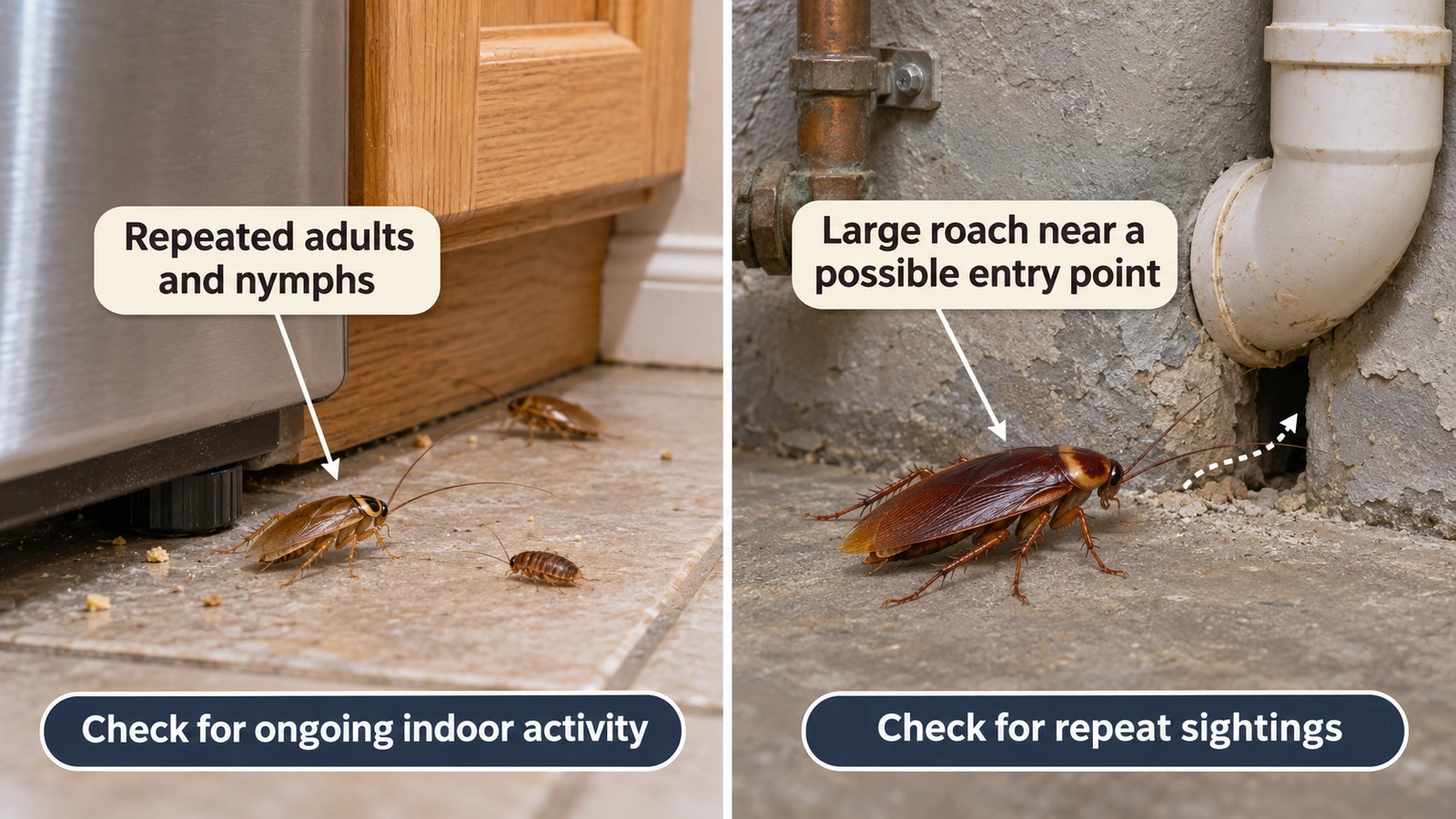
German cockroaches usually establish themselves indoors, especially near warmth, moisture, and food. Several small roaches with matching stripes around a stove or refrigerator, particularly when you also find wingless young, make an indoor German cockroach population more likely.
American cockroaches are more often associated with sewers, damp lower levels, crawl spaces, and outdoor entry points. A large reddish-brown adult near a basement doorway fits that pattern. Repeated sightings and nymphs in the same area may indicate a population living nearby rather than an occasional visitor.
When neither species fits
A large, uniformly dark roach without the American cockroach’s pale-edged shield could be another large species, such as a smokybrown cockroach. A small, striped adult that flies toward porch lights may be an Asian cockroach.
And if you are not sure the insect was a cockroach at all, check the common bugs that look like cockroaches before assigning a species.
The table below brings the main differences together. Use the physical features first and the location as supporting evidence.
| Feature | German cockroach | American cockroach |
|---|---|---|
| Adult body length | About 1/2 to 5/8 inch | Often around 1 1/2 inches, sometimes nearly 2 inches |
| Shield behind the head | Two dark, parallel lengthwise stripes | Pale yellowish border, without the paired dark stripes |
| Adult appearance | Usually tan to light brown, with developed wings | Reddish brown, with long developed wings |
| Nymph appearance | Wingless, often dark with a lighter stripe or patch along the back | Wingless, often reddish brown with darker segment margins |
| Flight | Has wings but rarely flies | Can fly, especially in warmer regions |
| Common setting | Warm indoor hiding places near kitchens, bathrooms, and appliances | Damp basements, utility spaces, drains, sewers, and outdoor areas |
Assess what the sighting means for your home
One large adult near a doorway or floor drain might have entered from a nearby outdoor or utility area. Check the same route again and look for additional roaches before assuming they are living throughout the house.
Several small, striped adults and nymphs repeatedly found around kitchen appliances suggest a different situation: a breeding population close to warmth, food, and moisture. The combination of life stages and repeated locations tells you more than one dramatic sighting.
If activity continues, look for fresh droppings, shed skins, egg cases, and further captures. Our guide to the signs of a cockroach infestation explains how these clues help assess ongoing activity. In apartment buildings, shared walls and utility spaces may also affect where cockroaches move.
Good to Know
A cockroach can look unusually pale immediately after molting, before its new outer covering darkens. If the color seems wrong for either species, pay more attention to its stage and structural features.