Guide
German cockroach: identification, infestation signs, and control
German cockroaches are small, fast, and easy to mistake for other roaches. Learn the markings that distinguish adults and nymphs, how to check for breeding activity indoors, and what to do before the problem spreads.
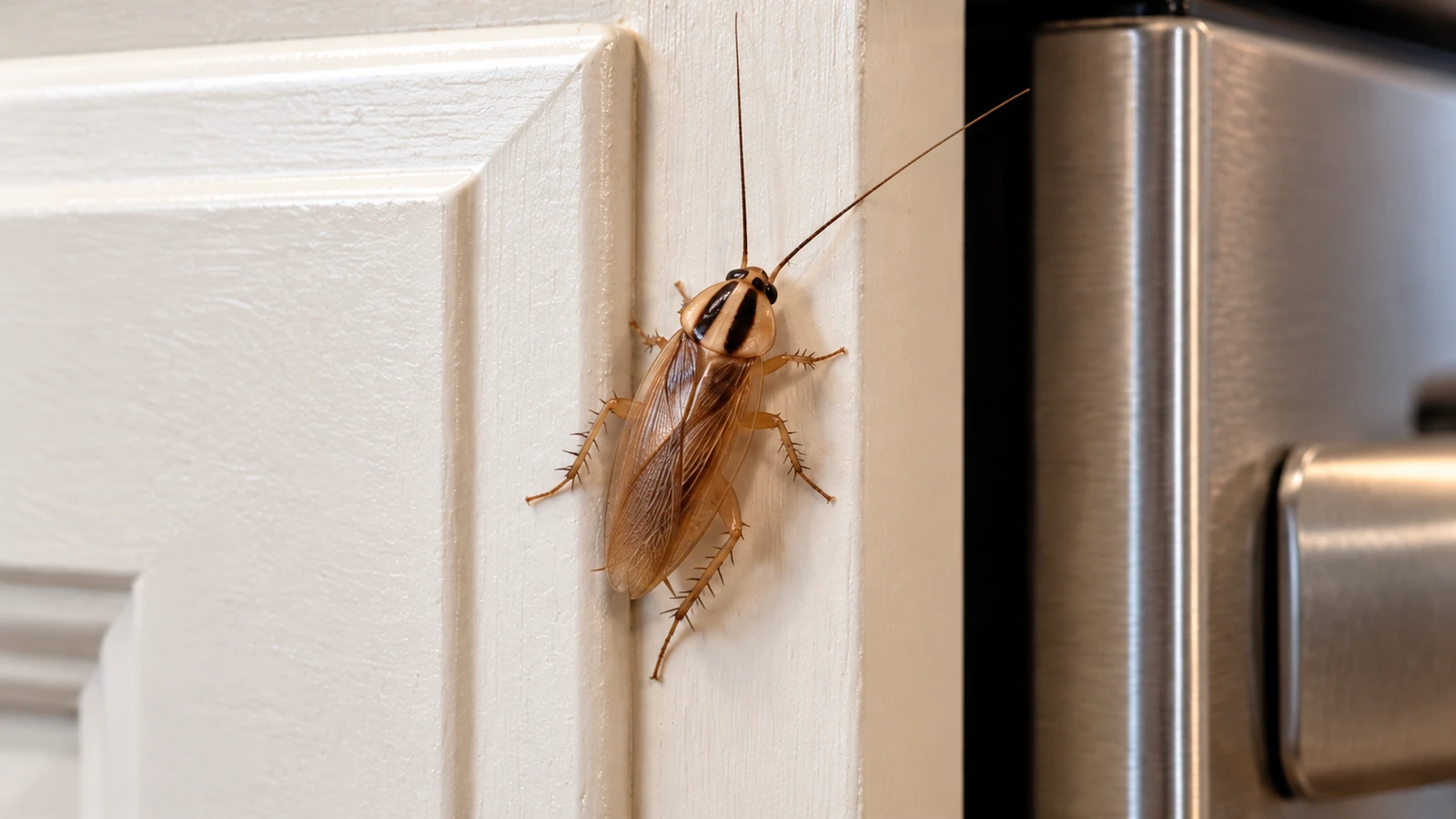
A small tan roach darts into the gap beside your refrigerator. Before reaching for a spray, find out what it is and where it came from. With German cockroaches, the most useful clues are often hidden around appliances, cabinet joints, and plumbing. Identifying the species changes where you look and how you respond.
Why German Cockroaches Need a Different Response
The German cockroach (Blattella germanica) is one of the most common cockroaches that establish themselves inside U.S. homes and apartment buildings. Unlike many outdoor roaches that occasionally wander through a doorway, German roaches live and reproduce indoors, often close to kitchens and bathrooms.
They are small, reproduce quickly, and spend much of their time concealed in narrow spaces. A female can carry an egg case containing dozens of developing young, allowing a small population to grow if it remains undisturbed.
Their droppings, shed skins, and body fragments can also contribute to indoor allergens, particularly where populations become large.
Finding German cockroaches calls for a focused indoor inspection, not simply sealing the front door or spraying along exterior walls.
Key Takeaways
- Adult German cockroaches are about 1/2 to 5/8 inch long, tan to light brown, with two dark parallel stripes directly behind the head.
- Young German roaches are smaller, darker, and wingless. Repeated sightings of nymphs suggest breeding activity nearby.
- The first places to check are warm, sheltered areas around refrigerators, stoves, dishwashers, sinks, and cabinets.
- Sticky monitors help locate active hiding spots. Cleaning, moisture control, and properly labeled baits are more useful starting points than bug bombs.
What Does a German Cockroach Look Like?
An adult German cockroach has a flattened, oval body, long antennae, six spiny legs, and wings lying over its back. Its most distinctive feature is the pair of dark, almost parallel stripes on the shield immediately behind its head.
Look for those stripes in a clear photo taken from above. Overall color is less reliable: lighting, age, and individual variation can make a roach appear lighter or darker than expected.
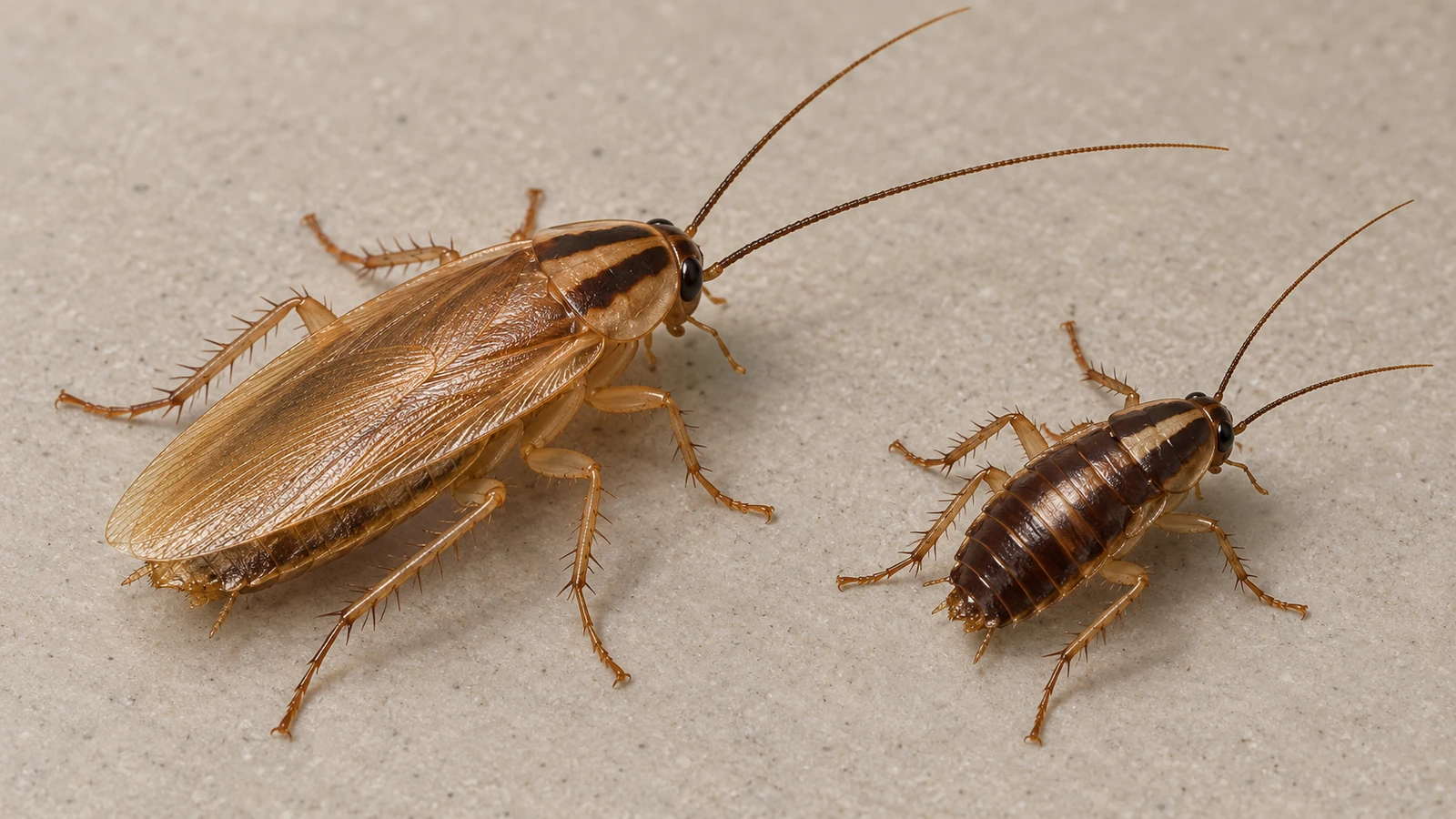
How to recognize a baby German cockroach
Baby German cockroaches, called nymphs, look different from the tan adults.
Young nymphs are small, wingless, and often dark brown or nearly black. Many show a lighter tan patch or stripe through the center of the back. As they develop, their markings become more distinct, but they still lack the full wings of an adult.
A tiny dark roach in a kitchen is worth examining carefully. If you repeatedly find nymphs of several sizes around the same cabinet or appliance, you are probably looking at an established indoor population rather than an occasional visitor.
What about German cockroach egg cases?
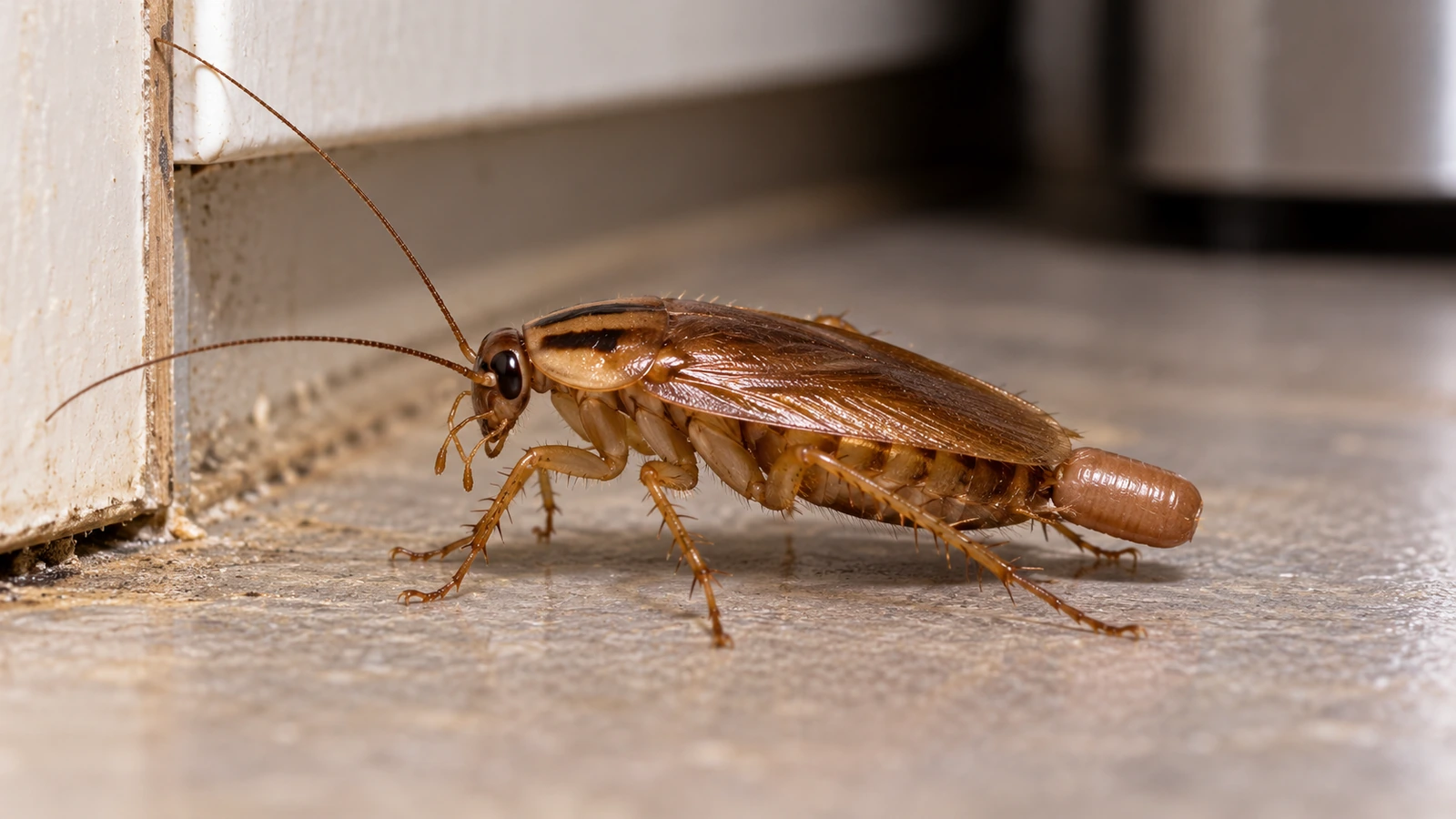
Female German cockroaches often carry a narrow, yellowish-brown egg case, called an ootheca, protruding from the rear of the abdomen. They retain it until shortly before the eggs hatch.
This matters during inspection. A female carrying an egg case may disappear into a narrow hiding space and release the case close to where newly hatched nymphs will find shelter.
If the insect lacks the characteristic stripes or seems unusually large, compare the types of cockroaches in the U.S. before settling on an identification.
Why German Roaches Gather Around Kitchens and Bathrooms
German cockroaches do best where warmth, moisture, food, and narrow hiding spaces come together.
Behind a refrigerator, for example, they may find warmth from the appliance, shelter near the motor housing, and access to food debris along the floor. Under a sink, small plumbing leaks or condensation can create a dependable moisture source. Cabinet hinges, gaps around trim, and openings beside pipes provide places to hide during the day.
They usually become active after dark, when they move out to find food and water. Seeing them during daylight can indicate a crowded infestation, although disturbance or a shortage of resources may also drive them into view.
How they get inside
German roaches can arrive unnoticed in grocery cartons, packaging, luggage, used furniture, or appliances. In apartment buildings, they can also move through openings connecting neighboring units.
This is why finding them is not automatically a reflection of how clean a home is. Even a well-maintained kitchen can receive an introduction from an infested item or nearby unit.
Once inside, however, accessible food, moisture, and clutter make it easier for the population to establish itself. The important question becomes where the roaches are hiding and whether they are reproducing.
How to Check Whether German Cockroaches Are Living in Your Home

Start with the exact area where you saw the roach. Use a flashlight to inspect cabinet corners, drawer runners, hinges, the spaces around plumbing, and accessible gaps beside appliances. Behind the refrigerator and stove are especially useful places to investigate.
Look for live adults, small nymphs, shed skins, egg cases, and dark pepper-like droppings concentrated around protected edges. A few dark specks may have another explanation; finding them alongside live roaches or shed skins makes the evidence much stronger.
Use sticky monitors to find the active areas
Place cockroach sticky monitors close to walls, cabinet edges, and suspected hiding spots, where roaches naturally travel. A trap in the middle of an open floor is less likely to intercept them.
Useful locations include:
- Along the back or side edges of accessible kitchen cabinets, especially beneath the sink.
- Near the refrigerator or stove, without placing the trap on hot or moving equipment.
- Along protected wall edges near plumbing and suspected entry gaps.
- In another room where you have seen activity, to check whether the problem extends beyond the kitchen.
Check the monitors daily for several days and compare what appears in each location.
Catching adults and nymphs of different sizes repeatedly in one area is strong evidence of local breeding activity. If one appliance accounts for most captures, concentrate your inspection there before treating the entire home.
A single adult with otherwise empty nearby monitors calls for continued checking, not an automatic assumption that every room is infested.
If the evidence is scattered or you need help interpreting droppings and other traces, use the guide to signs of a cockroach infestation to assess the broader picture.
Practical Tip
Number and date your sticky monitors. Keeping track of the same locations makes it easier to tell whether activity is falling, staying steady, or moving elsewhere after you take action.
Watch For
Nymphs appearing in several cabinets, repeated captures across rooms, or steadily increasing trap catches suggest that activity may extend beyond the first hiding spot. In a multiunit building, repeated sightings are a good reason to notify property management early.
What to Do First After Identifying German Cockroaches
Start where the activity is concentrated. Remove food crumbs and grease, empty accessible trash, seal stored food, and keep the sink and surrounding surfaces dry overnight. Fix dripping plumbing and remove unnecessary cardboard or clutter close to the affected area.
Vacuum accessible roaches and debris where practical, then contain and discard the collected material promptly. These measures remove immediate resources and exposed insects while you work out where the hidden population is centered.

Where bait fits into the response
When monitoring points to continuing German cockroach activity, indoor cockroach gel baits or enclosed bait stations can be useful. The aim is to reach roaches moving near their hiding places, rather than coating the entire kitchen with insecticide.
Use a product specifically labeled for the intended indoor cockroach application. Follow its U.S. label for placement, quantity, precautions, and reapplication. Keep bait away from food-contact surfaces and places accessible to children or pets. Do not spray insecticide over bait or put it onto recently sprayed surfaces when the product instructions prohibit that combination.
Avoid the spray-everywhere approach
Repeated broad spraying and total-release foggers, often called bug bombs, are poor substitutes for locating German cockroach hiding places. Foggers can leave protected cracks largely untreated, increase pesticide exposure, and disperse roaches rather than resolve the infestation.
Indiscriminate spraying may also interfere with bait-based control. If a product is needed, choose it for a specific purpose and use it exactly as labeled.
The broader step-by-step cockroach control plan explains preparation, treatment choices, and follow-up for household cockroach activity. A dedicated German cockroach treatment plan can address the more detailed species-specific protocol when continuing activity requires it.
When professional help makes sense
Consider a licensed pest control professional if you are finding substantial numbers of German roaches, repeated nymph activity across several rooms, or continued captures despite reasonable sanitation and targeted control.
Professional help can also be valuable when the main hiding areas are inaccessible or when several connected apartments may be affected. Coordinated inspection and treatment are often more effective than repeatedly treating one unit while roaches continue to move through the building.
For a small, localized problem, identification, focused monitoring, and appropriate control measures remain reasonable first steps.
Essential Steps
- Confirm the species. Check an adult for the two dark stripes behind its head, or examine captured nymphs and their markings.
- Find the active hiding areas. Inspect warm, sheltered spots and place dated sticky monitors near suspected refuges.
- Reduce resources and choose targeted control. Remove accessible food and moisture, then use a properly labeled bait if the situation warrants it.
- Track the response. Compare catches from the same locations and escalate if activity persists, spreads, or proves difficult to access.
How to Keep German Cockroaches From Returning

Once activity has declined, pay particular attention to items entering the home. Check used appliances, stored belongings, and the folds of cardboard packaging before bringing them into kitchens or storage areas. Unpack deliveries promptly and remove unneeded cartons.
Keep known hiding spots accessible for occasional checks. Repair leaks, clean accumulated grease around appliances, and address suitable gaps around plumbing or cabinets. In apartments, coordinate shared-wall or service-penetration repairs with building management where needed.
A few well-placed monitoring traps can remain useful after treatment. If new captures appear, their locations help you investigate the source early rather than waiting for visible activity to build again.
Frequently Asked Questions
Do German cockroaches fly?
Adult German cockroaches have fully developed wings, but they overwhelmingly run instead of flying. Brief fluttering or gliding is possible, while sustained flight is unusual.
If a small, similarly marked cockroach repeatedly flies from outdoor vegetation toward lights, consider the Asian cockroach. This close look-alike is more strongly associated with outdoor habitats in parts of the southern United States.
What bugs look like German cockroaches?
The Asian cockroach is one of the closest look-alikes. Adults share a very similar tan body and pair of dark stripes, so their behavior and surroundings are often more informative than an ordinary photograph.
Brown-banded cockroaches can also be mistaken for German roaches, but their pale bands run across the wings or abdomen rather than forming the characteristic paired dark stripes behind the head.
If you cannot see the markings clearly, preserve a specimen or obtain a sharp photograph before choosing a species-specific control method.
Explore this topic further: