Guide
Grease ants in your home: how to identify and control thief ants
Grease ants can slip into food packages, follow almost invisible trails, and ignore common sweet baits. Learn how to recognize thief ants, find the source of their activity, and choose a control approach that suits their behavior.
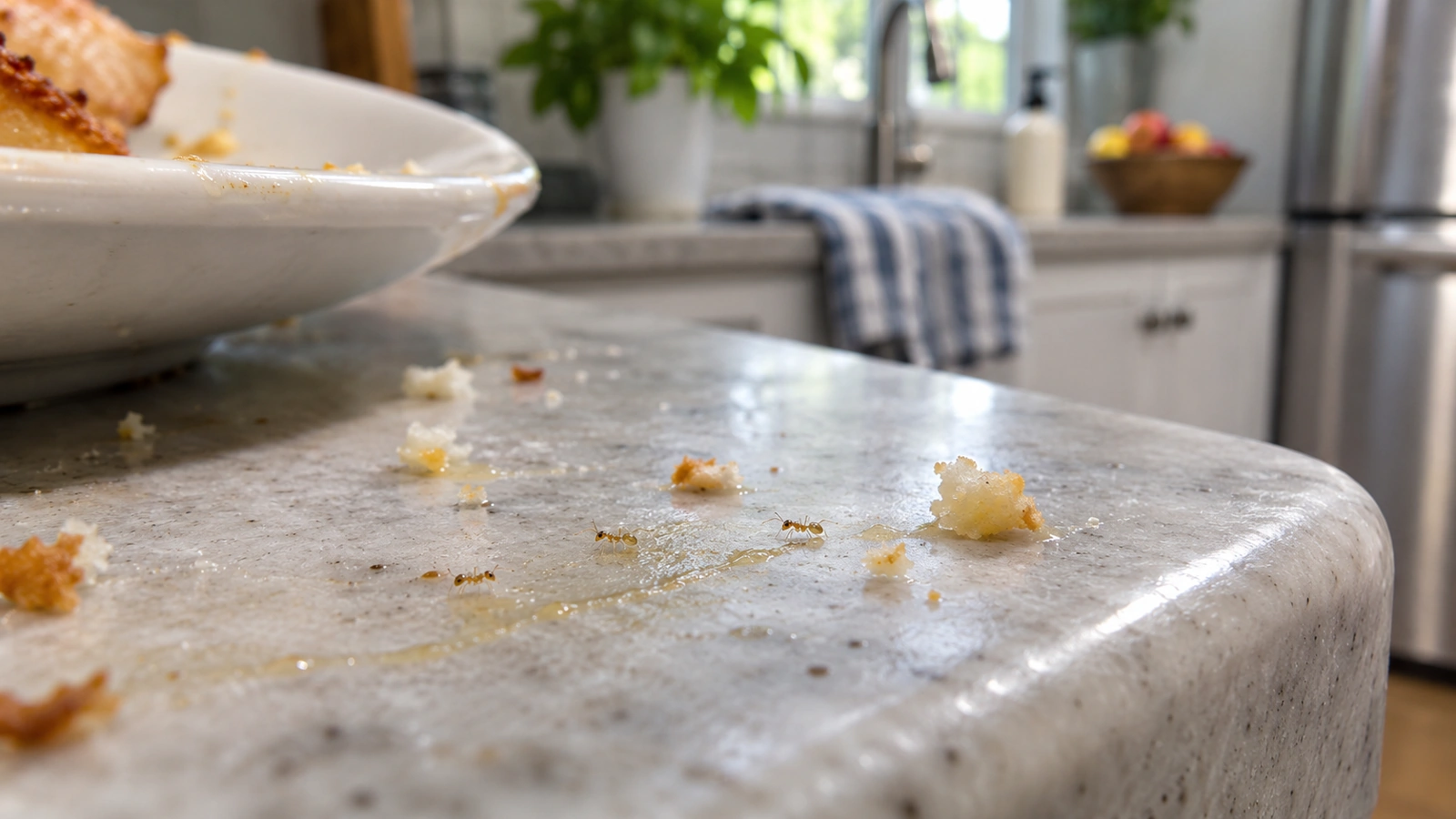
You wipe down the kitchen counter, put away the sugar, and still find tiny ants gathering around a drop of cooking oil. If the ants keep returning to fatty foods or pet food, you may be dealing with thief ants rather than the ants you usually see around the house.
The distinction matters because an ant bait that works well against one species may attract very little interest from another.
What are grease ants?
Grease ant is a common name often used for the thief ant, Solenopsis molesta. These unusually small ants get their other name from their habit of nesting near larger ant colonies and stealing food and developing young.
Thief ants live outdoors as well as inside buildings. A trail in your kitchen might originate in the soil beside the house, or it might lead to a colony concealed behind a cabinet.
Not every ant attracted to greasy food is a thief ant. The term grease ant is sometimes used loosely, particularly for tiny household ants that prefer fats over sugar.
Key Takeaways
- Check body features under magnification before identifying tiny yellow ants.
- Determine whether the ants enter from outdoors or repeatedly emerge from interior gaps.
- Choose a labeled bait the ants actually accept rather than automatically using a sweet bait.
- Monitor activity over time; killing visible workers is not the same as controlling the colony.
What do grease ants look like?
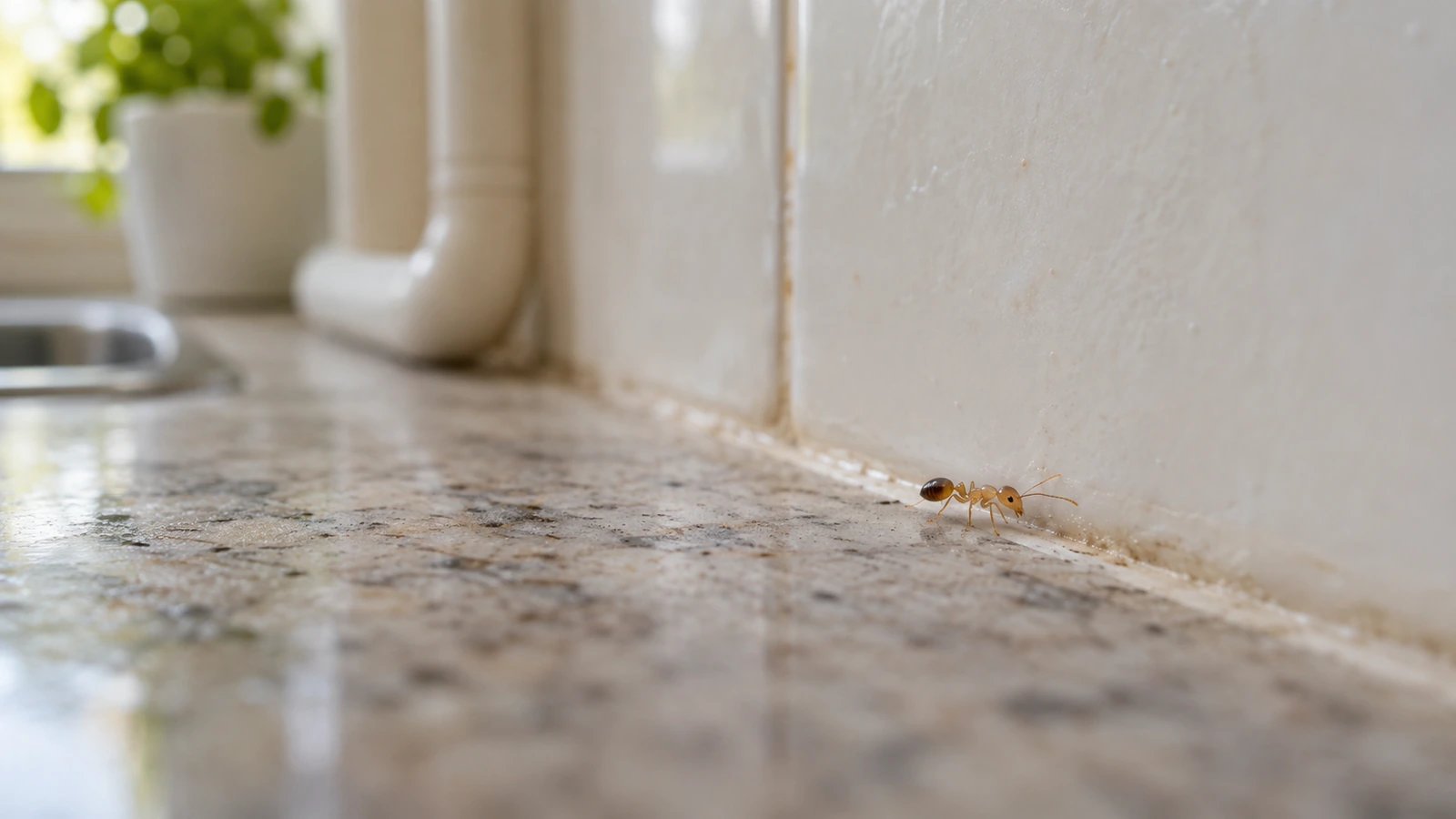
Thief ant workers are generally around 1/32 to 1/16 inch long (roughly 0.8 to 1.6 mm). They are usually yellowish to light brown, with a narrow, two-node waist and extremely small eyes.
The workers are similar in size to one another. Their pale color and tiny bodies make them particularly difficult to see on light countertops.
Thief ants vs. pharaoh ants
Both species may appear yellowish, have two nodes at the waist, and forage for protein-rich or fatty foods. The clearest differences are found under magnification: thief ants have 10 antenna segments, including a two-segment club at the tip. Pharaoh ants have 12 segments and a three-segment club. Pharaoh ants also have relatively larger eyes.
If a photo does not reveal these details, collect a worker in a sealed container for identification by a local Cooperative Extension office or pest control professional. A wider range of tiny ants in the house or kitchen can look similar from a distance.
Why grease ants appear in kitchens
They find food in places you may overlook
Grease ants readily investigate meat residue, cheese, nuts, peanut butter, and other sources of fat or protein. They may also feed on sweet foods.
Even a well-maintained kitchen can provide food in hard-to-reach spots, such as crumbs under an appliance, a greasy seam beside the stove, or food residue around a trash can. Their small size lets them enter some packages that would exclude larger ants.
They travel from hidden nesting sites
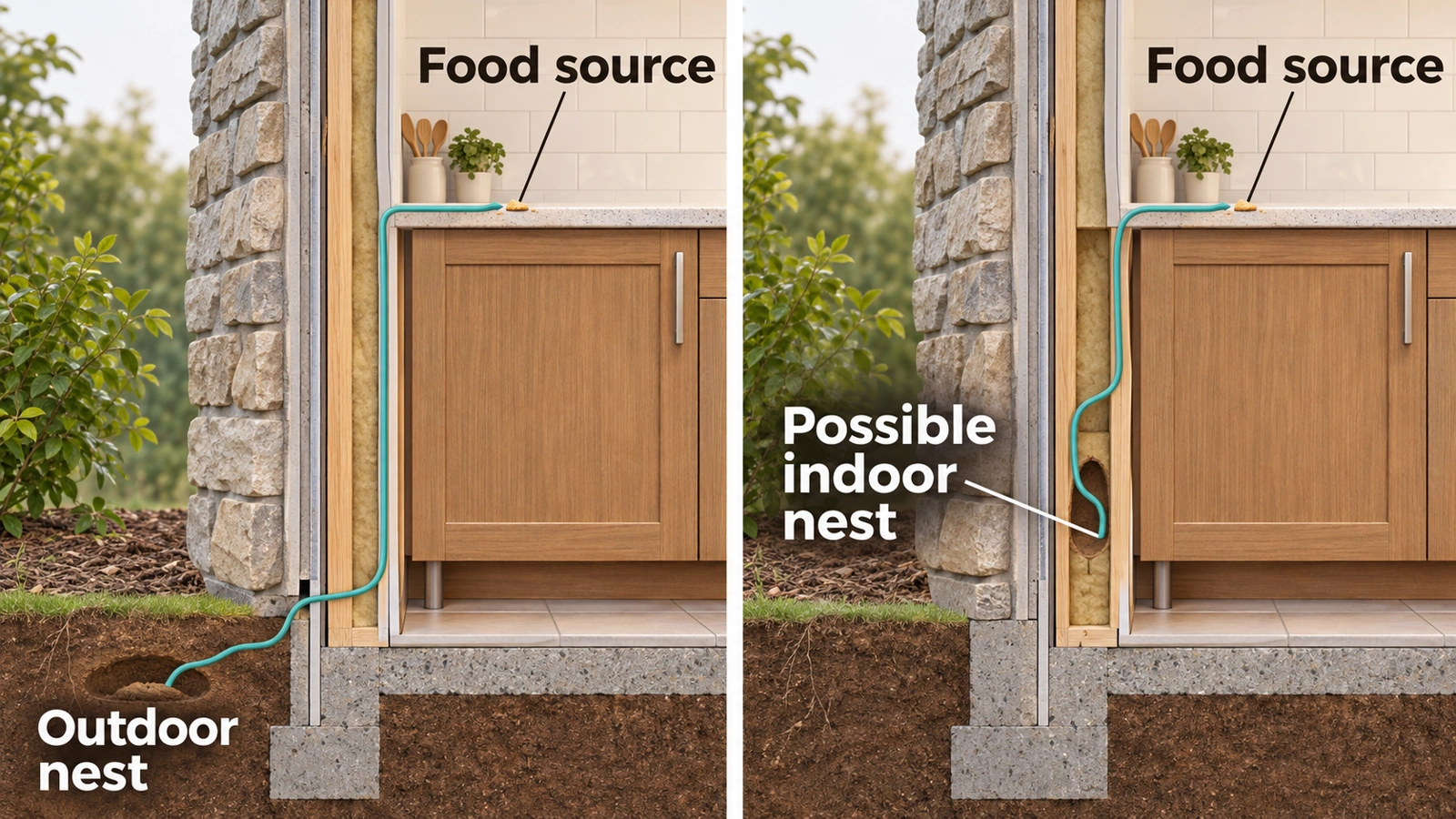
Outdoor thief ant colonies can occupy soil, sheltered spaces beneath stones, and decaying wood. Indoors, they may occupy narrow cavities around cabinets, baseboards, and walls.
Workers follow established routes to food. Because the ants are so small, a trail may disappear through a gap that is barely noticeable. Finding ants under a sink or along a cabinet edge tells you where they are traveling, but the nest may be elsewhere.
How to assess the activity in your home
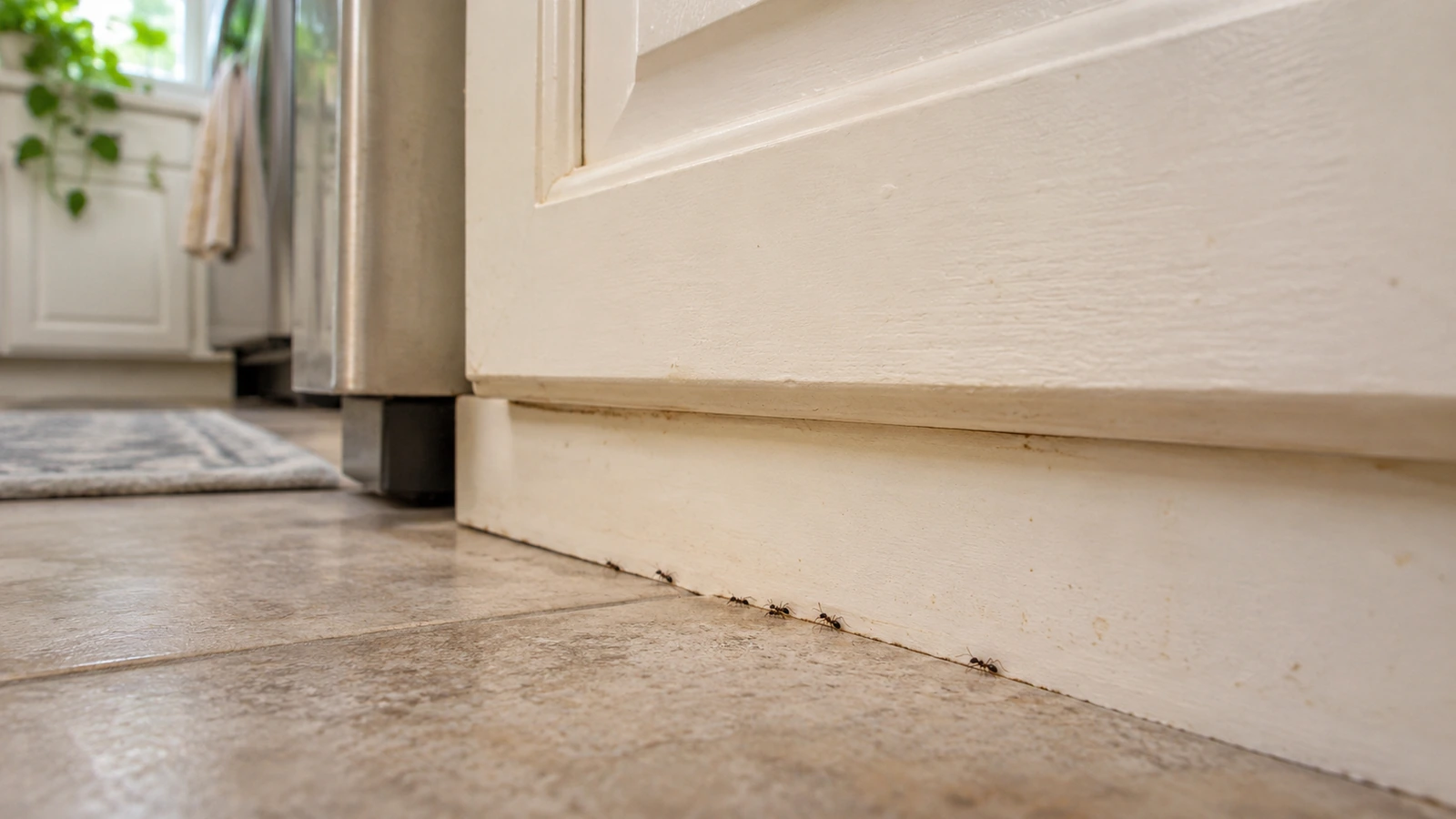
Watch where the ants go when they leave the food source. Check the edges of cabinets, baseboards, window frames, and gaps around plumbing. A route that continues outside points toward an exterior source.
If activity repeatedly starts from the same interior gap, especially after the nearby food has been removed, an indoor nest or a hidden access route becomes more plausible.
A few workers appearing during warm weather may be temporary visitors. Repeated trails on different days, activity in several areas, or persistent visits to clean surfaces deserve a closer inspection. Avoid using the number of visible ants as a measure of colony size.
Practical Tip
Use a flashlight to follow a trail along the edge of a cabinet before wiping it away. Finding the access point helps you target your next action.
Watch For
Tiny yellow ants that resemble thief ants may be pharaoh ants. Spraying a pharaoh ant colony can cause it to split, making the problem harder to control.
How to control grease ants
Remove accessible food and wipe up wandering ants with soapy water. If the trail leads outdoors, closing the entry gap and removing nearby attractants may solve the immediate problem without an indoor pesticide treatment.
When a colony appears to be established indoors, an appropriate slow-acting bait may help reach the ants hidden from view. Workers need to take the bait back to the nest for colony-level control.
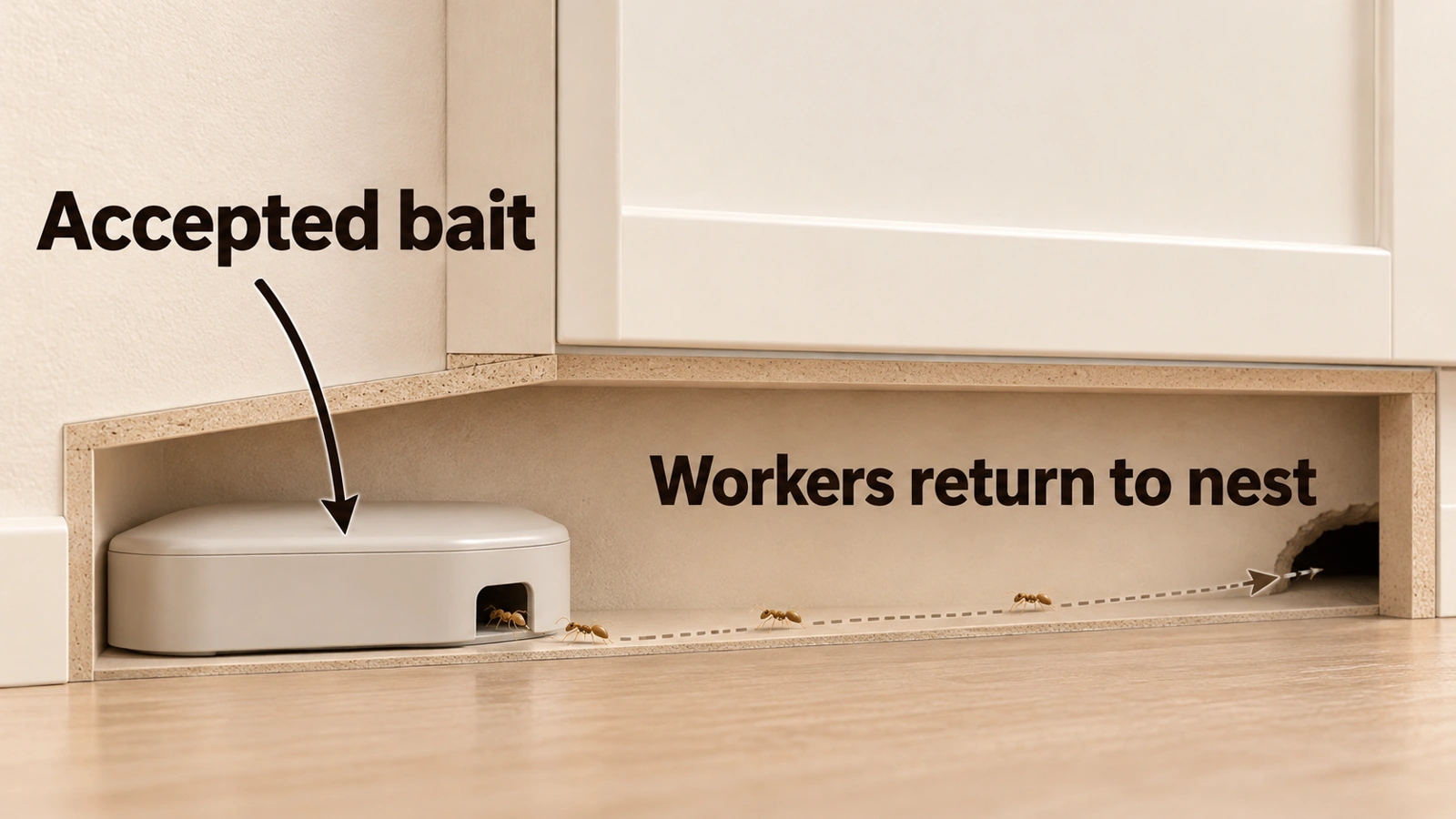
Choose a bait that fits their feeding preferences
A sweet liquid bait is not always attractive to thief ants. Look for an EPA-registered ant bait labeled for the intended location and suitable for ants attracted to fats or proteins. Observe whether workers feed on it rather than simply walking past the station.
If the ants ignore the bait, first check its freshness, placement, and suitability. Try a different labeled formulation if necessary. Do not add grease, peanut butter, or other foods to a pesticide or make homemade pesticide mixtures.
Place bait only where its label permits, away from food preparation surfaces and out of reach of children and pets. Avoid spraying insecticide around the bait. See our guide to choosing ant bait for the differences between stations, gels, and granules.
Give an accepted bait time to work
Thief ants can be difficult to control through baiting because workers may not feed on a bait long enough to deliver an effective amount to the colony.
A bait that attracts workers may take two weeks or longer to reduce activity. Check the same travel routes regularly and replace depleted bait as directed on its label. Look for a sustained decline in traffic, not just a temporary absence of ants.
If repeated activity continues despite appropriate sanitation, exclusion, and a bait the ants accept, confirm the species and consider professional help locating the source. In particular, suspected pharaoh ants require a different control approach; see how to get rid of pharaoh ants without spreading them.
Essential Steps
- Identify the likely ant and trace its route.
- Remove competing food sources and address accessible entry points.
- Use a suitable labeled bait if persistent activity requires colony control.
- Recheck the same locations and adjust the approach if activity persists.
Prevent grease ants from returning
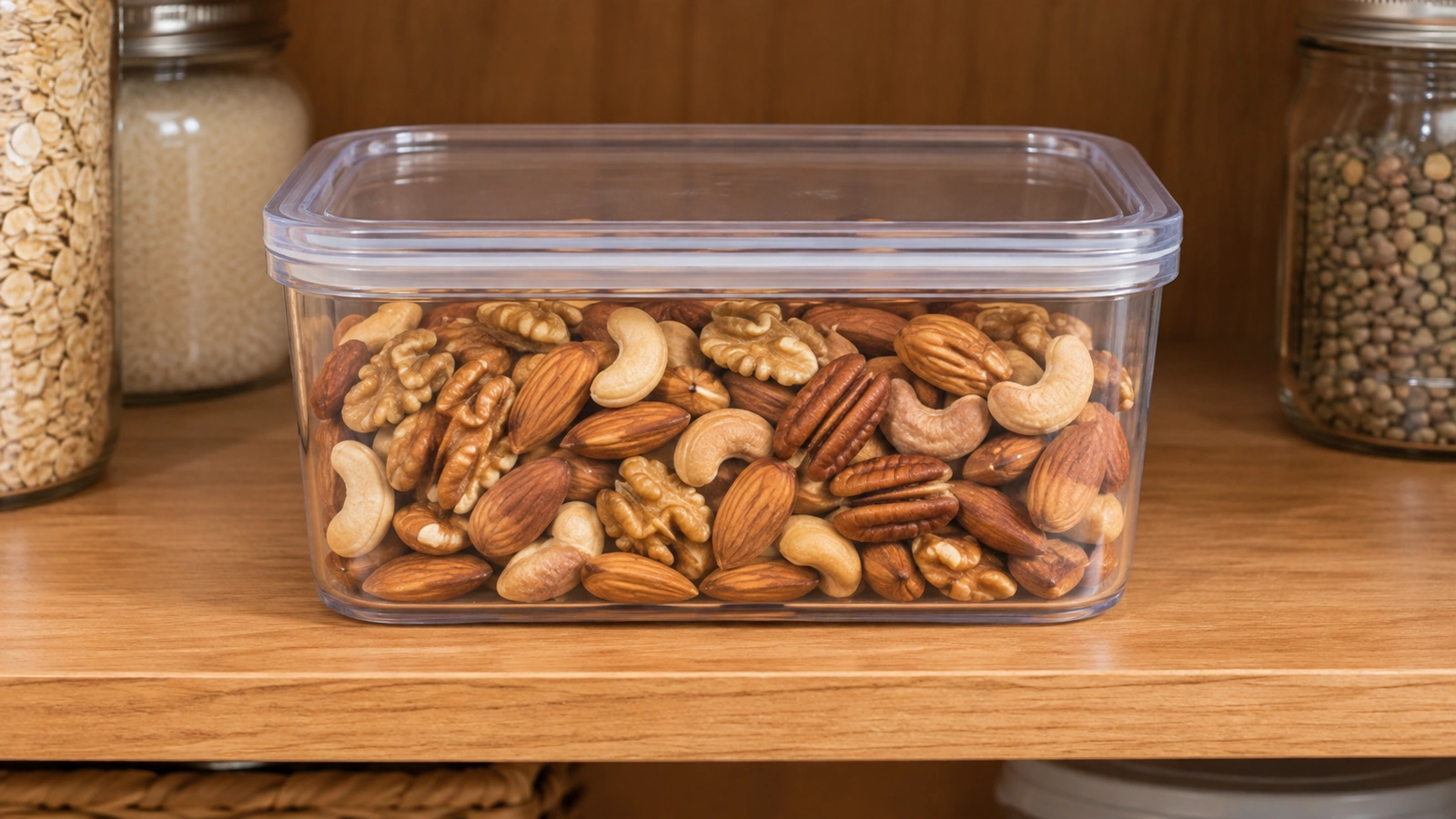
Store nuts, pet food, and other frequently visited foods in tightly sealed containers. Clean greasy residue along stove edges and beneath accessible appliances, and wash pet feeding areas after meals. Repair leaks and remove other accessible sources of water.
Check gaps around pipes, cabinet edges, doors, and windows. Seal appropriate openings with a suitable material, especially where you have observed ants entering. Outside, remove decaying wood and debris immediately against the foundation where practical.
Continue checking the original trouble spots after activity subsides. A returning trail may indicate a remaining colony or a new group of workers entering from outdoors.
Explore this topic further: