Identification
Carpenter Ants vs. Black Ants: How to Tell Them Apart
Black ant is not a precise species name, and some carpenter ants are black. Compare body shape, worker sizes, and the circumstances of a sighting to narrow down what you found.

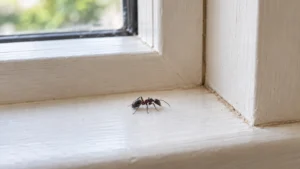
You spot a large, dark ant on the kitchen windowsill. Is it a carpenter ant that could be nesting in the woodwork, or another ant that simply found its way inside?
Before worrying about the house, take a closer look at the insect. Its body shape, the sizes of nearby workers, and the route they follow can tell you much more than color alone.
Is every large black ant a carpenter ant?
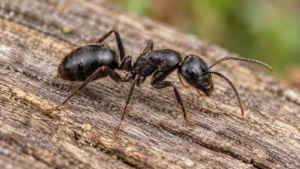
Not every black ant is a carpenter ant, and not every carpenter ant is black. Carpenter ants belong to the genus Camponotus. One familiar eastern U.S. species is the black carpenter ant, but the everyday name “black ant” also gets applied to unrelated species, including little black ants, dark pavement ants, and odorous house ants.
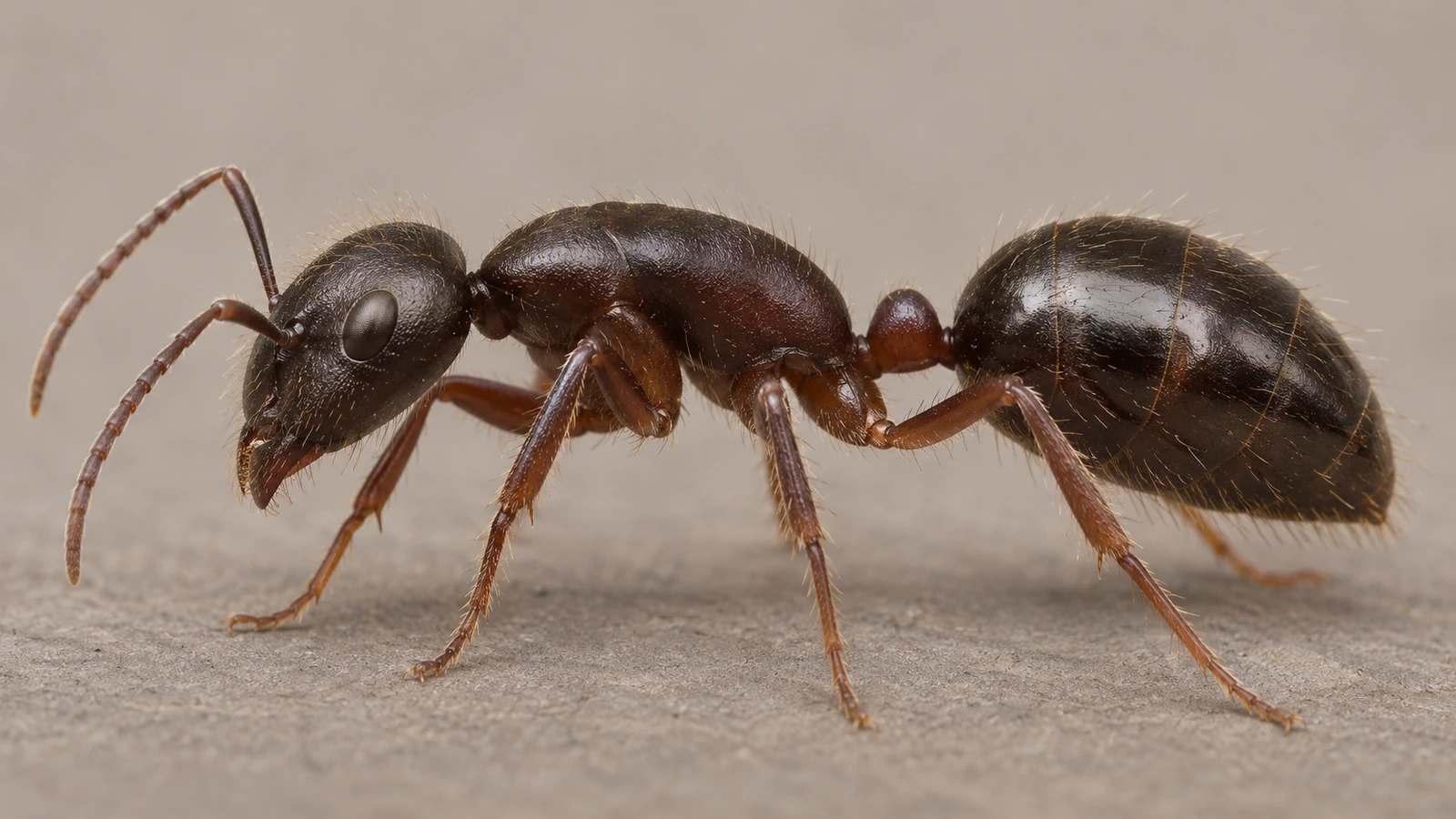
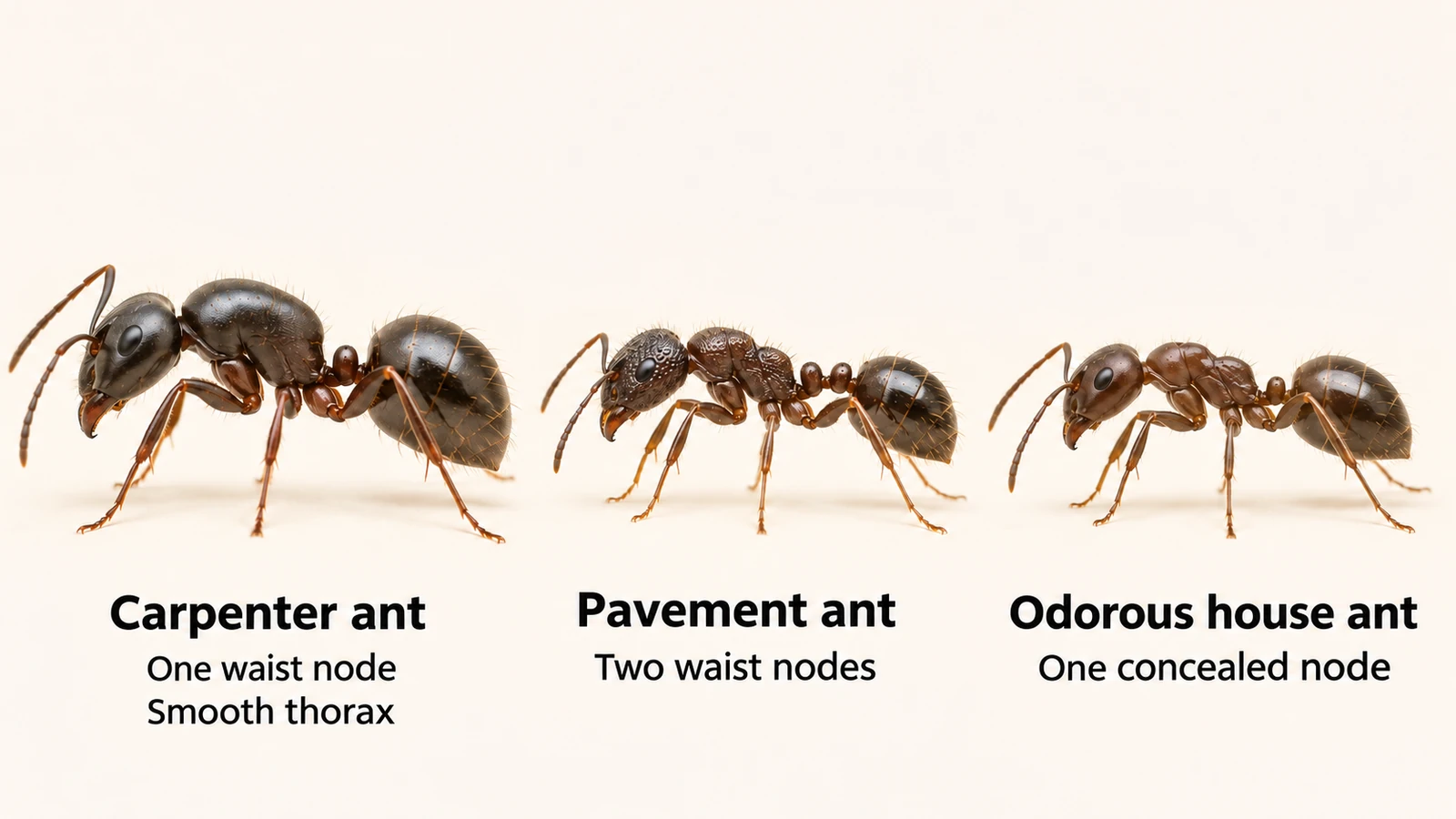
A carpenter ant worker has a narrow waist with one raised node, or bump, between its middle and abdomen. Seen from the side, the upper surface of its thorax forms a smooth, continuous curve. Those two structural features are more useful than the insect’s color.
Identification in 30 Seconds
- Waist: Carpenter ants have one node. Two distinct waist nodes rule out a carpenter ant.
- Upper back: Look for a smoothly rounded thorax when the worker is viewed from the side.
- Worker sizes: Noticeably different-sized workers in the same trail can support a carpenter ant identification.
- Color: Black, reddish, or mixed coloring can occur in carpenter ants. Black alone settles nothing.
Many carpenter ant workers commonly seen around U.S. homes are about 1/4 to 1/2 inch long, although species and worker sizes vary. The species actually called the little black ant (Monomorium minimum) is much smaller, generally around 1/16 inch, and has two waist nodes. Dark pavement ants also have two, while odorous house ants have one node that is often hidden from view.
If your insects are consistently tiny, compare them with little black ants. But don’t assume every larger dark ant must be a carpenter ant: some field ants look similar in size and color. Their less evenly rounded thorax is a more useful distinguishing feature.
How to examine the ants you found
Try to observe a worker on a light-colored surface, or carefully contain one in a clear container without touching it directly. Take a sharp photo from the side and note its approximate size. An overhead photo may show the color perfectly while hiding the features needed for identification.
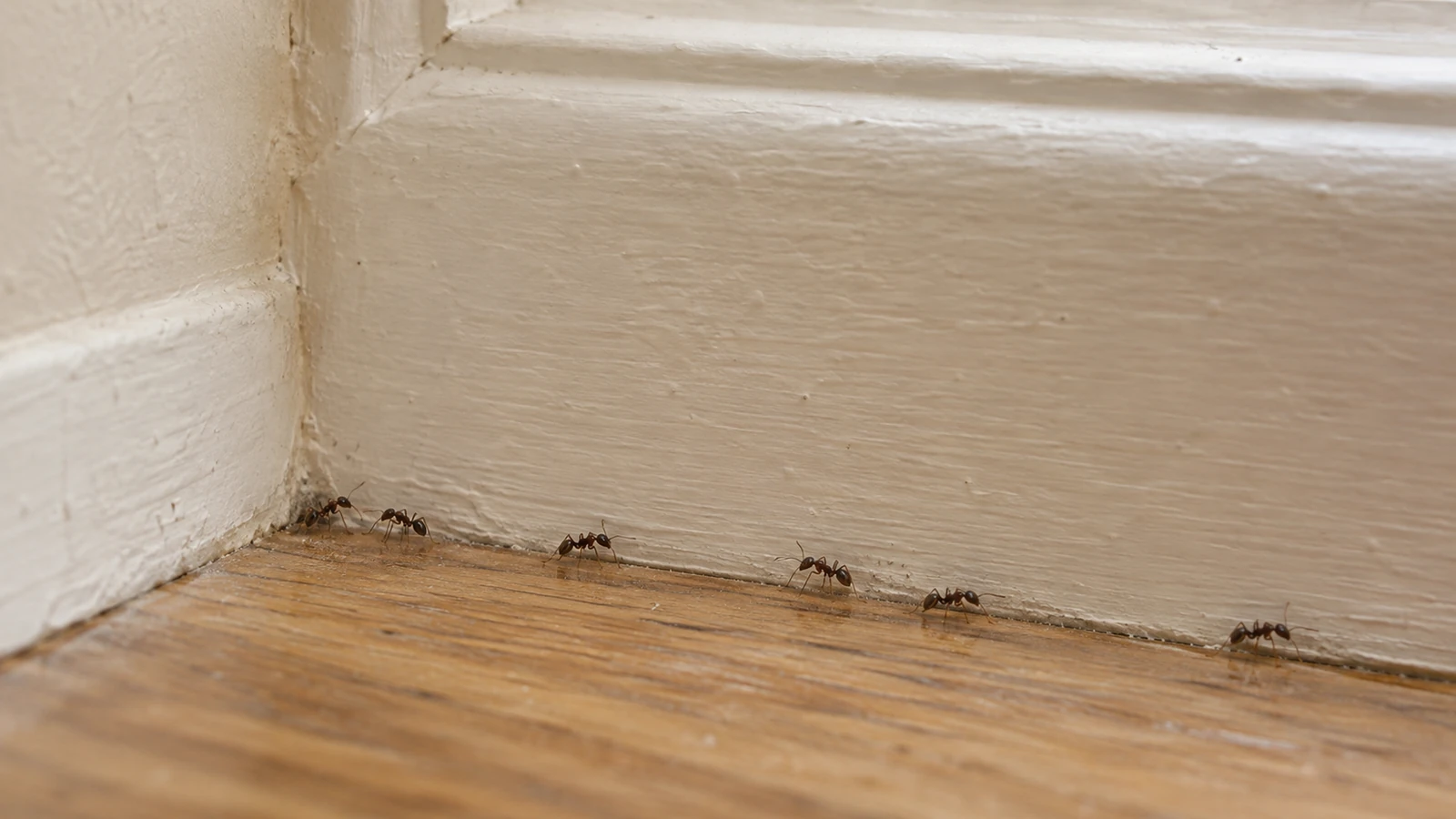
Watch where the ants travel before disturbing their trail. An insect crossing a wooden windowsill may be entering from outside, while several workers repeatedly emerging from a narrow interior gap deserve a closer look. The route helps decide where to investigate.
Keep the checks focused:
- Compare more than one worker if possible. Look for meaningful differences in body size among ants traveling together.
- Examine the waist and upper thorax. Use a magnifying glass or an enlarged, sharply focused photograph. The number of nodes and the side profile matter most.
- Note where the activity starts. Follow an accessible trail toward a window, foundation gap, food source, or wooden fixture without dismantling anything.
- Record any separate wood-related clues. Repeated activity near trim, moisture damage, or coarse shavings is worth noting, especially if the same location keeps attracting ants.
If a picture is too blurry to show the body details, keep the specimen or take another photograph. Guessing from an out-of-focus silhouette is rarely helpful.
Identification Mistakes
- Calling every tiny dark ant a little black ant without identifying its species.
- Labeling an ant a carpenter ant just because it is large or walking on wood.
- Trusting a top-down photo when the waist and thorax are hidden.
Key Clue
A single waist node combined with a smoothly rounded upper thorax is the strongest practical body-shape clue for a carpenter ant worker. Different-sized workers can support that identification.
What to Watch For
Even a correctly identified carpenter ant on a windowsill may have traveled from an outdoor nest. Repeated activity and its point of origin matter before investigating the wood inside your home.
What does the sighting tell you?
Several tiny, similarly sized dark ants moving between a kitchen counter and a crack often suggest a household foraging trail. A large ant near a window or exterior door may also be foraging. Neither situation tells you where its colony is nesting.
Carpenter ants excavate tunnels in wood to make nesting space, but they do not eat the wood. Repeated workers emerging from woodwork, especially near moisture damage or sawdust-like material, make indoor nesting more plausible. The material itself needs identification, since ordinary drilling dust and other debris can look similar. The signs of carpenter ants guide covers those clues in detail.
Other dark ants may nest in soil, beneath pavement, or in sheltered building cavities. Their location helps you choose what to check next, while the insect’s actual features remain central to identifying it.
Compare the evidence together rather than treating any single row as a verdict:
| Clue | Carpenter ants | Other ants called “black ants” | How useful is it? |
|---|---|---|---|
| Color | Black, reddish, or a combination | Many unrelated species are dark brown or black | Weak on its own |
| Worker size | Often 1/4 to 1/2 inch, with different-sized workers common | Many household species are smaller; some dark field ants are relatively large | Supporting clue |
| Waist nodes | One node | Two in little black and pavement ants; one often concealed in odorous house ants | Strong when clearly visible |
| Upper thorax | Smooth, evenly rounded from the side | Shape varies, often less evenly rounded | Strong with a clear side view |
| Where you see them | May forage indoors from outdoor nests; some nest in wood | Trails and nests vary by species, including soil and building gaps | Helps direct the next check |
Are carpenter ants nesting in your house?
Finding a carpenter ant indoors is different from finding its nest. Many colonies live outside in trees, logs, stumps, or landscape wood. Workers can enter a house while searching for food and return to an outdoor colony.
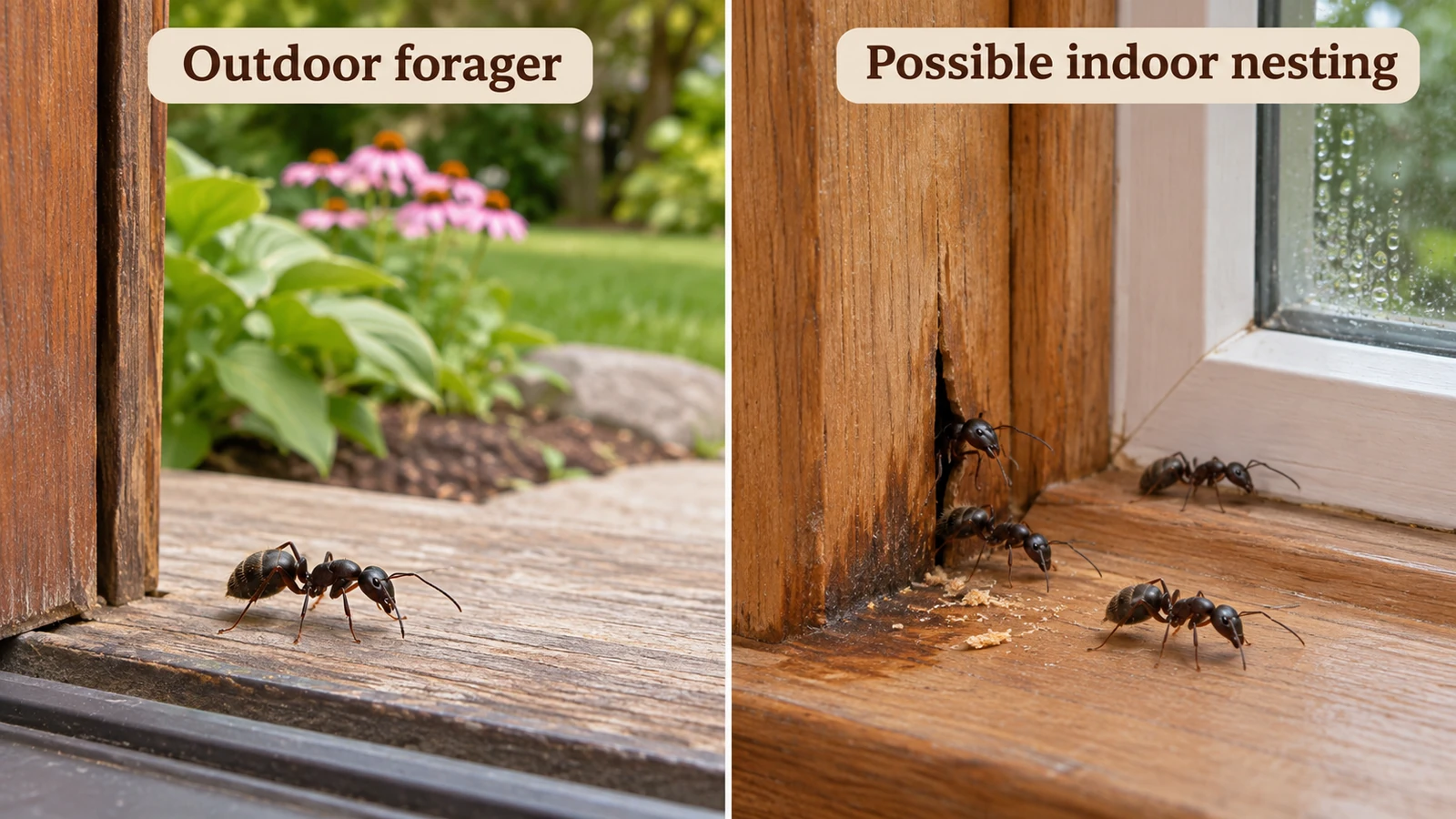
An indoor nest becomes a more serious possibility when identified carpenter ants repeatedly emerge from the same wooden fixture or wall gap, particularly alongside moisture problems or accumulating wood debris. Investigate accessible areas and keep a record of the activity rather than opening walls or spraying into cavities.
Species also vary across the United States. Some common eastern carpenter ants are entirely black; others, including species encountered in southern and western regions, can be reddish or two-toned. Regional context is helpful, but the body features still have to match.
Good to Know
Smaller carpenter ants aren’t necessarily young ants. Major and minor workers are both fully developed adults, and one colony can contain several worker sizes. Compare their body shapes before assuming you’ve found different species.