Identification
What do bed bugs look like? Pictures by life stage
See how bed bugs change after feeding and how nymphs, eggs, and shed skins differ. Compare visible features and real-world sizes, then learn which additional photo or specimen check helps when identification is uncertain.
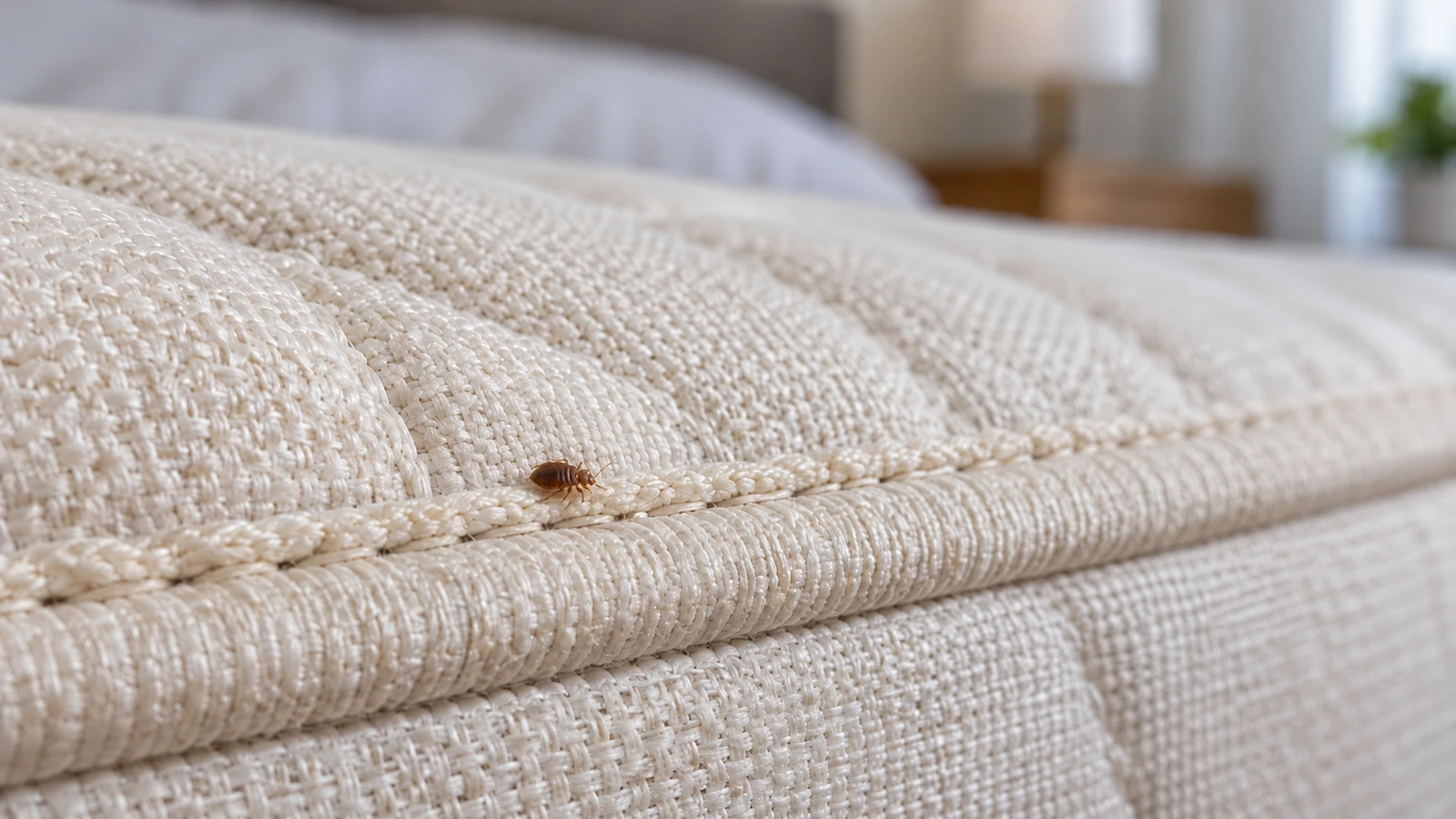
A dark, seed-shaped insect on your sheet can look enormous when you zoom in on a phone photo. Its real size and body shape matter much more. Start by checking the legs, abdomen, and wings, then account for one major change: a bed bug can look surprisingly different after feeding.
What Does an Adult Bed Bug Look Like?
The common bed bug (Cimex lectularius) is a small, wingless insect with six legs and two antennae. An unfed adult is usually about 3/16 to 1/4 inch long (5–7 mm), roughly the size of an apple seed. Viewed from above, its reddish-brown body is broad, oval, and flattened, with visible segments across the abdomen.
A recently fed adult looks longer, fuller, and often darker red. The abdomen expands as it fills with blood, changing the familiar flat outline into a more elongated shape. Look at the head, legs, and body structure rather than relying on color alone.

Identification in 30 Seconds
- Unfed adult: Flat, oval, reddish-brown body, about 5–7 mm long, with six legs and no developed wings.
- Recently fed adult: Fuller, longer abdomen, often dark reddish-brown, but still with the same head and leg arrangement.
- Nymph: Smaller and paler than an adult; a recent blood meal can make its abdomen appear bright red or dark red.
- Egg or shed skin: A tiny white oval or a pale, hollow insect-shaped shell needs a different check from a living bug.
Why fed and unfed adults look different
An unfed bed bug is thin when viewed from the side. Its abdomen spreads outward into the familiar oval shape, and the segments are often easy to see from above.
After feeding, the abdomen stretches and becomes thicker. Some recently fed adults look almost cigar-shaped compared with their flattened, unfed appearance. The darker, swollen abdomen is a temporary feeding condition, not a separate species or life stage.
This is an easy mistake when comparing two pictures. One may show a flat brown adult, while the other shows an elongated red insect. The body structure helps connect the two appearances.
What young bed bugs, eggs, and shed skins look like
A newly hatched bed bug is a tiny, pale nymph, around 1/16 inch (1.5 mm) long. It has six legs and a body shaped much like an adult, but it has not reached adult size. Bed bugs pass through five nymphal stages, gradually becoming larger. Their pale, nearly translucent bodies can make them hard to see against light fabric. For the changes between these stages, see the guide to baby bed bugs and nymph identification.
Bed bug eggs look very different from moving insects. They are pearly white, oval, about 1 mm long, and typically attached to a surface. A close view may reveal more detail, but an ordinary phone photo often shows little more than a small white shape. The dedicated guide to bedbug eggs explains what to inspect before deciding that a speck is an egg.
A shed skin, or casing, is the empty outer covering left after a nymph molts. It can retain the outline of a bed bug, including its legs, but looks pale, dry, and hollow. Some show a split along the back where the insect emerged. The guide to bed bug casings helps distinguish these remains from living nymphs and unrelated debris.

How to Check a Bug or a Phone Photo

First, establish the insect’s actual size. An adult bed bug is visible to the naked eye, but a newly hatched nymph can look like a tiny moving speck. On a phone screen, both can fill the frame. If you have the specimen, measure it with a small ruler or photograph it beside a reliable size reference on the same surface.
Next, get a clear view from above. Use bright, even light so you can see the outline, legs, and abdomen. Move the phone back until it can focus sharply, then crop the photograph afterward if necessary. Extreme digital zoom cannot recover body details that were never captured.
When the first photo is unclear
If the insect is still available, contain it in a small, securely closed clear container without crushing it. A preserved specimen can be more useful than a photograph when the shape or species is uncertain.
Try a second image from the side, especially if the insect looks swollen or unusually narrow. Use a contrasting background, avoid glare, and retain the original unfiltered photographs. Artificial image enhancement can introduce details that were not actually visible.
Record where you found the insect. A specimen from a mattress seam, a window, or an area near an attic may require different follow-up checks. The location adds context, but the insect’s visible anatomy remains the main identification evidence.
Identification Mistakes
- Identifying bed bugs from a photograph of red skin marks instead of examining an insect.
- Calling a blurry brown speck a bed bug when the legs and body outline cannot be seen.
- Estimating size from how large the insect appears on a cropped or enlarged screen.
Key Clue
A clear view of a broad, segmented abdomen, six legs, and no developed wings is much more useful than color alone. Combine those features with the insect’s measured size, particularly when comparing an unfed adult with a recently fed one.
What to Watch For
Bat bugs and some other close relatives can look almost identical to common bed bugs in an ordinary photograph. Distinguishing them may require examination of tiny hairs near the head. A specimen found near bat or bird nesting areas deserves closer identification before its source is assumed.
How Much Can You Conclude From the Picture?
A sharp photograph of an insect with the characteristic bed bug body, visible legs, and a size consistent with its apparent life stage can make the identification convincing. A preserved specimen makes it easier to verify small details that a phone camera misses.
When the image shows only a dark oval or a moving dot, the useful next step is a better view rather than repeated guesses about its color. A recently fed nymph, for example, can appear much darker than an unfed one, while an empty casing may resemble a pale living insect from the wrong angle.
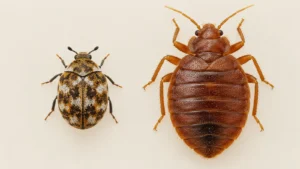
Other household insects can cause genuine confusion. Carpet beetles and their larvae are a common example, although their body structures differ. If you see a hard, rounded beetle body or a hairy larva rather than a recognizable bed bug outline, use the carpet beetle or bed bug comparison for the relevant distinguishing features.
A photograph of an unexplained skin reaction is a separate matter. The appearance of a welt or rash cannot identify which insect, if any, caused it. Physical evidence is the useful route to confirming bed bugs.
Use the clearest feature actually visible in your photo to decide what to check next.
| What you can see | What it suggests | Best next check |
|---|---|---|
| Flat, brown oval insect with six legs and no developed wings | Compatible with an unfed bed bug, particularly at adult size | Check the body segments and measure the specimen |
| Longer, fuller, dark red insect with the same basic body structure | Could be a recently fed bed bug | Obtain a side view and check the head and legs |
| Very small, pale insect with a visible six-legged outline | Compatible with a young nymph | Photograph against a contrasting background and verify its size |
| Tiny white oval or pale, insect-shaped shell | Possible egg or shed skin, rather than a living adult | Examine whether it is attached, hollow, or split open |
| Blurred dark spot without a clear outline | Identification remains unresolved | Capture a sharper image or preserve the specimen |

Does the Finding Suggest Bed Bug Activity?
A clearly identified bed bug is a reason to check the immediate area where it was found. Around a bed, the first useful places are mattress piping and seams, nearby bed-frame joints, and sheltered gaps in the headboard. Around a couch or chair, examine the seams and protected joints close to where people sit or sleep.
Several live bugs of different sizes, especially alongside eggs, shed skins, or dark fecal spotting in the same sheltered area, make ongoing activity more likely. A single identified insect tells you what it is; the surrounding evidence helps establish whether there is a local population.
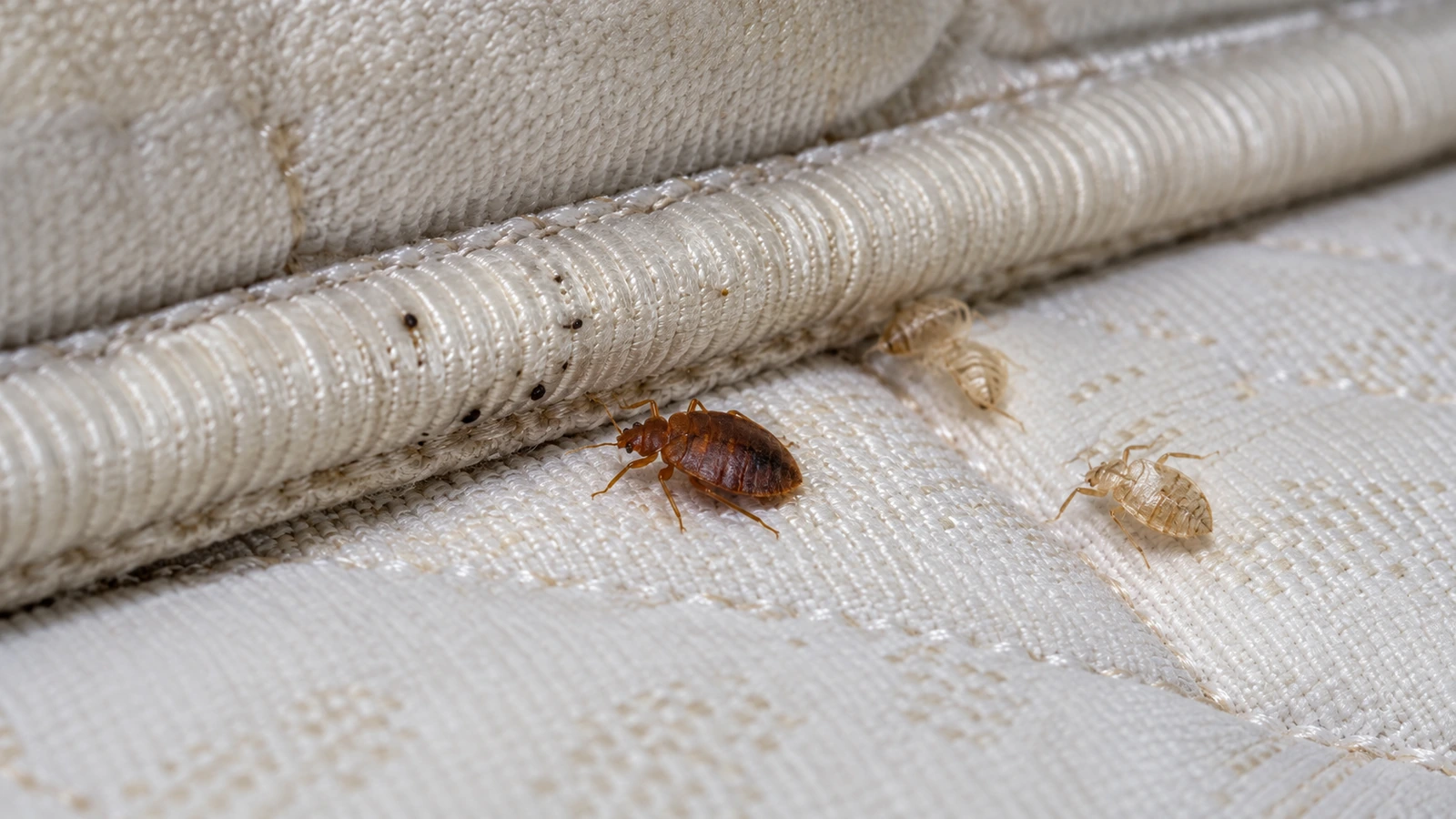
A brief check may find no additional evidence even when activity is still at an early stage. Record the original location and examine nearby hiding points before deciding how far to extend the search.
Avoid carrying loose bedding, bags, or other potentially affected belongings into additional rooms while you assess the situation. Focus first on preserving the evidence and determining where the insect came from.