Identification
Bed bug casings: how to identify shed skins and lookalikes
Learn how to recognize bed bug casings, compare them with other insect remains, and use nearby signs to assess whether bed bugs may still be present.

You found a tiny, pale shell in a mattress seam, along a bed frame, or beneath a piece of furniture. Before deciding what to do, you need to know whether it is actually a bed bug’s shed skin.
An intact casing has features you can check. Where you found it and what lies nearby also matter, especially when trying to distinguish an old trace from evidence of bed bugs currently present.
What Do Bed Bug Casings Look Like?
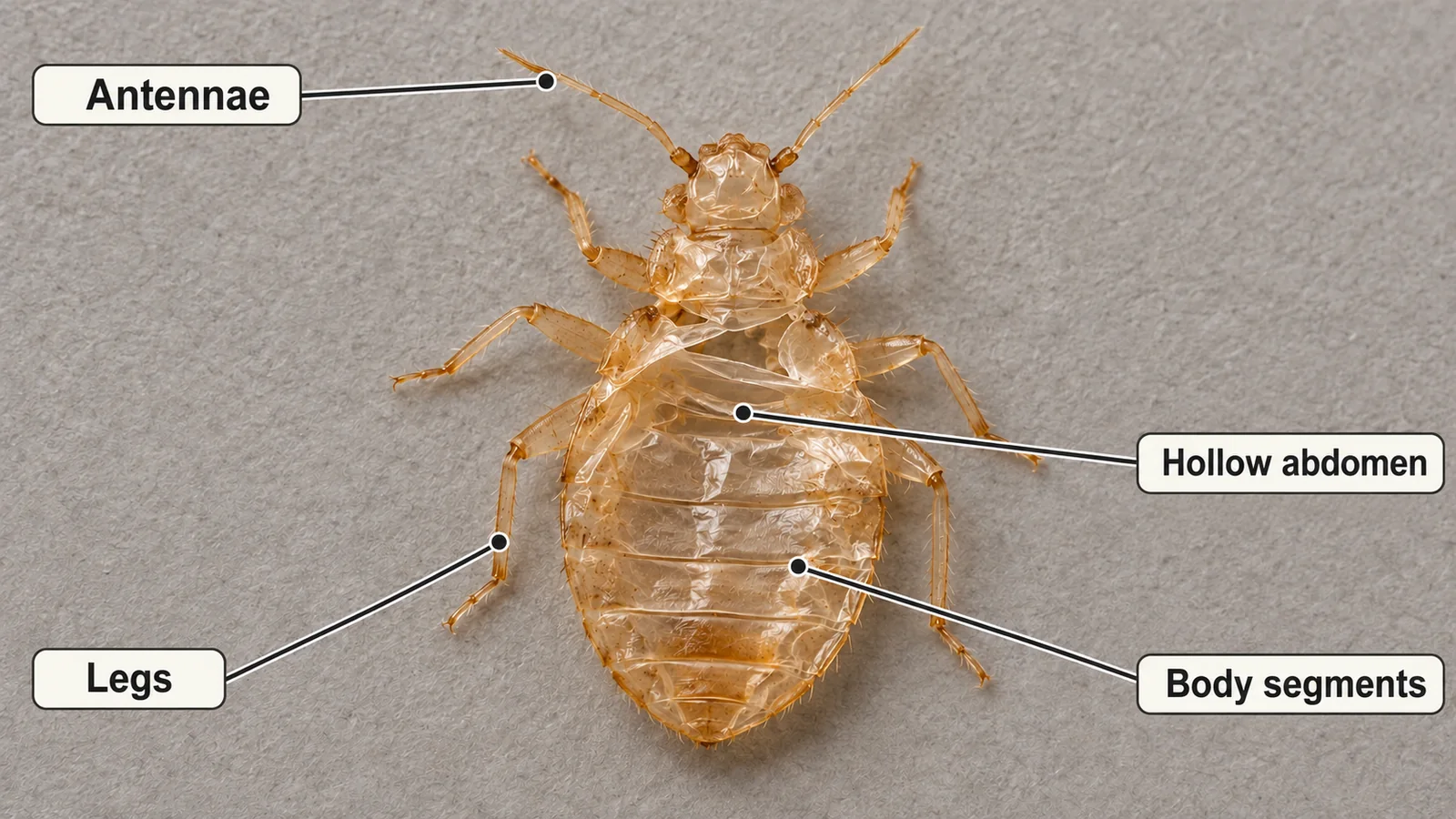
Bed bug casings are the empty exoskeletons left behind when young bed bugs, called nymphs, molt as they grow. An intact casing resembles a small, flattened bed bug, with an oval abdomen, visible body segments, six legs, and two antennae. Its color is usually pale yellowish-tan to amber, and parts of the shell may be translucent.
The body is hollow and often partly collapsed. You may also see an opening along the upper body where the insect emerged. Cast skins vary in size because bed bug nymphs molt as they grow, from approximately 1/16 inch (1.5 mm) in the earliest stage to around 3/16 inch (4.5 mm) in later stages. Adult bed bugs do not molt again.
Identification in 30 Seconds
- Shape: A flattened, oval insect outline with a smaller head and a segmented abdomen.
- Body parts: Six delicate legs and two antennae may remain visible on an intact skin.
- Appearance: A light, hollow, pale tan or amber shell, sometimes with an opening along the upper body.
- Size: Usually only a few millimeters long, depending on the nymph stage. Size and color support identification but are not enough on their own.
Are Bed Bug Shells Hard?
A shed skin has a thin outer cuticle, so it may feel dry, slightly crisp, or brittle once it has dried. It is not a thick, solid shell like a hard seed or a pebble. An intact casing can hold its insect-like shape despite being hollow.
Avoid crushing it to test the texture. A magnified view of the legs, abdomen, and empty body is more useful for identification.
How to Check a Suspected Bed Bug Shell

Start with the object itself, then inspect the place where you found it. A casing tucked into a mattress seam or bed-frame joint is more relevant than an unidentified flake lying in the middle of a floor, but location alone cannot establish its identity.
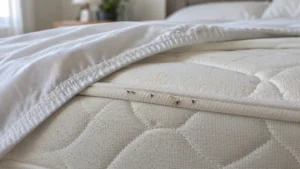
Use a bright flashlight and a magnifying glass or a clear phone close-up. Pay particular attention to mattress piping and tags, the edges and underside of the box spring, bed-frame joints, and gaps around the headboard. If the object was found on a couch or chair where someone regularly rests, inspect the nearby upholstery seams instead.
Examine the Object Without Damaging It
- Photograph it where you found it. Take a clear close-up and another photo showing the surrounding seam or furniture joint. Include a small ruler or familiar object for scale if possible.
- Look for recognizable anatomy. Check for a flattened, segmented body, legs, and antennae. Turn your viewing angle or adjust the lighting rather than relying on a blurry digital zoom.
- Preserve the specimen if possible. Gently move it with a piece of paper or tweezers into a small sealed, clear container. Record the location where you found it.
Then inspect the same seam or crevice for other cast skins, dark deposits, or live insects. A quick look at the exposed mattress surface can miss evidence tucked beneath piping, staples, or narrow joints.
Identification Mistakes
- Mistaking a striped, bristly carpet beetle larval skin for a bed bug casing because both are small and brownish.
- Calling a tiny eggshell, dead insect, or ordinary debris a molt without checking for the hollow, six-legged body outline.
- Assuming that a single casing must have been shed recently.
Key Clue
Look for the combination of an empty, flattened insect body, a segmented abdomen, and recognizable legs and antennae. Those structural details are more useful than the object’s color alone.
What to Watch For
A damaged or flattened casing may have lost its legs or other identifying structures. When only a fragment remains, preserve the sample and treat the identification as unresolved rather than forcing a conclusion from an unclear photograph.
Is It a Bed Bug Shell or Something Else?
Several household insects leave behind cast skins. Other small objects can also resemble an insect shell, especially when photographed under strong magnification.
Carpet Beetle Larval Shed Skins
Carpet beetle larvae leave brownish shed skins that commonly appear in fabric folds, beneath furniture, and in places where hair, lint, or natural fibers accumulate.
These skins are generally more elongated or tapered than bed bug casings, often with bands across the body and conspicuous bristles or tufts of hairs.
A bed bug casing, by contrast, has a flatter, broader body outline with recognizable legs and antennae. Tiny hairs may be visible under magnification, but it lacks the prominent bristly appearance typical of carpet beetle larval skins.
Finding either type of skin in a bedroom or couch seam is possible. The anatomical differences are what help separate them.
Eggshells, Dead Bed Bugs, and Household Debris
A bed bug eggshell is a different object. Bed bug eggs are approximately 1 mm long, pale or pearly white, and oval. An empty eggshell lacks the legs, antennae, and segmented body of a shed nymph skin.
A dead bed bug still has the remains of its body inside the exoskeleton. It may be darker, shriveled, or damaged, while a casing is essentially an empty outer covering.
Lint, seeds, and fragments of other insects can look convincing in low-quality photos. If there is no recognizable insect anatomy, the object may need closer examination before it can be identified.
A correctly identified bed bug casing shows that a nymph molted at some point. The shell by itself cannot tell you when that happened.

Does Finding One Casing Mean You Have Bed Bugs Now?
A confirmed bed bug shed skin is meaningful physical evidence. It indicates that a bed bug developed through a molt at some point, but the skin can remain lodged in a protected crevice after the insect has moved or an infestation has ended.
The surrounding evidence matters more than the number of casings alone. A skin found alongside live bed bugs or characteristic dark fecal deposits warrants more attention than a loose fragment with no other associated signs. Even several casings cannot reliably tell you how many insects are currently present.

How to Interpret What You Find
- One unidentified fragment, with no other signs: Compare its structure carefully and inspect the immediate area. There is no reason to begin treatment solely because a small piece of debris resembles a shell.
- A convincing bed bug casing near a sleeping area: Check the adjacent mattress seams, box spring, frame joints, and headboard for additional physical evidence. Preserve the specimen and note its exact location.
- A casing accompanied by a live bed bug or multiple consistent physical signs: Current activity becomes a stronger concern. Confirm the insect’s identity and move toward an appropriate bed bug response.
If the room was previously treated, remember that old cast skins may remain in place. Finding an old shell during a later inspection is not, by itself, a measure of treatment failure. Continuing to check for living bed bugs and other evidence is more informative.