Comparison
Termite bait systems: Homeowner options, limits, and professional oversight
Not all termite bait stations work the same way. Compare monitoring-first and active-bait systems, their upkeep and limitations, and when liquid treatment may be a better fit.
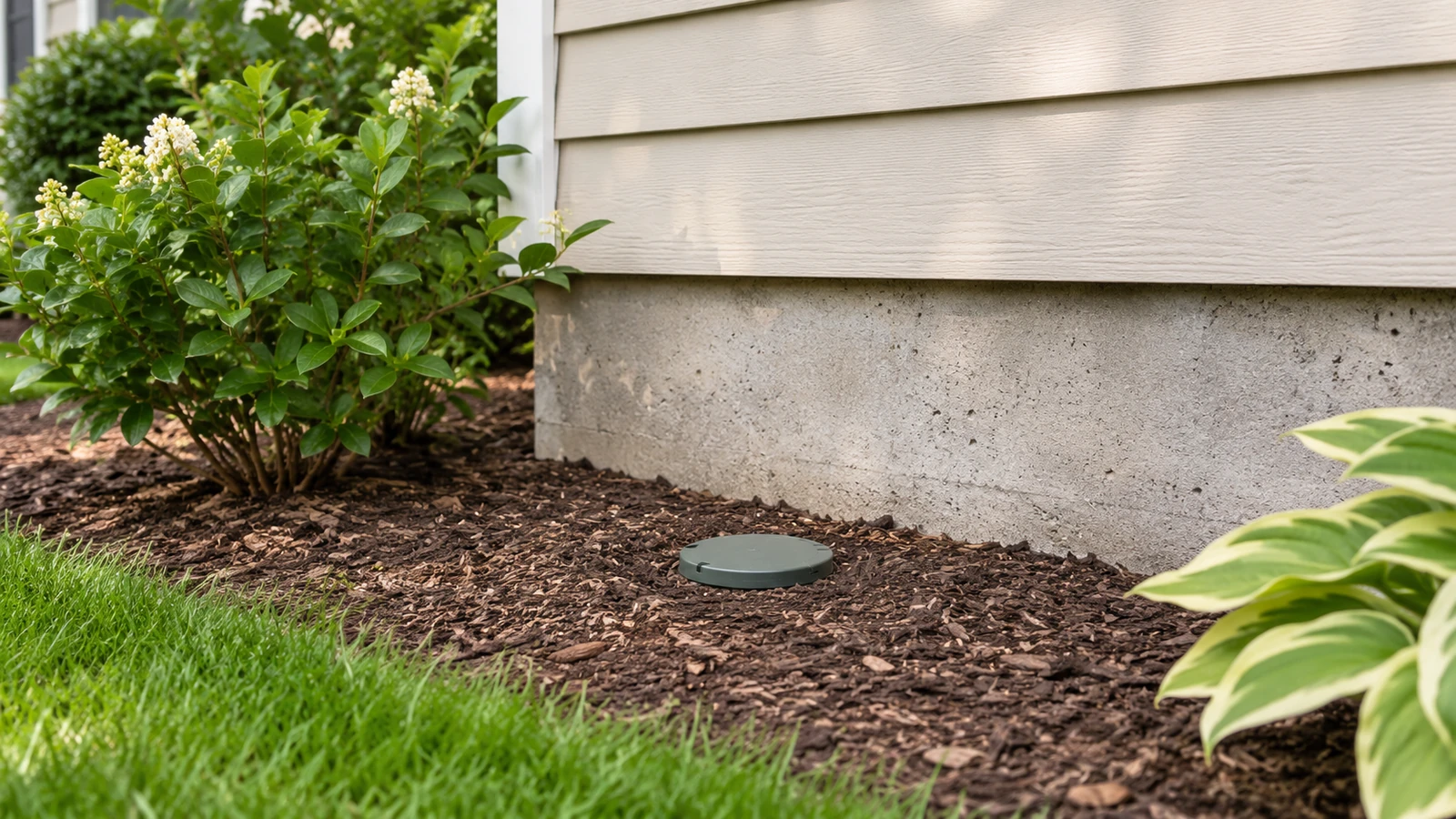
Two termite treatment proposals can look surprisingly different. One company offers stations containing bait from the day they are installed. Another starts with monitoring stations, while a third recommends treating the soil with a liquid termiticide.
The choice depends on more than the equipment. You need to know which termites are involved, whether they are already feeding inside the house, and how the company will respond if the stations remain untouched or activity continues.
What matters when comparing bait systems?
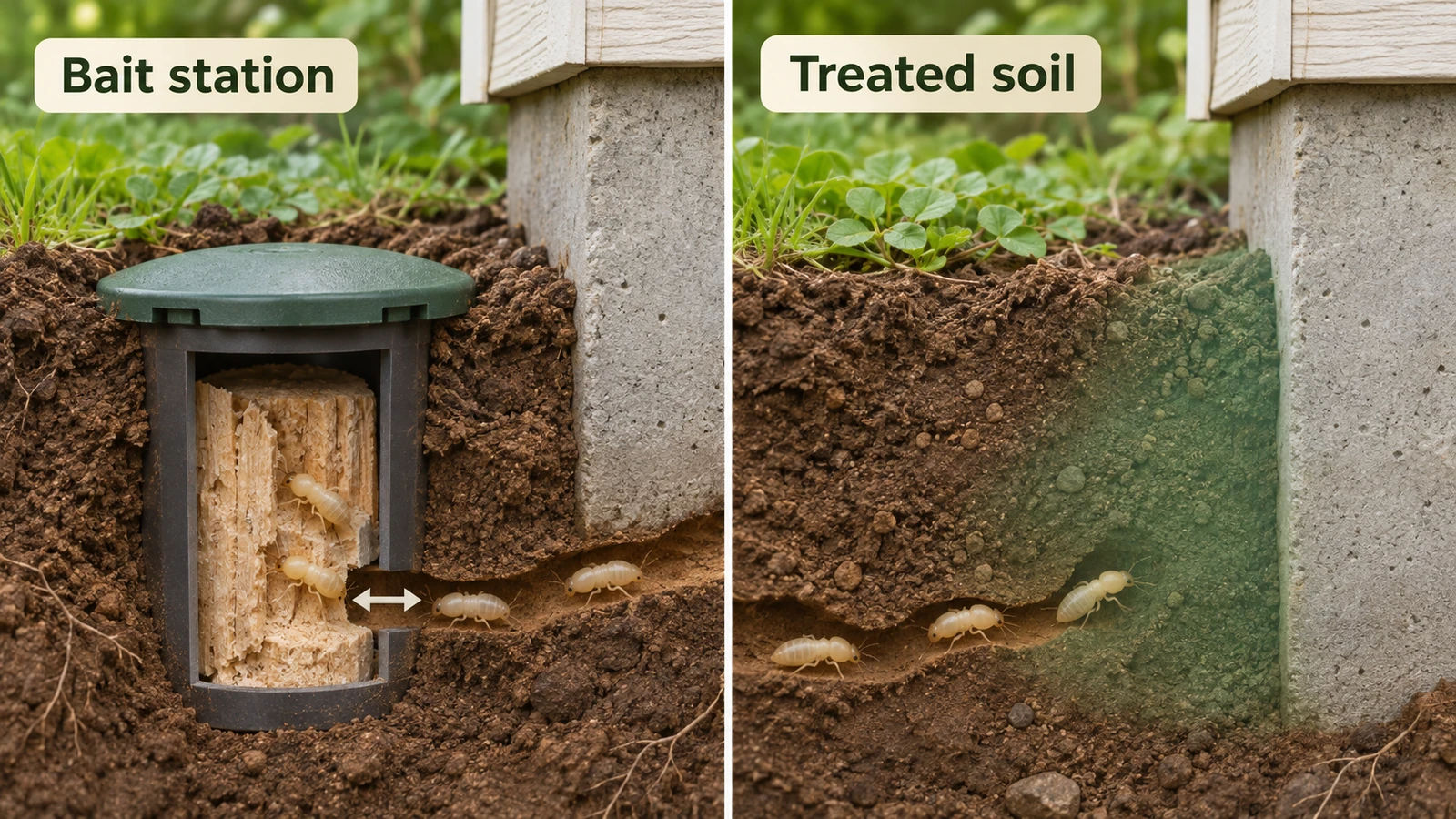
First, establish what is inside the station. Two similar-looking caps in a yard can cover entirely different systems: one contains untreated monitoring material, while the other contains insecticidal bait. Ask whether active bait is present now or will be introduced later.
The condition of the property matters just as much. A professional termite inspection should establish the likely termite group, identify evidence of activity and assess the accessible foundation and surrounding soil.
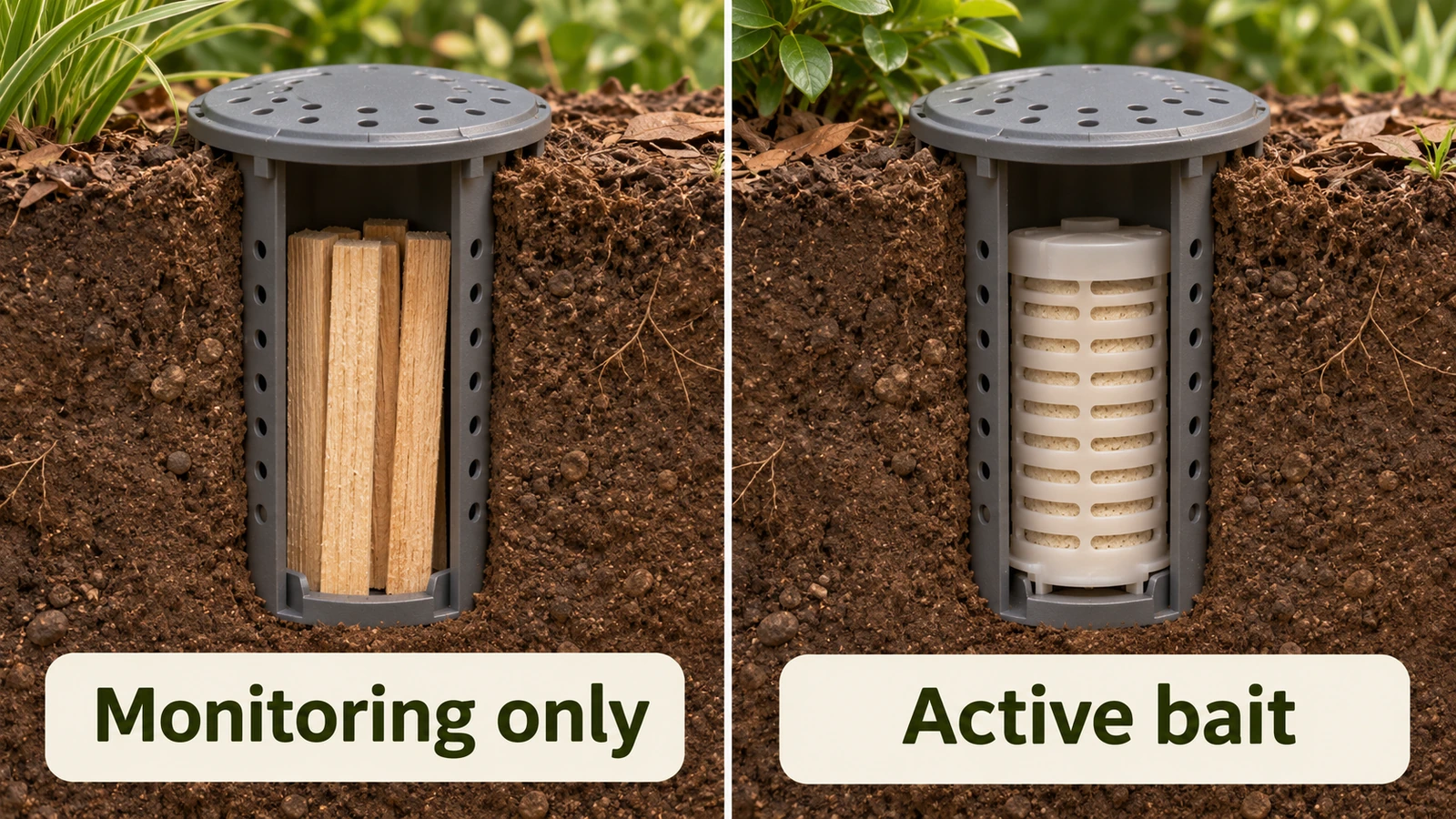
Compare the time required for termites to discover the stations, the expected response once feeding starts, and the service plan if activity persists. Termites can take weeks or months to find in-ground stations. Control can then take several more months, depending on the colony, the bait and local foraging conditions. The bait does not draw termites to your property from a distance.
In-ground baiting primarily targets subterranean termites, including Formosan subterranean termites. Drywood termites can live entirely inside wood without a connection to the soil, so ordinary perimeter bait stations are not an appropriate stand-alone treatment for a drywood infestation.
Termite bait systems vs. liquid treatment
Compare these approaches by how they address subterranean termite activity and what has to happen after the initial service.
| Approach | How it works | Main advantage | Main limitation |
|---|---|---|---|
| Monitor first, then bait | Detects feeding before active bait is introduced | Establishes where termites encounter stations | Requires timely inspection and a change to active bait |
| Active bait from the start | Workers consume bait as soon as they encounter it | No separate monitoring-to-bait transition | Discovery and colony control still take time |
| Liquid soil treatment | Establishes a termiticide-treated zone at relevant entry routes | Can address accessible routes more quickly | Access, site restrictions and treatment coverage matter |
The trade-offs beyond the initial installation

A house with extensive concrete patios, paving or difficult foundation access may be a good candidate for baiting, provided suitable station locations and a reliable service plan are available. A conventional liquid treatment can require more disruption to reach the soil.
However, avoiding disruptive work is not enough reason to choose bait alone when termites are actively damaging structural wood. The treatment plan needs to account for the activity that is already present while the bait system begins to work.
Baits typically use a smaller amount of insecticide than conventional liquid soil treatments, with the active material contained in stations. That is a useful difference, not a reason to regard the system as risk-free. Keep children and pets away from damaged or opened stations and have the service provider deal with compromised units.
Long-term protection is another important distinction. Bait stations can become depleted, damaged or inaccessible after landscaping. A service visit should include checking station condition and addressing problems under the product’s instructions. Liquid treatments also need inspection and appropriate follow-up, particularly if construction or soil disturbance changes the original treated area.
The service plan matters
Choose a bait program with a documented inspection schedule and a clear response to feeding, depleted bait, damaged stations and continuing termite activity.
What to Watch For
An untouched station may simply lie outside a colony’s current foraging route. A record showing no station activity is not a substitute for checking the house itself.
Which approach makes sense for your home?
If an inspection finds no current structural infestation but the property is vulnerable to subterranean termites, a professionally maintained bait system can be a reasonable preventive option. Finding termites in outdoor dead wood does not automatically establish that the house is infested. Base the decision on the property’s risk, construction and any existing protection.
When there is confirmed activity in the structure, ask how promptly the proposed method is expected to address it. A liquid treatment may be more appropriate where the relevant routes are accessible and local conditions allow it. A bait-based plan may be suitable if the professional can explain why it fits the infestation and how progress will be assessed.
When termite bait alone is not the right choice
A suspected drywood infestation, significant damage or inaccessible activity needs a diagnosis and a treatment plan specific to that situation. Formosan subterranean termites can sometimes maintain colonies above the ground when adequate moisture is available, which also complicates reliance on perimeter stations alone.
Do not delay a professional assessment while waiting for a store-bought stake to show activity. A pest management professional can evaluate the infestation; damaged load-bearing wood may also need assessment by a qualified building professional.
When combining bait and liquid treatment makes sense
A targeted liquid treatment can address an identified area of subterranean termite activity while a maintained bait system works on foraging colonies around the building. The two methods can therefore serve different purposes in the same plan.
Ask which problem each treatment is intended to solve. A combined program is worth considering when both parts have a clear function, rather than simply because it includes more treatment.
What to ask before agreeing to a bait system
Ask the provider to explain the following in writing:
- Which system will be installed, whether the stations contain active bait, and which termite groups the product is labeled to control.
- How station locations and service access will be documented, including areas where paving or other obstacles limit coverage.
- When the stations and the structure will be checked, how bait consumption will be recorded, and what triggers an additional visit or a change in the treatment plan.
- Who maintains the stations, what happens if one is damaged, and whether the stations will be removed if the service agreement ends.
- What the warranty actually covers, including the distinction between retreatment and damage repair.
Use that information to compare termite treatment costs on an equivalent basis rather than judging the proposals by the installation price alone.
In the United States, pesticide use must comply with the product labeling. Ask for the product’s EPA registration number and current label, and check whether it is intended for structural protection rather than just killing termites. State requirements can further restrict use and applicator qualifications. Verify that the firm is properly licensed in your state. A product sold to homeowners is not automatically equivalent to a professionally managed structural baiting program.
Explore this topic further:
Termite treatment: Options, safety, and when to hire a professional