How-To
How to get rid of German cockroaches in your home
German cockroaches live and reproduce indoors. This targeted plan shows where to inspect, how to combine cleanup and labeled bait, and how to monitor progress without guesswork.
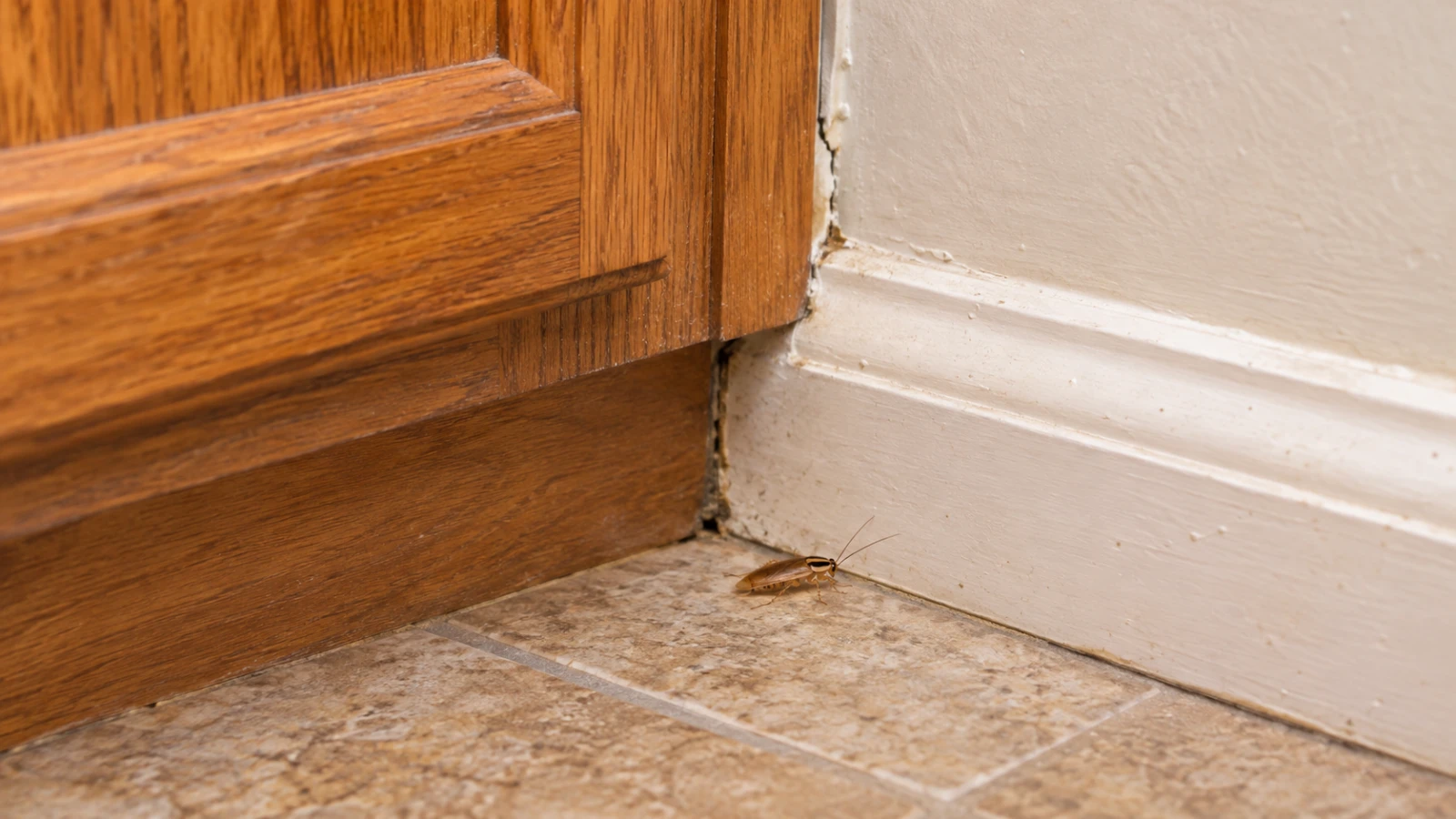
You switch on the kitchen light and a few small roaches scatter beneath the refrigerator. You kill the ones you can see, clean the counter, and find more the next evening.
German cockroaches are particularly difficult to eliminate because they live and reproduce indoors, spending much of their time in narrow hiding places near food, water, and warmth. Getting rid of the visible adults is only part of the job.
The approach that works is to locate the active hiding areas, remove as many roaches and resources as possible, place suitable bait close to their routes, and keep checking until the activity stops. Here’s how to put those actions together.
- Difficulty: Moderate. A manageable infestation can often be treated at home, but reaching hiding places and checking progress requires persistence.
- Equipment: Flashlight, cockroach sticky traps, vacuum with a crevice attachment, cleaning supplies, sealable food containers, materials for repairing accessible gaps, and an indoor cockroach bait labeled for the intended use.
Prepare the areas where German cockroaches are hiding
First, make sure you’re dealing with German cockroaches. Adults are relatively small, tan to light brown, with two dark parallel stripes on the shield behind the head. Their young, called nymphs, are smaller, darker, and wingless.
If the identification is uncertain, check the German cockroach identification guide before choosing a treatment. This plan addresses an indoor-breeding species, not the larger outdoor cockroaches that sometimes enter homes.
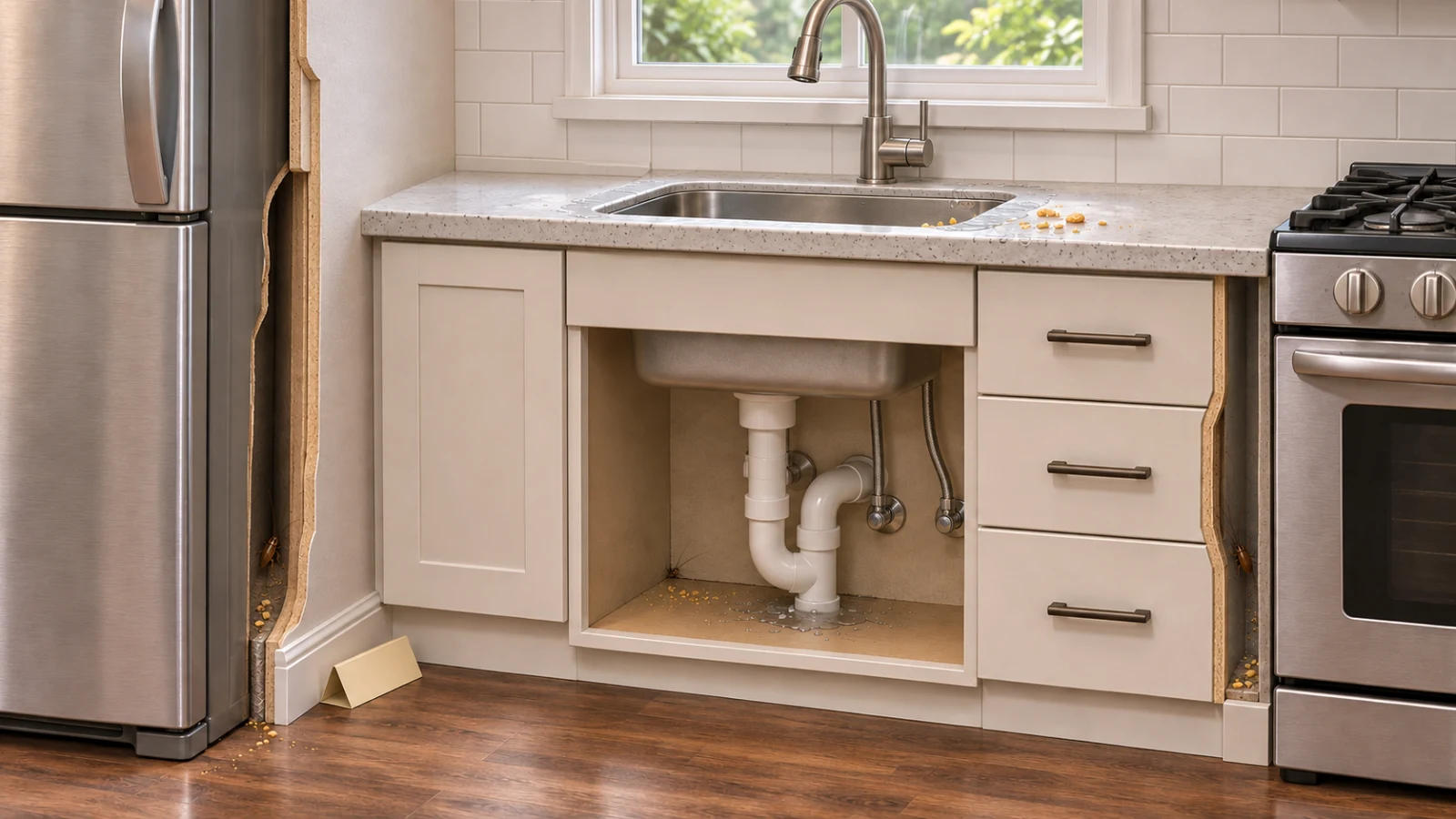
Start in the kitchen, especially around the refrigerator, stove, dishwasher, lower cabinets, and sink. German roaches often gather in sheltered spaces close to moisture and heat. Check nearby bathrooms or utility areas if you’ve seen activity there.
Clear stored items and loose clutter so you can inspect cabinet corners and appliance edges. Put away exposed food, dishes, and utensils before cleaning or applying any pest-control product.
Move appliances only when you can do so safely. Don’t pull against gas connections, damage plumbing, or open electrical housings to look for roaches. If an area cannot be reached without that risk, leave it for a qualified professional.
Before You Start
Read the entire label of any pesticide you plan to use. Choose only a product registered for U.S. use and labeled for the intended indoor cockroach treatment and location. Keep bait and other pesticides away from children, pets, food, and food-contact surfaces. Never apply insecticide to electrical components or use an outdoor-only product indoors.
Treat German cockroaches where they actually live
German cockroaches usually concentrate in sheltered areas rather than moving evenly through a room. The space behind a refrigerator may have much more activity than the rest of the kitchen.
Work from the areas with the clearest evidence. Finding those hotspots first makes cleaning, bait placement, and later monitoring much more effective.
Step 1: Find the active hiding spots
Use a flashlight to examine accessible cracks, cabinet joints, appliance edges, and plumbing openings. Look for live adults and nymphs, dark droppings, shed skins, and egg cases.
Place sticky cockroach monitors against walls or in sheltered corners near suspected activity. Useful locations include the floor beside the refrigerator, the back of a lower cabinet, and areas around sink plumbing.
Check the monitors daily for the first several days. Note which locations catch the most roaches, and whether the catches include small nymphs.
A concentration of nymphs near the same cabinet or appliance is a strong reason to search the nearby crevices. German cockroach young often remain close to protected hiding areas.
Keep a simple record of the number caught at each location. You will use those same monitoring points to judge the treatment later.
Step 2: Remove accessible roaches, food, and water
Use a vacuum with a crevice attachment to remove accessible roaches, egg cases, shed skins, and debris from cabinet corners, appliance edges, and other reachable hiding places.
Empty the vacuum promptly. Seal the collected debris in a bag and dispose of it outdoors, following the vacuum manufacturer’s instructions. Clean remaining residues from accessible surfaces.
Then concentrate on the resources that allow the population to survive:
- Remove crumbs and grease from under appliances and along cabinet edges.
- Wash dishes and clean food preparation areas after use.
- Store dry foods in tightly closed containers.
- Empty food waste regularly and keep trash covered.
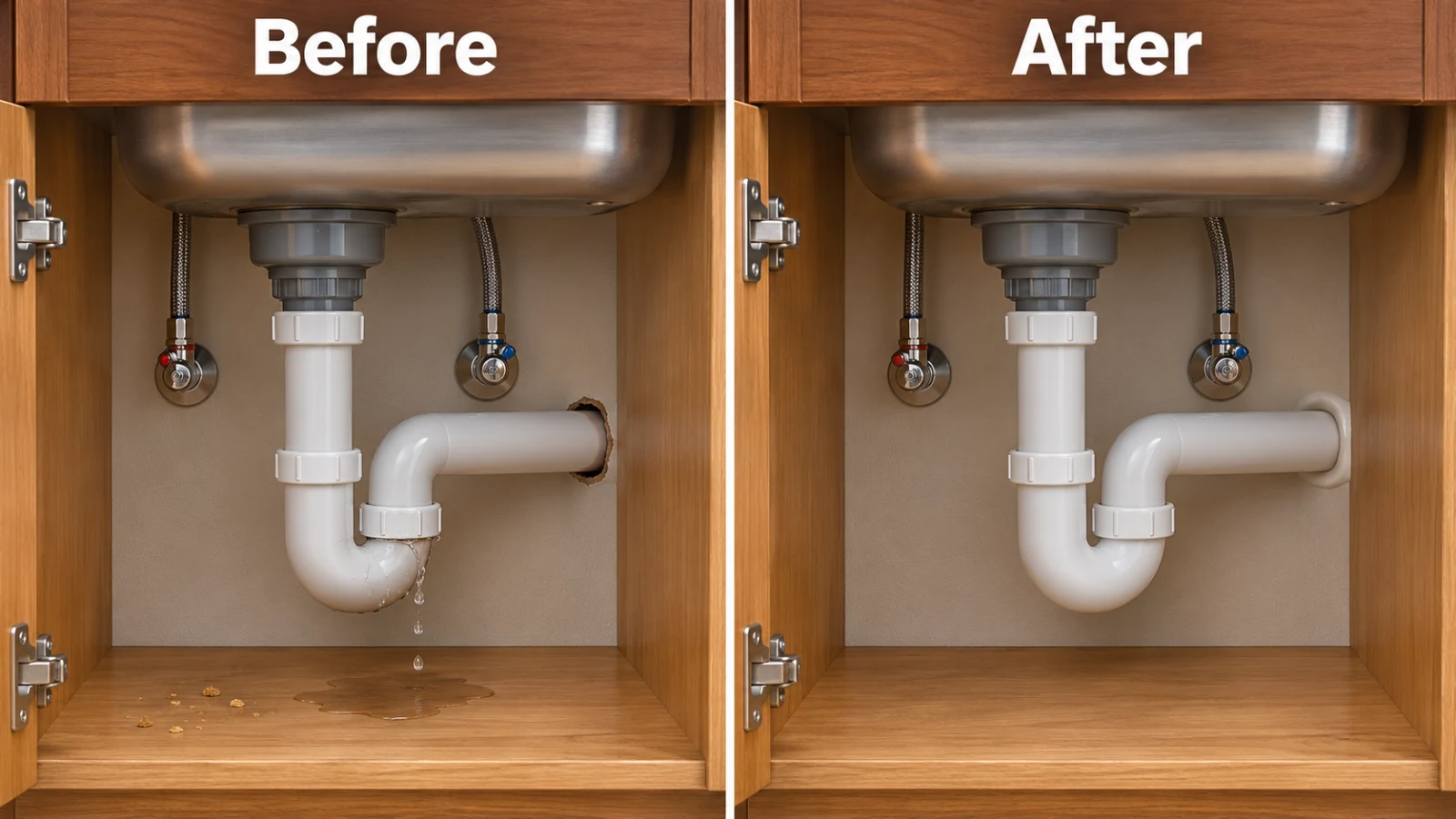
- Repair dripping pipes, wet cabinet bases, and other persistent moisture sources.
- Avoid leaving pet food or accessible standing water out overnight where practical.
Cleaning alone may not eliminate an established German cockroach infestation, but it removes competing food and makes hidden routes easier to inspect and treat.
Step 3: Apply suitable cockroach bait near the hotspots
For an established indoor German cockroach infestation, labeled insecticide baits are often a more useful starting option than repeated surface spraying.
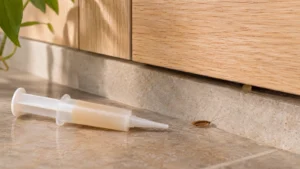
Baits are available in different formats, including enclosed stations and gels. Select a product labeled for cockroaches and for the specific indoor location where you intend to use it.
Place the bait close to the hiding places and travel routes identified during inspection, only where its label permits. A protected location near an active cabinet joint is generally more useful than placing bait in an open area far from the roaches.
Keep bait away from food-contact surfaces and places accessible to children or pets. Avoid spraying insecticide onto bait or contaminating the surrounding area with cleaners or other products that may interfere with feeding.
Follow the product’s directions for quantity, placement, replacement, and reapplication. Don’t increase the amount simply because roaches are still visible.
If you’re using gel, the separate guide to roach gel bait application covers gel-specific placement and maintenance in more detail.
Bait works through feeding, so the population usually declines progressively rather than disappearing immediately. Continue monitoring instead of judging the treatment after a single night.
Step 4: Reduce remaining hiding places and correct access problems
Once you’ve inspected and treated the active areas, address the physical conditions that allow roaches to remain sheltered.
Seal suitable gaps around pipe penetrations, cabinet joints, and baseboards where practical. Repair leaks before closing surrounding openings, and keep legitimate inspection and treatment access available.
Remove unnecessary cardboard, paper bags, and stored clutter from affected cabinets and nearby spaces.
In an apartment building, German cockroaches may move between connected units through service openings and shared structural spaces. Sealing accessible gaps inside one apartment can help, but recurring movement from neighboring areas may require building-wide coordination.
Avoid spreading pesticide into unrelated rooms simply as a precaution. Extend targeted inspection and treatment when there is evidence of activity elsewhere.
Keep the treatment effective and avoid common mistakes
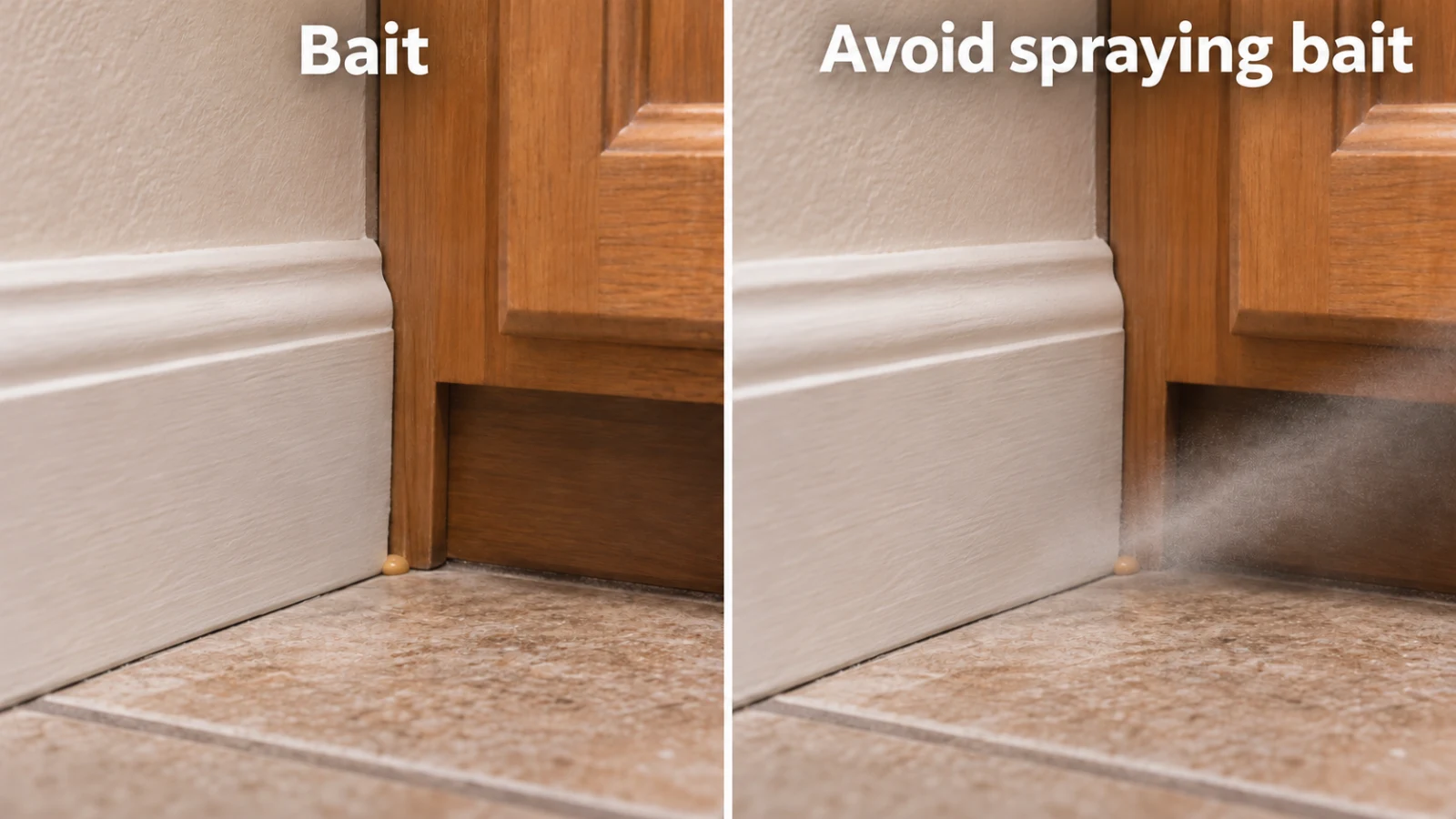
A German cockroach infestation is rarely solved by repeatedly spraying the roaches that appear on the floor. Contact sprays may kill exposed insects while leaving concealed populations and egg cases largely unaffected.
Total-release foggers, sometimes called bug bombs, are also a poor choice for this problem. They generally fail to reach the narrow spaces where German roaches hide and can create unnecessary exposure and other hazards.
Several less obvious mistakes can also undermine treatment:
- Spraying around bait: Insecticide sprays can contaminate bait or discourage roaches from approaching treated areas. Follow the relevant product labels and keep incompatible treatments separate.
- Placing bait too far from activity: A bait station in the middle of a room may be bypassed while roaches continue feeding and hiding behind nearby appliances.
- Letting bait become unusable: Some baits can be consumed, contaminated, or dry out. Inspect and replace them according to the label rather than adding more product blindly.
- Treating only the first visible hotspot: A second group may remain around a dishwasher, bathroom plumbing, or another appliance.
- Applying loose powders indiscriminately: Dust insecticides require suitable labeled locations and careful application. Exposed or excessive deposits can create hazards and may interfere with control.
The goal is to make the existing treatment more effective, not to keep adding different chemicals.
Check whether the German cockroach population is shrinking
Sticky monitors provide a practical way to measure progress. Compare catches from the same locations over time, using a consistent checking interval.
A declining number of roaches in previously active spots is encouraging, especially when fewer small nymphs and fewer fresh signs appear nearby.
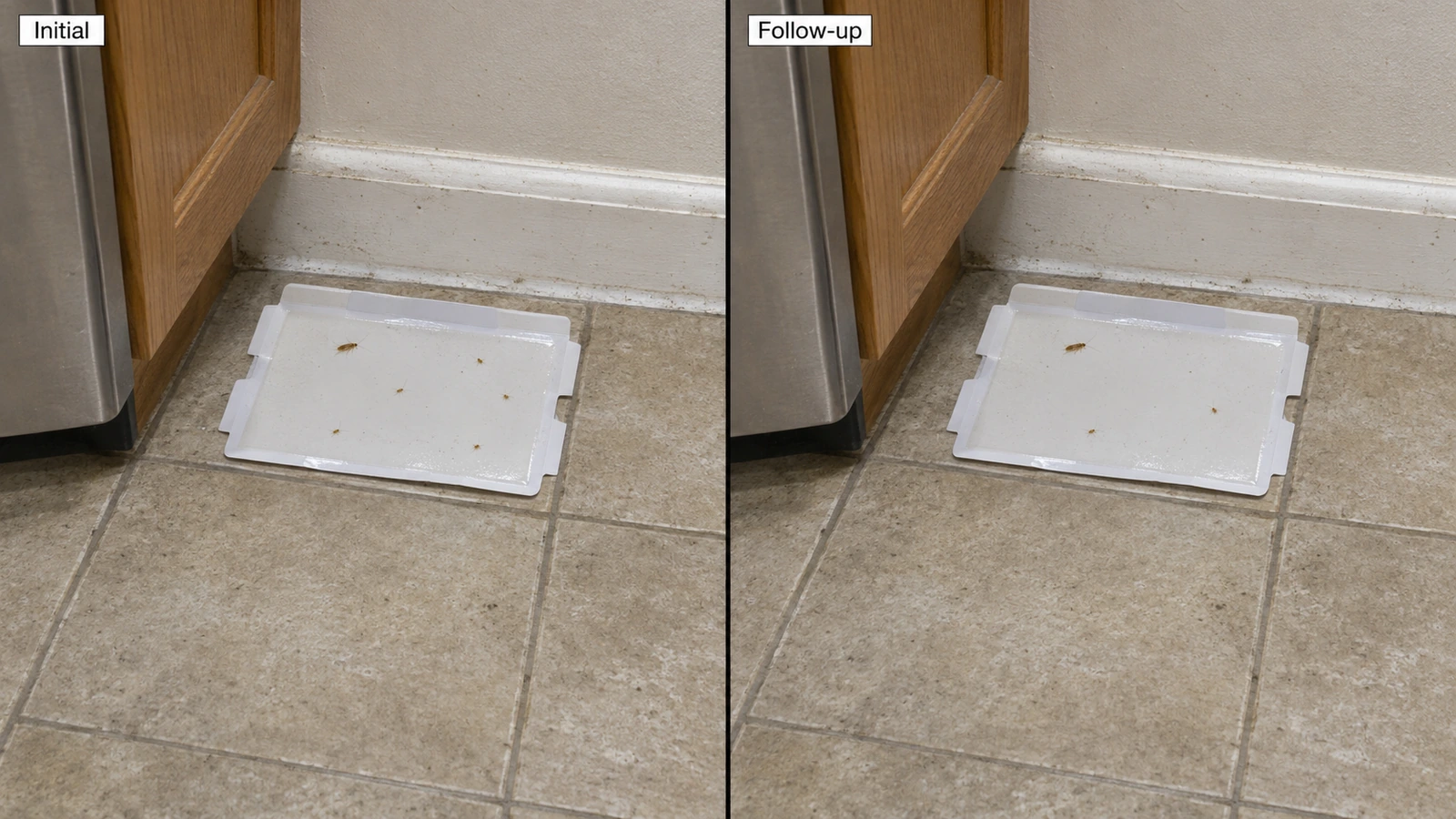
Don’t rely on the number of dead roaches found on the floor. Bait can affect insects that die in concealed spaces, while new nymphs may emerge from egg cases during the treatment period.
Pay attention to where activity remains. If traps behind the refrigerator become quiet but catches increase beneath the sink, investigate that second area instead of assuming the whole kitchen is clear.
When replacing full or damaged monitors, put the new ones in comparable positions so your observations remain useful.
Expected Result
Successful control should produce a sustained decline in catches at the original hotspots, followed by no fresh nymphs or other signs during continued monitoring. The time required varies with infestation size, available hiding places, treatment effectiveness, and possible reinfestation.
What to do if German cockroaches keep showing up
If activity remains high, first revisit the areas where traps catch the most roaches. For a broader reassessment, consult the general cockroach control plan. Persistent populations often indicate an untreated hiding place, continued access to food or moisture, ineffective bait placement, or activity originating elsewhere in the building.
Check whether the bait is still usable and whether roaches can reach it. Review its label before replacing, relocating, or changing products.
If one properly applied bait produces little response despite confirmed feeding activity and improvements to the environment, a different labeled treatment approach may be appropriate. Avoid repeatedly increasing doses or combining chemicals without a supported reason.
When Should You Call a Professional?
Professional help becomes particularly useful when German cockroaches are widespread, numerous during daytime inspections, repeatedly appearing despite properly applied treatment, or established in areas that cannot be inspected or treated safely.
In multi-unit housing, persistent activity may involve neighboring apartments or shared service spaces. Contact building management so the source can be assessed and affected units coordinated. Treatment limited to one apartment may provide only temporary relief if adjacent populations remain active.
Ask for an inspection-based treatment plan that includes monitoring, targeted control, corrections to the environment, and follow-up. A qualified professional can also assess whether additional labeled methods, such as insect growth regulators or specialized crack-and-crevice treatments, are justified.
Use the patterns below to decide which part of the plan needs attention.
| What you notice | Likely issue to investigate | Next action |
|---|---|---|
| Traps stay busy behind one appliance | An active hiding area remains close by | Reinspect accessible gaps, remove debris, and review nearby bait placement |
| Bait appears untouched while roaches remain active | Placement, contamination, or competing food may be interfering | Check the label, reposition where permitted, and remove nearby food sources |
| Small nymphs appear after adult sightings decline | A new group may have hatched from existing egg cases | Maintain monitoring and effective labeled treatment while checking the overall trend |
| Roaches repeatedly appear near shared walls or plumbing | Activity may extend beyond the treated room or apartment | Inspect connected areas and coordinate with building management when appropriate |
Keep monitoring after the first improvement
Once activity drops, maintain the sanitation and moisture-control measures that helped the treatment work. Keep a few monitors in the original hotspots rather than removing every trap as soon as sightings become rare.
German cockroaches can be brought into homes through infested belongings, cartons, and other transported items. Check suspicious secondhand appliances or stored items before bringing them into living areas.
Follow-Up Schedule
- During the first several days: Check monitors daily to establish where activity is concentrated.
- While treatment is underway: Compare catches at consistent intervals, inspect bait condition, and follow the product label for any replacement or reapplication.
- When catches become rare: Continue monitoring the original hotspots and check for fresh droppings, nymphs, or activity in adjacent areas.
- After activity stops: Maintain periodic monitoring, especially where food, water, and protected hiding places could allow a new population to establish.
Explore this topic further: