Identification
Paper wasps: How to recognize them and their open nests
Recognize Polistes paper wasps and their exposed paper combs, distinguish common lookalikes, and decide what to do without disturbing an active nest.
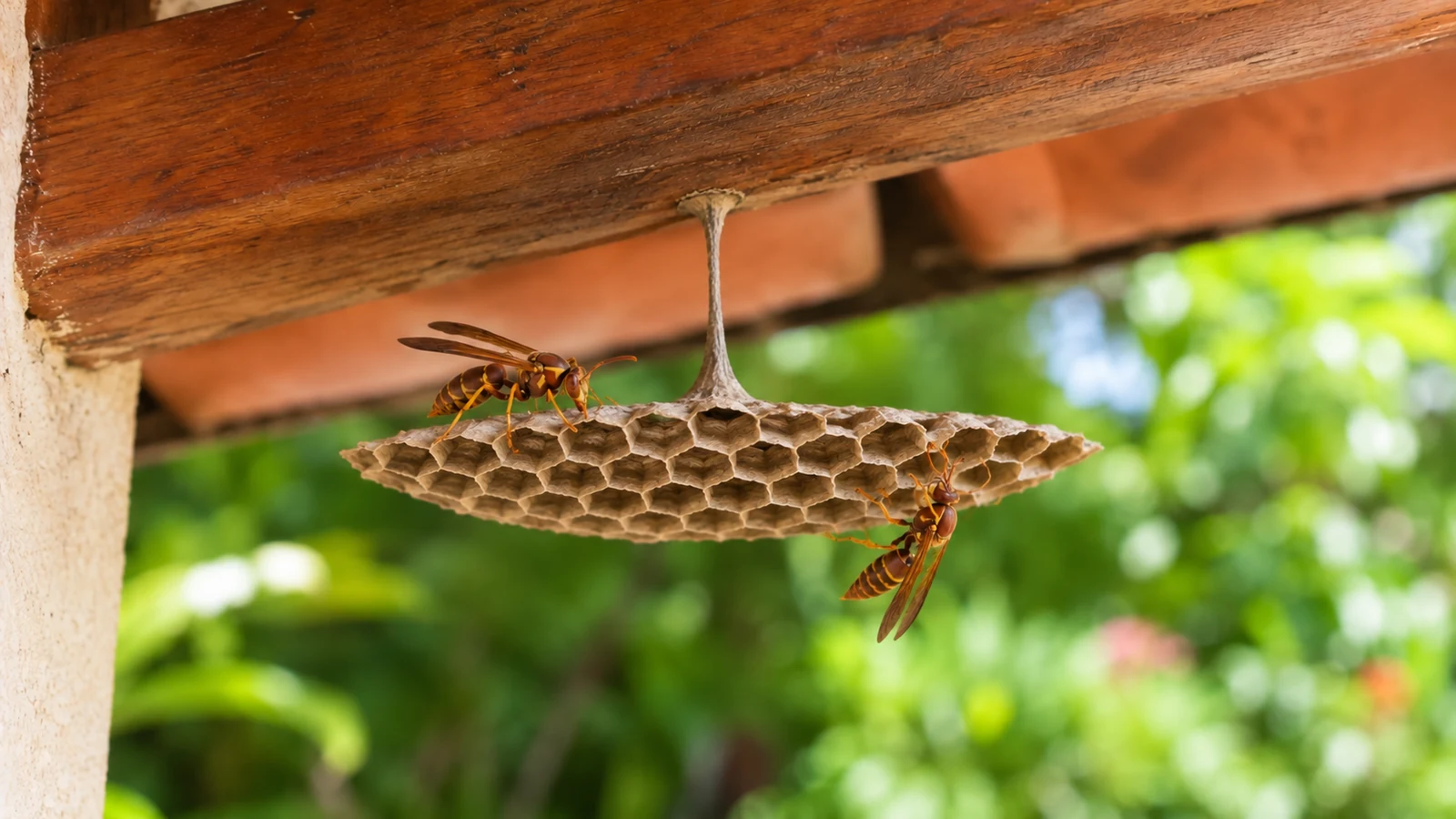
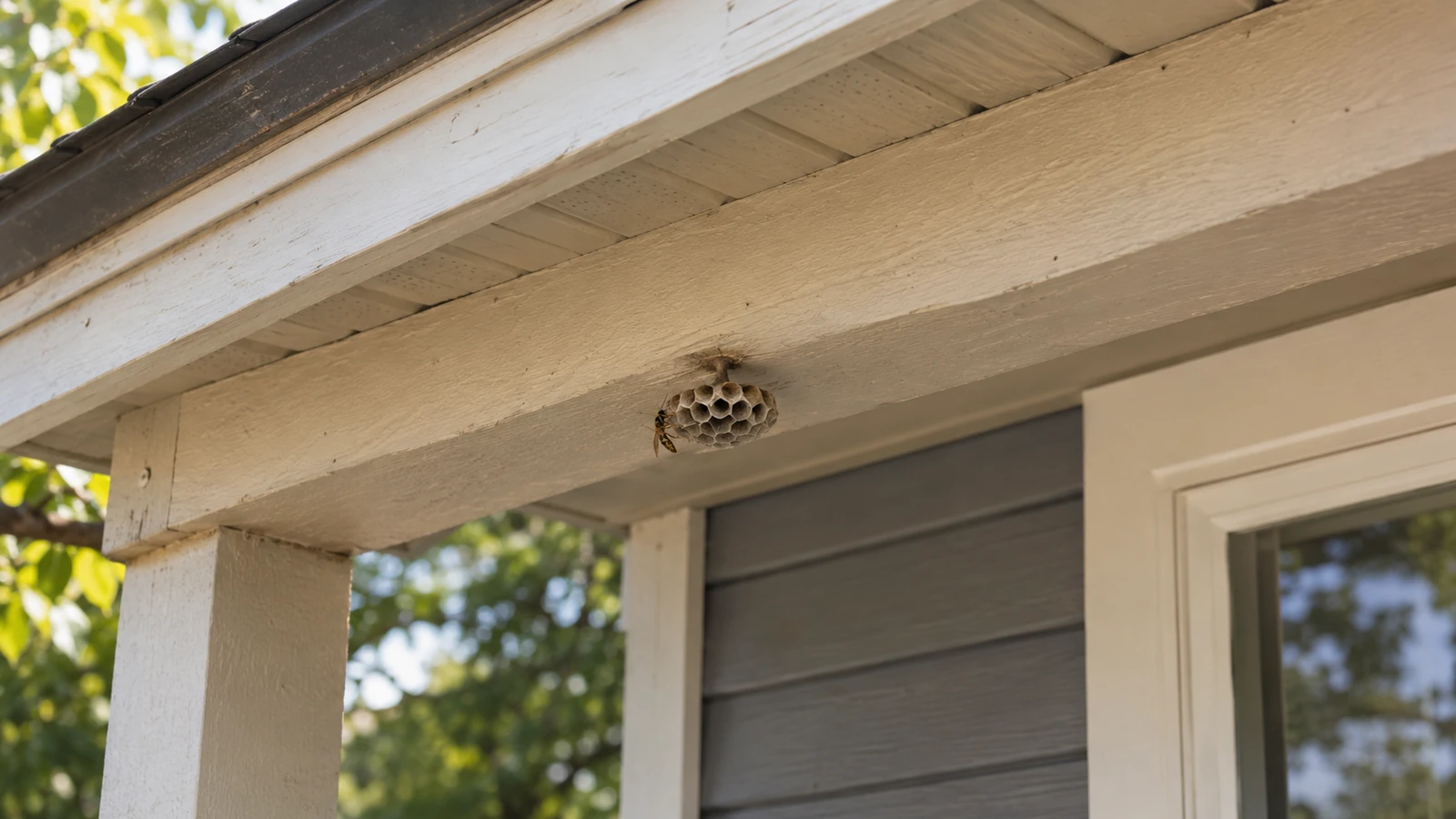
A small gray comb is hanging beneath a porch roof, with its hexagonal cells visible from below. A long-legged wasp lands on it, then another flies away. That combination is a strong clue that you are looking at a paper wasp nest, but you can examine the evidence without getting closer.
Paper wasps in the genus Polistes live in social colonies and build distinctive paper combs. Their body shape, exposed nest structure and activity are more informative together than any one color pattern. The important next step is to identify what you can already see and decide whether the location creates a real risk of contact.
What paper wasps look like
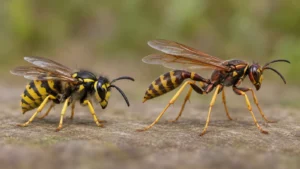
Paper wasps are slender, narrow-waisted insects with long legs and wings that fold lengthwise over the back when at rest. Their legs often trail beneath them in flight. Many Polistes species are reddish brown with darker or yellow markings, while others are conspicuously black and yellow.
A black-and-yellow paper wasp is easily mistaken for a yellowjacket. The European paper wasp, Polistes dominula, is one example. Its relatively long legs and tapered body help distinguish it from more compact yellowjackets. Colors vary among species and individuals, so a distant photograph may support a paper-wasp identification without establishing the exact species.

Identification in 30 Seconds
- Look for a slim wasp with a narrow waist and noticeably long legs, especially when it flies.
- Check whether the nest is a single exposed comb of hexagonal paper cells, rather than a wrapped paper ball.
- Look for the comb attached beneath a sheltered surface, sometimes by a short stalk.
- Use the insect, nest structure and location together; yellow-and-black coloring alone is not enough.
A typical paper wasp nest can be shaped like a small upside-down umbrella. Its gray or tan cells are visible from the open side, although adults or pale papery caps may partly cover them. Nests inside a sheltered cavity can be harder to recognize from the outside.
How to recognize a paper wasp nest safely
Paper wasps chew weathered wood fibers or other plant material into a papery pulp and arrange it into cells for their young. The comb usually lacks the outer envelope found around many yellowjacket or bald-faced hornet nests. One exposed layer of cells is the most useful nest feature to look for.
Under eaves, porch ceilings, beams, deck structures and other sheltered surfaces, the cells may face downward. Some Polistes nests are built in protected recesses, including hollow fixtures or pipes, where the familiar umbrella outline is not visible. Do not reach into such spaces to check.
From a place you already use safely, note these details:
- Structure: Are separate hexagonal cells visible, or is the nest hidden by a complete paper covering?
- Attachment: Does one exposed comb hang from a protected surface, rather than appearing as a mass of dried clay?
- Activity: Are wasps repeatedly arriving at the same comb, tending the cells or leaving to forage?
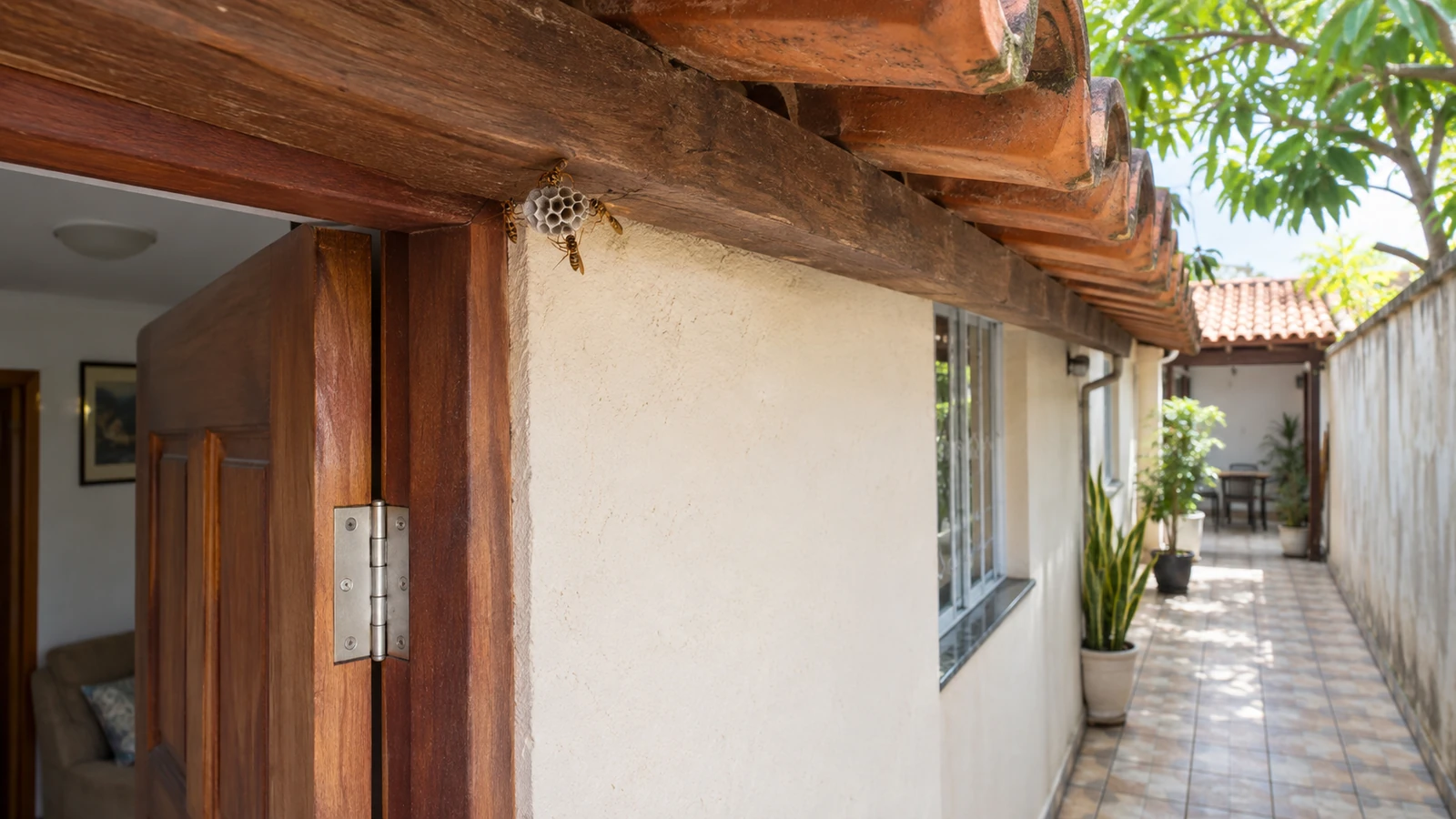
- Access: Is the nest near a door, railing, walkway or other place where someone could accidentally brush against it?
Photograph the nest only if it is visible without approaching it. Do not climb, reach beneath the comb, tap the surface or block an active entrance to get a clearer view.
Identification Mistakes
- Identifying every yellow-and-black wasp as a yellowjacket.
- Treating a clay-cell nest or an enclosed paper ball as a typical Polistes comb.
- Assuming a nest is inactive because no wasps appear in one brief glance.
Key Clue
An exposed, single-tier paper comb with open hexagonal cells and slender, long-legged wasps is strong evidence for a Polistes paper wasp colony.
What to Watch For
A nest beside a frequently used doorway or beneath an object that moves may be disturbed unintentionally. Judge the contact risk before deciding whether to leave it undisturbed.
Paper wasp or a different wasp? Put the clues together
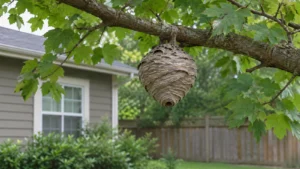
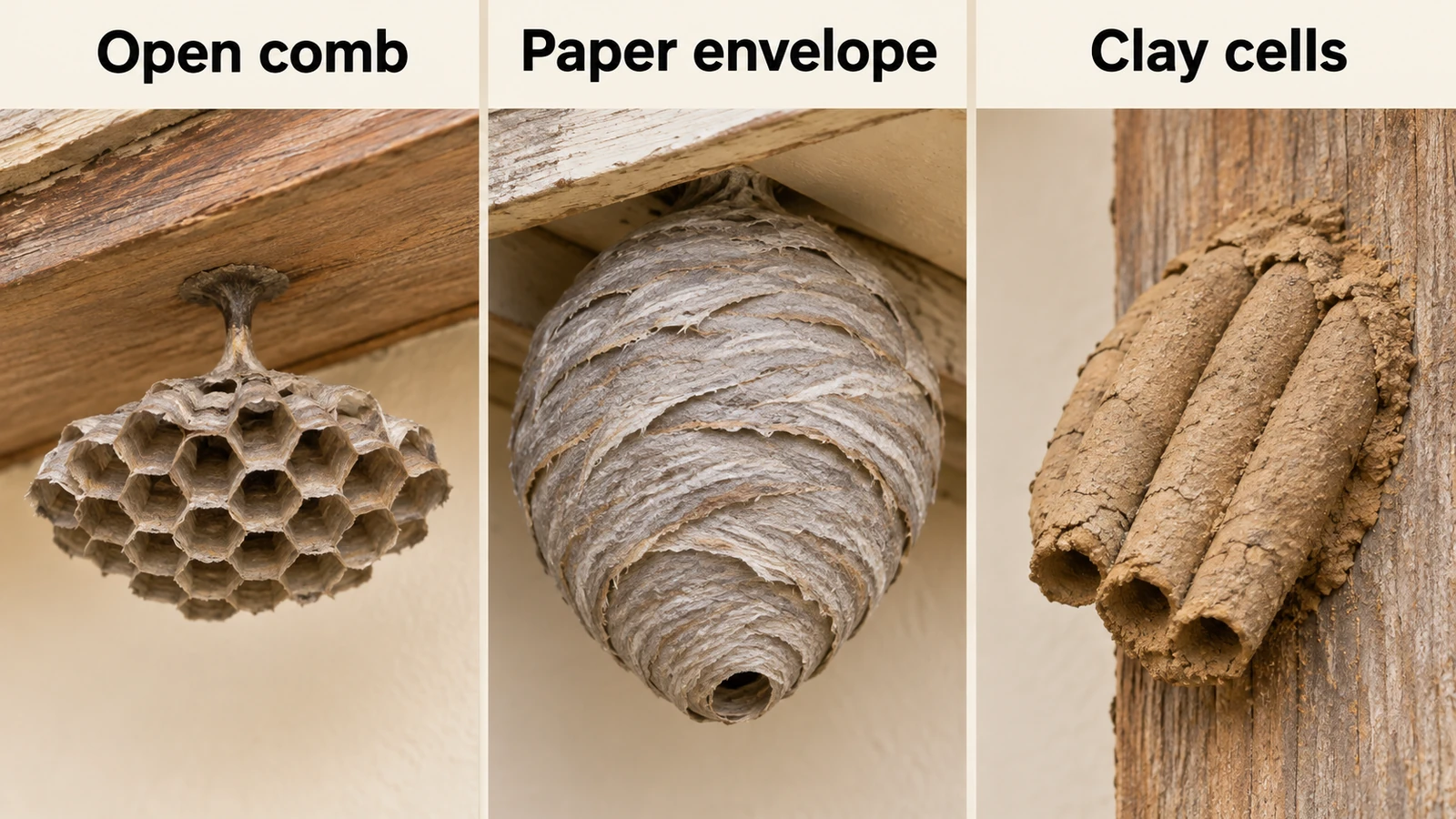
An enclosed gray paper ball, with the comb hidden inside an outer covering, points away from a typical paper wasp nest and toward another social wasp group. A compact yellow-and-black insect may also be a yellowjacket. For a closer comparison of the insects themselves, see the wasp versus yellow jacket guide.
A mud dauber nest is a different structure: dried clay cells or tubes attached to a sheltered surface, rather than exposed paper hexagons. If the shape is unclear or only a nest opening is visible, the wider wasp and hornet nest types guide helps sort the possibilities.
Paper wasps often collect nectar and hunt caterpillars or other soft-bodied insects to feed their larvae. Seeing one searching plants or collecting fibers on a fence does not locate its nest. A sequence of visits to the same identifiable comb is more informative than a single passing wasp.
Use this quick comparison when the nest can be observed without disturbing it.
| What you can see | Most likely interpretation | What to check from a safe place |
|---|---|---|
| One open paper comb, visible hexagonal cells, long-legged wasps | Polistes paper wasps are likely | Whether adults are visiting the same exposed comb |
| Rounded paper nest with an outer envelope hiding the cells | Another social wasp nest is more likely | The overall shape and location, without approaching an entrance |
| Dried clay tubes or clustered mud cells attached to a surface | Mud dauber or another mud-building wasp is plausible | Whether the material is clay rather than paper |
| A slender wasp away from any nest | Possible paper wasp, nest still unknown | Body shape and flight posture, without assuming a nearby colony |
Does the nest’s location call for action?
Paper wasps can sting when their nest is threatened, but adults away from the nest are often simply foraging. The useful distinction is whether ordinary movement around the home might bring someone into contact with an occupied comb. A sheltered nest high on an unused outbuilding creates a different situation from one directly above a door that opens every day.
One wasp flying across a yard offers little evidence about where it lives. Repeated visits to the same visible comb, especially with adults attending cells, are stronger evidence of an active nest. Some cells may have light-colored caps covering developing pupae. An apparently empty comb, on the other hand, should not be tested for activity by touching or shaking it.
Colonies commonly develop through the warmer part of the year, with new reproductive females surviving cold seasons in protected places in many regions. Timing varies with climate and species, and old combs can persist after their colony is gone. Neither the month nor the appearance of a vacant nest is a reliable reason to handle it.