Identification
Eastern subterranean termites: how to recognize them
Recognize the eastern subterranean termite by its castes, regional range, swarming habits, and sheltered routes, and learn which clues require expert confirmation.
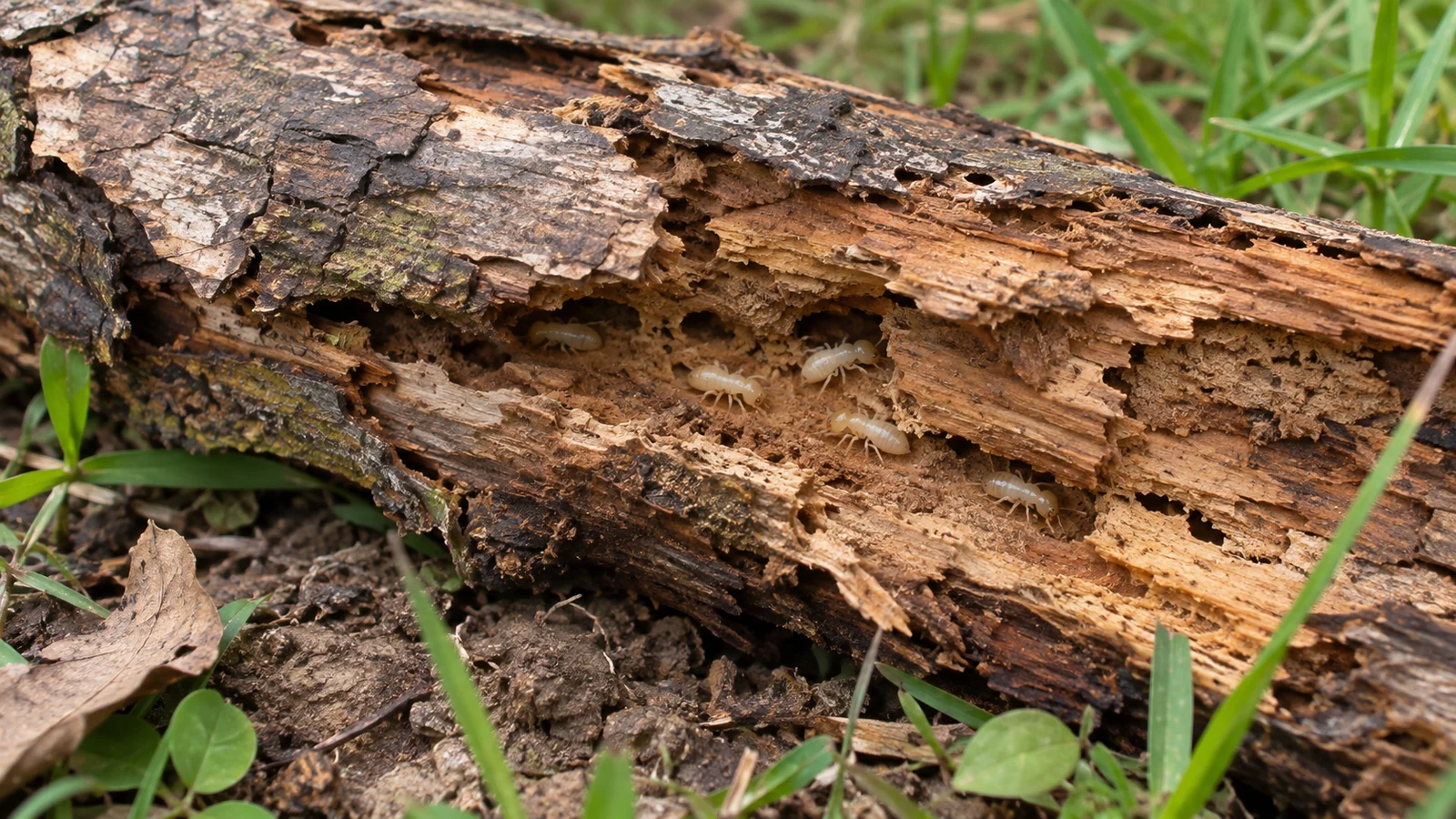
If you live in the eastern United States and find termites in a basement, a stump, or the wood around your home, the eastern subterranean termite (Reticulitermes flavipes) is one of the first species to consider. It is the most widely distributed native subterranean termite in the region.
Knowing that this species is common where you live helps narrow down the possibilities. To decide whether the insects are actually threatening your house, look at their appearance, the season, and where the activity originates.
What does an eastern subterranean termite look like?
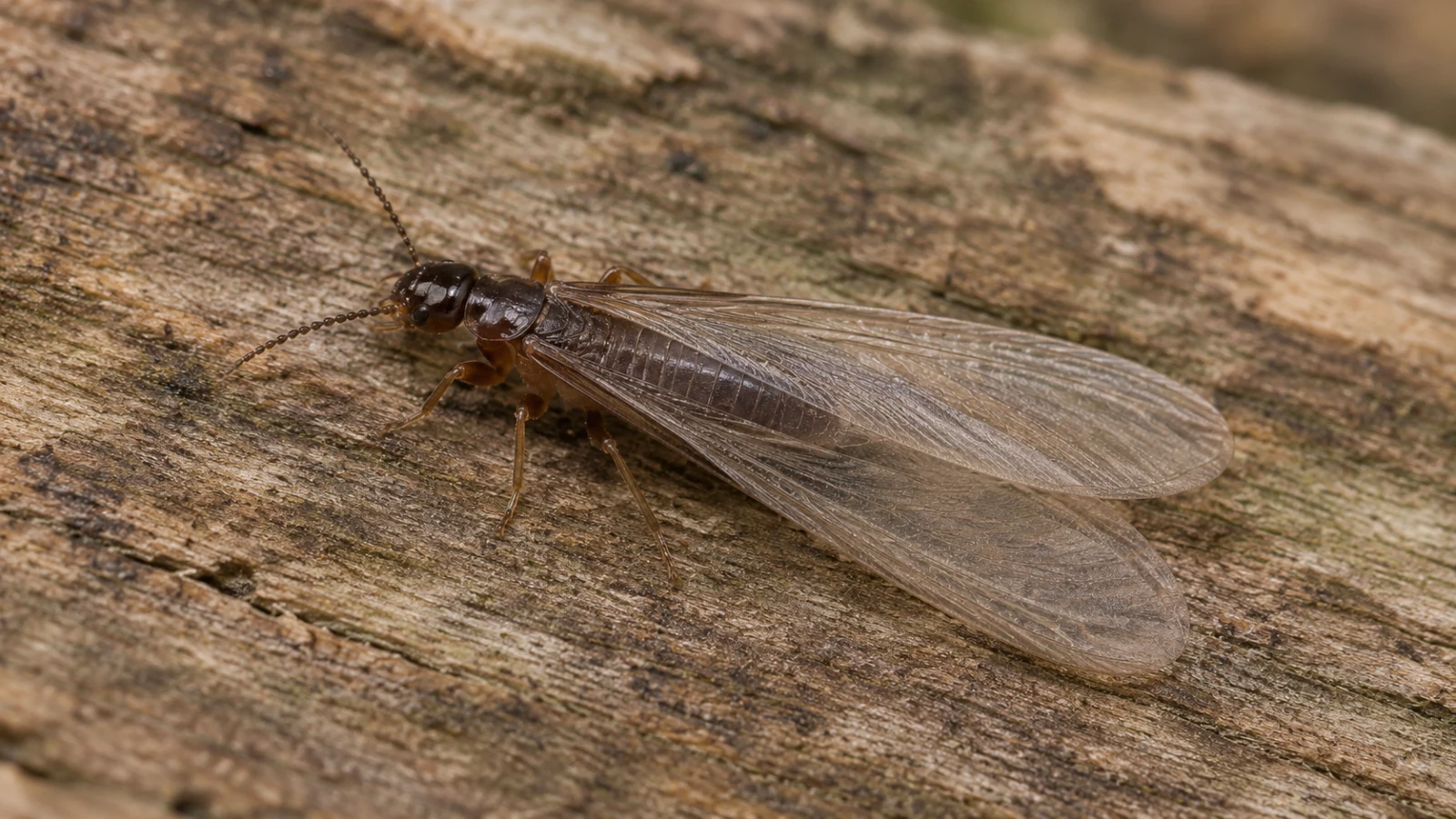
The winged adults, called swarmers, are usually dark brown to nearly black, with four long, translucent wings of similar length. An eastern subterranean termite swarmer measures roughly 3/8 inch from its head to the tips of its wings. The wingless termites found in sheltered wood or soil look quite different.
Identification in 30 Seconds
- Dark swarmers with a broad waist, beadlike antennae, and four similar wings: likely termites rather than flying ants.
- Pale, soft-bodied workers: compatible with subterranean termites, but difficult to identify to species.
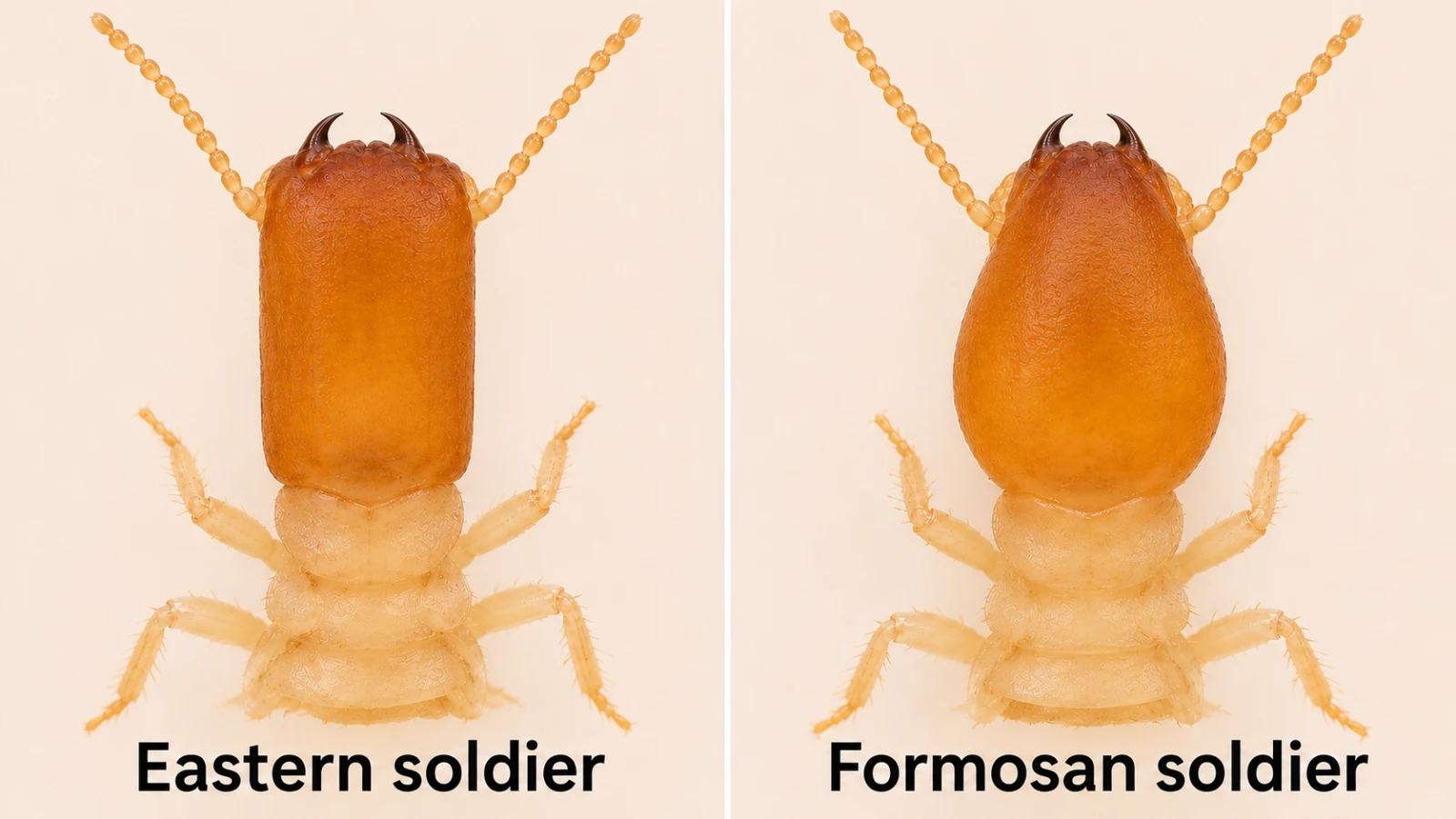
- Soldiers with an elongated, rectangular amber-colored head and prominent curved jaws: a useful clue to the genus Reticulitermes.
- A dark daytime swarm in eastern North America, especially in the warmer part of spring: consistent with R. flavipes, among other possibilities.
Workers and soldiers
Workers spend most of their lives out of sight. They are cream-colored, wingless, and responsible for collecting food and maintaining the colony’s sheltered passages. The pale workers of several subterranean termite species look remarkably similar.
Soldiers have a hardened head and large mandibles. In R. flavipes, the head is more rectangular than the teardrop-shaped head of a Formosan subterranean termite soldier. The soldier is useful for narrowing down the group, although closely related Reticulitermes species may require more detailed examination.
Where this species occurs in the United States
R. flavipes is widespread across the eastern half of the country and occurs inland into parts of the central United States. Its range extends north toward the Great Lakes and into southern Canada, as well as south through Florida. Isolated populations have also been documented in California.
In many eastern states it is a leading structural termite pest. In the Southeast, its range overlaps with other native and introduced subterranean species. Along the Pacific Coast, the western subterranean termite (Reticulitermes hesperus) is more characteristic. Geography helps establish which species are plausible; it is not a substitute for examining the insect.
Where to look for evidence of activity
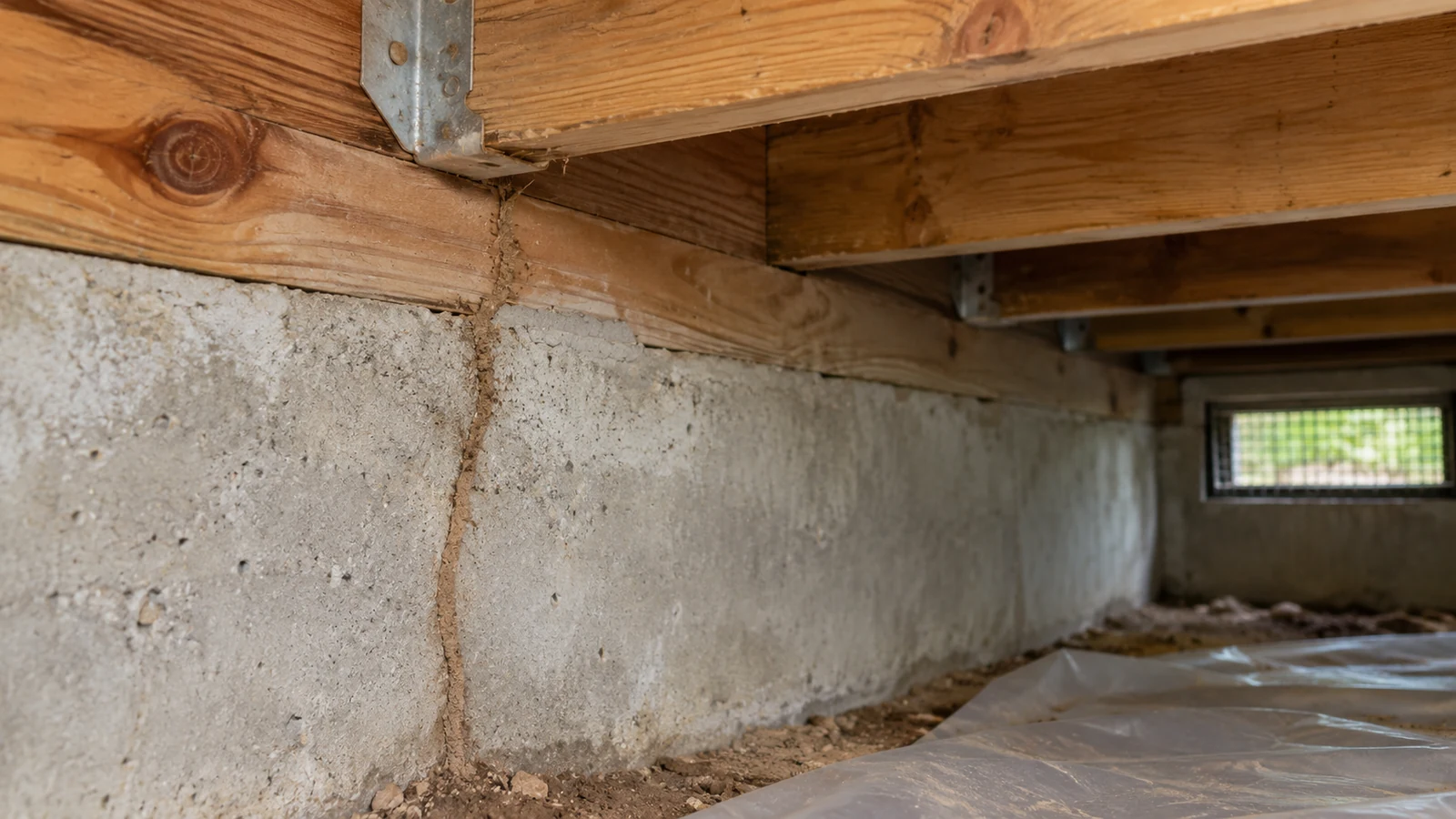
Eastern subterranean termites naturally occupy soil and feed on wood, including dead roots and decaying logs. The same behavior can bring them into contact with wooden parts of a building. They may cross an exposed foundation inside earthen shelter tubes or reach framing through concealed gaps and joints.
From accessible areas, look for a visible connection between soil, a suspected shelter tube, and nearby wood. On a slab foundation, an entry route can remain hidden beneath the floor even if the exterior foundation looks clear. In a basement or crawlspace, part of a route may be visible above a foundation wall.
Record the exact place you find the insects or a tube. Leave the tube intact, and photograph any already exposed evidence rather than probing wood, opening finished walls, or entering a difficult-to-access crawlspace.
Identification Mistakes
- Naming R. flavipes from a pale worker alone.
- Assuming every dark termite swarmer in a southern state belongs to this species.
- Dismissing a possible infestation because the exposed foundation has no mud tubes.
Key Clue
A soldier’s head shape and the anatomy of an intact swarmer can narrow down the termite’s identity much more effectively than the color of a shelter tube.
What to Watch For
An outdoor colony feeding in dead wood is part of the local ecosystem. Its presence near a building becomes more relevant when there is also evidence of access to structural wood.
What your observations tell you about the species
Eastern versus other subterranean termites
The dark southern subterranean termite (Reticulitermes virginicus) can also produce almost black swarmers. The light southern subterranean termite (Reticulitermes hageni) generally has lighter winged adults. R. flavipes swarmers tend to be larger than those of both of these species, but their size and color are best evaluated together with finer anatomical details.
An expert may examine the shape of the pronotum, the plate just behind the head, or compare wing and soldier features under magnification. When closely related species remain difficult to separate, a specialist may use genetic identification. A clear identification of native subterranean termites is often sufficient for the initial pest-management assessment.
Eastern versus Formosan subterranean termites
Where both occur, dark swarmers flying during the day favor R. flavipes over Formosan termites (Coptotermes formosanus), which typically have golden-brown winged adults and swarm around dusk or at night. The shapes of their soldiers’ heads offer a further distinction.
Both can build shelter tubes. The tubes themselves cannot identify which of the two species made them.
Drywood termites or flying ants?
Unlike eastern subterranean termites, drywood termites live within wood without needing contact with soil and may leave small, hard fecal pellets beneath infested material. If pellets are your main finding rather than an earthen route, consider that possibility.
Winged ants have a clearly constricted waist, bent antennae, and larger front wings than hind wings. Check those features first when you find a dark, winged insect; the color alone is unhelpful.
When do eastern subterranean termites swarm?
In the eastern United States, warm daytime conditions often trigger flights, particularly around spring rains. There is a regional difference: in Florida, R. flavipes commonly flies from January through April, whereas Pennsylvania typically sees flights between February and June.
Mature colonies can release winged adults over a short period, and the timing varies with local weather. A heated building may also see an unusually early indoor swarm.
Finding swarmers outdoors versus indoors
A swarm rising from a stump in the yard establishes that a colony is active in the vicinity. It does not establish that the house is infested. The closer the activity is to wood connected to the house, the more useful a building assessment becomes.
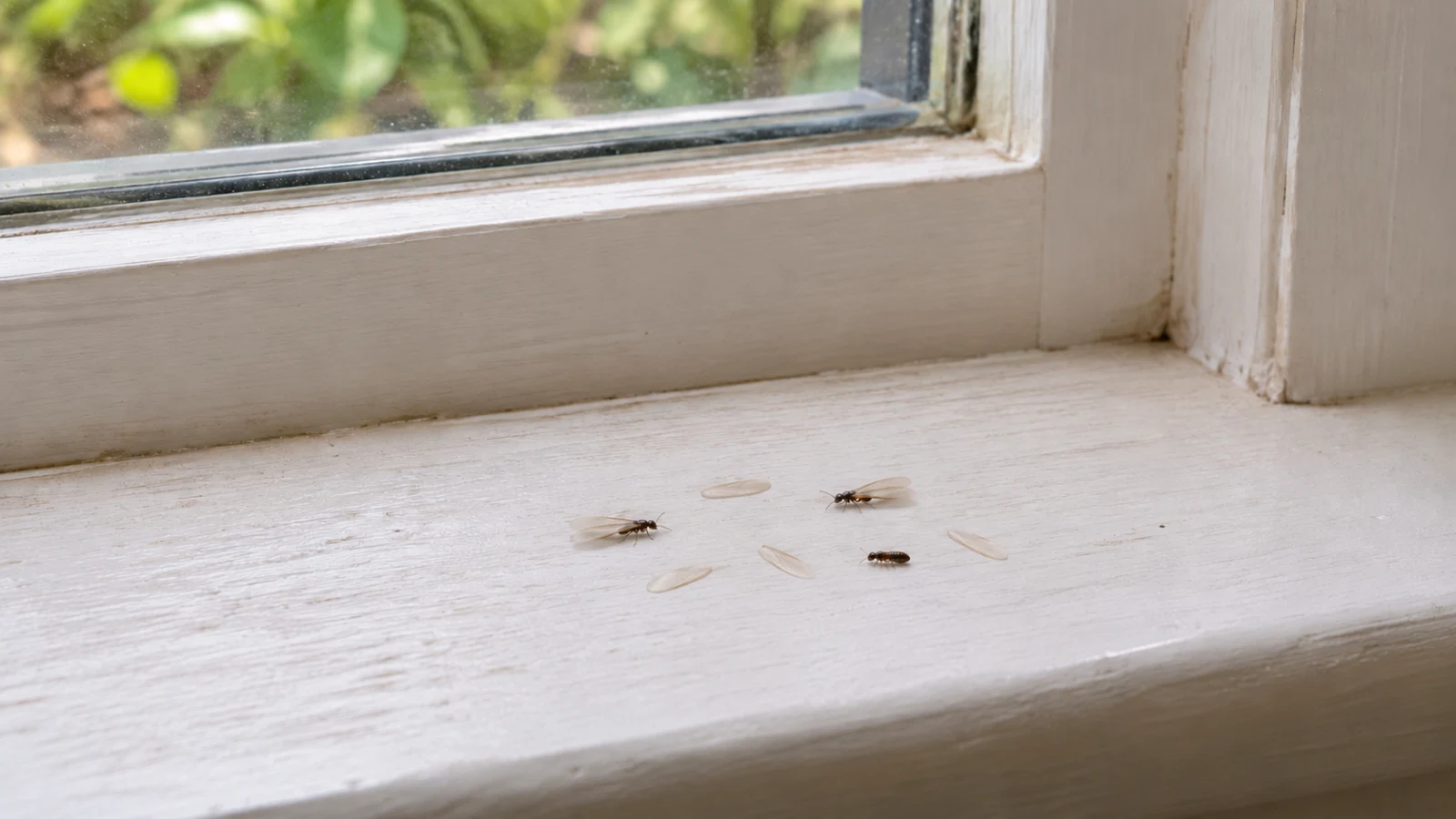
If you find termite swarmers clustered around a closed indoor window, check whether you can see an emergence point nearby. The insects may have moved toward the light after leaving a concealed part of the structure. A brief swarm can be over by the time an inspector arrives, so save the location and date of your observation.
How serious is the finding?
Live termites already visible in structural wood, a convincing shelter tube leading toward the framing, or an indoor swarm originating from the building all warrant a prompt inspection. The number of swarmers on a windowsill is a poor measure of how much wood has been affected.
Do not wait for another swarm to judge whether the original problem has resolved. The workers can remain active in sheltered areas after the winged adults disappear.