Identification
What does a cockroach look like? Key features for identification
Recognize the basic features of a cockroach, learn how an adult differs from a nymph, and use reliable visual clues to choose the right next identification check.
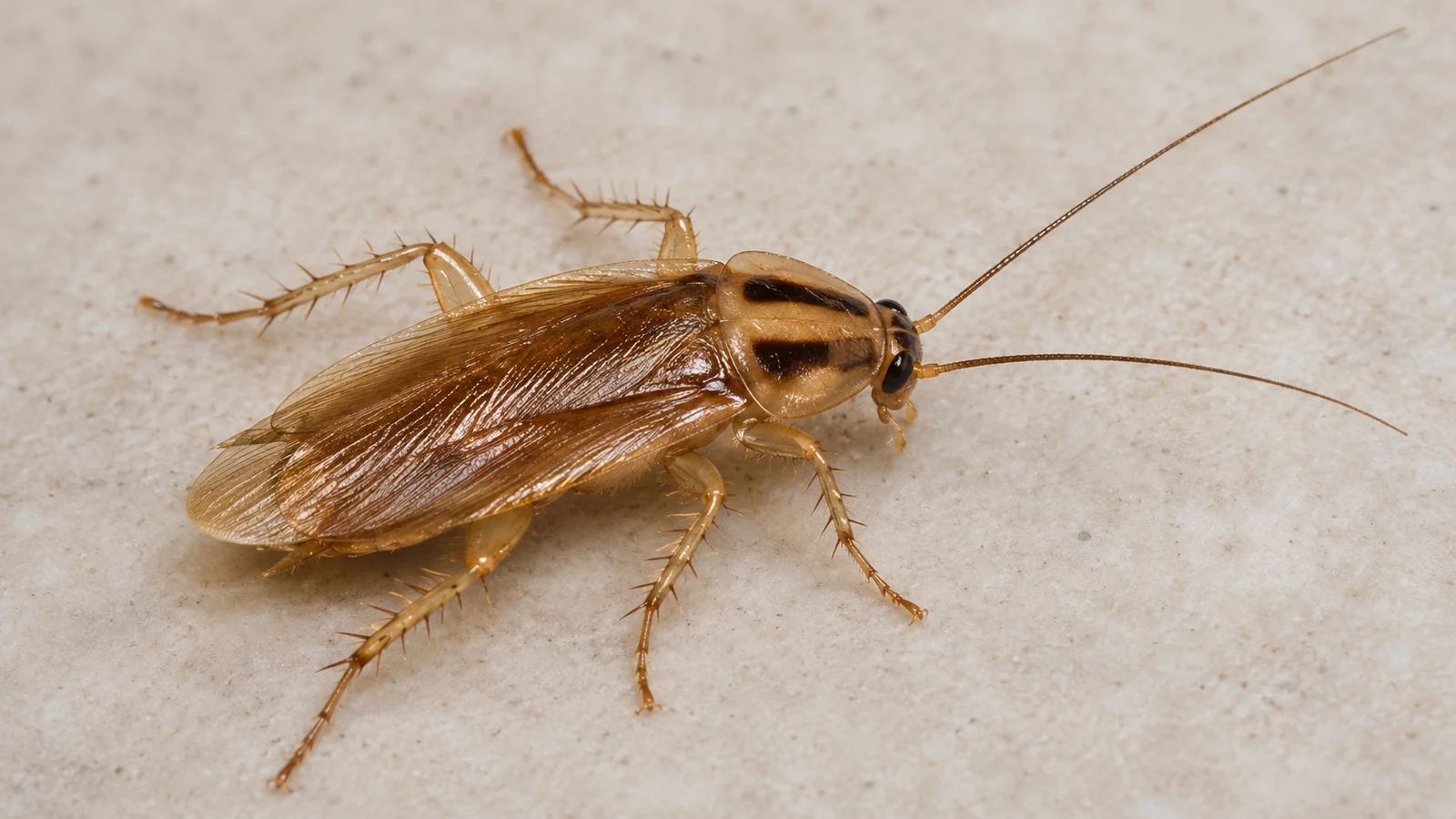
You see a brown insect dart across the bathroom floor and disappear beneath a cabinet. Was it a cockroach, or something that just looked like one?
A typical cockroach has a flattened, oval body, two long antennae, six spiny legs and a shieldlike plate that partly hides its head. Looking for these features together is more reliable than judging the insect by its color, speed or size.
What does a cockroach look like up close?
Viewed from above, a cockroach usually looks elongated and oval rather than round or dome-shaped. Its body is relatively flat from top to bottom, allowing it to squeeze into narrow gaps. The head points downward and is partly covered by a broad plate called the pronotum, located just behind it.
Two long, slender antennae extend from the head, sometimes reaching approximately the length of the body or farther. Cockroaches have six legs arranged in three pairs, with prominent spines along the legs. Many adults have wings that lie flat over the back, but wing length varies considerably.
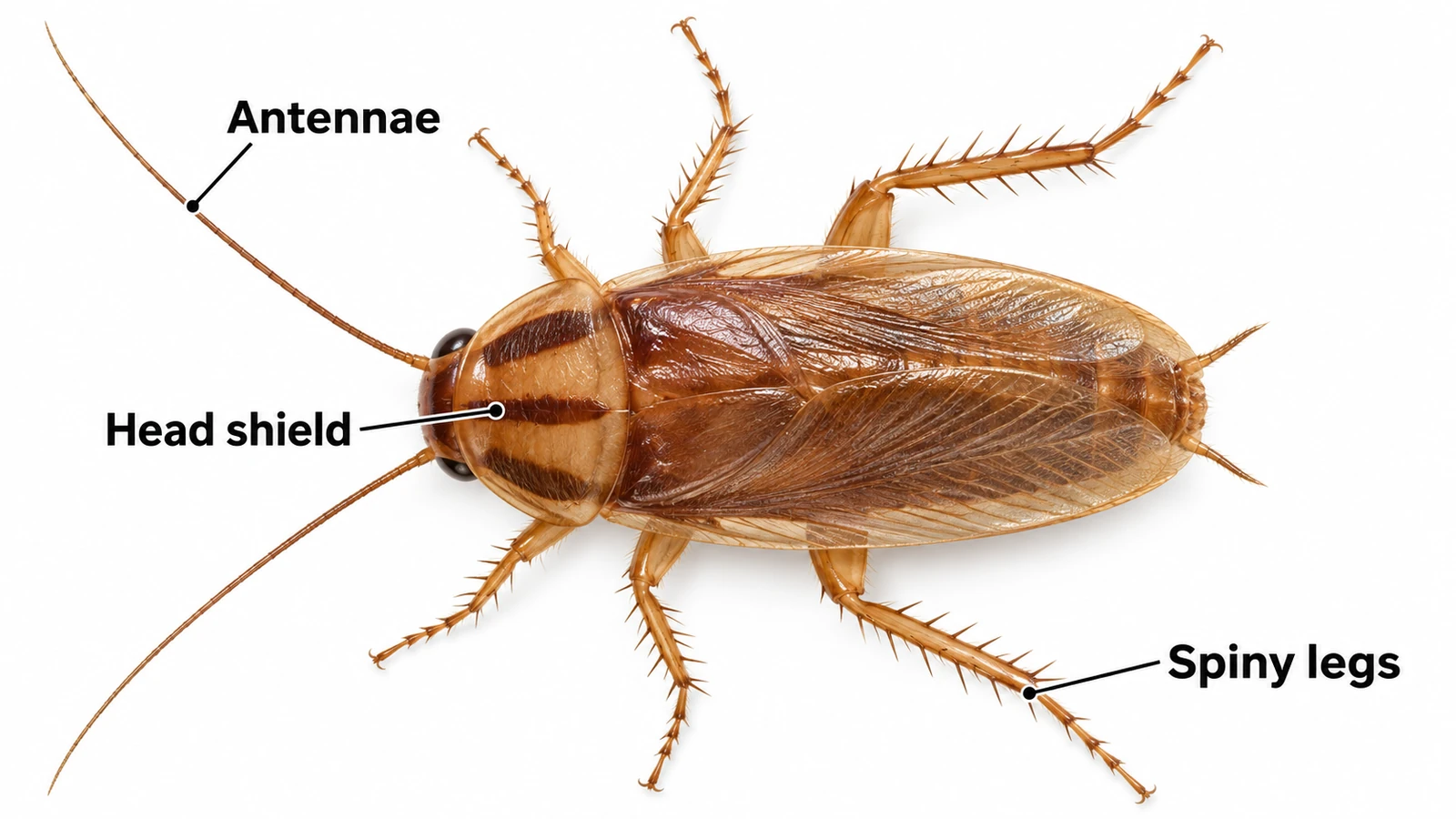
Identification in 30 Seconds
Look for this combination of features:
- Body: Flattened, elongated oval, often widest through the middle.
- Head: Partly hidden beneath a broad shield when viewed from above.
- Antennae: Two long, thin, flexible feelers projecting from the head.
- Legs: Six outward-splayed legs, usually with noticeable spines.
- Wings: Often visible on adults, but absent as fully developed structures in nymphs.
Size can help, provided you measure the body rather than including the antennae. An adult German cockroach is roughly half an inch long, while a large American cockroach can reach around 1½ to 2 inches. Other species fall outside these examples, and a very small cockroach is not necessarily a newborn.
Color is even less dependable. Depending on the species and life stage, roaches can be tan, reddish brown, dark chocolate brown or nearly black. Some have stripes or pale bands; others appear almost uniformly colored. A close view may also reveal two small appendages, called cerci, at the rear of the abdomen. They can be difficult to see beneath the wings or in an ordinary photograph.
How to check whether the insect is a cockroach

Start with the view you have. If the insect is still accessible, try to get a clear photograph from above in good light. A transparent container can keep it in place long enough for observation without touching it directly. Avoid crushing the insect before taking a picture, since damaged body parts make identification harder.
The most useful photograph shows the entire body, including the head area, antennae and legs. If you can safely photograph it from the side as well, look for the low body profile and the way the legs extend outward.
A few details make the check much easier:
- Get a sense of scale. Estimate or measure the body length without counting the antennae. A ruler alongside a safely contained insect can help.
- Look at the back. Identify whether you can see wings, an exposed segmented abdomen or a smooth-looking hard shell.
- Check the head and legs. A visible head shield, long antennae and spiny running legs together provide a stronger identification.
- Record where you found it. A kitchen cabinet, bathroom, basement or exterior doorway provides useful context, especially when the species is still unknown.
Roaches often run quickly and hide when disturbed, and many are most active at night. Those behaviors fit a cockroach sighting, but they are not distinctive enough to identify the insect on their own.
Identification Mistakes
- Assuming every fast-moving, dark brown insect is a roach.
- Ruling out cockroaches because the insect has no visible wings.
- Naming a particular species using color or size alone.
Key Clue
The head shield is especially helpful. From above, the head of a typical cockroach is partly concealed by the pronotum. Combined with long antennae and six spiny legs, this is a stronger clue than color.
What to Watch For
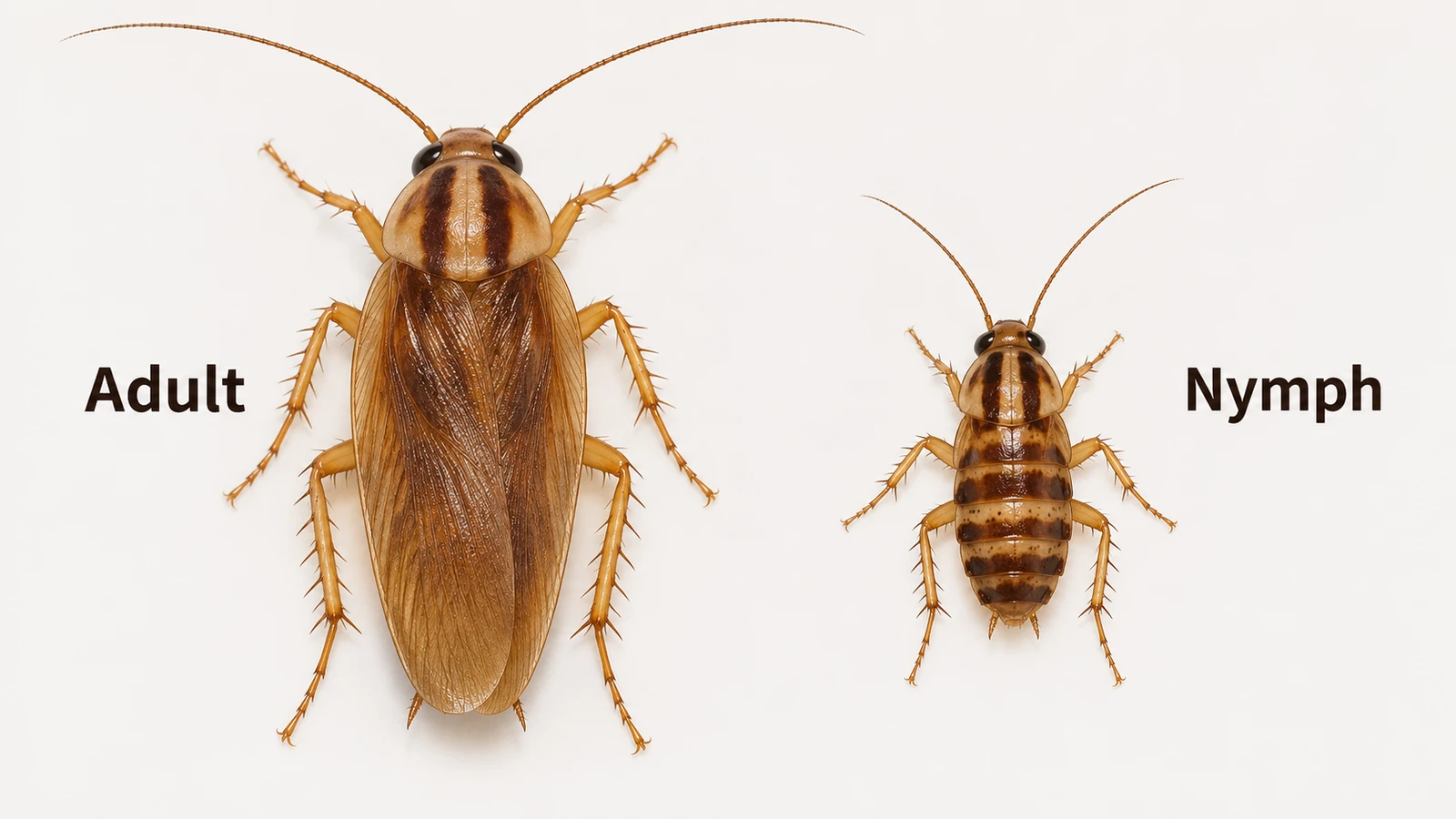
Some adult female cockroaches have short or reduced wings. A wingless-looking cockroach is therefore not always a nymph. Consider the overall body shape, size and other markings before judging its life stage.
What can you tell from its size, wings and body shape?
The first distinction is between recognizing a cockroach and naming its species. You can often recognize the characteristic cockroach body plan without knowing whether the insect is a German, American, Oriental or another kind of roach.
Small cockroaches and nymphs. A young cockroach, called a nymph, resembles a smaller version of the adult body form but has no fully developed wings. Newly hatched nymphs can be extremely small, and their colors and markings may differ substantially from those of adults. A newly hatched roach is a walking insect with antennae and legs, not a tiny egg-shaped capsule. For detailed stage-by-stage clues, use the baby cockroach identification guide.
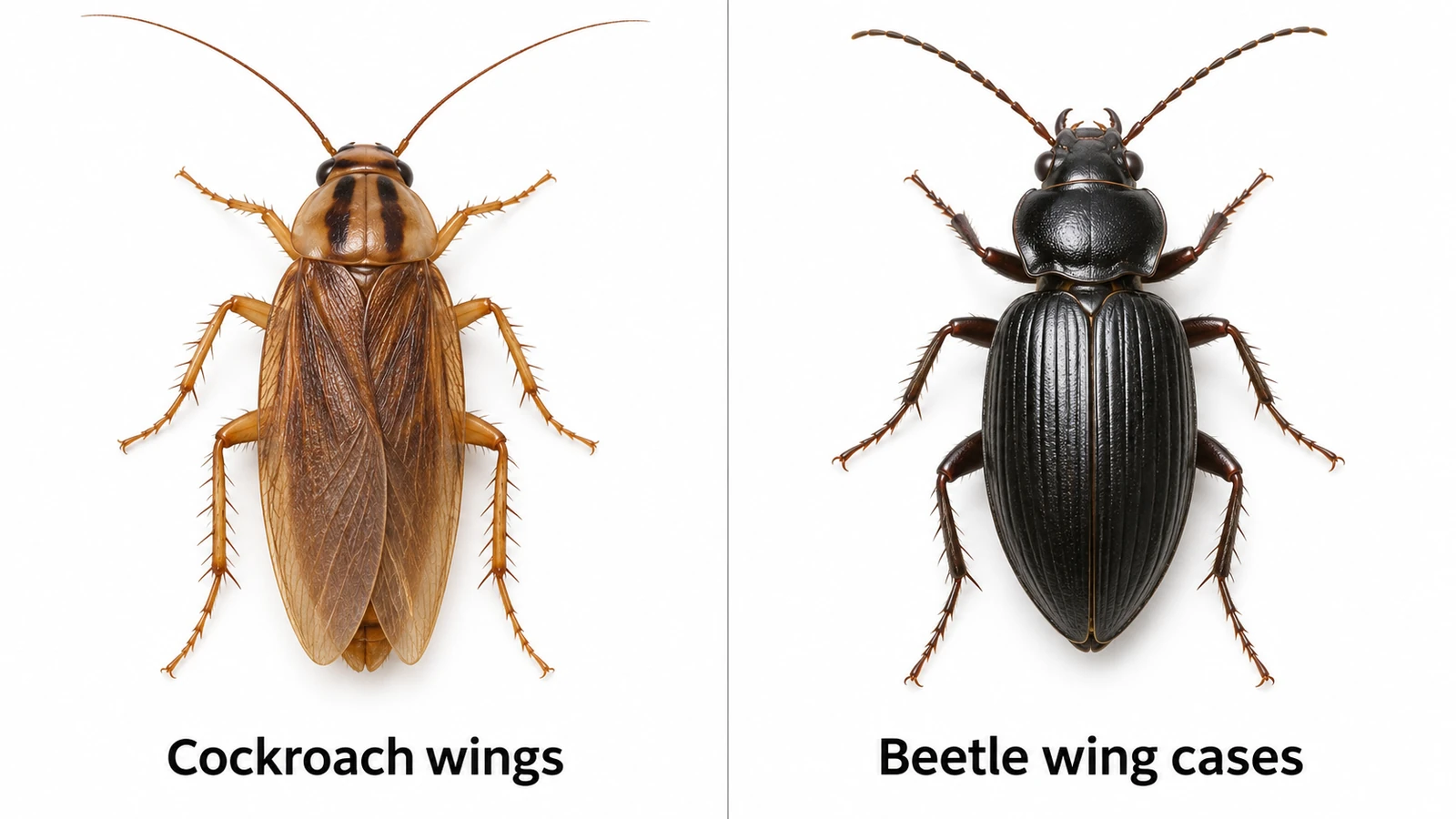
Adults and their wings. Many adult cockroaches have flattened, leathery front wings lying over the abdomen. Others have short wings or reduced wings, including adults of certain species. Wing presence can support identification, but it needs to be considered alongside the rest of the insect.
Possible look-alikes. Beetles can be mistaken for roaches, particularly when the insect is dark and seen briefly. Many beetles have harder, more rigid front wing covers that meet along a distinct line down the back, unlike typical cockroach forewings. Crickets and other insects can also be confused with roaches at a glance. A detailed comparison is more useful when the overall body features do not match.
Different U.S. cockroaches. Species vary by region, size, markings and habitat. Common names such as "water bug" and "palmetto bug" are used inconsistently and may describe different insects depending on where you live. Once you recognize the body form, the types of cockroaches in the U.S. guide can help narrow down the species.
Use these combinations to interpret what you actually observed:
| What you observed | What it suggests | Best next check |
|---|---|---|
| Flattened oval body, long antennae, spiny legs and a partly hidden head | Strong visual match for a cockroach | Compare its overall size and markings |
| Small, wingless insect with a cockroach-like body | Possible cockroach nymph | Examine the head shield and juvenile features |
| Winged, flattened insect with typical roach antennae and legs | Adult cockroach is plausible | Compare common adult species |
| Dark insect seen briefly, with head and legs unclear | Identification remains uncertain | Obtain a clearer view and compare look-alikes |
What does finding one cockroach tell you?
Identifying the insect and determining whether your home has an infestation are two different tasks.
A single cockroach near an exterior doorway may have wandered in from outside. Some cockroach species live mainly outdoors and enter buildings occasionally. Repeated sightings of smaller roaches inside the same kitchen cabinets or around indoor plumbing deserve closer investigation.

Pay attention to the pattern rather than treating every sighting as equivalent. Keep the clearest photograph you have, along with the approximate size, location and whether you have seen similar insects before. These details are useful if you later need to identify a species or decide whether further inspection is necessary.
The insect’s appearance can tell you what it probably is. The frequency and location of sightings, together with any additional physical evidence, help determine what the finding means for your home.
Good to Know
A cockroach can appear almost white immediately after molting. Its new outer covering gradually darkens as it hardens, often within hours. If the body features match, an unusually pale insect may simply be a freshly molted cockroach.
Learn more: