
Identification
How to tell if you have bed bugs: signs to check first
Check mattress seams and bed-frame joints in a useful order, then sort what you find into confirmed bed bug presence, suspicious traces, or no physical evidence.

You wake up with itchy marks, then notice a tiny dark speck on your sheet. It is easy to jump from those clues to a bed bug diagnosis. But skin reactions and stray stains have other possible explanations.
The useful next move is to look for an insect or recognizable traces near a place where someone sleeps. Start with a focused check, then decide whether the evidence confirms a bed bug, calls for a closer look, or points elsewhere.
What signs are worth checking for?
An identifiable live bed bug is the clearest direct evidence. Adults are visible without magnification, and smaller, paler nymphs can be seen too, although they are easier to miss. If you find an insect, preserve it intact or take a sharp close-up instead of identifying it by color alone.
Bed bugs can also leave dark fecal spots near hiding places, pale shed skins, tiny eggs attached inside crevices, and sometimes rust-colored marks on bedding. The location and combination of clues matter. A cluster along a protected seam is more informative than one unexplained stain on a sheet.
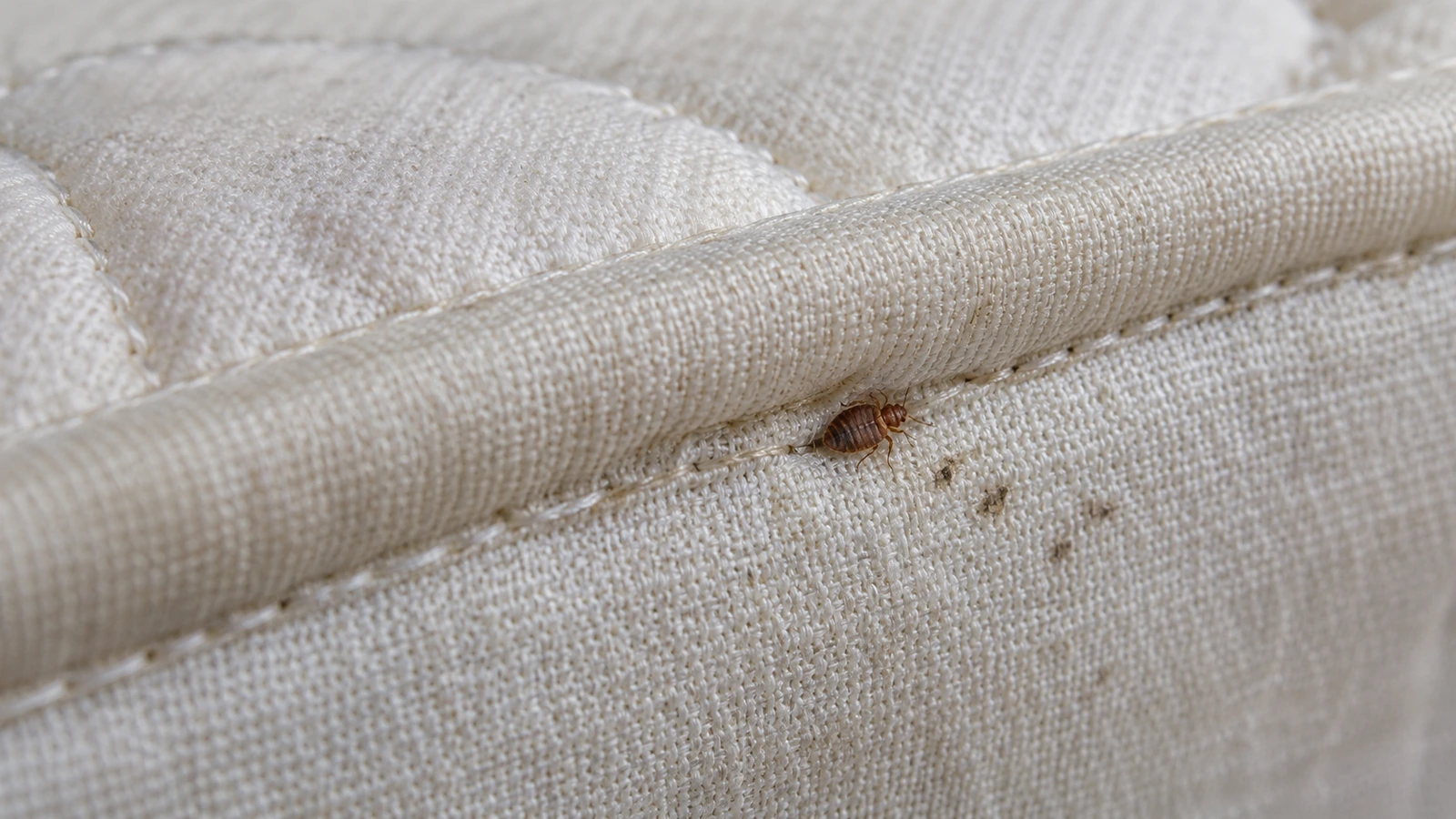
Identification in 30 Seconds
- A flat, oval insect or a smaller nymph near a bed seam or frame joint is worth collecting for identification.
- Small dark spots concentrated along stitching or in a narrow gap deserve a closer look.
- Pale cast skins or tiny eggs tucked into a crevice may support the suspicion.
- Itchy marks without an insect or physical traces leave the cause uncertain.
On fabric, suspected droppings may resemble dark ink dots, but dirt and unrelated stains can look similar. If spots are your main clue, compare them with bed bug droppings. If you find a pale shell, examine the differences shown in the guide to bed bug cast skins.
You may not see insects walking on the sheet. Bed bugs usually remain in sheltered gaps between feeding, so the absence of a bug in plain sight tells you little about what is inside the nearest crevice.
Where should you look first?
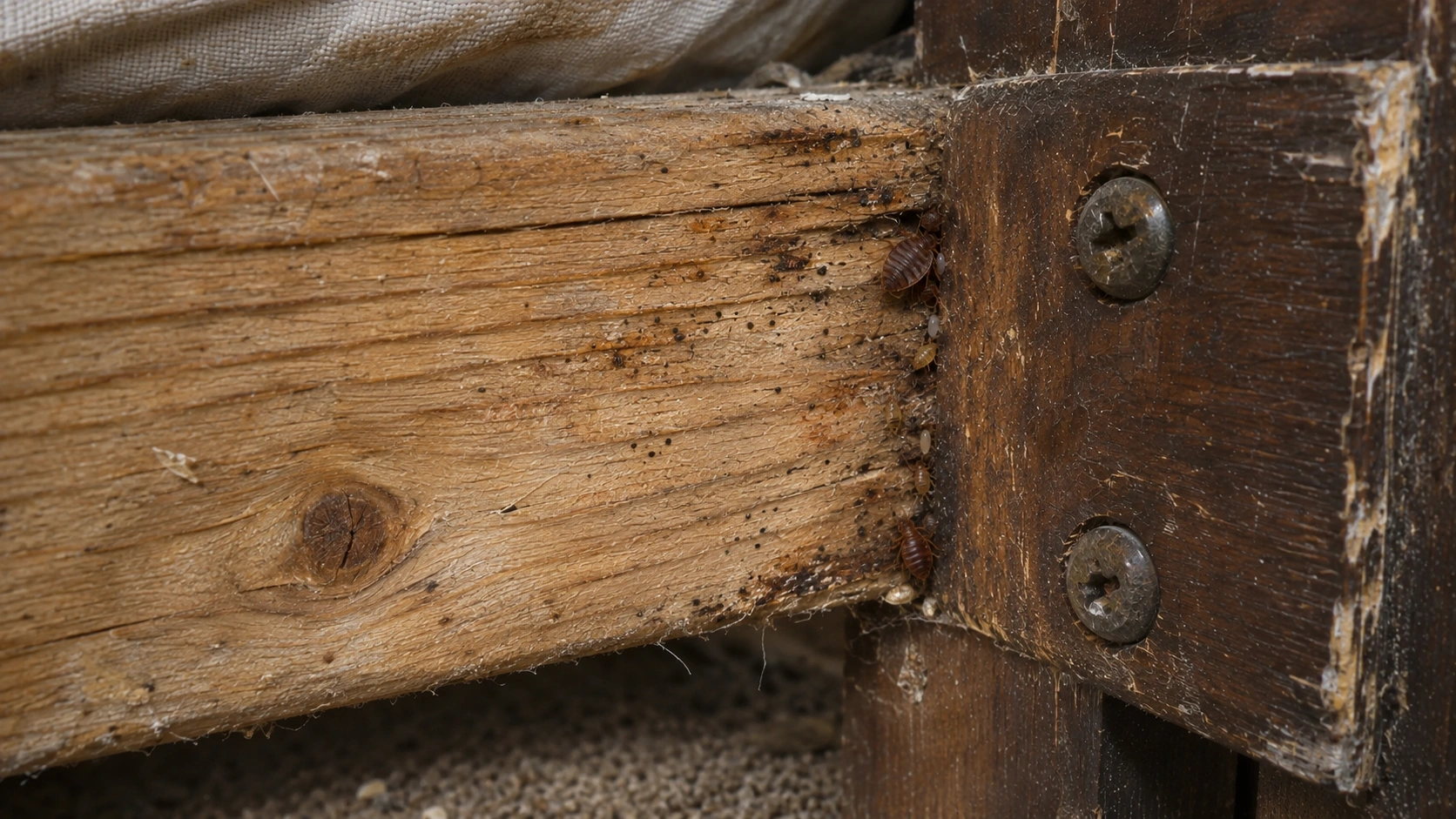
Begin where the person with the concern sleeps or regularly rests. Pull back the bedding and use a flashlight to examine mattress piping, stitching, folds, and tags. Even in a bright room, angled light can reveal what is tucked into a seam.
Then examine accessible box spring edges, bed-frame joints, and the headboard closest to the mattress. If someone usually sleeps on a couch, that resting area deserves attention too. Keep the first search near the place of concern instead of emptying every closet in the home.
Use this short inspection sequence:
- Check the sheets, then the mattress edges and accessible seams.
- Follow any suspicious marks toward the box spring, frame joints, and headboard.
- Examine nearby protected gaps before widening the search to other furniture.
Avoid opening electrical fixtures or moving heavy furniture without help. For a more detailed look at the bed itself, follow the mattress inspection guide. If evidence points beyond the sleeping area, the guide to where bed bugs hide covers those additional locations.
If you find an insect, take a clear photograph and, when practical, keep it in a closed container. A usable specimen is more valuable for identification than cleaning away every suspicious mark before anyone can examine it.
Identification Mistakes
- Treating a pattern of itchy marks as proof that bed bugs caused them.
- Assuming every black speck or rust-colored stain came from a bed bug.
- Looking only at the top sheet and overlooking bed-frame joints.
Key Clue
An intact live insect found near a sleeping area gives you something that can be identified. A vague stain or an unexplained skin reaction cannot do the same job.
What to Watch For
Cast skins and fecal marks can remain after earlier bed bug activity. If the room was treated before, ask about that history before using old-looking traces to judge what is happening now.
What do your findings actually mean?
You found an insect that can be identified
If a live specimen is confirmed as a bed bug, its presence is established. Take the finding seriously even when you have seen only one. That single sighting does not reveal the total number present or how many hiding places may be involved.
You found several compatible traces but no insect
Dark spots in a likely hiding place, especially alongside shed skins or eggs, give you a good reason to investigate further. Save clear pictures of the exact location. The next question is whether you can find a current, identifiable insect or other reliable evidence of ongoing activity.
You found only skin marks or an isolated stain
If your concern is bites without visible evidence, keep the cause open. People react differently to bites, and some marks are unrelated to insects. The same is true of a lone reddish stain on fabric. A targeted recheck is more useful than treating a guess as a diagnosis.
If you collect a bug that seems close but does not clearly match, compare it with bugs that look like bed bugs. Different insects call for different responses.
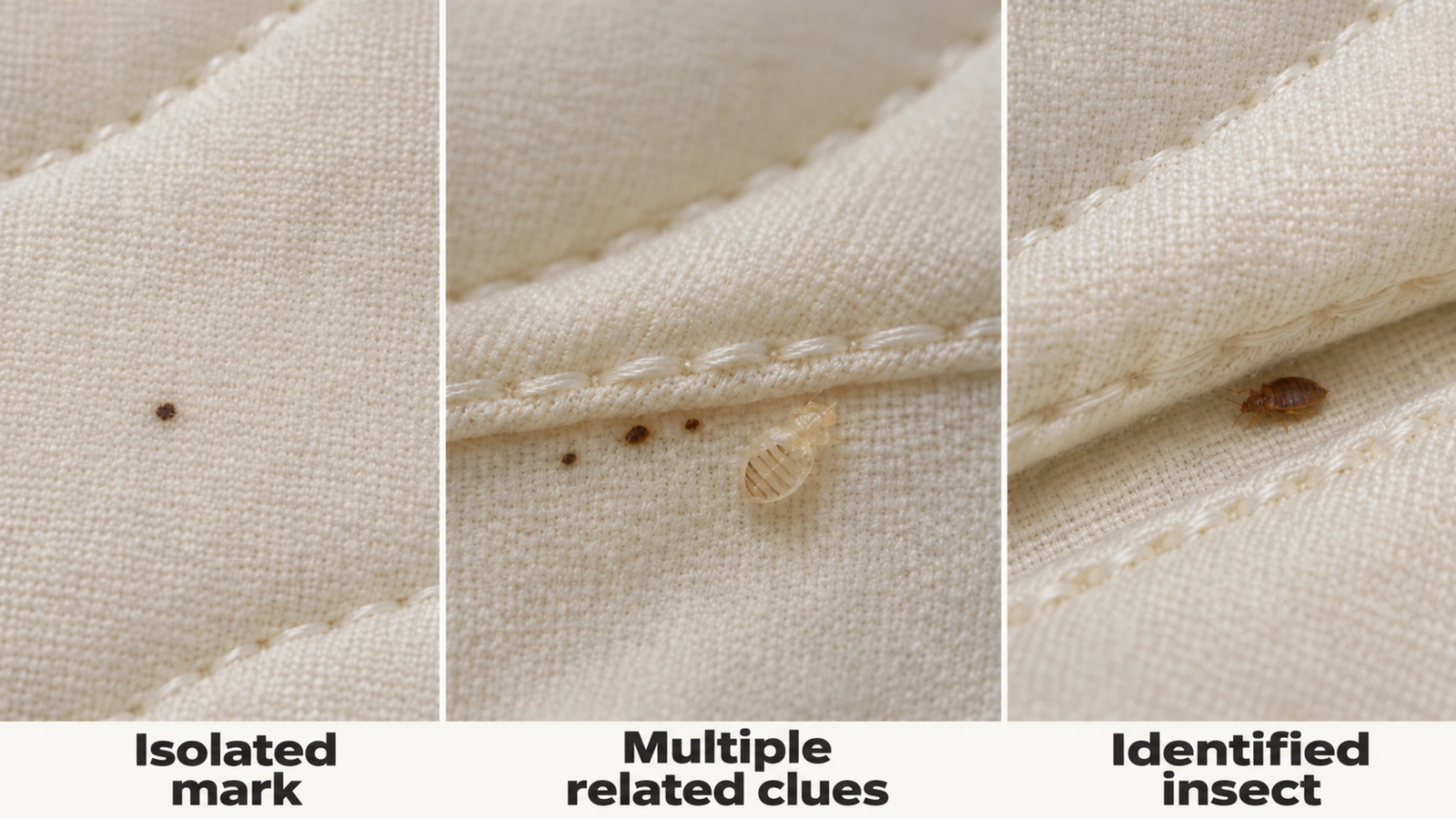
How much can you conclude from one inspection?
Finding an identified live bed bug confirms its presence, but it does not measure the extent of activity. Note where it appeared, whether multiple hiding places have signs, and whether anything new has been found. There is no useful shortcut that converts a certain number of bites or spots into an infestation grade.
When the evidence is uncertain, a second focused check or a suitable bed-leg interceptor may help you obtain a specimen. A small population can be difficult to detect, so an empty monitor or one negative visual check is not a definitive all-clear.

Repeated suspicious findings, inaccessible hiding places, or possible activity in several rooms can justify a qualified inspection. In an apartment building, confirmed activity is also a reason to notify management so connected spaces can be assessed as appropriate. An inspection should help establish what is present before anyone commits to an extensive treatment.


