
Explanation
Does vinegar kill ants? What it really does
Vinegar may interrupt an ant trail, but does it kill ants or reach the colony? Understand what a surface wipe can change, its limits, and the next step if ants return.
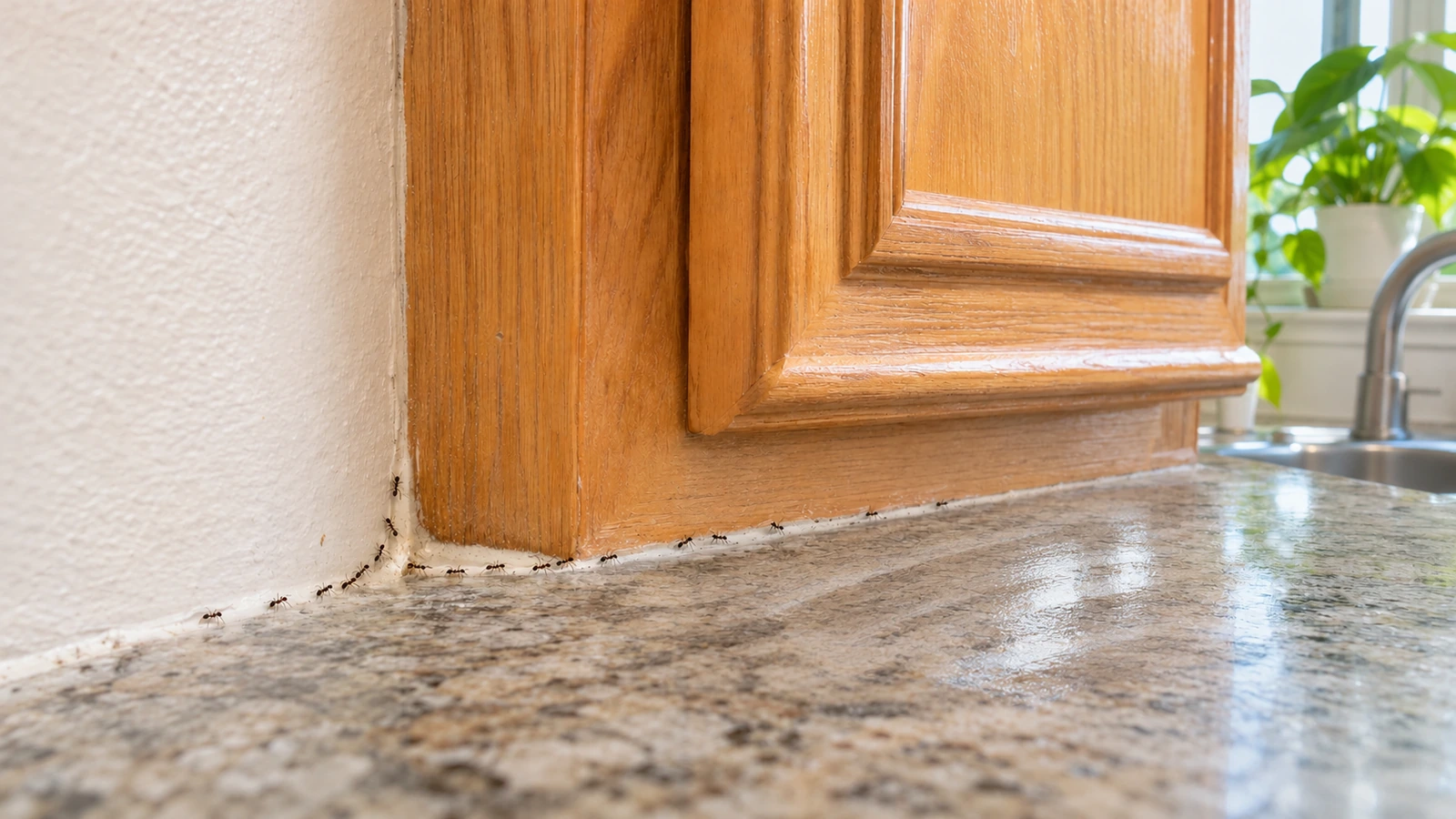
You wipe a line of ants off the kitchen counter with vinegar. The ants disappear, but later another line turns up near the same corner. Did the vinegar work, or did it just move the problem?
The answer depends on what you expected it to do. Clearing visible workers, disrupting a route, and eliminating the colony supplying those workers are three different outcomes.
Quick Answer
Vinegar can help temporarily disrupt an ant trail when you use it to wipe a suitable surface. Direct exposure may harm some ants, but ordinary household vinegar is not a reliable way to eliminate an ant colony. A clean counter means the visible trail has been disturbed, not that the nest has been destroyed.
What happens when you wipe an ant trail with vinegar?
Many household ants leave chemical trails as they travel between food and their colony. Other workers use those cues to follow the route. A line of ants along a backsplash or baseboard often reflects repeated trips, not a group living on the counter.
Wiping that surface physically removes ants, food residue, and at least some of the trail cues. A vinegar solution may also change how ants move through the treated area for a while. That is a useful cleaning effect, but it is temporary.
Why the ants may return
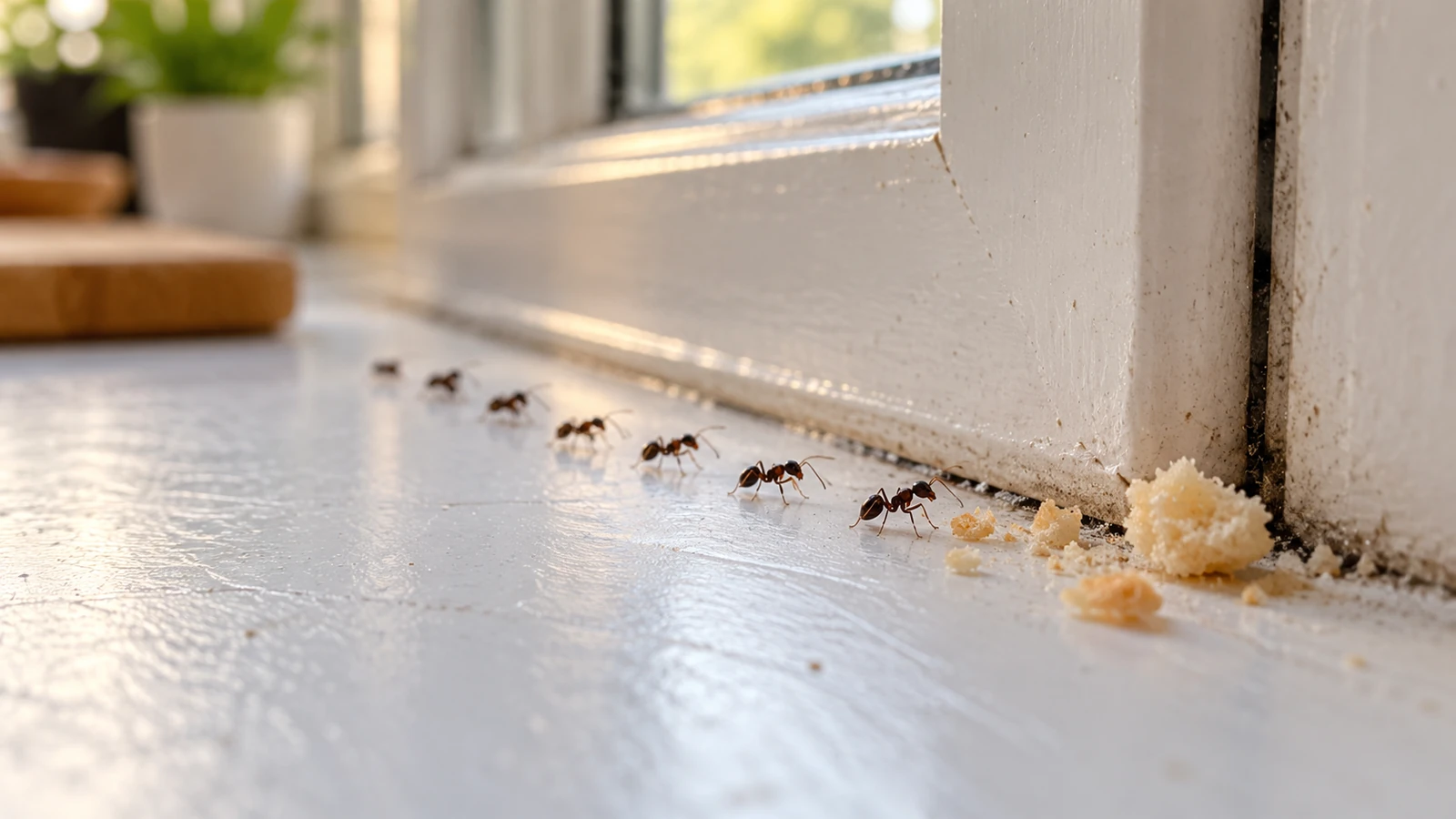
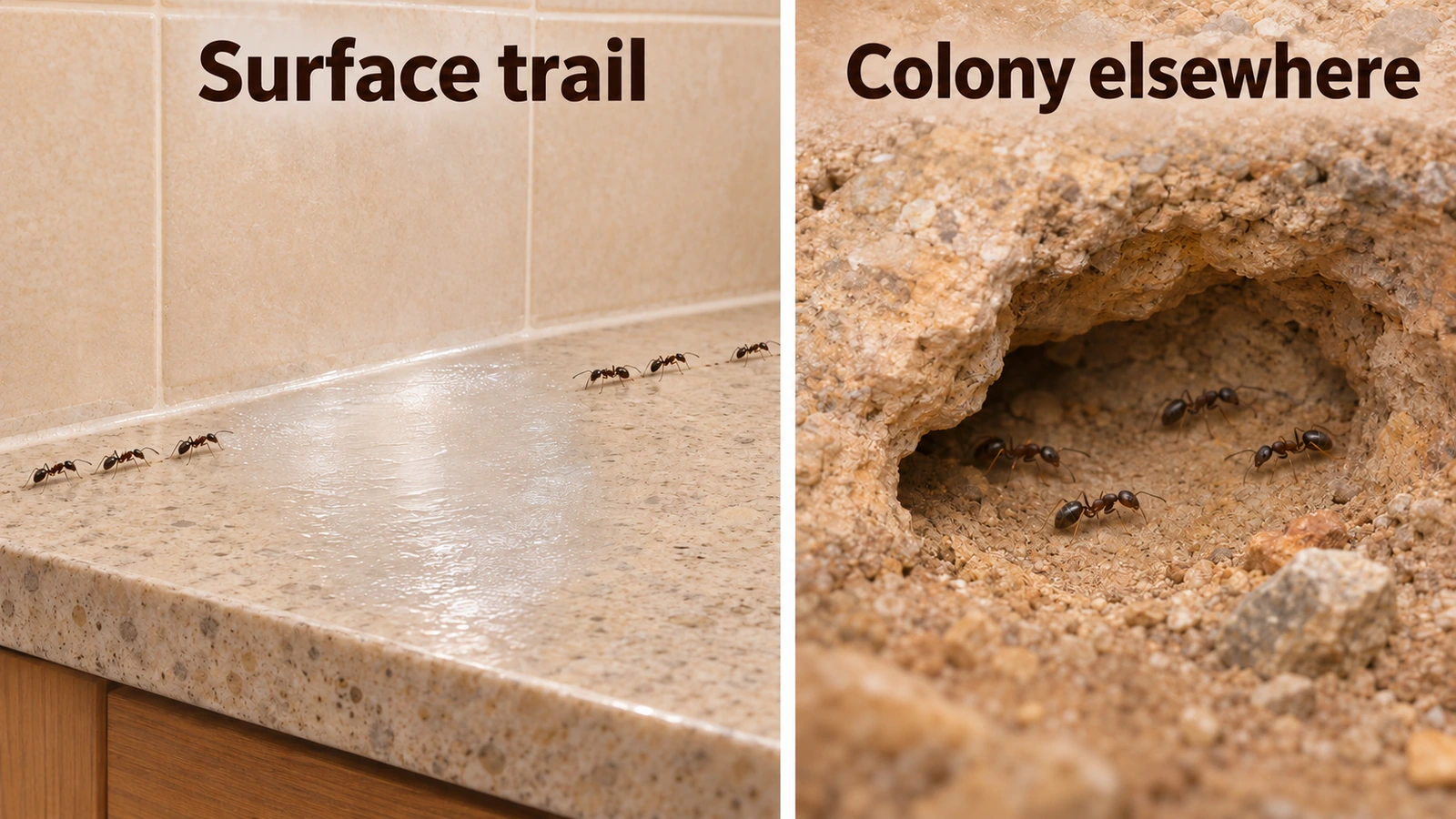
The ants you see are foraging workers. Their colony may be outside, under a structure, or concealed elsewhere in the building. Removing a line of workers from the kitchen leaves that source untouched.
If the food or water that attracted them is still available, other ants may find the same spot or establish a different path. A return visit is not proof that vinegar attracted the ants. It usually means surface cleaning has not addressed the reason they are coming in.
Can vinegar kill ants on contact?
Acetic acid, the active acid in vinegar, can affect ants exposed to it. Under some conditions, direct exposure may kill individual workers. But results from controlled acid exposures or particular species cannot be treated as proof that a household vinegar spray will kill ants consistently.
Even when the ants you wet stop moving, you have learned little about the colony. Most of its members, including reproductive ants and developing young, are not traveling across the surface you wiped. There is no reliable household-vinegar dose that turns counter cleaning into colony elimination.
When is vinegar useful, and when can it interfere?

For an occasional trail across a compatible hard surface, cleaning is a reasonable first response. Wiping away food residue and the trail can stop that particular route from guiding more ants for a time. Mild soapy water or an appropriate household cleaner can do this too; vinegar is not essential.
The situation changes if you are using ant bait. Workers need to reach an acceptable bait and carry it back toward the colony. Wiping the active route with vinegar, spraying the ants, or cleaning around the bait can interfere with feeding and transport.
A disappearing trail does not always mean progress
A wiped trail that stays empty may simply mean the workers have changed direction. Look for new activity near the same food source, along another edge, or at an entry point before deciding that the problem is over.
Conversely, seeing ants gather at a properly placed bait can be part of the intended process. Do not try to make the baited area look instantly ant-free by wiping it down. Follow the bait label and allow the ants to travel undisturbed.
What should you do if the ants keep coming back?
First, decide whether you are only dealing with a few foragers on a cleanable surface or repeated activity from the same gap. If you are not using bait, notice where the ants are traveling and what they are reaching before wiping the accessible trail. Remove reachable food residue and address an obvious spill or leak rather than repeatedly applying more vinegar.
If lines of ants keep returning, the next question is how to address the continuing source. A correctly chosen ant bait may be useful because workers can carry it back to other colony members, which surface cleaning cannot do. Baits are not interchangeable for every ant or situation, so compare the role and limits of ant bait options before choosing a method.
In a shared building, or when activity persists from inaccessible spaces, the source may be beyond one countertop or apartment. A qualified pest-control professional can help when the location or extent of activity makes ordinary household measures impractical. Otherwise, start with the smallest response that fits what you are actually seeing.
What to Watch For
Do not mix vinegar with bleach. That combination can release dangerous chlorine gas. Vinegar is also acidic and may damage marble, limestone, and other acid-sensitive finishes. Check your surface-care instructions before using it as a cleaner.
Explore this topic further:

