Explanation
Do bed bugs die in cold weather? When freezing works
Cold can kill bed bugs and eggs, but a winter night is not the same as a controlled freezer. Learn what temperature, exposure time, and item size change.
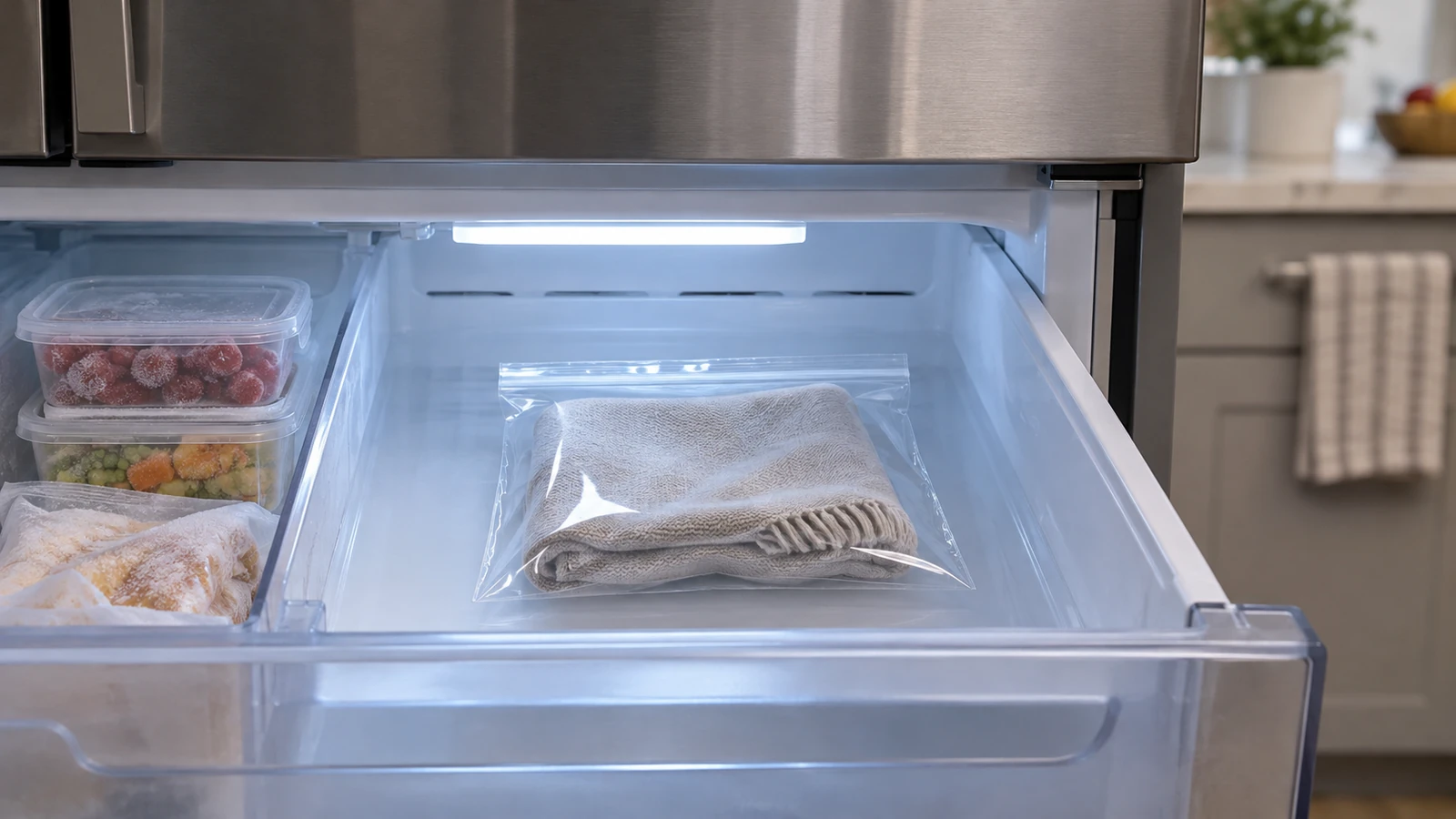
You find a suspected bed bug on a scarf, and the temperature outside is below freezing. Could you leave the scarf on the porch overnight instead of treating it another way? The answer depends on far more than the weather forecast.
Cold can kill bed bugs, but an item in a measured freezer is very different from a room, car, or suitcase exposed to winter air. Knowing the difference can save you from an ineffective treatment and damaged belongings.
Quick Answer
Yes, sustained deep freezing can kill bed bugs, including their eggs. For suitable small items, a freezer that stays at 0°F (-18°C) or colder for at least four full days after the center of the item reaches that temperature is a well-supported approach. A cold night outdoors or an unheated room cannot be counted on to do the same.
Why cold can kill bed bugs but a chilly room usually won’t
Bed bugs can survive a period of low temperatures. As the environment cools, they become less active, and an insect that appears motionless may still be alive. Killing them requires a sufficiently low temperature maintained for long enough, not merely a brief drop below freezing.
Bed bugs also hide in seams, folds, cracks, and protected spaces. The air around a suitcase may be freezing while its packed interior remains warmer. Even if exposed insects die, any survivors hidden inside an object can become active again when it warms up.

Eggs matter too. A treatment that affects visible adults but leaves viable eggs behind has not cleared the item. The freezer benchmark below is intended to cover all life stages, rather than judging success from a motionless adult.
What a freezer needs to achieve
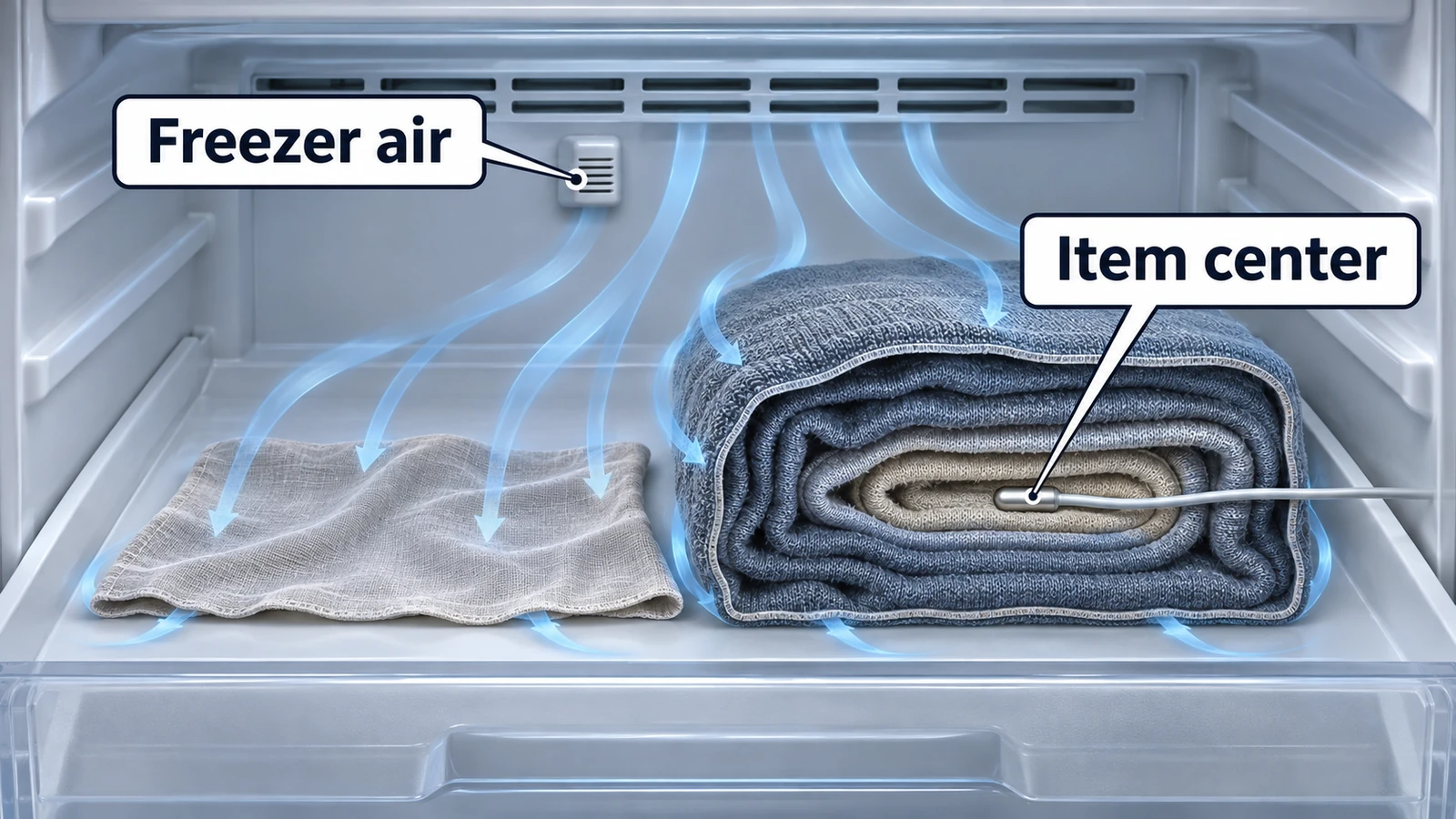
A commonly used benchmark for a controlled item-level treatment is 0°F (-18°C) or colder for at least four days. That interval starts once the coldest-to-reach part of the item has reached the target temperature. Simply leaving something in the freezer for four calendar days, without knowing its internal temperature, gives a weaker basis for confidence.
The difference is heat transfer. A thin, loosely arranged item cools more readily than tightly packed clothes, a thick book, or the center of a stuffed object. A freezer’s setting or an icy surface tells you little about the warmest protected location inside the item.
Before relying on a household freezer, check three practical conditions:
- Actual temperature: Use a thermometer rather than assuming the freezer dial is accurate. For dense items, the temperature at the center matters, not just the air reading.
- Containment and space: Keep suspected items sealed during handling, and avoid packing the freezer so tightly that cooling is uneven.
- Material compatibility: Use this approach only for things that tolerate freezing and subsequent warming. Moisture-sensitive books, valuable objects, and some electronics may be damaged by condensation or cold.
If you cannot verify the temperature or safely treat the item, choose a different suitable approach rather than simply extending an unmeasured freeze and calling it successful.
Where freezing helps and where it falls short
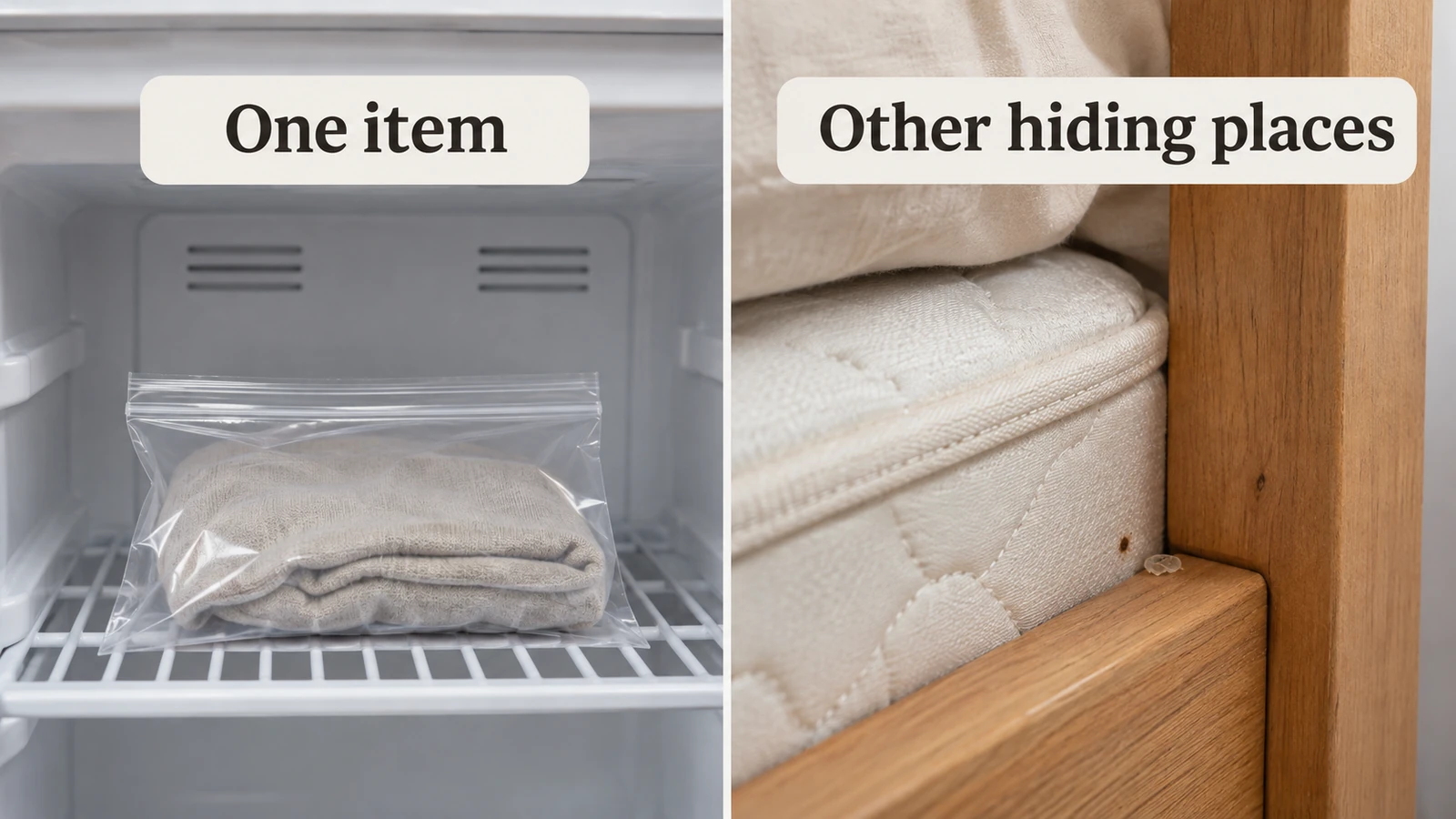
Controlled freezing can make sense for a small, dry, freezer-safe belonging that may be carrying bed bugs, especially when heat or laundering would damage it. Its scope is the particular item placed in the freezer, not the bedding, furniture, or other hiding places left in the room.
If you have only a suspicion, first check for actual insects or other physical evidence. Our guide to how to tell if you have bed bugs explains what to inspect. Freezing random belongings without identifying the problem may create work without addressing the source.
For confirmed activity beyond a single movable item, the decision changes. Inspect and manage the affected sleeping area as a whole; successful freezing of one bag does not treat a mattress or bed frame. When whole-room treatment is warranted, professional heat treatment for bed bugs is a different process with its own preparation and verification requirements.
What to Watch For
Do not try to freeze bed bugs out of a home by turning off the heat and opening windows. Indoor hiding places will not reliably reach a lethal temperature, and plumbing or the building itself can be damaged. Leaving furniture outside in winter is unreliable for the same reason: air temperature is not the temperature inside its protected seams and joints.
The most useful distinction is what was actually exposed to controlled cold:
| Situation | What the cold may achieve | How to interpret it |
|---|---|---|
| Small, dry item in a measured freezer at 0°F or colder | Can kill all stages if the item itself reaches that temperature for the full exposure | A realistic item-level option |
| Household freezer with an unknown or fluctuating temperature | May chill bed bugs without delivering a verified lethal exposure | Check temperature or use another method |
| Suitcase or furniture outdoors during winter | Exposed areas may get cold while protected areas remain warmer | Not reliable clearance |
| Repeated bed bugs found around a bed or couch | Freezing selected possessions leaves other hiding places untreated | Address the wider infestation |
Explore this topic further: