Identification
Field cockroach: How to identify it and interpret indoor sightings
A small striped roach found in the yard or near a doorway may be a field cockroach. Learn which features separate it from indoor pests and what repeated sightings mean for your next inspection.
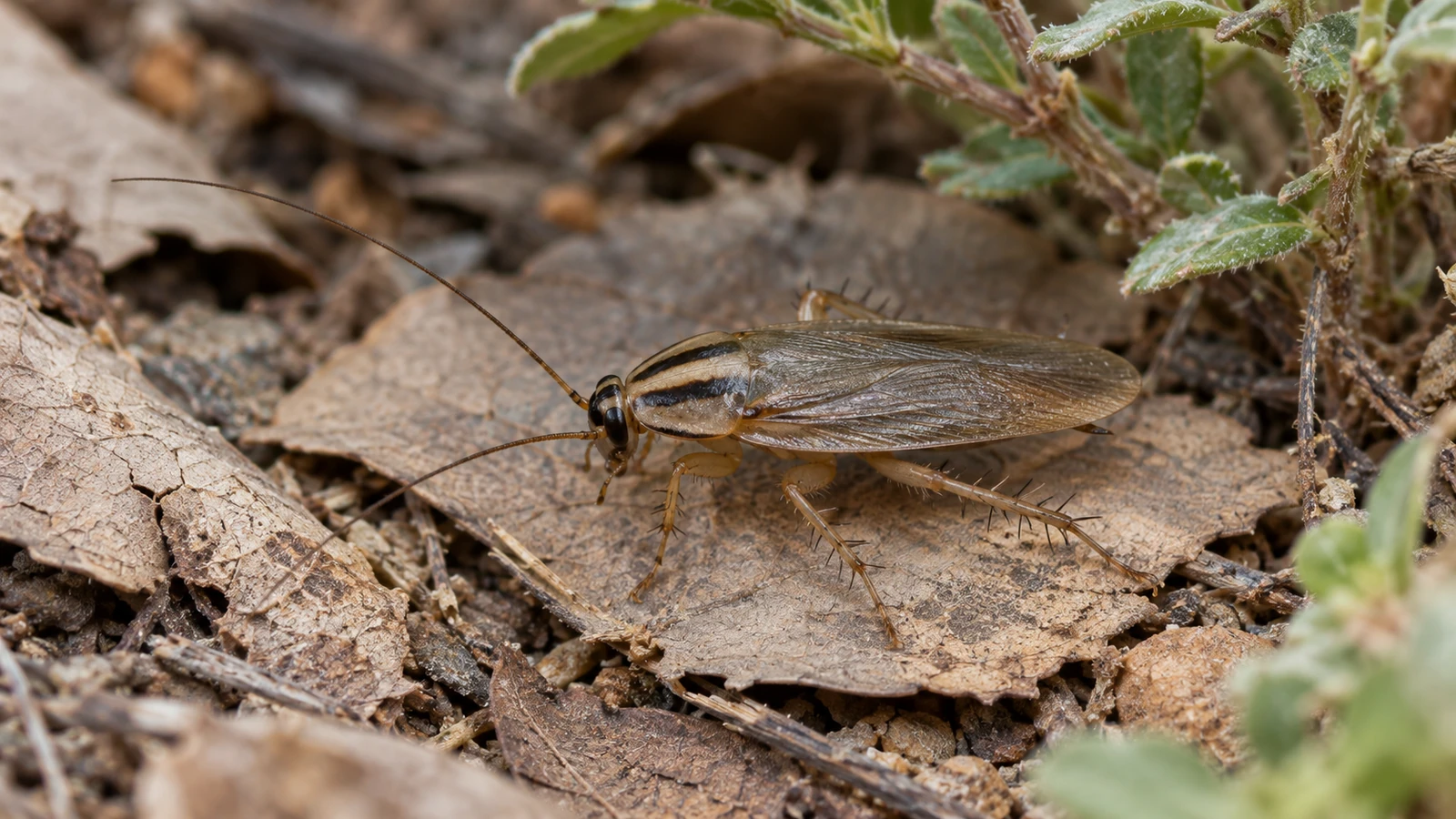
A small roach turns up beside the patio door. It has two dark stripes behind its head, which makes it look alarmingly like a German cockroach. But if it came from the yard, the right response may be very different from the response to a roach breeding indoors.
Field cockroaches are easy to mistake for household pests. Look at the face, the outdoor setting, and the pattern of indoor sightings before deciding what you found.
How to recognize a field cockroach
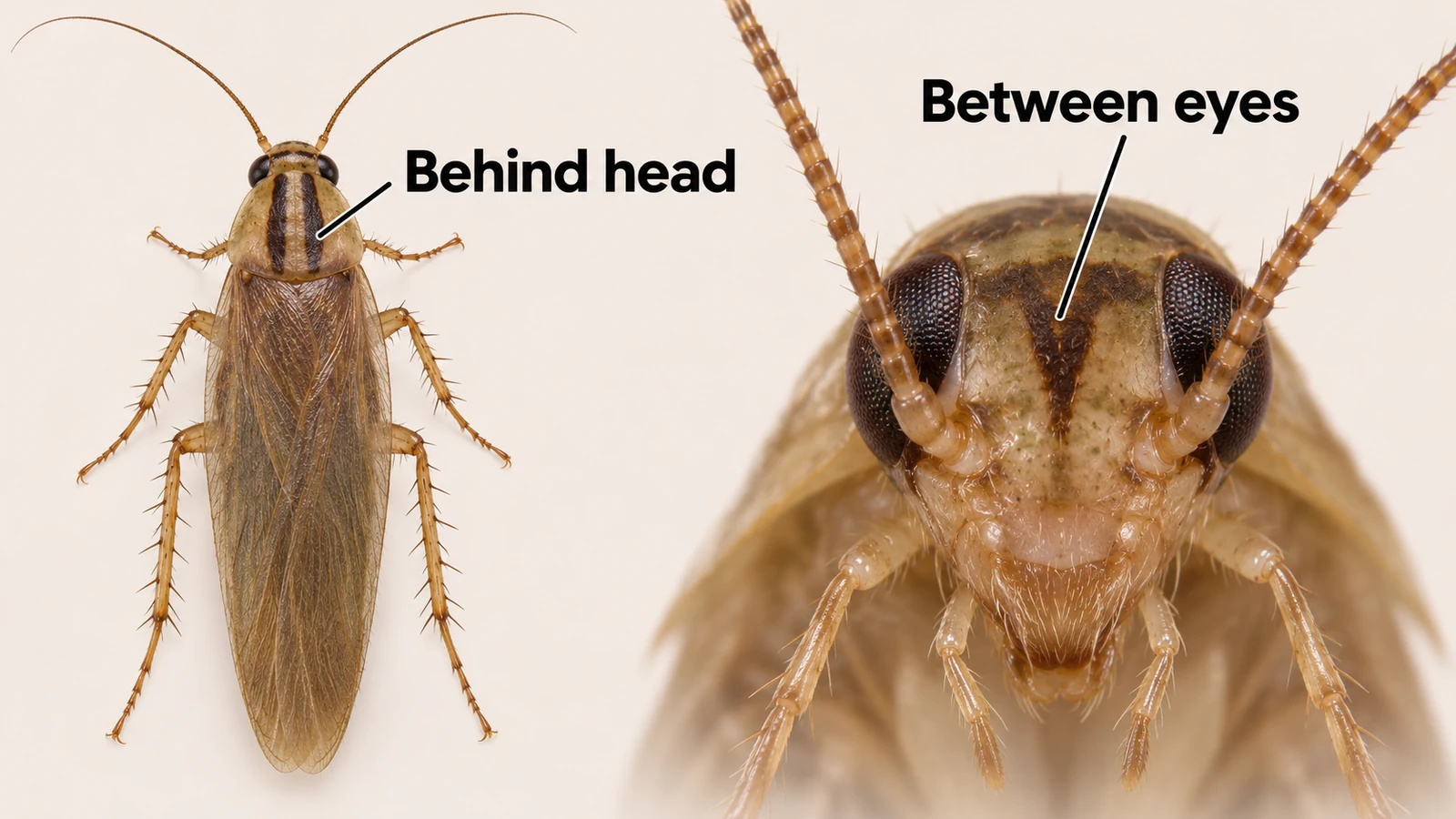
The field cockroach (Blattella vaga) is a slender roach, usually about 1/2 inch long as an adult, excluding its antennae. It is grayish to olive brown, with two dark lengthwise stripes on the pronotum, the small shield immediately behind the head. Adults have developed wings; immature roaches, called nymphs, do not.
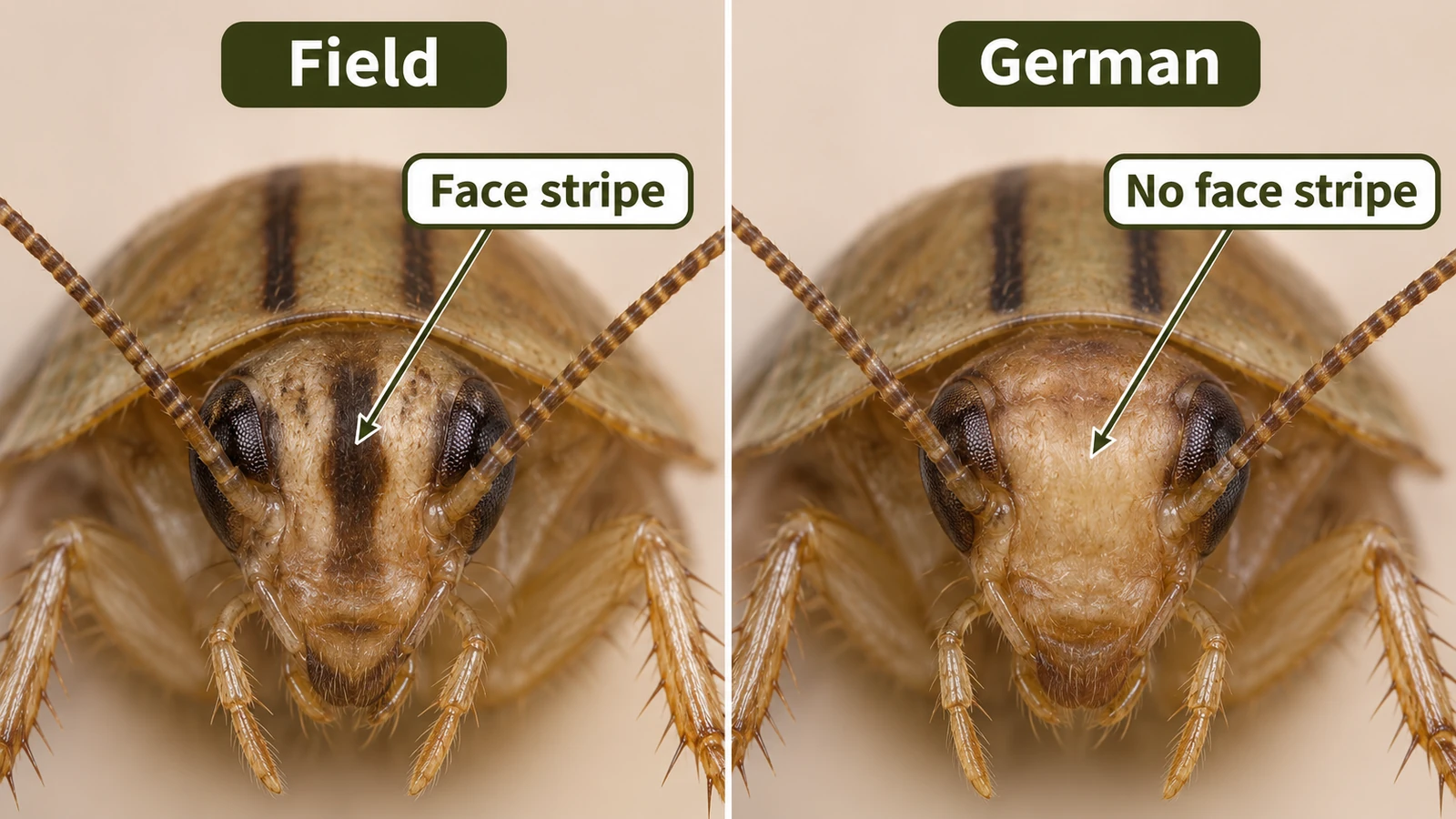
The strongest visual clue is on the front of the head: a dark stripe between the eyes. A German cockroach (Blattella germanica) also has two dark stripes behind its head, so a photo taken only from above can make these species look almost identical.
Identification in 30 Seconds
- Check body length: a typical adult is around 1/2 inch, not counting the antennae.
- Look for two dark, parallel stripes on the shield behind the head.
- If you can see the face, look for a dark stripe between the eyes.
- Consider the setting: leaf litter or plant debris in a warm, dry Southwestern area fits an outdoor field cockroach.
Young roaches change appearance as they grow. A wingless nymph, a crushed specimen, or a blurry photograph may not show the adult markings clearly enough for a reliable species identification. Similar small, striped species also occur in other U.S. regions, so location belongs in the identification process.
Check where the roach was found
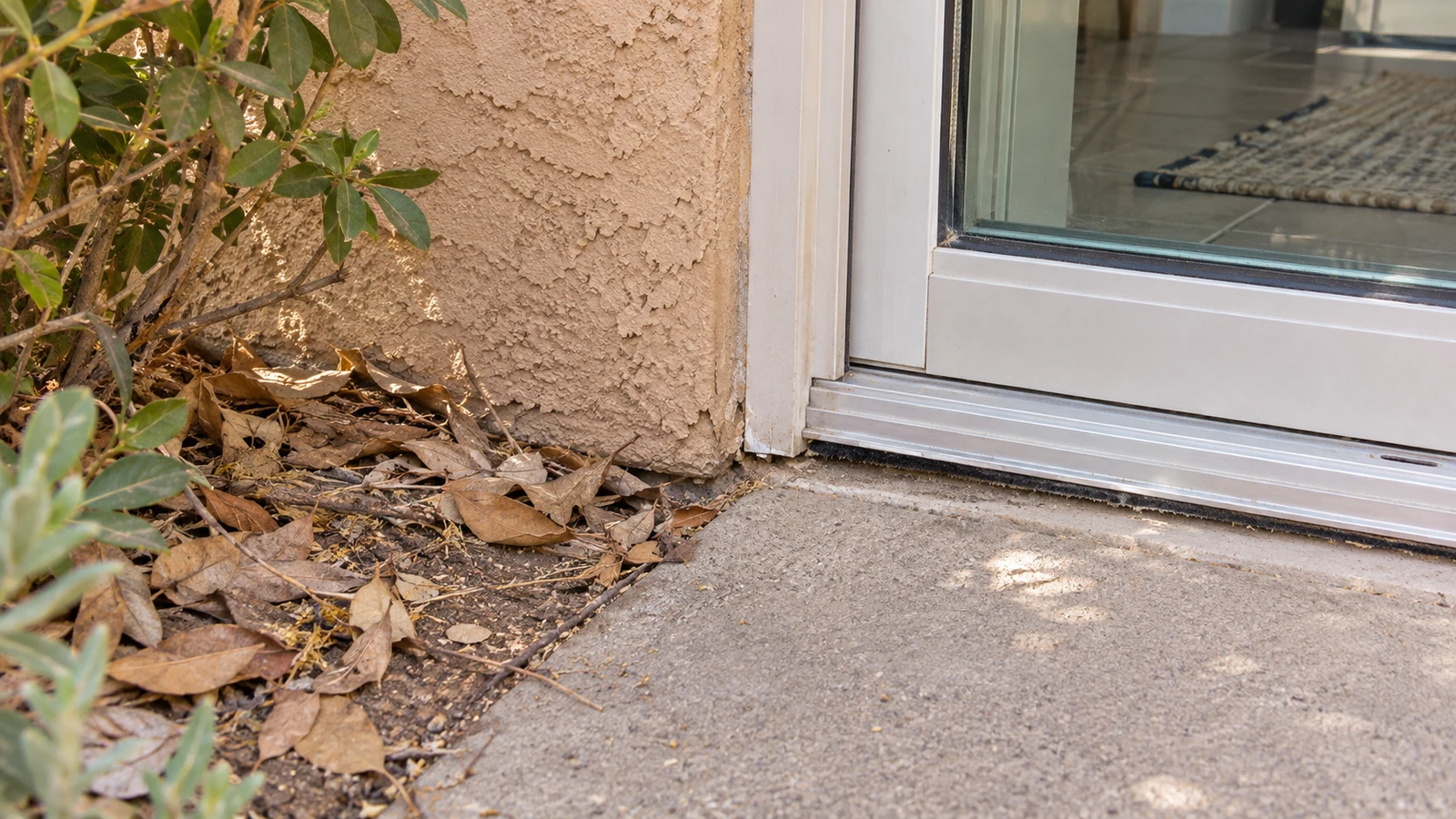
Field cockroaches generally live outdoors among leaf litter, mulch, and decaying plant material. They are particularly associated with southern California and desert areas. Hot or dry conditions can lead them to enter buildings, even though the yard is their normal habitat.
An adult next to a sliding door after activity in the mulch outside presents a different clue from roaches repeatedly appearing behind kitchen appliances. Begin where you saw the insect, then check the nearest exterior door, screen, threshold, and vegetation touching the wall.
Make a short record of what you can verify:
- Take a clear picture of the back and, if possible, the front of the head. Photograph a safely contained specimen next to a ruler if you need to confirm its body length.
- Note whether the roach was indoors or outdoors, how close it was to an entrance, and whether similar insects are active in nearby leaf litter.
- Check for additional roaches or nymphs in the immediate indoor area. Repeated appearances away from exterior entrances matter more than one isolated visitor.
- If sightings continue, place a cockroach sticky monitor along an indoor wall near the activity, out of reach of children and pets. Its catches help show where activity is occurring and provide specimens for identification.
Identification Mistakes
- Identifying a German cockroach from the two back stripes alone.
- Calling a single roach by an exterior door an indoor infestation.
- Using flight or daylight activity as the only test of species identity.
Key Clue
On a clear adult, the dark stripe between the eyes strongly favors Blattella vaga over the German cockroach. Confirm the clue against the insect’s location and overall appearance.
What to Watch For
Repeated small roaches or nymphs in kitchen or bathroom hiding spots deserve an indoor inspection, even if the first adult seemed to be an outdoor species.
What the evidence suggests
The important difference is not simply appearance. Field cockroaches normally occupy outdoor plant debris and may wander indoors. German cockroaches are adapted to living and reproducing inside buildings, particularly near food, moisture, and sheltered crevices.
A field-cockroach identification becomes more convincing when the facial marking, a plausible regional location, and an outdoor source all agree. If the insect was collected in an area outside the usual range of B. vaga, revisit the identification rather than forcing a match.
Use the combination of clues closest to your sighting:
| What you observe | What it suggests | Next useful check |
|---|---|---|
| One adult near an exterior door, with leaf litter close by | An outdoor visitor is plausible | Inspect the facial marking and doorway |
| Similar roaches active in yard debris, with little indoor activity | The nearby outdoor habitat may be the source | Check the exterior shelter and entry gaps |
| Two dark back stripes, but the face is not visible | Field and German cockroaches remain difficult to separate | Get a clearer front view or retain a specimen |
| Repeated adults and nymphs in interior kitchen hiding spots | An indoor-breeding cockroach needs to be considered | Monitor the indoor area and identify a collected specimen |
Does one indoor sighting mean an infestation?
A single suspected field cockroach near a door usually calls for a check of the entry point, not immediate whole-house treatment. When the species and setting fit an outdoor origin, keep debris away from the threshold, close obvious gaps, and watch for new activity.
The interpretation changes when sightings become frequent or appear in several indoor hiding places. Finding nymphs along with adults inside a kitchen is more concerning than finding an isolated winged adult near a patio. The growth stages and locations help determine whether a cockroach population may be established indoors.
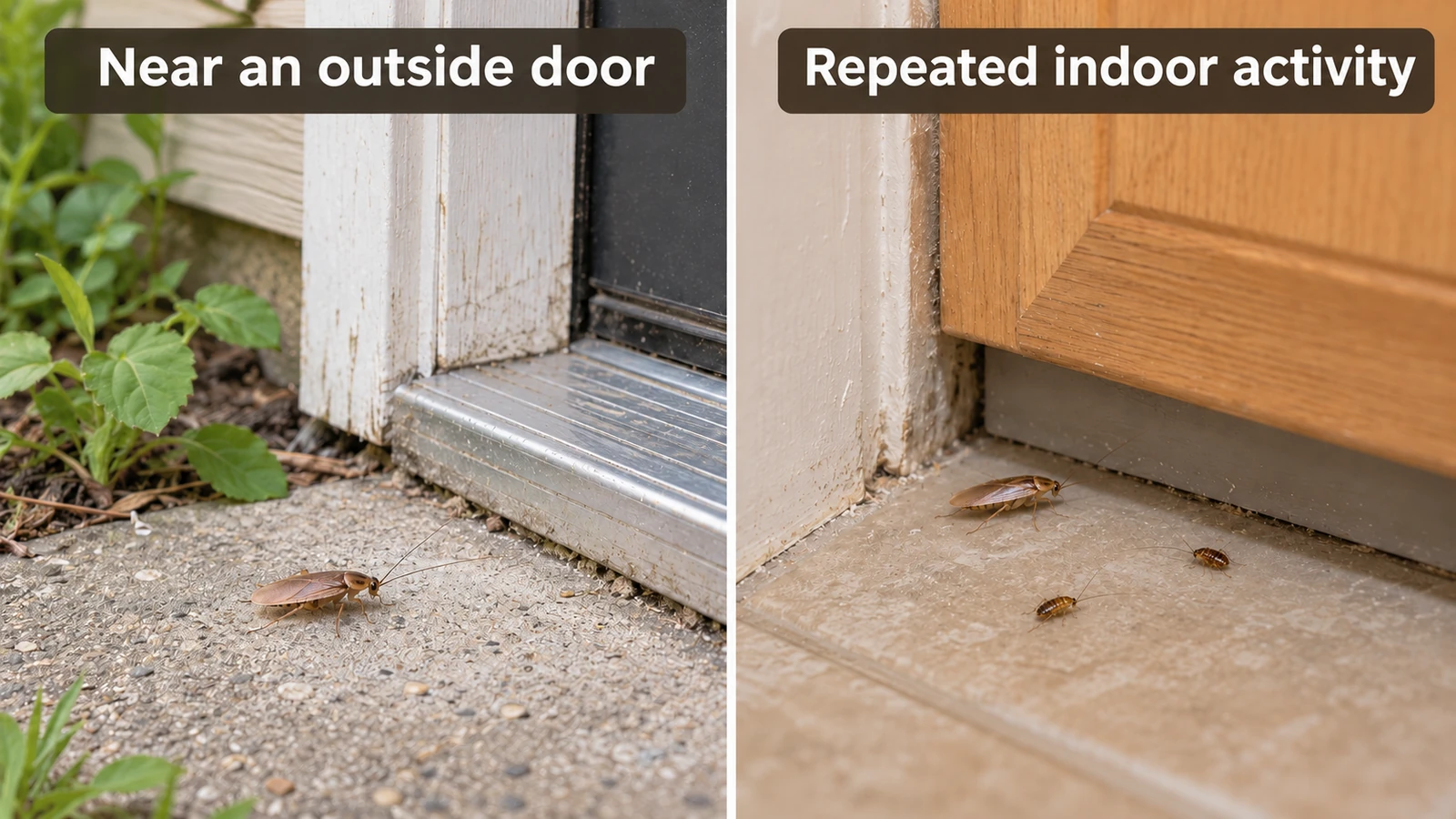
If you are uncertain, keep a specimen for identification and look for a pattern before deciding on treatment. This avoids treating the entire house for a one-time outdoor visitor while still taking persistent indoor activity seriously.
Good to Know
The pale-bordered field cockroach (Pseudomops septentrionalis) is a different species from Blattella vaga. Their similar common names can mix unrelated images and descriptions in search results. Use the scientific name when checking which insect a photo actually shows.
Learn more: